
Overview Gut and vitamin D
High level of vitamin D/UV reduces the risk of many gut problems
Many gut problems result in less absorption of Vitamin D & Magnesium . . .
Not restoring Vitamin D levels increases the risk of many other diseases
- Increasing Vitamin D reduces many inflammations - incude those of the gut
Many companies make gut-friendly forms of vitamin D
- Topical nanoemulsion gut not needed
- Nanoemulsion
- Topical gut not needed
- Patch gut not needed
- Calcidiol gut not need to digest fat
- Liposomal not need to digest fat
Gut Summary
Gut problems result in reduced absorption of Vitamin D, Magnesium, etc.
Celiac disease has a strong genetic component.
Most, but not all, people with celiac disease have a gene variant.
An adequate level vitamin D seems to decrease the probability of getting celiac disease.
Celiac disease causes poor absorption of nutrients such as vitamin D.
Bringing the blood level of vitamin D back to normal in patients with celiac disease decreases symptoms.
The prevalence of celiac disease, not just its diagnosis, has increased 4X in the past 30 years, similar to the increase in Vitamin D deficiency.
Review in Nov 2013 found that Vitamin D helped
- Many intervention clinical trials with vitamin D for Gut problems (101 trials listed as of Sept 2019)
- All items in category gut and vitamin D items
- There are many ways to get vitamin D to people with poor guts
See VitaminDWiki (other than Crohn's)
"Ulcerative Colitis" OR UC 1420 items Feb 2021
"celiac disease" OR CD 2030 items Jan 2019
IBS or IBD or IRRITABLE BOWEL in title of 37 VitaminDWiki pages as of July 2021
diverticulitis 21 items as of Feb 2018
88 percent of Intestinal failures had both low vitamin D and low bone density – Feb 2013
Vitamin D might reduce military costs for UC and CD – June 2011
Gut doctors becoming aware of importance of vitamin D – May 2012
- Many items in the journal Gut and the Journal of Crohn's and Colitis Spring 2012
Ulcerative colitis associated with both low Vitamin D and poor Vitamin D Receptors – Oct 2016
Ulcerative Colitis relapse 25 percent more likely if vitamin D level is lower than 35 ng – June 2016
Antibiotics and Vitamin D are associated with many of the same diseases
Inflammatory bowel diseases treated with vitamin D – Review May 2014
IBD more likely in areas with low UV ( and thus low vitamin D) – June 2014
Inflammatory bowel diseases are helped by vitamin D – commissioned review Nov 2013
Gut problems associated with low vitamin D – invited review Dec 2015
Irritable Bowel Syndrome - can it be treated by 3000 IU of vitamin D - RCT Feb 2014
Better response to Inflammatory Bowel Disease drug if more than 30 ng of vitamin D – March 2014
Gut microbiome massively changed by weekly vitamin D – July 2015
Vitamin D injection is far better than oral for diabetics (poor gut) – RCT March 2017
Inflammatory diseases: review of vitamin D, with many tables – May 2014 which has a summary table
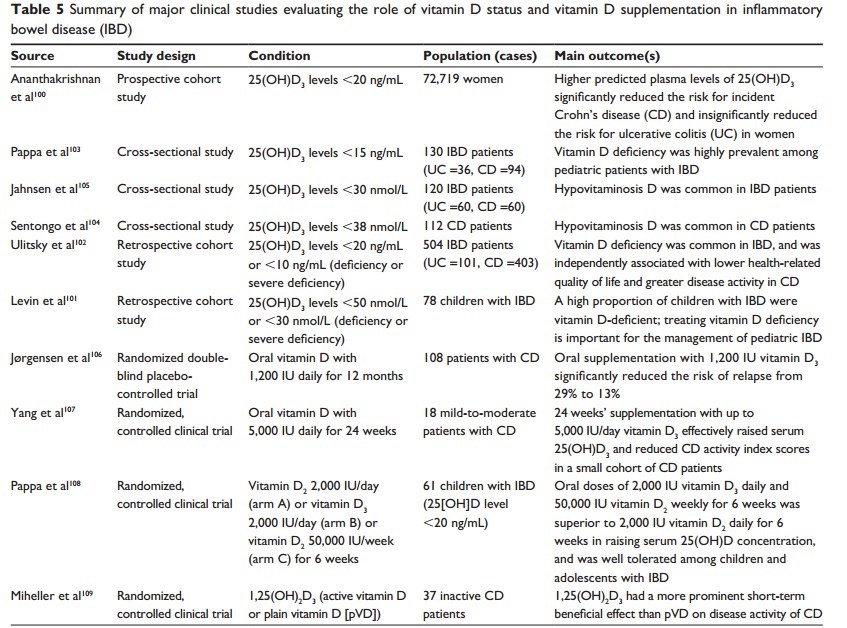
9 gut problems - in order of prevelance - Perplexity AI June 2024
Irritable Bowel Syndrome (IBS) - Affects 12% of the US population, making it the most common digestive disorder.
Gastroesophageal Reflux Disease (GERD) - Along with IBS, GERD is noted as one of the digestive disorders seeing a noticeable rise in incidence.
Constipation - Chronic constipation affects 15-30% of Canadians and is especially common in young children and the elderly.
Inflammatory Bowel Disease (IBD) - IBD, which includes Crohn's disease and ulcerative colitis, had an estimated 4.9 million prevalent cases globally in 2019.
Gastritis - Inflammation of the stomach lining, commonly caused by H. pylori infection, NSAIDs, or alcohol.
Peptic Ulcers - Often associated with gastritis and caused by H. pylori infection or NSAID use.
Pancreatitis - Had an estimated 2.41 million prevalent cases globally in 2019.
Appendicitis - Had an estimated 0.67 million prevalent cases globally in 2019.
Paralytic Ileus and Intestinal Obstruction - Had an estimated 0.55 million prevalent cases globally in 2019.
4 gut problems are associated with low vitamin D levels - Perplexity AI June 2024
- Inflammatory Bowel Disease (IBD), including Crohn's Disease and Ulcerative Colitis:
- Vitamin D deficiency is more common among those with IBD.
- Lower vitamin D levels are associated with higher disease activity and severity in Crohn's disease.
- Vitamin D deficiency may be implicated in the etiology and severity of IBD.
- Individuals with higher serum vitamin D have a lower incidence of IBD, particularly Crohn's disease.
- Constipation:
- A study found that patients with chronic functional constipation and intestinal motility disorders had lower vitamin D levels compared to healthy controls.
- Low vitamin D levels were significantly correlated with constipation symptoms and impaired quality of life in these patients.
- Diarrhea:
- Low vitamin D levels are associated with an increased risk of rotaviral diarrhea in children under 5 years old.
- A study found lower vitamin D levels in children with acute bacterial diarrhea compared to healthy children.
- General Gastrointestinal Inflammation:
Vitamin D plays a role in maintaining gastrointestinal barrier integrity, regulating gut microbiota, and modulating inflammatory immune responses, which are important in preventing and ameliorating gut inflammation.
87% of eating disorders got worse with COVID-19 - Aug 2020
UK study, FREE PDF
Many gut diseases will do better with gut-friendly forms of Vitamin D
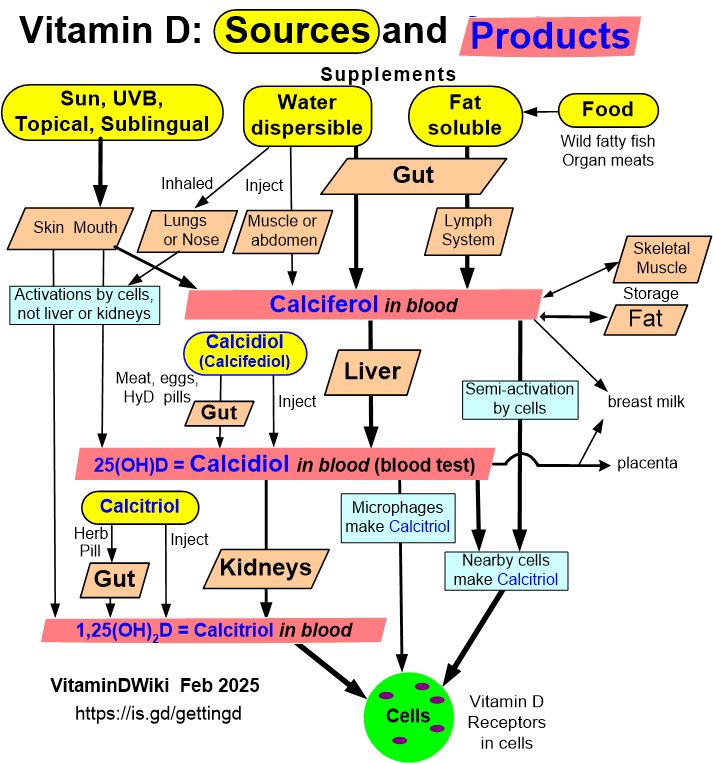 Getting Vitamin D into your blood and cells also has the following
{include}
Getting Vitamin D into your blood and cells also has the following
{include}
See also web
[https://ckarchive.com/b/k0umh6hd8dmdx?cksubscriberid=1050764595IBS extensive review at Examine.com March 2023]
-
- Michael Greger July 2019 text and 5 minute video
[https://clinicaltrials.gov/ct2/show/NCT04225819?sfpds=12%2F30%2F2019&sfpd;d=14Clinical trial starting in 2020] giving Vitamin D (10,000 IU) for 14 weeks
- Doomed to fail. People with poor guts need gut-friendly form of Vitamin D
Vitamin D Insufficiency Linked to Irritable Bowel Syndrome and Sports Injuries Mercola Feb 2018
- "About 75 percent of people with IBS have insufficient levels of vitamin D, and about 70 percent report improvement when taking vitamin D supplements " Reference: Jan 2018 $5 to rent the PDF
- Vitamin D for Inflammatory Bowel Disease Dr. Greger’ Jan 2017
- 3 minute video looking at the scientific reasons to believe IBD is associated with low Vitamin D
- Includes random controlled trials using increasing dose sizes - 5,000 IU treating most IBD very well
- Why Everyone with Celiac Disease Desperately Needs Vitamin D SCD Lifestyle 2012
- Vitamin D can stop your intestines from leaking, Vitamin D helps put the fire out
Coeliac Disease has increased 4X in the past 30 years in Clinical Education web UK
Elderly had 2.5X as much Celiac as the rest of Finnish population
- seems reasonable - elderly have much less vitamin D since generate only 1/3 as much vitamin D from the same amount of sun
African Americans get Celiac as well long forum discussion
Search for Gut Clinical Trials with vitamin D INTERVENTION 103 trials listed as of Feb 2018
- (gut OR bowel OR Gluten intolerance OR "Celiac Disease" or "Crohn's Disease" OR "Ulcerative Colitis" OR "Inflammatory Bowel Disease") with "vitamin d" intervention
Search for "Crohn's Disease" and vitamin d" intervention 26 trials as of Feb 2018
IBS Self Help and Support Forum 142 items on vitamin D as of Nov 2016
ACG clinical guidelines: diagnosis and management of celiac disease. AHRQ May 2013
- Mentions Vitamin D and other nutrients in treatment section
- Optimal vitamin D levels in Crohn's disease: a review Feb 2015
- Cannabis Superior To Drugs For Inflammatory Bowel Condition (Crohn's Disease) GreenMedInfo April 2015
- RCT with 21 patients, Vitamin D not mentioned, but vitamin D appears to treat the disease, and not just the pain
- Download the PDF from VitaminDWiki
- Study links increased dietary zinc intake to reduced risk of Crohn's May 2015
- Result of questionnaires of 200,000 people - corrected for changes due to Vitamin D, smoking, BMI, etc.
- < 8 mg Zinc no change, 8-16 mg daily==> 30% reduction, > 16 mg daily ==> 48% reduction
- Cut out FODMAPs, cut out IBS symptoms? Examine.com Dec 2016
- FODMAP= "Fermentable, Oligo-saccharides, Di-saccharides, Mono-saccharides, and Polyols."
- Less FODMAP in diet ==> less gas; review of a meta-analysis
Why Everyone with Celiac Disease Desperately Needs Vitamin D SCDLifestyle 2012
Using Essential Oils to Heal the Gut GreenInfo Aug 2017
- Nothing about Vitamin D. Oils for Leaky Gut, Irritable Bowel Syndrome, GERD, . . .
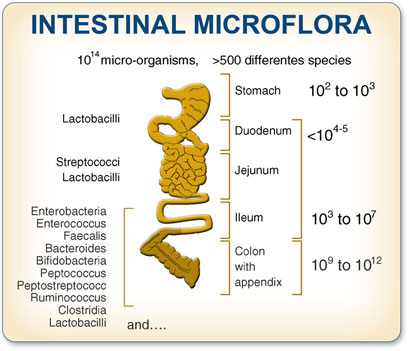
- Gut Flora - has the following graphic
Review of IBD and Vitamin D (generally < 1,000 IU) - Feb 2014
Review of observational and intervention studies
Download the PDF from VitaminDWiki
SBI can help Colitis - Aug 2022
SBI = Serum-Derived Bovine Immunoglobulin/Protein Isolate,
IBS vs IBD
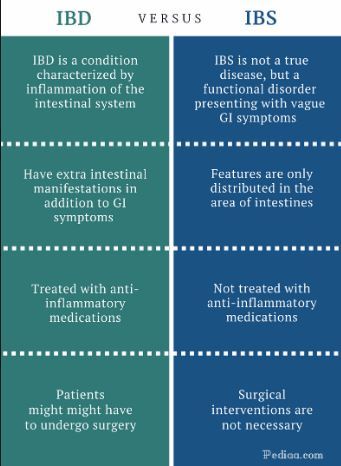
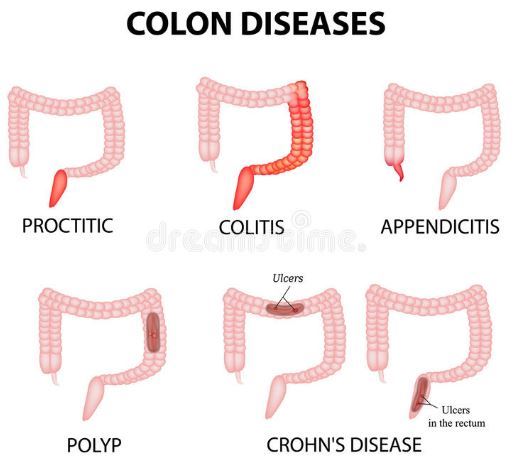
Colon Diseases
Celiac
Celiac associated with both low vitamin D and poor Vitamin D Receptor - meta-analsys - Feb 2023
A meta-analysis suggests the association of reduced serum level of vitamin D and T-allele of Fok1 (rs2228570) polymorphism in the vitamin D receptor gene with celiac disease
Front Nutr . 2023 Jan 19;9:996450. doi: 10.3389/fnut.2022.996450
Tanya Shree 1, Pratibha Banerjee 1, Sabyasachi Senapati 1
Purpose: As an immune-modulator, vitamin D is known to regulate immune response and is implicated in disease pathogenesis. Celiac disease (CD) is a systemic autoimmune disease and susceptibility conferred by vitamin D metabolism is under investigation. Studies on the association of vitamin D metabolism and genetic polymorphisms are expected to explain CD pathogenesis. We performed a systematic review-based meta-analysis to investigate the 25(OH)D serum levels and susceptibility conferred by the genetic variants of VDR in CD.
Methods: Systematic review was conducted through a web-based literature search following stringent study inclusion-exclusion criteria. The Newcastle-Ottawa Scale and GRADE tools were used to assess the quality of evidence in studies and the study outcome. Cohen's κ value was estimated to access the reviewer's agreement. RevMan 5.4.1 was used to perform the meta-analyses. Weighted mean difference and Meta p-value was assessed for 25(OH)D serum levels. Meta-odds ratio and Z-test p-value were evaluated to estimate the allelic susceptibility of VDR variants.
Results: A total of 8 out of 12 studies were evaluated for "25(OH)D" serum level, while four studies were found eligible for SNPs (Bsm1, Apa1, Fok1, and Taq1) of VDR. Significantly higher levels [WMD = 5.49, p < 0.00001] of 25(OH)D were observed in healthy controls than in patients with CD. rs2228570-T (Fok1) [Meta-OR = 1.52, p = 0.02] was confirmed to be predisposing allele for CD.
Conclusion: Reduced serum level of 25(OH)D and association of Fok1 T-allele of VDR confirmed in this study plays a critical role in immunomodulation and maintaining barrier integrity, which is majorly implicated in CD.
Download the PDF from VitaminDWiki
Celiac disease is the most common genetic disease in Europe.
In Italy about 1 in 250 people and in Ireland about 1 in 300 people have celiac disease.
from http://www.wrongdiagnosis.com/c/celiac_disease/prevalence.htm
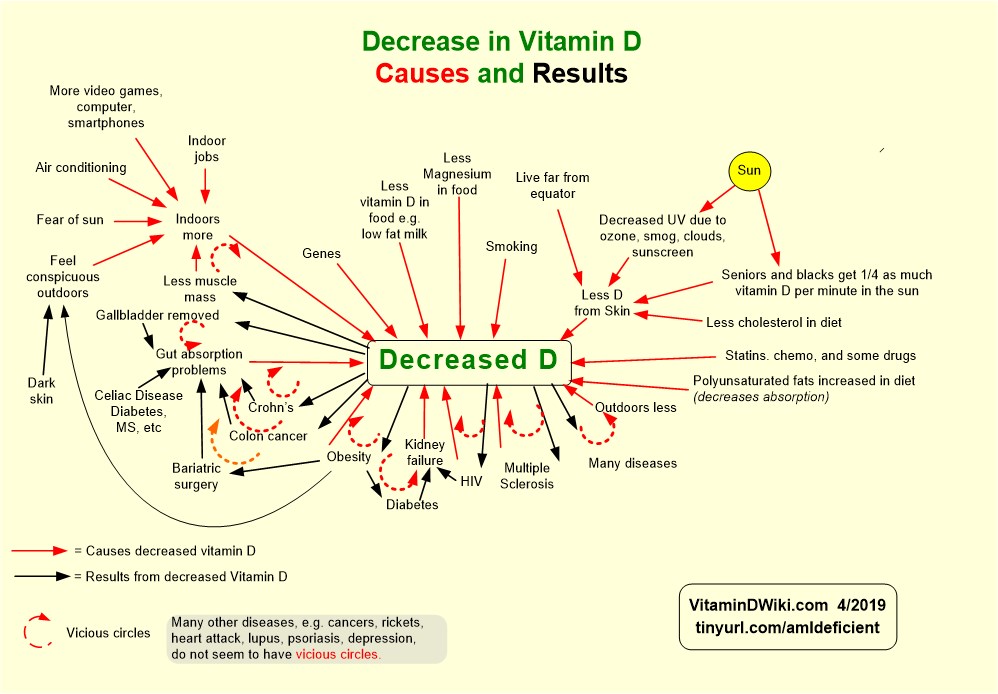
Celiac Disease is similar to Crohn's Disease in that both decrease vitamin D which can be absorbed in the gut
Celiac Disease may be similar to Crohn's Disease on the following chart
Does Gluten-Free Diet Protect Children with Celiac Disease from Low Bone Density? - Aug 2014
Download the PDF from VitaminDWiki.
They believe: CD ==> poor absorption ==> low vitamin D ==> low Bone Mineral Density
They conclude that if teen with CD has bone pain should have DXA test of BMD, then might consider giving vitamin D.
8 ✻ VitaminDWiki pages with CELIAC in title
Crohn's
Crohn's reduced by plant-based diet - Dr. Greger
Crohn's reactions to yeast, milk, eggs - good video review of many studies (video with transcript)- Feb 2021
Is Nutritional Yeast Healthy for Everyone? Dr. Greger
The Best Diet for Crohn’s Disease Treatment Video with transcript April 2021
Vitamin D levels OK months before Crohn's, but were low only after Crohn's
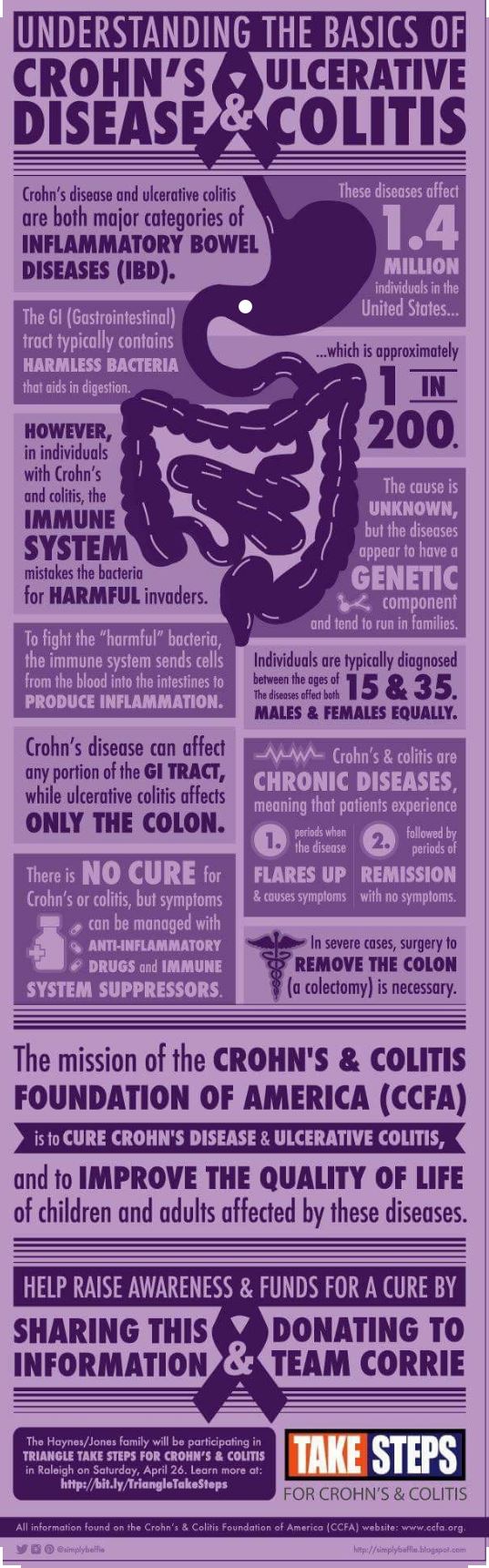
Crohn's and Colitis infographic
39+ VitaminDWiki pages with CROHN in title
15 gut questions and answers – NYT Feb 2023
The Wild World Inside Your Gut
Questions
1 How can I tell if my gut is healthy? And what are some warning signs that it isn’t?
2 How does my gut affect the rest of my body?
3 What are some simple things I can do to improve my gut health?
4 Are there any foods I should limit for the sake of my gut health?
5 I often feel heartburn after I eat. Why is that and what can I do to stop it?
6 Am I at risk for an ulcer if I am constantly stressed and eat a lot of spicy food?
7 What is ‘leaky gut syndrome’ and how do I know if I have it?
8 Can refined carbs like sugar or white flour cause an overgrowth of yeast in my gut?
9 Are antibiotics bad for my gut health? And if so, what can I do to prevent the damage?
10 I’ve seen a lot of ads for colon cleanses. What are they and should I do one?
11 So what should I do to take care of my colon?
12 What can the shape, type and frequency of my stool tell me about my health?
13 If I see identifiable foods in my stool, does that mean I have a food intolerance?
14 What actually works to prevent constipation?
15 If I use over-the-counter laxatives, will my gut build up a tolerance or become dependent on them?