
High vitamin D in Mexicans associated with many healthy conditions
High Vitamin D Consumption Is Inversely Associated with Cardiovascular Disease Risk in an Urban Mexican Population.
PLoS One. 2016 Nov 28;11(11):e0166869. doi: 10.1371/journal.pone.0166869. eCollection 2016.
Muñoz-Aguirre P1, Denova-Gutiérrez E2, Flores M3, Salazar-Martínez E4, Salmerón J1,4.
📄 Download the PDF from VitaminDWiki
BACKGROUND:
Vitamin D deficiency is a major global public health problem. Recent epidemiological studies have assessed the relationship between vitamin D and multiple outcomes, including cardiovascular disease. However, this evidence is limited and inconclusive. Our purpose in this study was to evaluate the association between dietary vitamin D intake and cardiovascular disease risk in adult Mexican population.
METHODS:
We conducted a cross-sectional analysis with the baseline data from 6294 men and women aged 20-80 years participating in the Health Workers Cohort Study. Data on sociodemographic, lifestyle, and medical history factors were collected with a self-administered questionnaire. Dietary intake was evaluated by using a semi-quantitative food-frequency questionnaire. Cardiovascular disease risk was calculated using a recalibration of the Framingham heart disease prediction score. To evaluate the association between vitamin D intake and 10-year cardiovascular disease risk, odds ratios (OR) and 95% confidence intervals (95% CI) were calculated using multiple logistic regression analysis.
RESULTS:
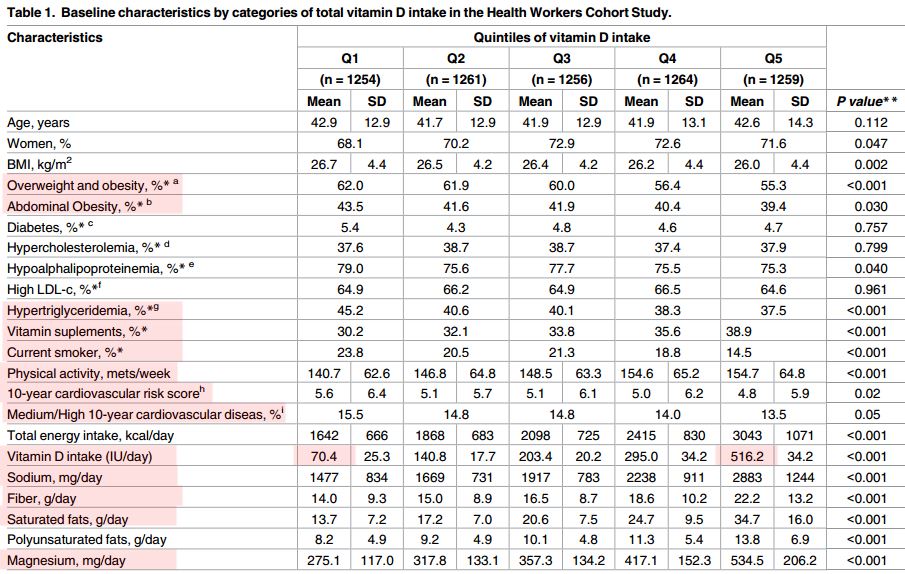
A total of 6294 subjects (1820 men and 4474 women) with a mean age of 42 years, were included. Of these, subjects in the highest quintile of vitamin D intake presented lower levels of triglycerides 14.6 mg/dL (P for trend = 0.001); 2.0 cm less in waist circumference (P for trend = 0.001) and 0.8 points less in the Framingham cardiovascular disease risk score (P for trend = 0.002) compared with the subjects in the lower quintile of vitamin D intake. Additionally, participants in the highest quintile of vitamin D consumption were less likely to develop elevated 10-year cardiovascular disease risk, compared with those in the lowest quintile (OR = 0.51; 95%CI: 0.33, 0.77; P for trend = 0.007).
CONCLUSION:
Our data suggest that higher consumption of vitamin D is associated with a reduced risk of cardiovascular disease in Mexican population.
PMID: 27893863 DOI: 10.1371/journal.pone.0166869