
Vitamin D Cofactors in a nutshell
Cofactors need to be adjusted when taking a lot of vitamin D for more than a month
A lot is more than 4,000 IU Vitamin D daily or 50,000 IU every two weeks
There is virtually no agreement as how much of each cofactor is needed vs vitamin D level
The first three cofactors have, like vitamin D, greatly decreased in the human diet in the past 50 years
The goal is to restore Vitamin D, Magnesium, Omega-3, and Vitamin K back to where they had been
in a nutshell = summed up = condensed
Magnesium
- About 1 in 300 people have a poor reaction to increasing Vitamin D
- but the Vitamin D reaction (muscle pain) is almost always due to lack of Magnesium
Magnesium increases the benefits of vitamin D by about 30% (Mg and Vit. D are synergistic)
Magnesium provides a great many health benefits independent of Vitamin D
Magnesium is used in 8 stages of Vitamin D metabolism
100 milligrams of Magnesium supplement (say from Magnesium Chloride) may be enough, even with high levels of Vitamin D
- Some people (not a consensus) believe that only 100 mg of Mg can be taken up by the gut at a time
- Some people get 300+ mg of Magnesium daily from greens
If possible, take your Magnesium several times during the day - not just once
Vitamin D appears to consume Magnesium
People with > 100 ng of Vitamin D (and do not consume Mg) are 2.5X more likely to have A-fib
Constipation due to low Magnesium after greatly increasing Vitamin D level (personal experience of the founder of VitaminDWiki)
Omega-3
Omega-3 increases active vitamin D - especially in people with poorly functioning livers or kidneys
Need >1 gram of Omega-3. Note: different brands have widely different bio-availability
Need to take with a fatty meal unless you use an emulsified form
Vitamin K2
K2 Keeps Calcium in bones and out of arteries
Calcification due to K2 deficiency may be a reason for increased mortality for some diseases for high vitamin D
Probably need 100 micrograms per 2,000 IU of vitamin D (i.e. 500 micrograms for 10,000 IU of Vit D)
- Perhaps Vitamin D consumes Vitamin K, so need more of it
Calcium
Too much Calcium is associated with cardiovascular problems years later, not stronger bones
Should have less than 750 milligrams of Calcium supplementation
Drinking a lot of water helps flush any excess Calcium from the Kidneys
VegiCalcium appears to be better than rock Calcium, and only costs 10 cents a capsule
Boron - good, but not as essential
Boron increases Vitamin D and Magnesium in the body by ~ 20%
Most people Boron deficient now that commercial fertilizers are used
Should have an average of 3 -10 milligrams of Boron daily
Founder of VitaminDWiki takes a 30mg Boron capsule once every 4 days
Zinc - good, but not as essential
Extra Zinc does not appear to increase D in the blood. but may increase D in the tissue
Zinc is, however, essential to make Vitamin D Receptors and utilize Omega-3
Low zinc is associated with many autoimmune diseases,infections, colds, etc
Zinc, like Boron, is extremely low-cost and safe
Glutathione - the master antioxidant, synergistic with Vitamin D
Glutathione should improve response to Vitamin D - June 2025
Glutathione improves Vitamin D in 9 ways
it improves activation of 7 Vitamin D genes - far more than anything else
Glutathione can be increased in many ways, perhaps the best is liposomal Glutathione
Supplements taken by the founder of VitaminDWiki
As of Dec 2024, my only daily supplement is Calcium. The rest are every 2 to 7 days
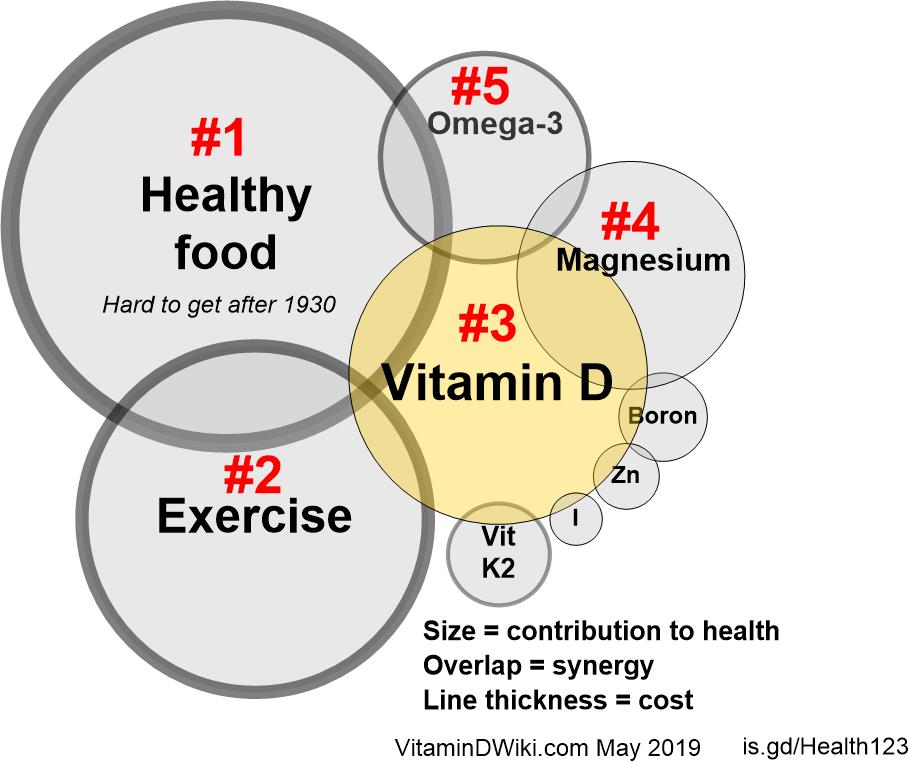
Perspective of the importance of Vit D and co-factors to health
See also VitaminDWiki
Need to adjust cofactors if take 50,000 IU of vitamin D weekly – Nov 2013
How you might double your response to vitamin D
classically by increasing Magnesium, Boron, Omega-3
perhaps by supplementing with Glutathione - which increases the activation of 7 vitamin D genes
Too much Vitamin D long-term problems if take too much vitamin D without balancing cofactors
Low cost cofactors for vitamin D - includes a listing of what the founder of VitaminDWiki actually takes
Immune system is better fortified by nano forms of Vitamin D, Vit C, Vit B12, Omega-3, resveratrol, etc - March 2021
many of the vitamin D cofactors are available in nanoformsVitamin D Receptor is one of the genes which can block vitamin D from getting to the cells
The standard Vitamin D test cannot detect a poor Vitamin D Receptor
Adding more Vit D, Mg, Omega-3, Boron, Resveratrol, Zinc, etc. increases Vit D getting into the cells
See also - Excellent reviews of supplements at ConsumerLab
short URL = is.gd/Dplus