
Pregnancy and offspring health - umbrella of 250,000 pregnancies - meta-analysis
Effects of vitamin D in pregnancy on maternal and offspring health-related outcomes: An umbrella review of systematic review and meta-analyses
Nutrition & Diabetes volume 14, Article number: 35 (2024)
Mei-Chun Chien, Chueh-Yi Huang, Jie-Huei Wang, Chia-Lung Shih & Pensee Wu
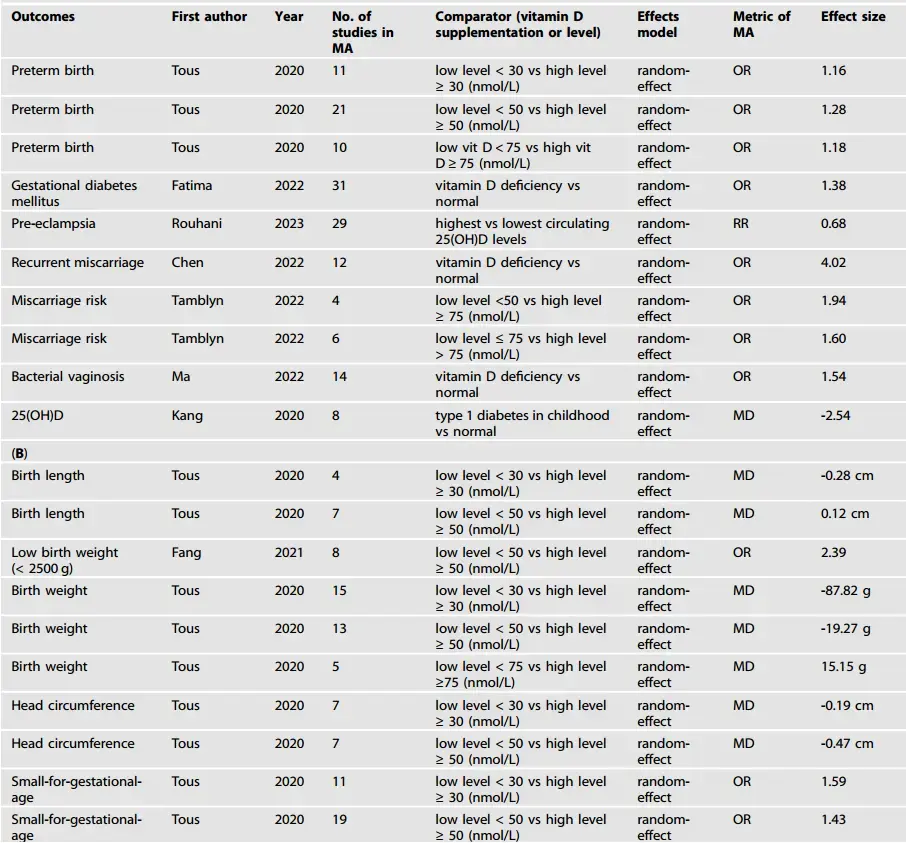
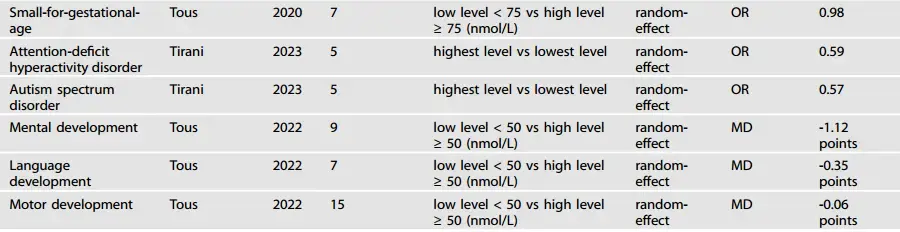
Vitamin D LEVEL
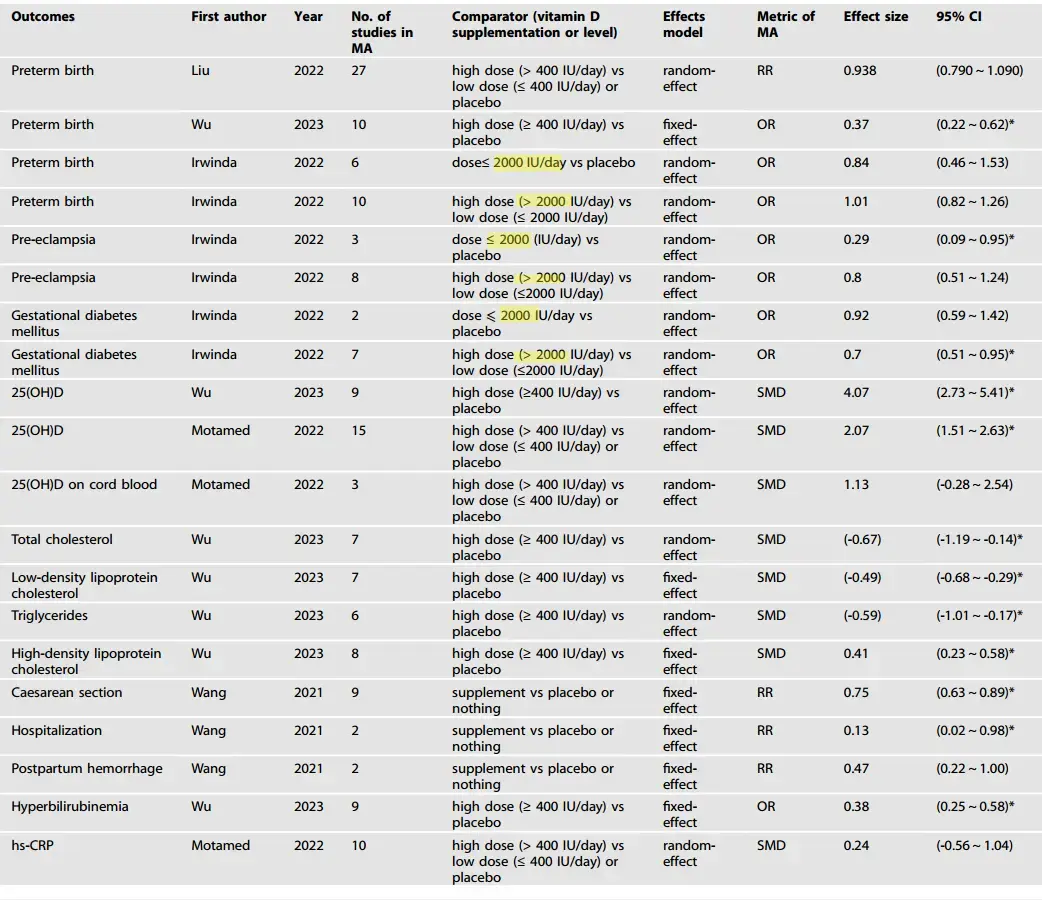
Vitamin D DOSE
Background
Vitamin D deficiency has been linked with several adverse maternal and fetal outcomes.
Objective
To summarize systematic reviews and meta-analyses evaluating the effects of vitamin D deficiency and of vitamin D supplementation in pregnancy on maternal and offspring health-related outcomes.
Methods
Prior to conducting this umbrella review, we registered the protocol in PROSPERO (CRD42022368003). We conducted searches in PubMed, Embase, and Cochrane Library for systematic reviews and meta-analyses on vitamin D in pregnancy, from database inception to October 2, 2023. All outcomes related to vitamin D in pregnancy obtained from the systematic reviews and meta-analyses were extracted. Data Extraction: Two reviewers independently chose studies and collected information on health outcomes. The quality of the included articles’ methodology was assessed using AMSTAR 2 (A Measurement Tool to Assess Systematic Reviews–2).
Results
We identified 16 eligible systematic reviews and meta-analyses, which included 250,569 women. Our results demonstrated that vitamin D deficiency in pregnancy is associated with increased risk of preterm birth, small-for gestational age/low birth weight infants, recurrent miscarriage, bacterial vaginosis and gestational diabetes mellitus. Vitamin D supplementation in pregnancy increases birth weight, and reduces the risk of maternal pre-eclampsia, miscarriage, and vitamin D deficiency, fetal or neonatal mortality, as well as attention-deficit hyperactivity disorder, and autism spectrum disorder in childhood. In women with gestational diabetes mellitus, vitamin D supplementation in pregnancy can reduce the risk of maternal hyperbilirubinemia, polyhydramnios, macrosomia, fetal distress, and neonatal hospitalization.
Conclusion
Due to the association with adverse maternal and offspring health outcomes, we recommend the vitamin D status in pregnancy should be monitored, particularly in women at high risk of vitamin D deficiency. It is suggested that pregnant women take a dose of >400 IU/day of vitamin D supplementation during pregnancy to prevent certain adverse outcomes.
📄 Download the PDF from VitaminDWiki
Related in VitaminDWiki
- Pregnancies are helped 10 ways by Vitamin D - umbrella analysis
- 50,000 IU of Vitamin D once every 2 weeks achieved 40 ng in 3 months – RCT
- One pill every two weeks gives you all the vitamin D most adults need 50,000 IU
- Better than Daily weekly is generally better than daily
- Preeclampsia 2.7 X less likely if 50,000 IU of Vitamin D every 2 weeks – meta-analysis
- Preeclampsia reduced by Vitamin D (50,000 IU bi-weekly) and Calcium
- 50,000 IU of Vitamin D every 2 weeks reduced gestational diabetes – RCT
- Optimal Vitamin D during pregnancy - 4000 IU
- Overview Pregnancy and vitamin D
- Ensure a healthy pregnancy and baby - take Vitamin D before conception has:
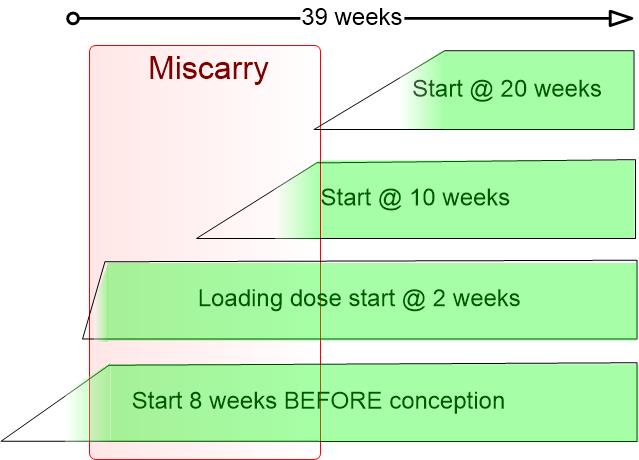
Need to at least start with a loading dose ASAP @ 2 weeks to get all of the Vitamin D benefits
| Problem | Vit. D Reduces |
Evidence |
| 0. Chance of not conceiving | 3.4 times | Observe |
| 1. Miscarriage | 2.5 times | Observe |
| 2. Pre-eclampsia | 3.6 times | RCT |
| 3. Gestational Diabetes | 3 times | RCT |
| 4. Good 2nd trimester sleep quality | 3.5 times | Observe |
| 5. Premature birth | 2 times | RCT |
| 6. C-section - unplanned | 1.6 times | Observe |
| Stillbirth - OMEGA-3 | 4 times | RCT - Omega-3 |
| 7. Depression AFTER pregnancy | 1.4 times | RCT |
| 8. Small for Gestational Age | 1.6 times | meta-analysis |
| 9. Infant height, weight, head size within normal limits |
RCT | |
| 10. Childhood Wheezing | 1.3 times | RCT |
| 11. Additional child is Autistic | 4 times | Intervention |
| 12.Young adult Multiple Sclerosis | 1.9 times | Observe |
| 13. Preeclampsia in young adult | 3.5 times | RCT |
| 14. Good motor skills @ age 3 | 1.4 times | Observe |
| 15. Childhood Mite allergy | 5 times | RCT |
| 16. Childhood Respiratory Tract visits | 2.5 times | RCT |
RCT = Randomized Controlled Trial
- Clicking on a tag at the bottom of this page will show 19+ Pregnancy pages with many (>10) studies