
Pneumonia and low vitamin D - many studies
Pneumonia in VitaminDWiki
Fewer children died of pneumonia after 100,000 IU Vitamin D injection – RCT March 2021
Search VitaminDWiki for community pneumonia 1080 items as of March 2021
ICU patients with pneumonia stay 7 days longer if low vitamin D - Dec 2011
Much higher hospital costs (ICU and pneumonia) if low vitamin D – Dec 2015
Risk Factor estimates for Pneumonia
Acute pneumonia in children 3X less likely if greater than 30 ng of vitamin D – Jan 2021
Pneumonia 6X more likely if very low vitamin D – meta-analysis Sept 2019
Pneumonia patients 3 X more likely to die if low vitamin D – meta-analysis Sept 2017
Pneumonia acquired in hospital – 3X more likely to die if low vitamin D – June 2015
Pneumonia in seniors was 2.5X more likely if low vitamin D – June 2014
Any supplementation with vitamin D reduced chance of pneumonia by 50 percent – Oct 2013
Tripledemic: Flu, COVID, and RSV (all fought by Vitamin D) - Oct 2022 - all three of which can result in viral pneumonia
Children and Pneumonia
Pneumonia in Egyptian Children 3.6 X more likely if poor Vitamin D Receptor – Aug 2018
Recurrence of child pneumonia delayed by 100000 IU of vitamin D – RCT Oct 2010
Children with pneumonia in Ethiopia were 22X more likely to have rickets – 1997
Severe Mycoplasma pneumonia 11X more likely in children with vitamin D below 12 ng - Oct 2026
Independent Risk Factors and Combined Predictive Model for Severe Mycoplasma pneumoniae Pneumonia in Children: The Role of Vitamin D Deficiency
Children (MDPI), 21 October 2026, https://doi.org/10.3390/children13101444
Mengting Zhang, Yu Fu, Ruimeng Ma, Zonglang Yu, Shuping Jin, Xiaoying Zhang
Summary by Claude Opus 5.5 - October 2026
Children hospitalized with Mycoplasma pneumonia were far more likely to have the severe form if their vitamin D was very low. 13 of the 15 children below 12 ng/mL (87%) were severe.
This was a retrospective study at one hospital: 102 children aged 6–14 admitted to Shanghai Ninth People's Hospital with Mycoplasma pneumoniae pneumonia between July 2023 and July 2024, during a large outbreak. 25(OH)D was measured once, at admission, by LC-MS/MS (the reference method). Nobody was given vitamin D; this study only measured it.
| 25(OH)D at admission | Children | Severe cases |
|---|---|---|
| Under 12 ng/mL | 15 | 13 (87%) |
| 12–20 ng/mL | 50 | 25 (50%) |
| Over 20 ng/mL | 37 | 14 (38%) |
- Average vitamin D was 17.2 ng/mL in severe cases vs 20.5 ng/mL in mild cases.
- After adjusting for CRP, LDH, fever duration and pleural effusion, vitamin D under 12 ng/mL was linked to 11X higher odds of severe disease (95% CI 1.5–83).
- Vitamin D alone was a weak predictor (AUC 0.61, not statistically significant). A model combining all 5 factors reached AUC 0.87.
- Lung function during the acute illness did not differ between mild and severe cases.
Even the "adequate" group was only above 20 ng/mL. The study tells us nothing about children at 30–40+ ng/mL.
What this does NOT show
- That low vitamin D caused the severe disease. The authors note "reverse causation cannot be excluded," since acute inflammation itself lowers 25(OH)D.
- That giving vitamin D would prevent or treat Mycoplasma pneumonia. There was no supplementation.
- A precise effect size. Only 15 children were below 12 ng/mL, hence the very wide confidence interval.
- Season, sun exposure and supplement use were not adjusted for.
- That the prediction model works elsewhere. It has not been tested at other hospitals, and pleural effusion is part of the definition of "severe," which inflates the model's accuracy.
Related in VitaminDWiki
- Pneumonia 6X more likely if very low vitamin D – meta-analysis
- Acute pneumonia in children 3X less likely if greater than 30 ng of vitamin D
- Risk of childhood pneumonia reduced 30% by high Vitamin D
- Viral Pneumonia in children 52 X more-likely if very low vitamin D (trend)
- Fewer children died of pneumonia after 100,000 IU Vitamin D injection – RCT
- Recurrence of child pneumonia delayed by 100000 IU of vitamin D – RCT
- Pneumonia in children not stopped for 6 months by single dose of vitamin D (3 months max) – RCT
- Childhood pneumonia not treated by 100,000 IU of vitamin D – Cochrane (need more, inhaled)
- Pneumonia is increasing (now 1 in 6 child deaths), more vitamin D studies needed
- 9 bacteria fought by vaccines, 5 might be fought by Vitamin D
- All 40 Pneumonia pages
- Respiratory infections in children 6 X more likely if low Vitamin D
6 of 85 Pneumonia and Vitamin D publications PubMed- April 2025
Cost-effectiveness of high-dose vitamin D supplementation to reduce the occurrence of repeat episodes of pneumonia in children Nov 2024 FREE PDF
Vitamin D as an adjunct to antibiotics for the treatment of acute childhood pneumonia Jan 2023 FREE PDF
Effect of Adjunctive Single High-Dose Vitamin D 3 on Outcome of Community-Acquired Pneumonia in Hospitalised Adults: The VIDCAPS Randomised Controlled Trial - Sept 2018 Download the RCT PDF from VitaminDWiki
17X more likely for Pneumonia to go away in those starting with <10 ng and getting a single dose of 200,000 IU of Vitamin D
Note: Not statistically significant
The Association Between Vitamin D Deficiency and Community-Acquired Pneumonia: A Meta-Analysis of Observational Studies - Sept 2019
- 1.6X more likely if < 20 ng of Vitamin D Download the Meta-Analysis from VitaminDWiki
Effect of Vitamin D Supplementation in the Prevention of Recurrent Pneumonia in Under-Five Children - Dec 2019,DOI: 10.1007/s12098-019-03025-z
- 300,000 IU given quarterly Download the PDF from Sci-Hub via VitaminDWiki
Vitamin D Supplementation for Treatment and Prevention of Pneumonia in Under-five Children: A Randomized Double-blind Placebo Controlled Trial - Aug 2016 Download the RCT PDF from VitaminDWiki
- 100,000 IU temporaily raised vitamin D levels by an average of 30 ng, not much benefit (needed much larger dose)
Future childhood pneumonia cut in half by 300,000 IU of Vitamin D - meta-analysis Oct 2020
Efficacy of High-Dose Vitamin D Supplementation as an Adjuvant Treatment on Pneumonia: Systematic Review and a Meta-Analysis of Randomized Controlled Studies
Nutrition in Clinical Practice October 2020 https://doi.org/10.1002/ncp.10585 Behind !2 paywall
Chao Yang MD, PhD, Yifei Lu MD, Min Wan MPH, Dengfeng Xu MD, PhD, Xian Yang MD, PhD, Ligang Yang MD, PhD, Shaokang Wang MD, PhD, Guiju Sun MD, PhD
The purpose of this meta-analysis was to summarize randomized controlled trial (RCT) evidence and evaluate the efficacy and safety of vitamin D (VD) supplementation as an adjunct to antibiotics for the treatment of pneumonia. Data sources published from the inception dates up to January 2020 were searched. RCTs of VD supplementation of any duration, age, and dosing regimen type were eligible for inclusion if data on pneumonia were collected. Thirteen studies (4786 randomized participants) fulfilled eligibility criteria. VD supplementation significantly increased levels of serum 25(OH)D (mean difference = 15.97; 95% CI, 7.49–24.44; P = .002) and reduced incidence of repeat episodes of pneumonia (risk ratio [RR] = 0.68; 95% CI, 0.50–0.93; P = .02).
Subgroup analysis revealed VD supplementation had more reducing effects on repeat episodes of pneumonia among participants in trials in which the population were children
(RR = 0.66; 95% CI, 0.48–0.90), duration <3 months (RR = 0.55; 95% CI, 0.33–0.91),
or dose of VD <300,000 IU (RR = 0.51; 95% CI, 0.29–0.89).
Although our results suggested that VD supplementation had a positive effect on recovery rate of pneumonia (RR = 1.28; 95% CI, 0.94–1.74; I2 = 13%), there was no statistical difference (P = .12).
High-dose VD intervention may have an effect on reducing the incidence rate of repeat episodes of pneumonia by enhancing immune efficacy, although more population studies are needed to support that VD supplementation has therapeutic effects on pneumonia itself.
Pneumonia in the web
https://en.wikipedia.org/wiki/Pneumonia
- "Pneumonia affects approximately 450 million people globally (7% of the population) and results in about 4 million deaths per year"
- "Pneumonia often shortens suffering among those already close to death and has thus been called "the old man's friend"."
- "Pneumonia is due to infections caused primarily by bacteria or viruses and less commonly by fungi and parasites."
"Conditions and risk factors that predispose to pneumonia include
smoking, immunodeficiency, alcoholism, chronic obstructive pulmonary disease, asthma, chronic kidney disease, and liver disease."
Note by VitaminDWiki - every one of those risk factors is also associated with low vitamin D levels
https://en.wikipedia.org/wiki/Community-acquired_pneumonia much less likely to be due to a superbug
Sunshine, rainfall, humidity and child pneumonia in the tropics: time-series analyses June 2013
- "Lack of sunshine was most strongly associated with pneumonia in both lagged regression. . . and case-crossover analysis"
- "This association is well known in temperate settings but has not been noted previously in the tropics"
- Search Google for heliotherapy pneumonia 31,000 items
- sun therapy for pneumonia, TB, etc. was common before the invention of antibiotics
- Be in the Know About Pneumonia Mercola June 2016?
- "These rates resulted in pneumonia being addressed as the eighth leading cause of death in the U.S., tied with influenza."
- ". . .it’s one of the two main causes of hospitalization, apart from childbirth."
Pneumonia elderly death 12X more likely when vitamin D less than 12 ng – 2011
Vitamin D, Innate Immunity and Outcomes in Community Acquired Pneumonia
- Leong Leow1, 2. Talia Simpson3, 3. Ray Cursons3, 4. Noel Karalus1, 5. Robert J Hancox1,2,*
DOI: 10.1111/j.1440-1843.2011.01924.x
Background and objective Vitamin D regulates the production of the antimicrobial peptides cathelicidin and beta defensin-2, which play an important role in the innate immune response to infection. We hypothesised that vitamin D deficiency would be associated with lower levels of these peptides and worse outcomes in patients admitted to hospital with community-acquired pneumonia.
Methods Associations between mortality and serum levels of 25-hydroxyvitamin D, cathelicidin, and beta defensin-2 were investigated in a prospective cohort of 112 patients admitted with community-acquired pneumonia during winter.
Results Severe 25-hydroxyvitamin D deficiency (<30nmol/L) was common in this population (15%) and was associated with a higher 30-day mortality compared to patients with sufficient 25-hydroxyvitamin D(>50nmol/L) (OR 12.7 , 95%CI 2.2-73.3, p = 0.004).
These associations were not explained by differences in age, co-morbidities, or the severity of the acute illness.
Neither cathelicidin nor beta defensin-2 levels predicted mortality, although there was a trend towards increased mortality with lower cathelicidin (p = 0.09).
Neither cathelicidin nor beta defensin-2 levels correlated with 25-hydroxyvitamin D.
Conclusions 25-hydroxyvitamin D deficiency is associated with increased mortality in patients admitted to hospital with community-acquired pneumonia during winter.
Contrary to our hypothesis, 25-hydroxyvitamin D levels were not associated with levels of cathelicidin or beta defensin-2.
Download the PDF from VitaminDWiki
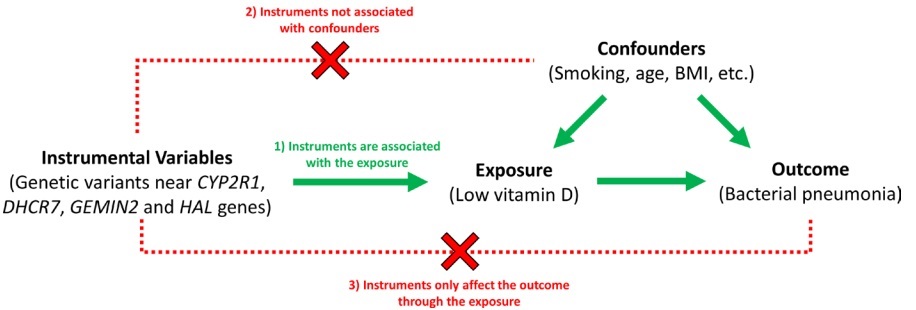
Vitamin D and bacteria pneumonia causality (ignores the Vitamin D Receptor) - March 2021
Vitamin D and bacterial pneumonias: the question of causality
Thorax. 2021 Mar 2;thoraxjnl-2020-216375. doi: 10.1136/thoraxjnl-2020-216375
Richard James Allen 1
Download the PDF from VitaminDWiki
VitaminDWiki - Inhaled vitamin D help lungs - many studies
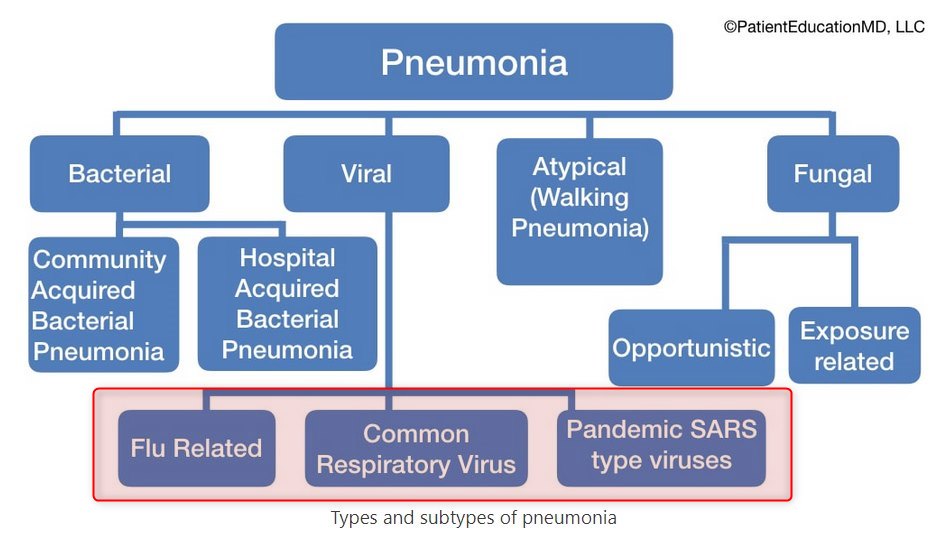
Type of Pneumonia: viral, bacterial, fungal

25% of Pneumonia is viral (Rhenovirus, Influenza, etc,) - CDC
High-dose Vitamin D reduces recurrent pneumonia by half - meta-analysis Oct 2020
Efficacy of High-Dose Vitamin D Supplementation as an Adjuvant Treatment on Pneumonia: Systematic Review and a Meta-Analysis of Randomized Controlled Studies
Nutrition Considerations for Specific Medical Conditions https://doi.org/10.1002/ncp.10585
Chao Yang MD, PhD, Yifei Lu MD, Min Wan MPH, Dengfeng Xu MD, PhD, Xian Yang MD, PhD, Ligang Yang MD, PhD
The purpose of this meta-analysis was to summarize randomized controlled trial (RCT) evidence and evaluate the efficacy and safety of vitamin D (VD) supplementation as an adjunct to antibiotics for the treatment of pneumonia. Data sources published from the inception dates up to January 2020 were searched. RCTs of VD supplementation of any duration, age, and dosing regimen type were eligible for inclusion if data on pneumonia were collected. Thirteen studies (4786 randomized participants) fulfilled eligibility criteria.
VD supplementation significantly increased levels of serum 25(OH)D (mean difference = 15.97; 95% CI, 7.49–24.44; P = .002) and reduced incidence of repeat episodes of pneumonia (risk ratio [RR] = 0.68; 95% CI, 0.50–0.93; P = .02).
Subgroup analysis revealed VD supplementation had more reducing effects on repeat episodes of pneumonia among participants in trials in which the population were children (RR = 0.66; 95% CI, 0.48–0.90), duration <3 months (RR = 0.55; 95% CI, 0.33–0.91), or
dose of VD <300,000 IU (RR = 0.51 ; 95% CI, 0.29–0.89).
Although our results suggested that VD supplementation had a positive effect on recovery rate of pneumonia (RR = 1.28; 95% CI, 0.94–1.74; I2 = 13%), there was no statistical difference (P = .12).
High-dose VD intervention may have an effect on reducing the incidence rate of repeat episodes of pneumonia by enhancing immune efficacy, although more population studies are needed to support that VD supplementation has therapeutic effects on pneumonia itself.
Download the PDF from Sci-Hub via VitaminDWiki
Pneumonia problems in China might by treated by Vitamin A - Dr. Campbell Videos
Vitamin A and mystery pneumonia Dec 2023
Pneumonia and Vitamin A in China Dec 2023
Vitamin A deficiency is a problem in China, but not the US
See also: Vitamin D and Vitamin A - toxicity and interaction