
Vitamin K2 and heart calcification: coronary arteries a little, aortic valves no - review
Vitamin K2 and Cardiovascular Calcification: Mechanistic Foundations, Conflicting Clinical Evidence, and Unresolved Questions
International Journal of Molecular Sciences (MDPI), 28 October 2026, https://doi.org/10.3390/ijms27219645
Chinmayi Kothari, Rahul Chowdhary, Sada Babazade, Alexander Egoavil, Wajeh Abuirmaileh, Samir R. Kapadia, Sunil J. Wimalawansa
Summary by Claude Opus 5.5 - October, 2026
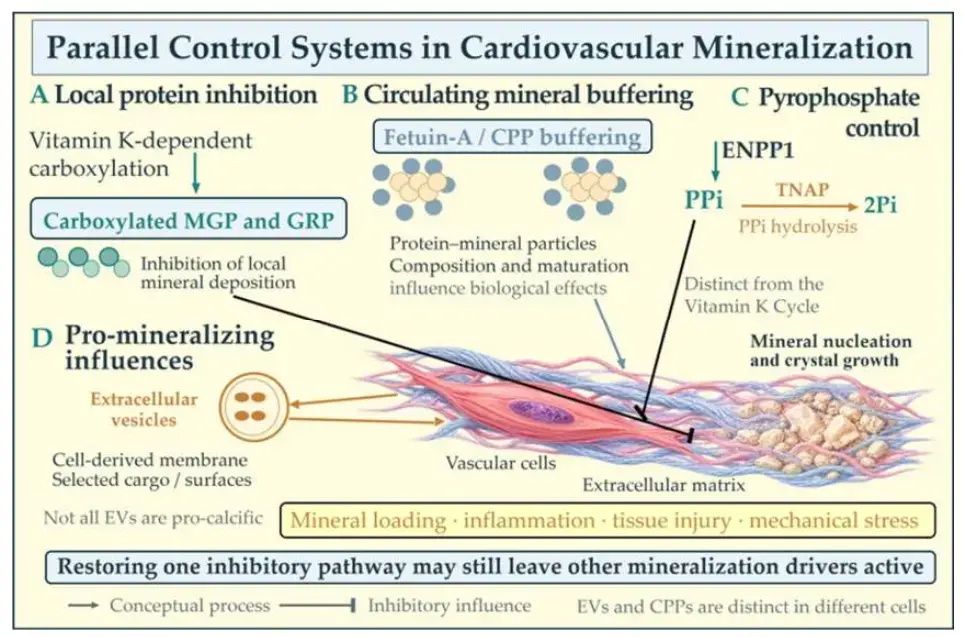
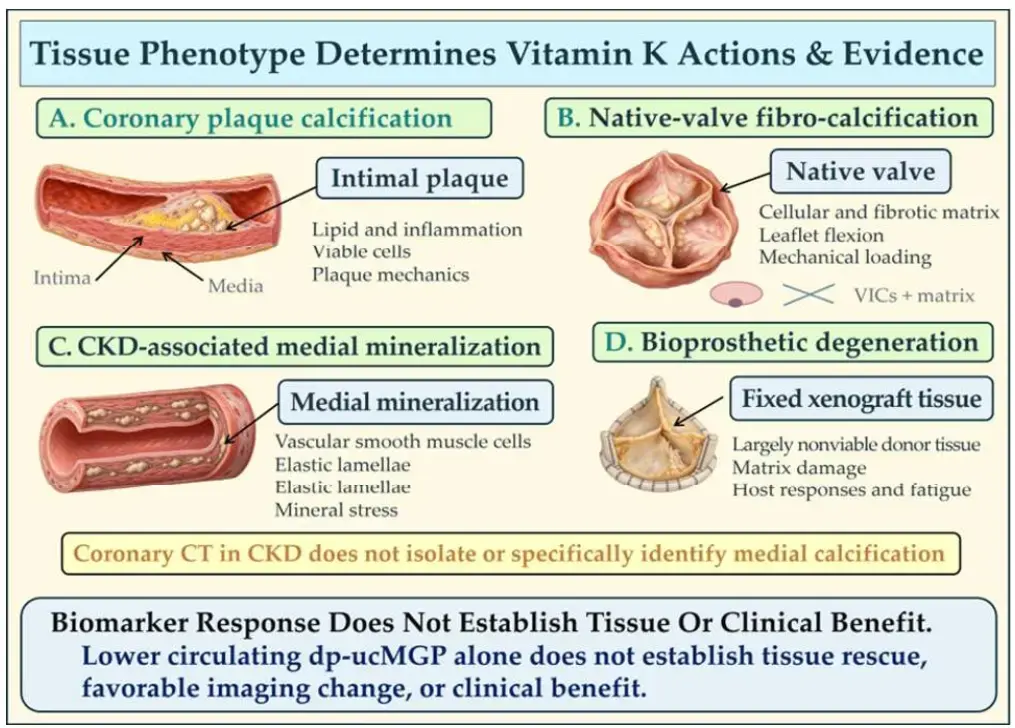
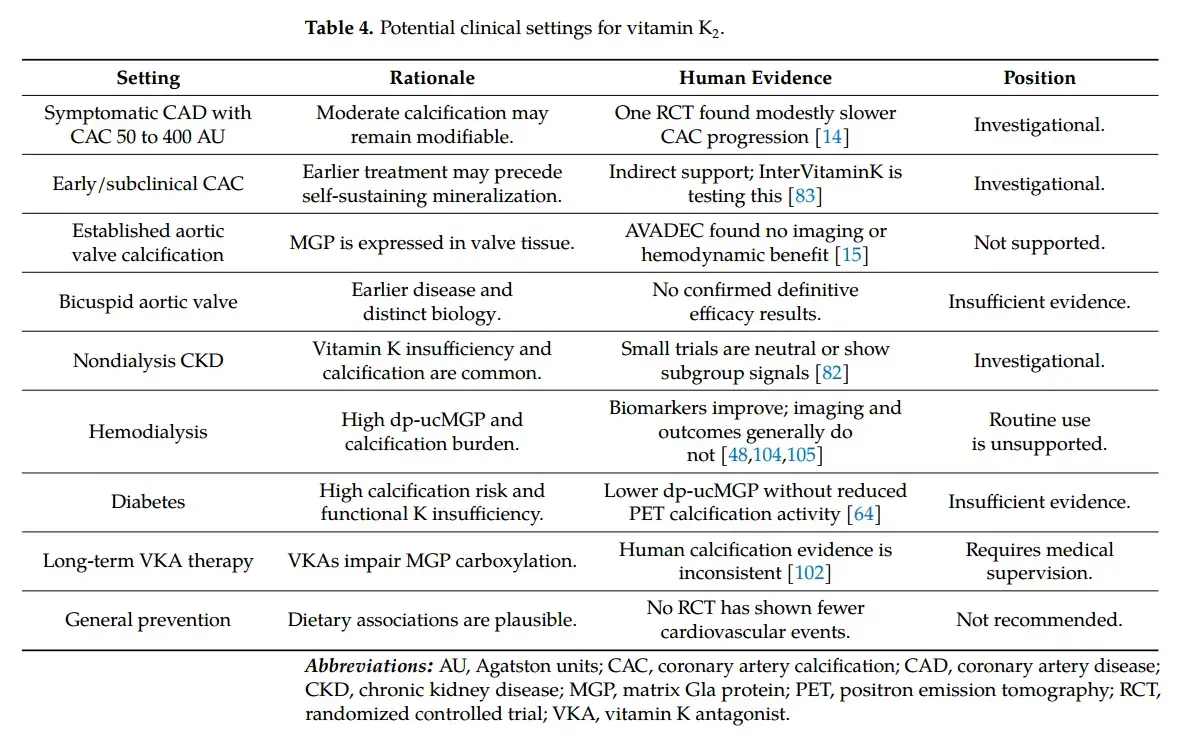
Vitamin K2 (MK-7) reliably improves vitamin K status, but whether it slows calcification depends on where the calcium is. Two recent 2-year RCTs found slower calcium buildup in coronary arteries. Trials in aortic valves and in dialysis patients found no benefit. No trial has yet shown fewer heart attacks, valve replacements, or deaths.
This is a peer-reviewed narrative review with 117 references, written by Cleveland Clinic physicians and Sunil Wimalawansa. It used no systematic search and reports no new meta-analysis. The authors declared no funding or conflicts.
Key trials it summarizes:
- VitaK-CAC: 180 patients with symptomatic coronary disease and moderate coronary calcium (CAC score 50–400). MK-7 360 μg/day for 2 years modestly slowed CAC growth (p = 0.02). Calcium still rose in both groups.
- DANCODE: 400 people with heavy calcium (CAC ≥ 400). MK-7 720 μg/day plus vitamin D3 1,000 IU/day for 2 years. CAC rose 196 vs 248 units, about 21% less progression.
- AVADEC: 365 men aged 65–74 with aortic-valve calcium, given the same K2 + D3 doses for 2 years. There was no effect on valve calcium or valve function.
- Dialysis and diabetes trials: the vitamin K blood marker (dp-ucMGP) improved, but calcification did not.
Observational data are mixed. Higher K2 intake was linked with fewer coronary deaths in the Rotterdam Study but with slightly more atherosclerotic heart disease in UK Biobank.
The authors call K2 "a micronutrient with a plausible biological role, not a proven 'arterial decalcifier.'" Anyone taking warfarin should use vitamin K only with medical supervision.
What this does NOT show
- Calcium scores are an imaging stand-in, not a health outcome, so slower buildup does not prove fewer heart events. Also, 78% of VitaK-CAC patients took statins, which themselves raise calcium scores.
- The vitamin D in AVADEC and DANCODE was only 1,000 IU/day, with no loading dose. The review does not report the 25(OH)D levels reached. These trials therefore say little about what more vitamin D might add.
- Trials ran 6–36 months, while the disease builds over decades. The authors suggest 2 years may be the minimum to detect a CAC difference, so shorter trials may have been too brief to show an effect.
- As a narrative review, its choice of studies was not systematic.
Related in VitaminDWiki
- Overview Vitamin K and Vitamin D
- Vitamin K, cardiovascular health, and stroke - many studies
- Vitamin K (across all dose sizes and types) decrease Vascular Stiffness – meta-analysis
- If you must take statins and want to avoid hardening of arteries, take vitamin K2 – RCT
- Decalcify Aortic Valve – 3 year trial with 1 mg of Vitamin K and 5,000 IU of Vitamin D – 2021
- Vitamin K-7 needed to keep Calcium out of soft tissues - Dec 2025
- Cardiovascular calcification prevented by Omega-3, Magnesium, Vitamin K, and Vitamin D
- Mortality associated with Vitamin K insufficiency (PREVEND Study)