
Alzheimer's proven to be prevented and treated - RCT 2026
RCT preprint Jan 2026
Video #1 = 62 minutes
The latest results from a randomized controlled trial (RCT) involving Dr. Dale Bredesen’s precision medicine protocol represent a significant breakthrough in Alzheimer's treatment, demonstrating sustained cognitive improvement rather than the mere slowing of decline.
Summary of Clinical Trial Results
(00:00 - 01:26) Dr. Bredesen introduces the results of a three-year randomized controlled trial, describing the findings as "absolutely striking" and more effective than any previously published data in the field of cognitive decline.
(01:26 - 03:06) Unlike first-generation drugs like Aricept—which may show mild initial improvement but often lead to worse long-term outcomes than no treatment—this precision medicine protocol focuses on addressing the underlying drivers of the disease for sustainable recovery.
(04:38 - 06:06) The nine-month trial was conducted across six sites, comparing patients on the personalized protocol to a "standard of care" control group. It specifically targeted individuals with Mild Cognitive Impairment (MCI) or early-stage dementia.
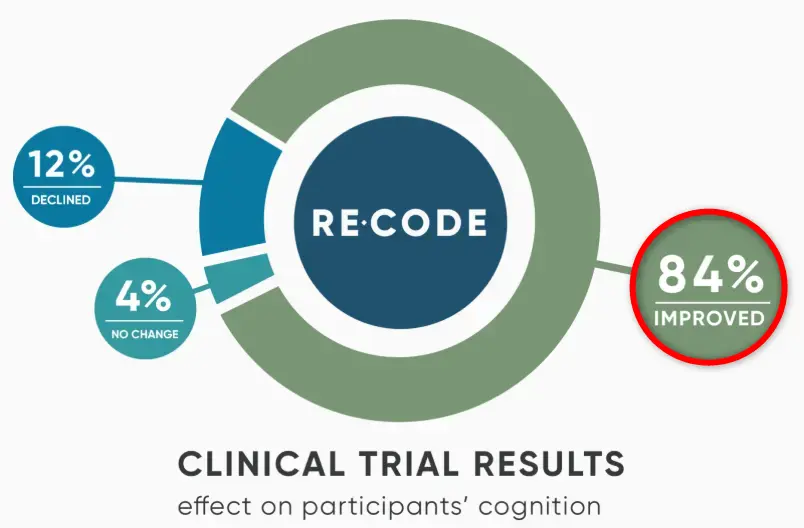
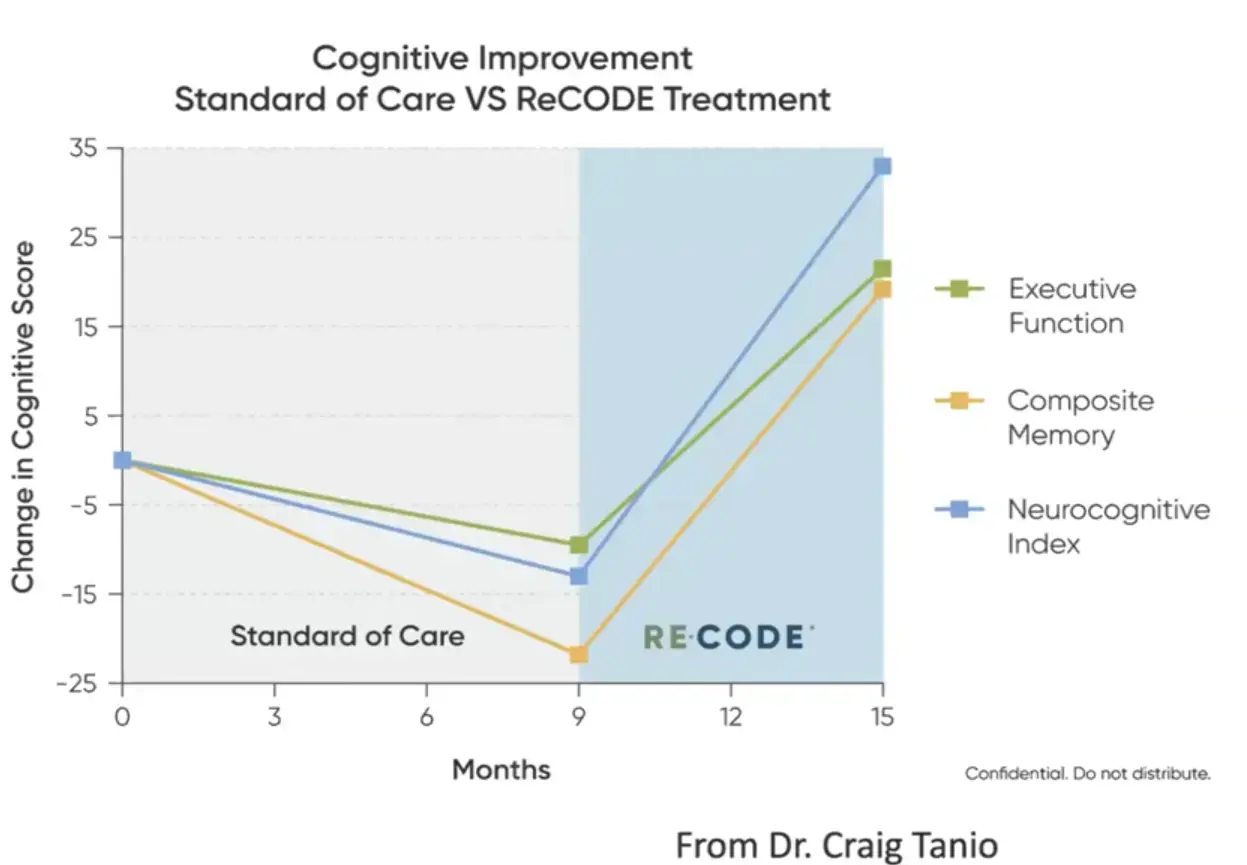
(06:34 - 07:17) Treatment group participants saw statistically significant improvements in overall cognition, memory, executive function, and processing speed. This contrasts with the control group, which continued to decline cognitively over the same period.[1]
(07:57 - 10:02) In certain sites, 100% of treated patients showed improvement, with many reaching the "completely normal" range for their age. Case studies also revealed significant physical improvements, such as the resolution of joint pain and autoimmune symptoms.
(10:36 - 11:12) Beyond cognition, the trial documented physiological benefits, including improvements in BMI, blood pressure, hemoglobin A1C, and lipid profiles, proving that the brain's health is intrinsically linked to the body’s metabolic state.
(11:38 - 13:13) Success was heavily tied to protocol compliance, which included achieving ketosis (ketone levels between 1.0–4.0), high-intensity interval exercise, and professional health coaching to ensure sustainable lifestyle changes.
(17:22 - 19:02) The protocol emphasizes the critical role of bioidentical hormone replacement therapy (BHRT), particularly topical estradiol and progesterone, in supporting brain health for menopausal women.
(15:06 - 16:35) Researchers noted the "ethics of waiting," as control group participants who delayed treatment by just nine months did not improve as rapidly or as thoroughly as those who began the active treatment protocol immediately.
(42:48 - 50:11) A core focus of the treatment involves identifying and targeting "root causes," such as chronic infections (e.g., HSV-1, Lyme disease) and biotoxins like mold or heavy metals, which often trigger the brain's protective amyloid response.
Insight: Dr. Bredesen often uses the "roof with 36 holes" analogy to explain this functional medicine approach: Alzheimer's is not caused by one single factor but by multiple metabolic imbalances. To successfully "fix the roof," one must address as many of these "holes" (risk factors) as possible simultaneously through personalized interventions (Apollo Health).
Video 2, 59 minutes
(01:12) Visual Evidence of Reversal: Dr. Bredesen presents an MRI with Arterial Spin Labeling (ASL) showing a patient whose brain blood flow in the precuneus region returned to completely normal levels after one year on the protocol, illustrating the physiological impact of the treatment.
(02:25) Core Trial Takeaways: Dr. Tanio emphasizes three major findings: precision medicine works for cognitive decline, fixing the brain requires fixing the entire body, and multi-intervention approaches must become the new standard of care.
(04:30) A Four-Phase Clinical Methodology: The trial utilized a sequenced approach:
starting with life essentials (diet, sleep, movement),
followed by micronutrients/hormones (month 1-3), addressing detox and infections (month 3-6), and
finally adding intensive therapies like hyperbaric oxygen and laser treatment (month 6-9).
(07:24) QEEG as a "Stethoscope for the Brain": The clinic utilized Quantitative Electroencephalogram (QEEG) as a low-cost, real-time functional test to track brain energy changes and network regulation, allowing clinicians to adjust treatments based on immediate neurological feedback.
(12:03) Case Study Success: A 67-year-old female participant with multiple root causes (mold, toxins, metabolic syndrome) saw her MoCA score improve from 22 to 27 and her neurocognitive index jump by 60 percentile points after following the multi-phasic protocol.
(18:39) Impact of Intensive Therapy: The trial demonstrated that adding intensive neuromodulatory therapies (HBOT and photobiomodulation) in the final three months provided a significant "additive" boost, yielding an additional 5-point improvement in neurocognitive scores.
(21:40) Control Group Decline and Crossover: Participants in the standard-of-care control group experienced significant cognitive decline over nine months; however, once they switched to the precision medicine protocol, they showed rapid and life-changing cognitive improvements.
(28:38) Systemic Health Benefits: Beyond cognition, the trial results showed statistically significant improvements in systemic markers, including systolic and diastolic blood pressure, BMI, lipid profiles, and insulin sensitivity.
(31:41) Treatment of Non-Alzheimer's Conditions: Dr. Tanio and Dr. Bredesen discuss the protocol's potential for other conditions like Lewy Body dementia, Vascular dementia, and LATE (TDP-43), noting that addressing root causes like toxins and viruses is often effective across different pathologies.
(52:30) Critique of Mono-therapy Drugs: The speakers discuss the limitations and safety risks of anti-amyloid infusions (like Leqembi), noting that these drugs often fail to address the underlying drivers of decline and carry "black box" warnings for certain genetic profiles.
Related in VitaminDWiki
- Alzheimer’s Is Now Optional - Bredesen
- Alzheimer’s Is Now Optional - Dr. Bredesen video and transcript
- End of Alzheimer's videos, transcripts - many studies
- Alzheimer's trials by both Posit Science and Apollo Health
- Cognitive problems in young adults increased 9.1X in a decade - Nov 2025
- Vitamin D and neurodegenerative diseases
- Overview Alzheimer's-Cognition and Vitamin D
- Magnesium fights: Depression, Migraine, Alzheimer’s, etc. - review
- Alzheimer's risk reduced 45% by physical activity - several studies
- Risk of Alzheimer’s is decreased by food, supplements, and lifestyle
- APOE-04 Alzheimer’s progression slowed up by Omega-3 – RCT
- Alzheimer’s 1.6X more likely if vitamin D is less than 25 ng – meta-analysis
- Alzheimer's 40 percent less likely if leafy veggie diet
- Brain and Vitamin D - many studies
- Alzheimer's 9X more likely in women with a poor Vitamin D receptor
- Alzheimer’s delayed 4.7 years by high Omega-3 index (7.6 years if also have APOE-4) June - 2022
Personalized protocol: Vitamin D, Omega-3, Exercise, Diet, Liposomal Glutathione, Sleep . . .
Curcumin Ashwagandha Bacopa moniera Gotu kola, Other herbs as indicated Magnesium threonate Ubiquinol PQQ Resveratrol Nicotinamide riboside Omega-3: EPA & DHA Choline Liposomal glutathione Probiotics and prebiotics Vitamin D3 and K2 (MK7) Methylcobalamin, methylfolate, P5P ALA, NAC, cinnamon, berberine or metormin Zinc picolonate, ALA, NAC, P5P, Mn, vitamin C