
Dr. Marik on Gastric Cancer: 8 repurposed drugs (4 increase Vitamin D in cells)
Gastric Cancer: Epidemiology, Causes, Diagnosis, and Modern Treatment
Paul Marik's Cancer & Metabolic Healing Playbook (Substack), Nov 8, 2026, no DOI, https://paulmarik.substack.com/p/gastric-cancer-epidemiology-causes
Summary by Claude - November 2026
Practical takeaway: Clearing H. pylori infection is the biggest preventable step against stomach cancer, and treatment of advanced disease now depends on testing the tumor for HER2, PD-L1, MSI and CLDN18.2. Vitamin D appears once, as a nutrient to watch after surgery: "Iron, calcium, vitamin D, and other nutritional parameters also require monitoring."
Study type: Narrative review on Dr. Marik's Substack, 58 references. Not peer-reviewed; no new patient data.
Highlights
- About 969,000 new cases and 660,000 deaths a year worldwide; rates are highest in Mongolia, Japan and South Korea.
- Adding durvalumab to FLOT chemotherapy (MATTERHORN trial, 948 patients) improved overall survival (HR 0.78).
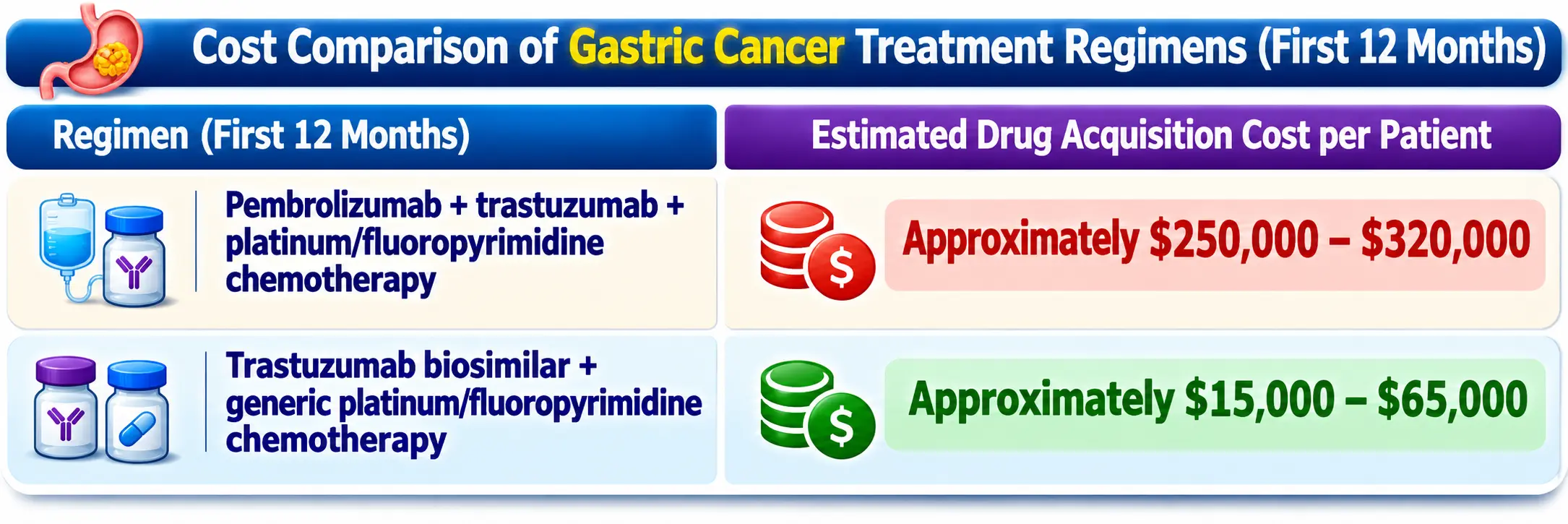
- First-year drug cost: about $250,000–$320,000 for pembrolizumab + trastuzumab + chemotherapy, vs. $15,000–$65,000 for a trastuzumab biosimilar + generic chemotherapy (author's estimates).
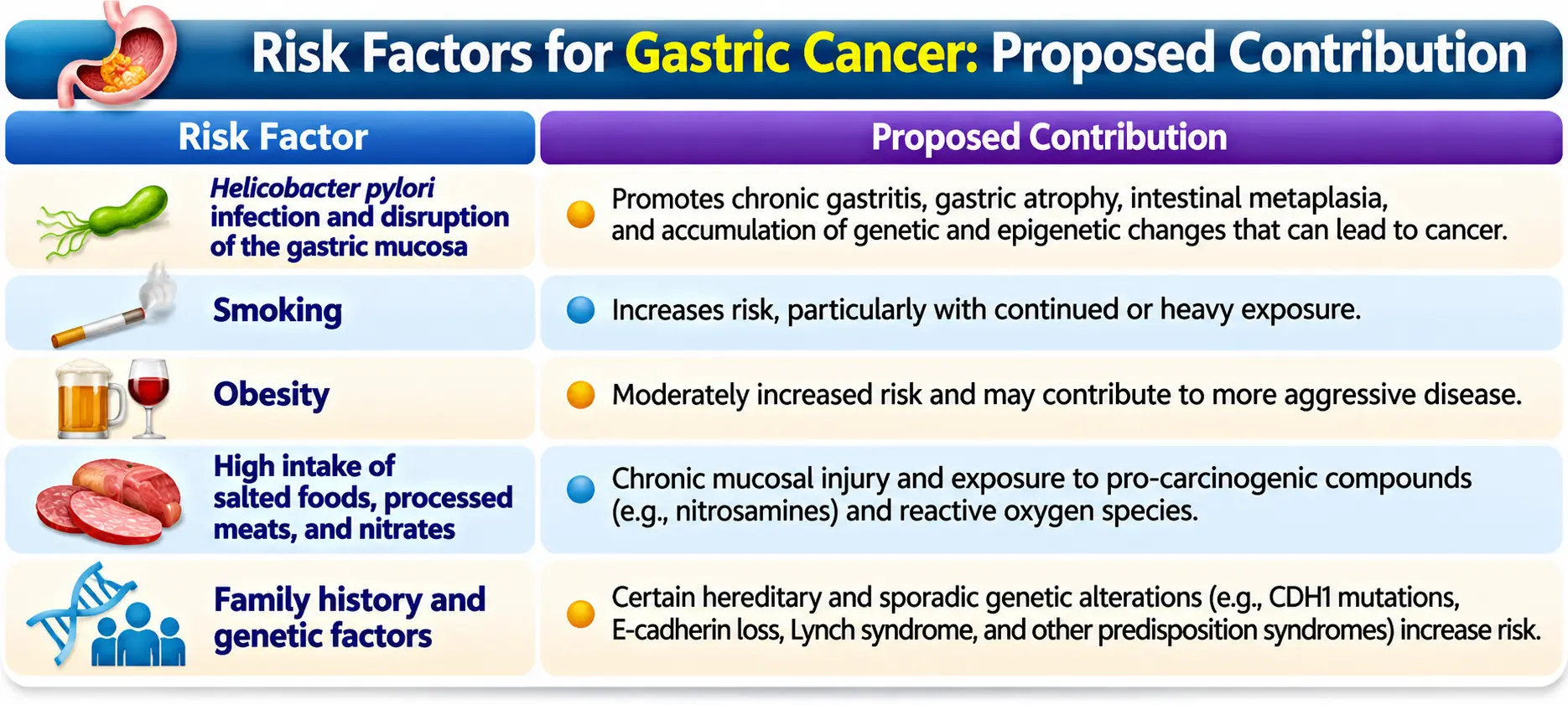
- Of 8 repurposed drugs and nutraceuticals, only metformin has a human survival signal, from retrospective studies of diabetics (HR 0.72). Marik acknowledges there is no clinical proof yet that his metabolic regimen improves survival.
Missing: vitamin D. By the review's own table, none of the 8 agents has been tested in an RCT of cancer patients; vitamin D has. In the AMATERASU RCT (417 digestive-tract cancer patients, 42% gastric, 2,000 IU/day vitamin D3 after surgery), 5-year relapse-free survival was 77% vs. 69%, not statistically significant. It was better in patients who started at 20–40 ng/mL (85% vs. 71%) and in a post hoc p53-immunoreactive subgroup of 80 patients (81% vs. 31%). In a Chinese study of 197 gastric cancer patients, those with 25(OH)D ≥20 ng/mL lived longer (Ren 2012).
What this does NOT show
- It is one physician's overview, not new evidence.
- Lab results for the repurposed agents (cells, organoids, mice) do not establish benefit, safe doses, or safe combinations in patients.
- The vitamin D results above come from subgroups, a post hoc analysis and an observational study; AMATERASU's main result was null.
Sources:
- AMATERASU RCT 2019
- AMATERASU p53 post hoc 2023
- Ren 2012
- WCRF stomach cancer statistics
- Bartik 2010
- Huang 2024
- Wen 2022
- Hossain 2021
Images
Rates of Gastric Cancer are high in some places around the world
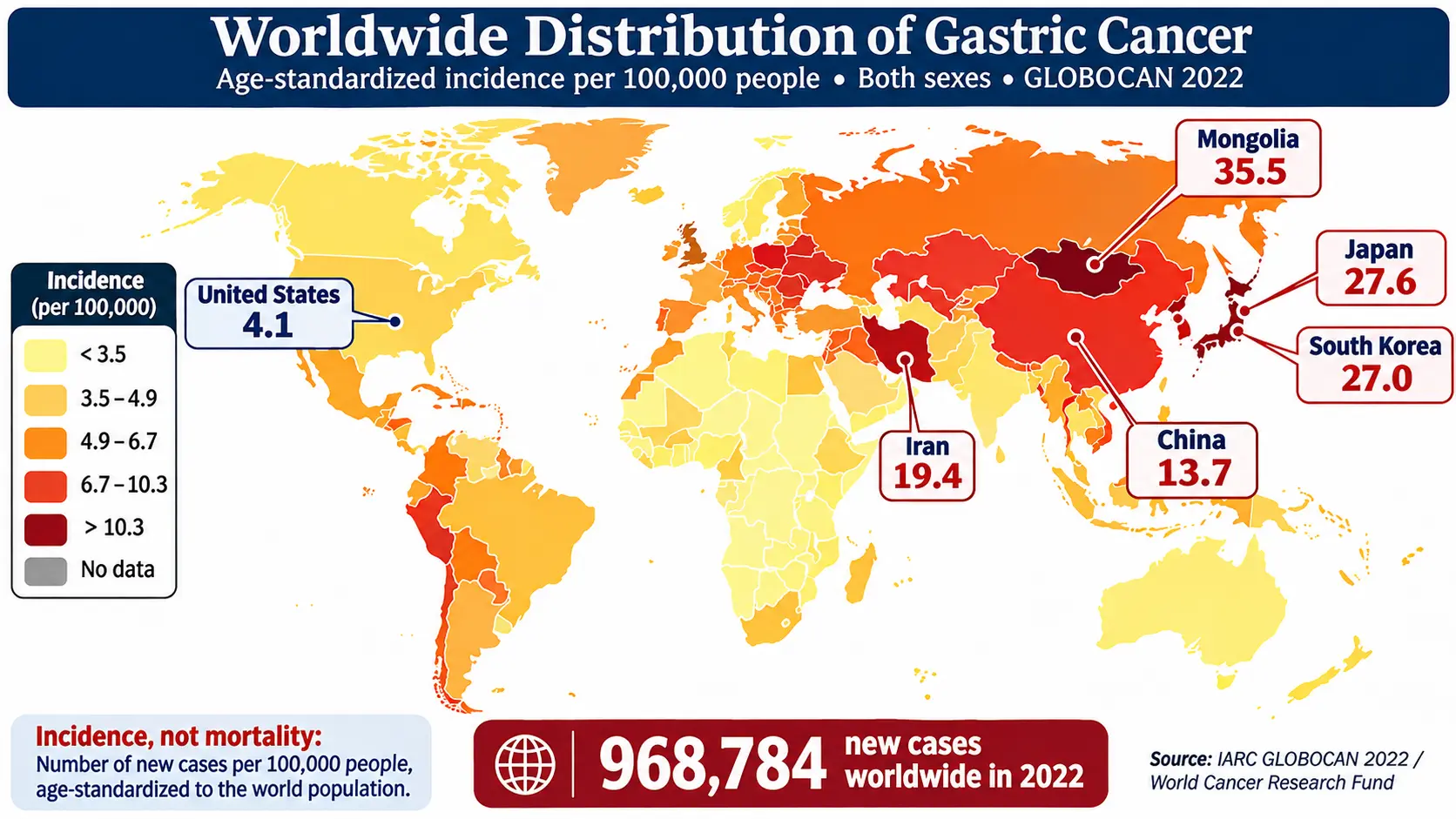
World map: The labeled numbers match the 2022 global figures (Mongolia 35.5, Japan 27.6, South Korea 27.0, Iran 19.4, China 13.7, 968,784 cases). But Great Britain is shaded in the darkest band, which doesn't fit its low rate. That looks like a mistake in the AI-drawn map, so trust the labels more than the colors.
Conventional treatment is very expensive
Repurposed Drugs
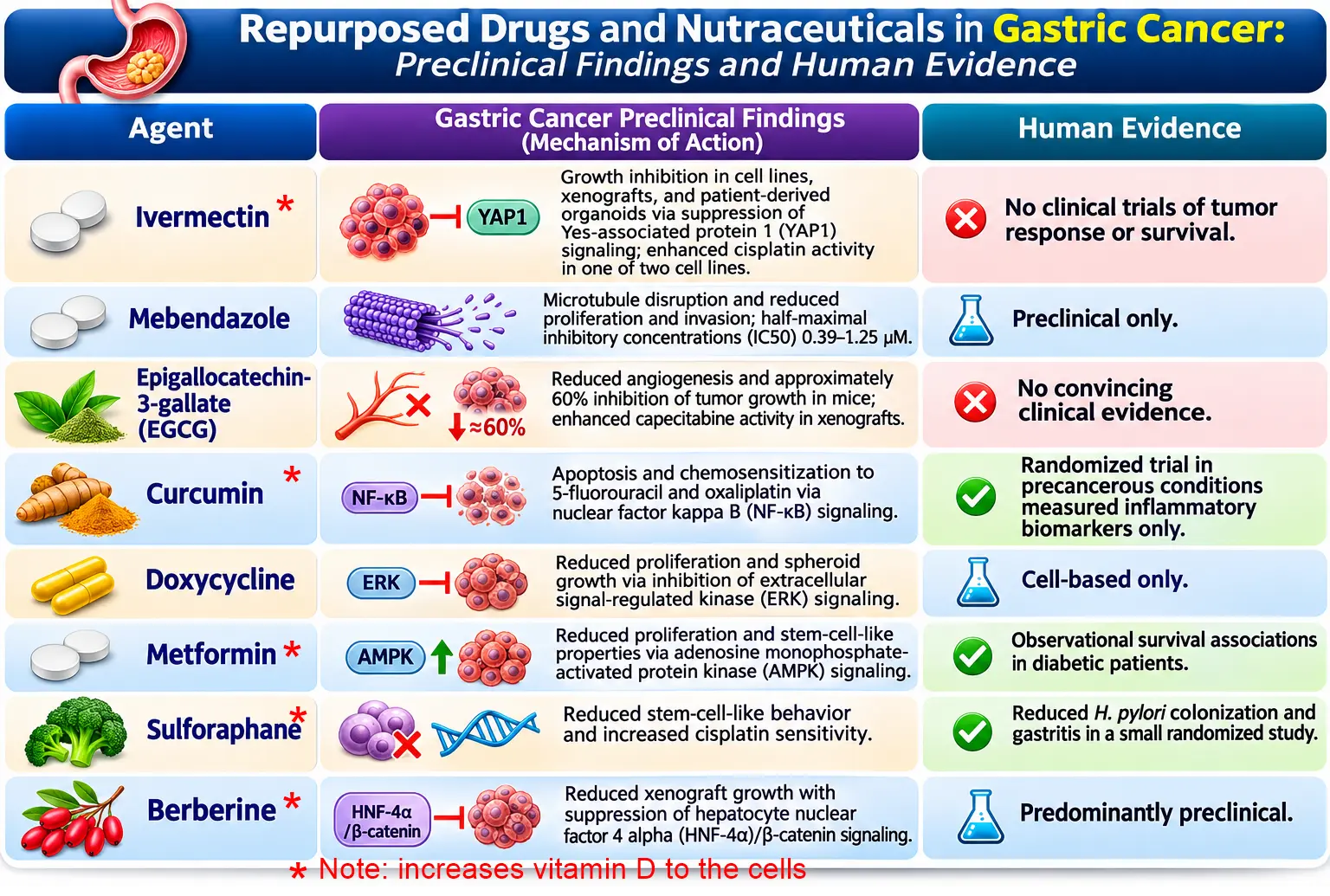
4 of the 8 agents in Dr. Marik's table have been reported to increase vitamin D receptor (VDR) activity or amount. None of these effects has been shown in stomach tissue or in people:
- Curcumin binds and activates the VDR in colon cancer cells Bartik 2010
- Berberine increased VDR activity in colon cells of IBS rats Huang 2024
- Metformin increased VDR in kidneys of diabetic mice Wen 2022
- Sulforaphane raised VDR in growing colon cancer cells but lowered it in mature ones Hossain 2021
No VDR studies were found for ivermectin, mebendazole, EGCG or doxycycline.
Related in VitaminDWiki
- Gastric Cancer 8.8 times more likely if low vitamin D
- Gastric Cancer patients with more vitamin D more likely to live

- Restore your Vitamin D levels before surgery (Gastric Cancer in this case)
- Gastric Cancer, Vitamin D, VDR, UV - many studies
- Gastric Cancer patients with more vitamin D more likely to live
- Bone loss (following gastric cancer) reduced by 16,000 IU of vitamin D every 10 days
- Gastric Cancer 2.7 X more likely if poor Vitamin D Receptor (Chinese) – 2015
- Colon Cancer and Gastric Cancer rates both vary by 10X around the world
- Vitamin D might reduce gastric cancer in humans too
- Vitamin D Receptor