
3 lbs weight gain in just 3 weeks from Ultra-processed foods - RCT Oct 2025
Effect of ultra-processed food consumption on male reproductive and metabolic health
Clinical and Translational Report Volume 37, Issue 10p1950-1960.e2 October 07, 2025
Jessica M. Preston1 ∙ Jo Iversen1 ∙ Antonia Hufnagel1 ∙ … ∙ Marcelo A. Nóbrega11 ∙ Stephen J. Simpson12 ∙ Romain Barrès1,2,13 barres@ipmc.cnrs.fr … Show more
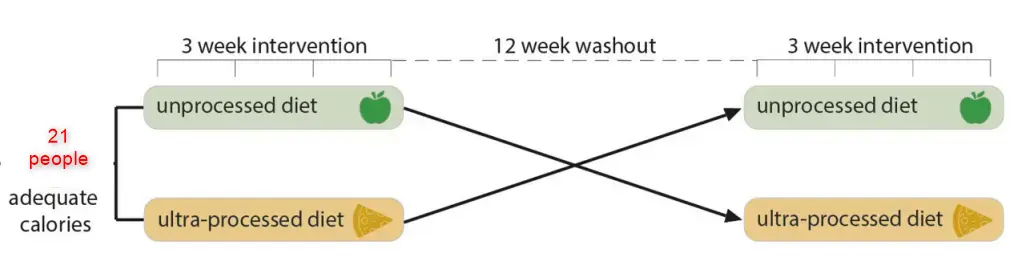
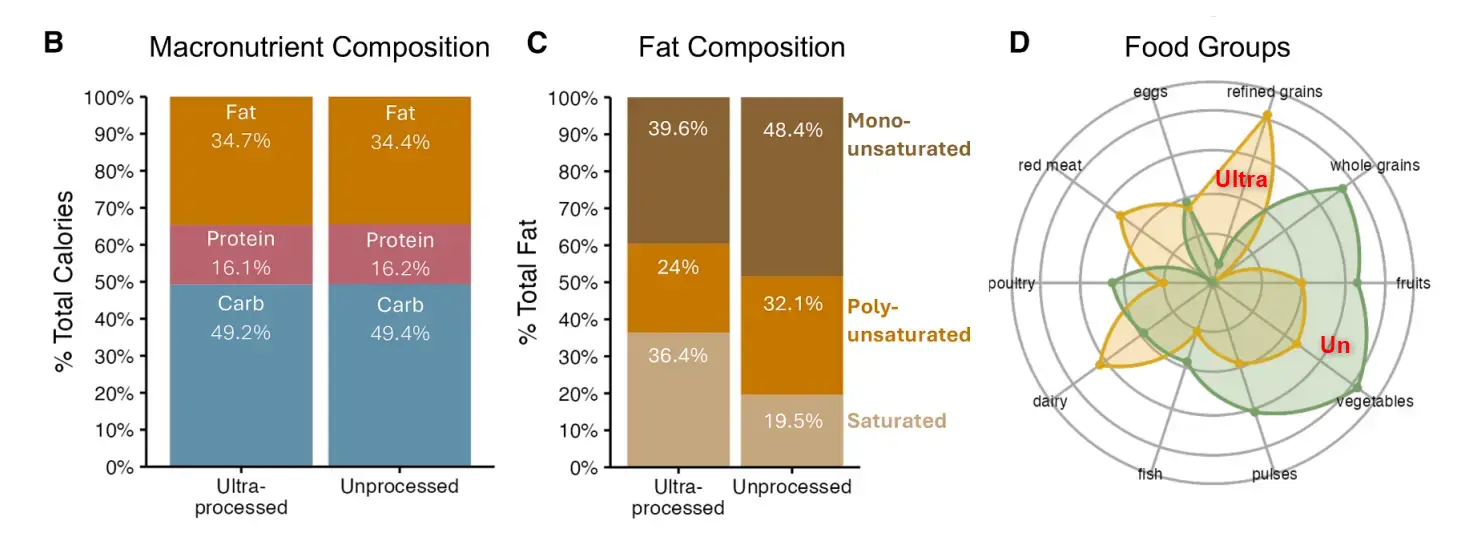
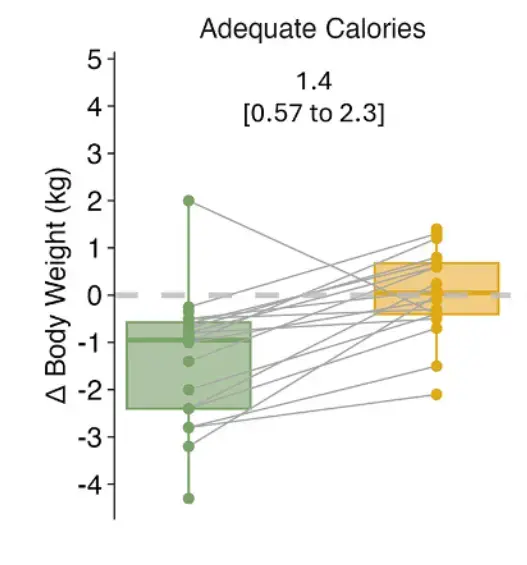
Consumption of ultra-processed food is associated with increased caloric intake and impaired health. Here, we conducted a nutrition trial (NCT05368194) with controlled, 2 × 2 crossover design and tested whether ultra-processed food impairs reproductive and metabolic fitness, with further aggravation by excess caloric intake. Comparing the response from an unprocessed to ultra-processed diet identified increased body weight and low-density lipoprotein (LDL):high-density lipoprotein (HDL) ratio, independent of caloric load. Several hormones involved in energy metabolism and spermatogenesis were affected, including decreased levels of growth/differentiation factor 15 and follicle-stimulating hormone. Sperm quality trended toward impairment, with a decrease in total motility. Differential accumulation of pollutants between the discordant diets were detected, such as decreased plasma lithium and a trend for increased levels of the phthalate mono(4-methyl-7-carboxyheptyl)phthalate (cxMINP) in serum, following the ultra-processed diet. Alteration in caloric load alone had distinct effects on the measured outcomes. This study provides evidence that consumption of ultra-processed food is detrimental for cardiometabolic and reproductive outcomes, regardless of excessive caloric intake.
Isocaloric weight gain if food is easier to digest Perplexity AI - Dec 2025
1. Reduced Thermic Effect of Food (TEF)
Digestion is an energy-intensive process. Your body must burn calories to break down cell walls, unravel proteins, and emulsify fats. This "tax" on eating is called the Thermic Effect of Food (TEF).
- The Difference: Whole foods have a high TEF because their cellular structures are intact. UPFs have been mechanically and chemically disintegrated, meaning the factory has done the work of digestion for you.
- The Evidence: A study comparing a "whole food" sandwich (multigrain bread, cheddar cheese) to a "processed" sandwich (white bread, processed cheese) found that the body burned 47% fewer calories digesting the processed meal, even though both meals had the same number of calories and macronutrients.[4][5]
- Result: If you eat 2,000 calories of whole foods, you might only "keep" 1,600 after digestion. If you eat 2,000 calories of UPFs, you might keep 1,850. The label is the same; the metabolic reality is not.
2. Bioavailability & The "Almond Paradox"
Food processing ruptures plant cell walls, making nearly 100% of the calories available for absorption. In whole foods, many calories remain trapped inside fibrous cell structures and are excreted rather than absorbed.
- The Evidence: USDA researchers found that because of the rigid cell walls in whole almonds, the human body absorbs about 20-30% fewer calories than the Atwater factors (the standard used for labels) predict. However, when those almonds are processed into almond butter, the cell walls are broken, and the body absorbs the full calorie load.[6][7][8]
- Result: A diet high in UPFs provides "maximum efficiency" calorie absorption, whereas a whole-food diet allows for "energy loss" through excretion.
3. Microbiome Dysbiosis & Inflammation
UPFs often contain emulsifiers (like carboxymethylcellulose and polysorbate-80) and lack fermentable fiber. This combination alters the gut microbiome in ways that promote fat storage and inflammation.
- Mechanism: Emulsifiers can erode the protective mucus layer of the gut, allowing bacteria to come into contact with the intestinal lining. This triggers "metabolic endotoxemia"—a low-grade inflammation that can induce insulin resistance.[9][10]
- Consequence: Insulin promotes energy storage (fat) and blocks fat burning. Even at the same calorie level, an inflamed, insulin-resistant body is hormonally primed to store fat rather than burn it.[11][9]
4. Hormonal Response & Eating Rate
UPFs are typically soft and low in texture, allowing them to be eaten significantly faster than whole foods.
- Eating Rate: In controlled trials, people ate UPFs much faster (e.g., 50% faster eating rate). Rapid intake causes glucose and insulin to spike more sharply than they would if the same nutrients were eaten slowly.[1][12][13][14]
- Hormonal Impact: These sharp insulin spikes drive blood sugar into fat cells rapidly, potentially causing a "crash" that triggers hunger hormones like ghrelin sooner, creating a physiological drive to eat again or lowering metabolic rate to conserve energy.[13][15]
Summary Table: Isocaloric Differences
| Feature | Whole Foods (e.g., Peanuts, Whole Grains) | Ultra-Processed Foods (e.g., Peanut Butter, White Bread) | Effect on Weight |
|---|---|---|---|
| Digestion Cost (TEF) | High (Body works hard to digest) | Low (Factory did the digestion) | UPF yields more net energy |
| Calorie Absorption | Incomplete (Trapped in fiber/cells) | Complete (100% Bioavailable) | UPF yields more net energy |
| Gut Microbiome | Promotes diversity & gut barrier health | Emulsifiers erode mucus; causes inflammation | Inflammation drives fat storage |
| Insulin Response | Slower release (Lower Glycemic Load) | Rapid spike (High Glycemic Load) | Spikes promote fat storage |
Conclusion
Eating ultra-processed foods increases weight "even with no increase in calories" because the net metabolizable energy is higher. You absorb more of what you eat, burn less processing it, and trigger an inflammatory and hormonal state that biases your metabolism toward fat storage.
1 2 3 4 5 6 7 8 9 10 11 12 13 14 15 16 17 18 19 20 21 22 23 24 25 26 27 28 29 30 31 32 33 34 35 36