
8 Huge health benefits if 4% of exercise is intense
Volume vs intensity of physical activity and risk of cardiovascular and non-cardiovascular chronic diseases
European Heart Journal.doi/10.1093/eurheartj/ehag168/8537159
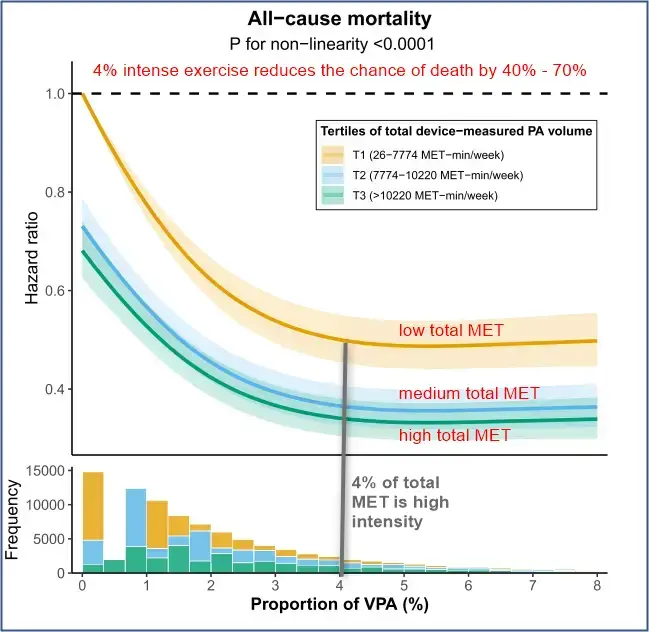
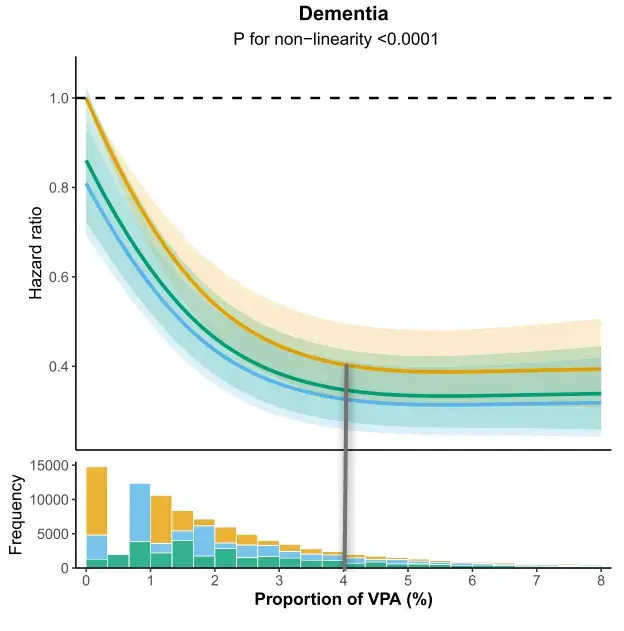
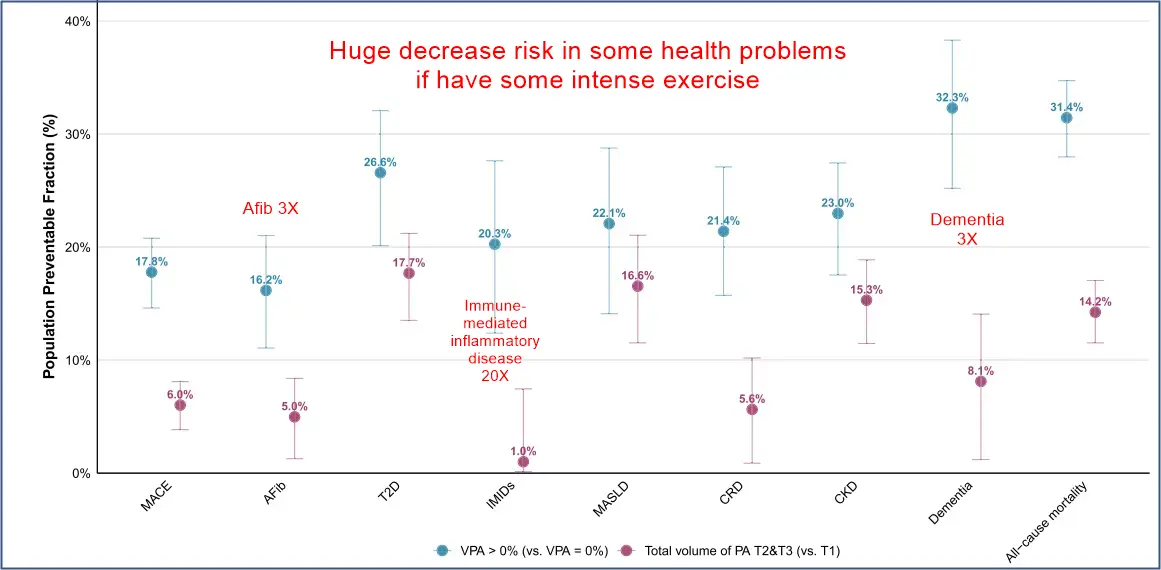
Background: While vigorous physical activity (VPA) is known to provide greater health benefits per unit time than moderate aims activity, the spectrum of these benefits across different chronic diseases and the relative importance of physical activity (PA) intensity vs volume remain unclear. This study examined associations between the proportion of VPA (%VPA) relative to total volume of PA and the incidence of multiple chronic disease outcomes.
Methods: This prospective population-based cohort study included 96,408 participants (mean age 61.9 years, women: 56.3%) with device-measured data (wrist-worn accelerometers) and 375,730 participants (mean age 56.2 years, women: 52.2%) with self-reported PA data (IPAQ) from the UK Biobank.
Main outcomes included the incidence of eight chronic diseases:
- major adverse cardiovascular events (MACE),
- atrial fibrillation (AFib),
- type 2 diabetes (T2D),
- immune-mediated inflammatory diseases,
- metabolic dysfunction-associated steatotic liver disease (MASLD),
- chronic respiratory diseases (CRD),
- chronic kidney disease (CKD), and
- dementia,
- as well as all-cause mortality.
Cox proportional hazards models were used to estimate adjusted hazard ratios and 95% confidence interval.
Results: In the device-measured data, non-linear inverse dose-response relationships were observed between %VPA and all outcomes (all P < .001), and these patterns remained consistent across strata of total PA volume. In multivariable models adjusted for total PA volume, participants with >4% VPA had 29%-61% lower risks of these outcomes compared with those with 0% VPA. Joint analyses and population attributable fraction revealed distinct disease-specific patterns: immune-mediated inflammatory diseases showed very strong intensity-dependence with minimal contribution from PA volume (20.3% for intensity vs 1.0% for volume), while MACE (17.8% vs 6.0%), AFib (16.2% vs 5.0%), CRD (21.4% vs 5.6%), and dementia (32.3% vs 8.1%) demonstrated intensity predominance with modest contribution from PA volume, and T2D (26.6% vs 17.7%), MASLD (22.1% vs 16.6%),CKD (23.0% vs 15.3%), and all-cause mortality (31.4% vs 14.2%) showed more balanced contributions from both intensity and volume.
Conclusions: A higher %VPA, independent of total activity volume, is inversely associated with eight major chronic diseases and all-cause mortality. Intensity consistently demonstrated a higher preventive potential than total PA volume. These findings support, whenever possible, prioritizing higher-intensity activities in clinical and public health interventions aimed at preventing non-communicable diseases.
Related in VitaminDWiki
- Benefits of Micronutrients, fasting, saunas, intense exercise, cold showers – Patrick
- Life-extension, improved healthspan: Diet, Exercise, Omega-3, Vitamin D - many studies
- Exercise and Vitamin D are synergistic - many studies
- What is the easiest way to get healthy: Vitamin D, Healthy Food, or Exercise
- 4000 IU increased peak power in exercise vs placebo
- Ways to improve health
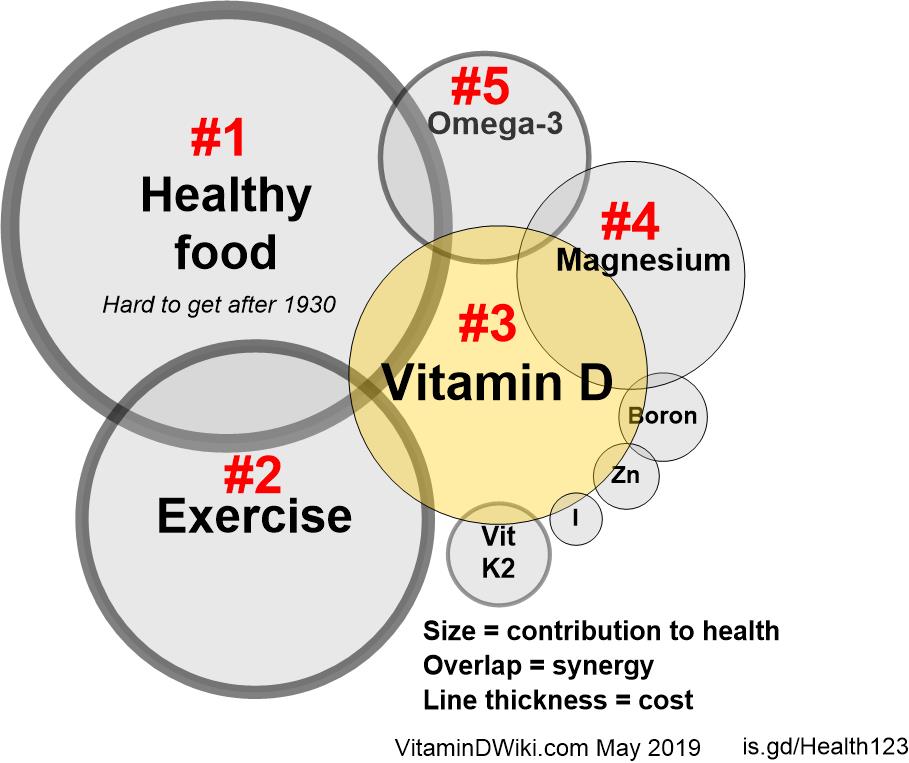
The founder of VitaminDWIki is doing all 9 of them, including intense exercise
Intense Exercise