Vitamin D Can Reduce the Pain (and chance) of Dying
Can Vitamin D Reduce the Pain of Dying?
Yes, emerging evidence suggests that vitamin D supplementation may reduce pain and improve comfort in patients approaching end of life, particularly those with advanced cancer. The strongest evidence comes from the Palliative-D trial, which demonstrated that correcting vitamin D deficiency can slow opioid dose escalation and reduce cancer-related fatigue in palliative care patients [^1][^7].
Key Clinical Evidence
The Palliative-D Study
The most rigorous trial on this topic was conducted at Karolinska Institutet in Sweden. This randomized, double-blind, placebo-controlled trial enrolled 244 cancer patients in palliative home care between 2017 and 2020 [^7]:
| Parameter | Details |
|---|---|
| Participants | 244 palliative cancer patients with verified vitamin D deficiency (<50 nmol/L) |
| Intervention | 4,000 IU vitamin D3 daily vs. placebo for 12 weeks |
| Primary Finding | Vitamin D group had significantly slower increase in opioid (fentanyl) doses—0.56 µg/h less per week |
| Fatigue Reduction | 1.1 point improvement on ESAS scale (clinically meaningful) [^7] |
| 12-Week Outcome | Mean opioid dose 6.7 µg/h lower than placebo group |
| Safety | Well-tolerated with no serious adverse events |
The treatment effect was most pronounced in patients who survived beyond 12 weeks. Researchers calculated that 12 patients needed to be treated for 12 weeks to achieve a clinically meaningful opioid dose reduction (≥12 µg fentanyl/hour) in one patient [^7][^1].
Supporting Studies
An earlier pilot study from the same research group showed even more dramatic results—a significant decrease in fentanyl dose averaging 46 µg/h after one month and 91 µg/h after three months compared to matched controls [^5][^35]. The vitamin D-treated group also showed improved quality of life scores and reduced antibiotic use.
Mayo Clinic research found that chronic pain patients with inadequate vitamin D levels required nearly twice the narcotic medication compared to those with adequate levels [^2].
Prevalence of Vitamin D Deficiency in Dying Patients
Vitamin D deficiency is strikingly common among hospice and palliative care populations:
- 59% of critically ill patients are vitamin D deficient, with 18% severely deficient [^28]
- ~80% of hospice inpatients have insufficient or deficient levels [^17]
- Palliative cancer patients have higher rates of deficiency compared to the general population [^15][^48]
Contributing factors include limited sun exposure, reduced mobility, poor appetite, and metabolic changes associated with advanced illness [^17].
Biological Mechanisms
Vitamin D appears to modulate pain through multiple pathways:
Anti-Inflammatory Effects
Vitamin D dampens inflammatory cytokine release (IL-6, TNF-α) and inhibits Toll-like receptor expression, reducing inflammation-driven pain sensitization [^29][^34]. This is particularly relevant given the chronic inflammatory state common in advanced cancer.
Opioid System Modulation
Research in Science Advances demonstrated that vitamin D signaling directly affects the opioid reward system. Vitamin D deficiency increases morphine reward and accelerates tolerance development, while adequate vitamin D levels appear to modulate opioid-associated genes in the brain and spinal cord [^19][^21]. This may explain why deficient patients require higher opioid doses.
Neurotrophic Support
Vitamin D regulates nerve growth factor (NGF) and glial-derived neurotrophic factor (GDNF) expression in dorsal root ganglion neurons, supporting healthy pain signal processing. It also influences expression of ion channels (TRPV1, sodium channels) involved in nociception [^21].
Neuropathic Pain
Clinical evidence suggests vitamin D supplementation can significantly reduce neuropathic pain symptoms, including in diabetic peripheral neuropathy [^20][^22]. A single high-dose injection provided relief lasting up to 20 weeks in one study [^22].
Beyond Pain: Additional Benefits for Dying Patients
Fatigue Reduction
Cancer-related fatigue—a distressing and notoriously difficult-to-treat symptom—improved significantly with vitamin D supplementation. The effect was particularly pronounced in men, with benefits evident after 12 weeks of treatment [^6][^44].
Mood Support
Vitamin D deficiency is associated with depression and anxiety in elderly populations [^42][^43][^45]. While direct trial evidence in end-of-life patients is limited, addressing deficiency may support emotional wellbeing during the dying process.
Reduced Infection Burden
Meta-analyses show vitamin D supplementation reduces respiratory tract infections [^11]. Though the Palliative-D study found no significant difference in antibiotic use, the pilot study showed a 26% reduction in antibiotic days at 3 months [^35].
Practical Considerations
Dosing
The evidence supports 4,000 IU daily of vitamin D3 (cholecalciferol) as effective and safe in palliative populations [^7][^44]. This dose successfully raised serum 25-OHD from approximately 36 nmol/L to 81 nmol/L over 12 weeks.
Testing
It seems reasonable for palliative care patients to have vitamin D levels checked, with supplementation initiated for those with deficiency [^15][^17]. However, in patients very close to death, the burden of testing and supplementation may not be justified given the 12-week timeframe needed for benefits.
Safety
Vitamin D is generally well-tolerated even in frail patients. In the Palliative-D trial, only mild hypercalcemia was observed (2 cases each in vitamin D and placebo groups), and no treatment discontinuations were attributed to vitamin D [^7].
Who May Benefit Most
The evidence suggests vitamin D supplementation is most beneficial for: - Patients with documented vitamin D deficiency - Those with an expected survival of more than 12 weeks - Patients experiencing pain requiring opioid titration - Those with significant fatigue
Limitations and Caveats
Several important limitations should be noted:
- Time to benefit: Effects emerged at 12 weeks, limiting applicability for patients with shorter prognosis [^7]
- Quality of life: Despite reducing pain and fatigue, neither study showed improvement in overall self-rated quality of life [^7]
- Population: Studies were conducted primarily in Caucasian populations; generalizability to diverse groups requires confirmation
- Dropout rates: High dropout in the Palliative-D trial (39% overall, higher in vitamin D arm) due to death introduces potential bias
Conclusion
Vitamin D supplementation appears to be a safe, inexpensive intervention that can modestly but meaningfully reduce the pain burden in dying patients with vitamin D deficiency. The evidence is strongest for palliative cancer patients, where correcting deficiency slowed opioid dose escalation and reduced fatigue. While not a dramatic intervention, vitamin D may contribute to improved comfort during the dying process—particularly for those with weeks to months remaining. Testing vitamin D levels and supplementing those who are deficient represents a reasonable approach in palliative care settings.
References Summary
The primary evidence comes from:
- Palliative-D Trial (Helde-Frankling et al., Cancers, 2021): 244-patient RCT showing reduced opioid escalation [^7]
- Karolinska Institutet pilot study (2017): Case-control study showing significant opioid and antibiotic reduction [^5][^35]
- Mayo Clinic research: Correlation between vitamin D status and narcotic requirements [^2]
- Mechanistic reviews: Frontiers in Immunology (2020) on vitamin D-pain signaling pathways [^21]
- Hospice audits: Multiple studies documenting high deficiency prevalence in end-of-life populations [^15][^17][^28]
References
Vitamin D reduces the need for opioids in palliative cancer - Patients with vitamin D deficiency who received vitamin D supplements had a reduced need for pain re...
Mayo Clinic Researchers Link Vitamin D and Chronic Pain Relief - Mayo Clinic research shows a correlation between inadequate vitamin D levels and the amount of narco...
Vitamin D supplementation to palliative cancer patients shows ... - In this study, vitamin D supplementation had no effect on self-reported pain intensity, but there wa...
Cancer patients in palliative care experienced reduced fatigue after ... - This study shows that correction of vitamin D deficiency in cancer patients in palliative care seems...
Vitamin D Supplementation to Palliative Cancer Patients: A Double ... - Vitamin D-supplemented patients increased their opioid doses at a significantly slower rate than pat...
An update of the effects of vitamins D and C in critical illness - Frontiers - In 2014, the VITDAL study showed no benefit of vitamin D supplementation on the primary endpoint in ...
Vitamin D levels in hospice in-patients - PubMed - It seems reasonable for all suitable palliative care patients to have their vitamin D level checked ...
[PDF] Vitamin D levels in Hospice In-Patients: Clinical Audit - It seems reasonable for all suitable palliative care patients to have their vitamin D level checked ...
Vitamin D deficiency exacerbates UV/endorphin and opioid addiction - VitD supplementation might have a preventative benefit by decreasing opioid reward and possibly dimi...
Vitamin D Deficiency–Associated Neuropathic Pain Examined in a ... - Supplementation with vitamin D has promise in improving neuropathic symptoms, especially in patients...
Vitamin D and Its Potential Interplay With Pain Signaling Pathways - This includes vitamin D-mediated regulation of known pain signals via opioid receptors, cannabinoid ...
Vitamin D for the treatment of painful diabetic neuropathy - Vitamin D may play an important role in the treatment of painful diabetic neuropathy. · A single hig...
Prevalence of Vitamin D Deficiency and Associated Factors in ... - This study shows that the prevalence of vitamin D deficiency is high (59%) in critically ill patient...
Vitamin D and inflammatory diseases - PMC - PubMed Central - Emerging evidence from clinical studies has indicated that vitamin D deficiency is associated with s...
Vitamin D and Its Potential Interplay With Pain Signaling Pathways - Vitamin D is known to be anti-inflammatory and inhibits the release of several cytokines and TLRs (5...
Vitamin D supplementation to palliative cancer patients shows ... - Vitamin D supplementation to palliative cancer patients is safe and improvement in pain management i...
3 Signs You Are Deficient in Vitamin D - Verywell Health - 3. Fatigue and Depression. Besides bone and muscle symptoms, fatigue4 and depression5 are also assoc...
Vitamin D Deficiency: Symptoms, Treatments, and Causes - Healthline - Symptoms of vitamin D deficiency may include fatigue, frequent illness, anxiety, bone pain, and slow...
Vitamin D and cancer-related fatigue in elderly patients - Frontiers - In elderly cancer populations, VD supplementation has demonstrated good safety and adherence, with d...
The association of vitamin deficiency with depression risk in late-life ... - Clinical studies reveal that vitamin D deficiency (<20 ng/mL) correlates with elevated depression ri...
Prevalence of vitamin D deficiency among palliative care cancer ... - Conclusions: 1) Low (deficient or insufficient) 25-OH-D serum levels were highly prevalent in pallia...
Related in VitaminDWiki
- Hospice and palliative care – Vitamin D, CBD, and Medical Cannabis
- Less fatigue if more vitamin D (90 percent of palliative cancer were deficient)
- Palliative cancer benefit of 4,000 IU of Vitamin D – less opioids, infection, and CRP
- 15.3 X fewer COVID deaths in those getting Vitamin D injections in ICU – RCT
- Top 10 chronic health problems of children, women, pregnancies, seniors, and darker skins are fought by Vitamin D
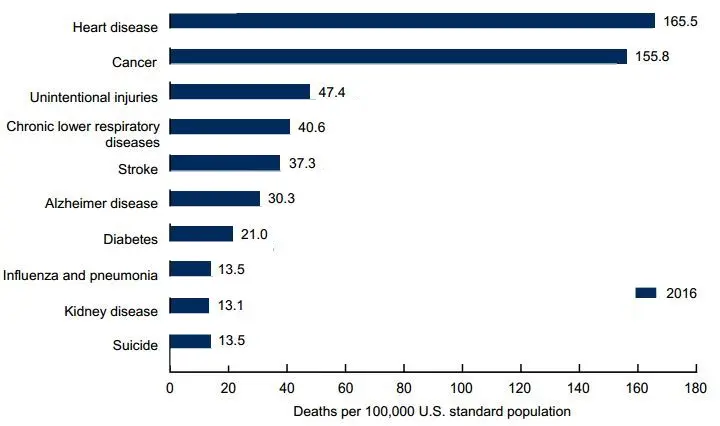
- Top 10 causes of death - low vitamin D is associated with every cause has the following chart