Sunlight as a Biological Signal for Health - GRH interview of Dr. Wunsch
Sunlight as a Biological Signal for Health: A Balanced Approach
Summary by Google AI Studio
- A Balanced Approach to Sunlight (09:00 - 09:46): The modern debate claiming the sun is either "always harmful" or "always good" is an oversimplification. Sunlight is highly beneficial when utilized intelligently with appropriate timing, dosage, and a deep understanding of human biology.
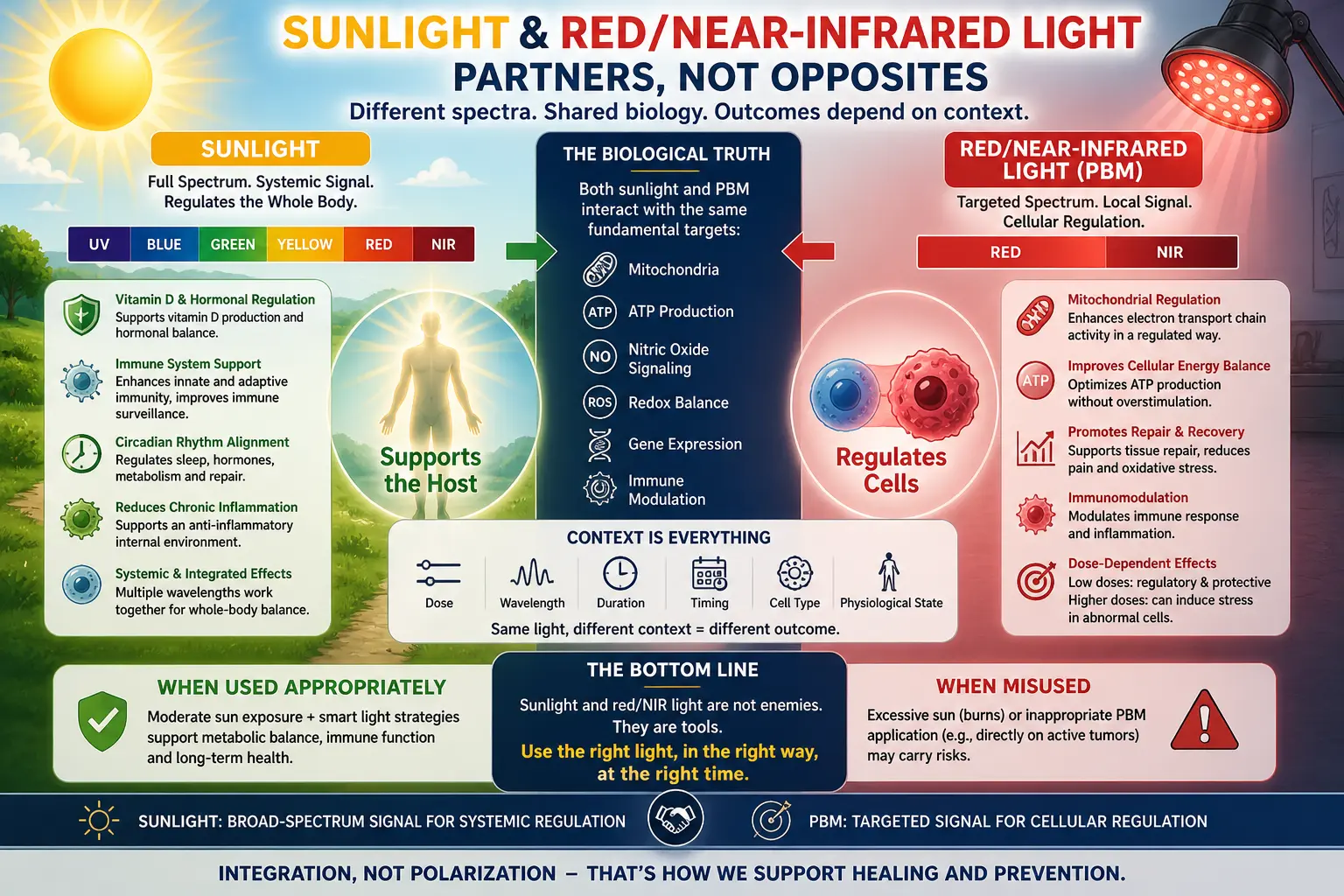
- Sunlight is Much More Than UVB (14:46 - 16:08): While UVB gets the most attention due to Vitamin D production and sunburn, it makes up only 0.13% of solar energy reaching Earth. Visible light (~43%) and near-infrared light (~42%) comprise the vast majority of the spectrum and trigger profound physiological and mitochondrial effects.
- The Ideal "Forest Canopy" Environment (19:02 - 23:23): Humans evolved primarily in partial shade, not under constant, direct midday sun. Forest canopies naturally filter harsh shortwave (blue) light while letting through green light and massive amounts of near-infrared (NIR) radiation. This is one of the most biologically balanced lighting environments.
- The Active, Healing Role of Darkness (29:34 - 31:47): Biological health requires a rhythmic oscillation between light and dark. While light activates the sympathetic nervous system, true regeneration requires darkness. Darkness actively initiates parasympathetic recovery, cellular repair, and the release of melatonin.
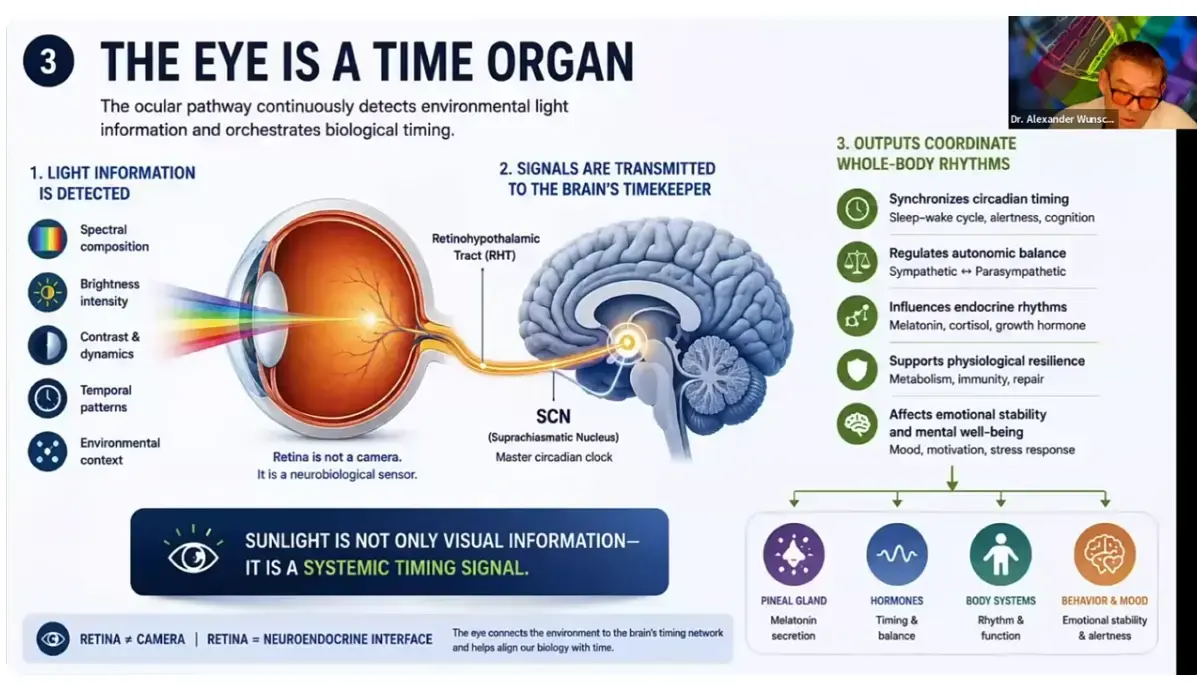
- Two Distinct Pathways of Light Processing (32:57 - 34:39): Sunlight interacts with the body via the dermal pathway (the skin, which accumulates exposure over time for Vitamin D, nitric oxide, and thermal adaptation) and the ocular pathway (the eyes, which continuously analyze light in real-time to regulate circadian rhythms and autonomic balance).
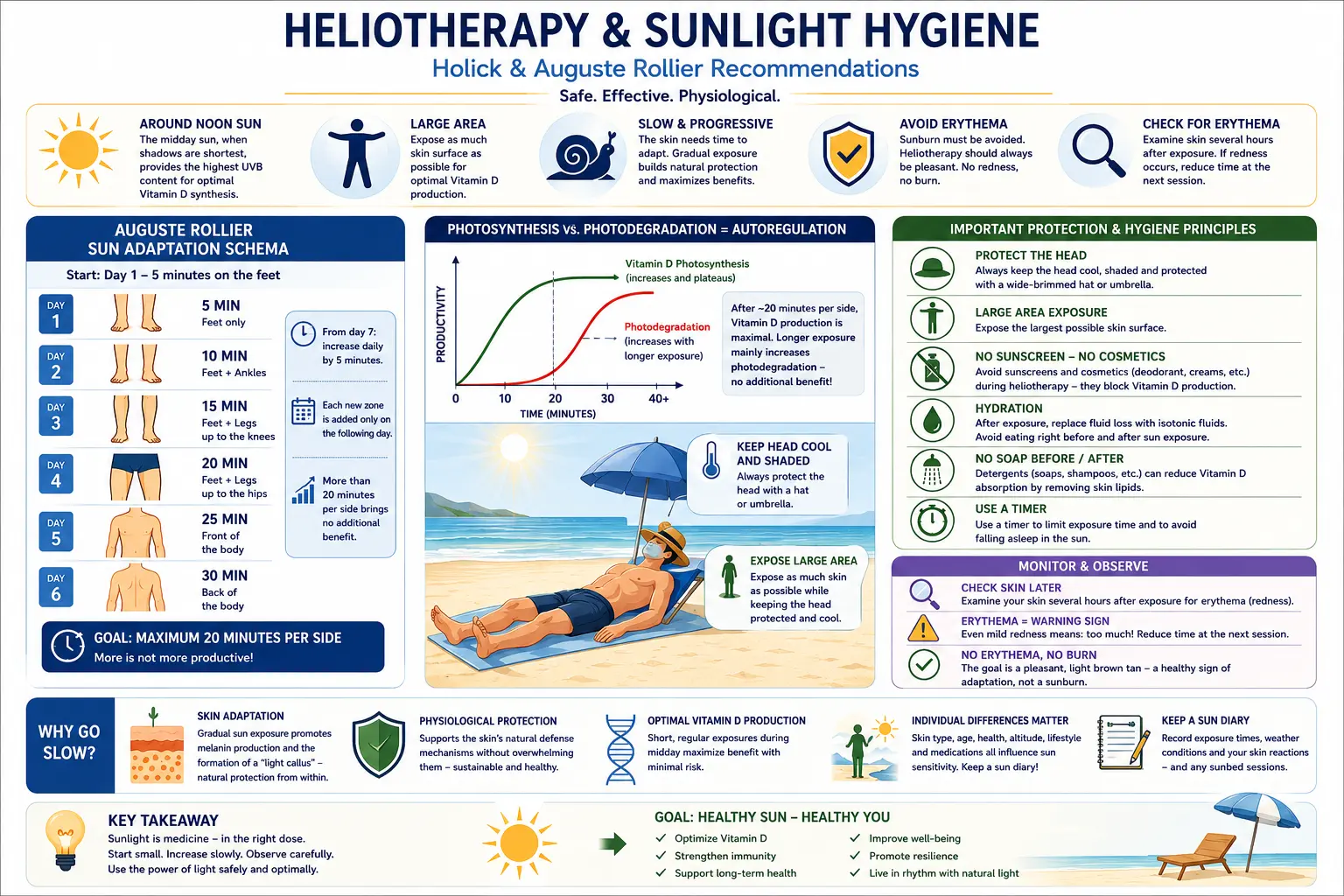
- Safe Sun Exposure and Avoiding Erythema (40:16 - 52:25): Safe sun exposure relies on gradual adaptation rather than maximum intensity. The most critical rule is avoiding erythema (skin redness and swelling), which is a delayed inflammatory response to cellular stress. Incremental exposure is highly recommended.
- Morning Sunlight and the Risks of "Sungazing" (53:19 - 58:25): Morning sunlight is excellent for setting circadian rhythms via red/infrared light, but it contains no UVB and therefore cannot produce Vitamin D. Furthermore, direct "sungazing" is medically discouraged; simply facing the sun with closed eyes allows the eyelids to safely filter the beneficial red-light morning signals.
- The Modern "Near-Infrared Deficiency" (1:14:16 - 1:21:00): Near-infrared (NIR) light penetrates deeply (up to 5 cm) into tissues, acting as a crucial "diffusion enhancer" that nourishes cells and maintains eye and skin health. Modern artificial lighting (like LEDs and computer screens) completely lacks NIR, exposing modern society to a severe near-infrared deficiency.
Some charts
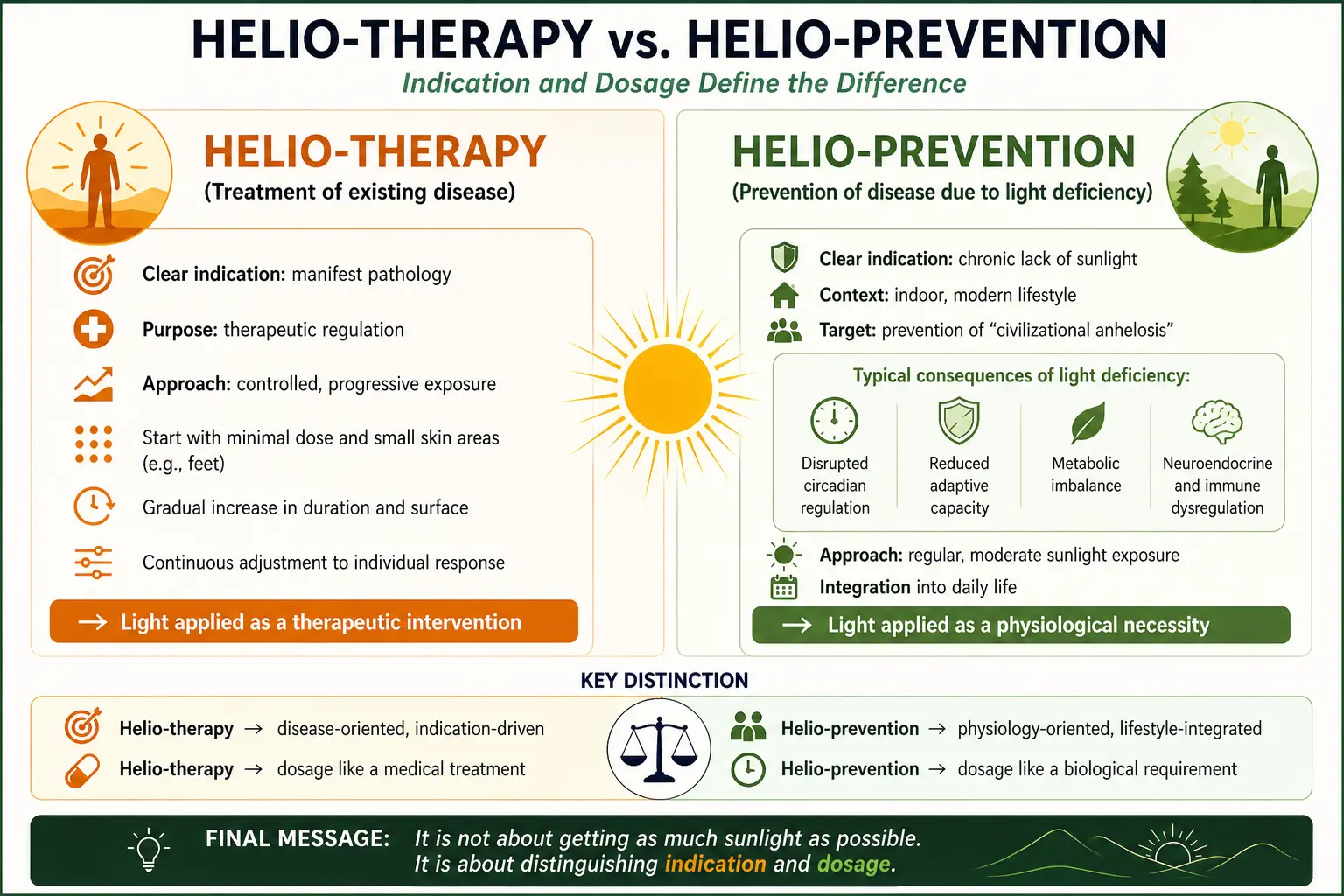
Timeline
- 00:00 Introduction and webinar overview
- 01:04 Dr. Wunsch’s background in photobiology and light medicine
- 05:06 The balanced approach to sunlight and health
- 06:35 What is light? Understanding sunlight biology
- 09:05 Is sunlight always harmful or always beneficial?
- 09:45 Sunlight as both nourishment and physiological stress
- 11:10 Sunglasses, eye protection, and natural light environments
- 12:29 Human adaptations to excessive sunlight exposure
- 14:28 UVB, vitamin D, and the full solar spectrum
- 16:26 How the body predicts UV exposure through light signals
- 18:37 Forest light environments and filtered sunlight
- 20:11 Melanopsin, circadian activation, and visual biology
- 22:15 Open sunlight vs canopy-filtered light
- 24:47 Biological rhythms and the importance of light-dark balance
- 27:07 Conscious and unconscious effects of light and color
- 28:00 Non-visual pathways and circadian regulation
- 29:25 Darkness, recovery, and melatonin
- 31:40 Vitamin D and melatonin as chronobiological hormones
- 32:38 Skin pathways vs eye pathways in sunlight biology
- 35:05 Do humans need sunlight to stay healthy?
- 35:40 Heliotherapy vs helioprevention
- 37:09 Bright days, dark nights, and mental health
- 39:45 Light hygiene and circadian health
- 40:46 Practical principles for healthy sun exposure
- 41:51 Final synthesis: intelligent and balanced sunlight exposure
- 44:34 Designing a healthy daily sunlight routine
- 47:11 Gradual adaptation and avoiding erythema
- 49:53 Understanding erythema and sunburn
- 53:01 Morning sunlight and circadian signaling
- 56:52 Is sun gazing safe?
- 58:33 Sunglasses, cataracts, and retinal protection
- 1:00:23 Blue light glasses and circadian rhythm protection
- 1:05:06 Sauna, cold exposure, and circadian stability
- 1:06:15 Benefits of daylight even through windows
- 1:09:11 Melatonin production and nighttime recovery
- 1:10:52 Cataract surgery, lenses, and light sensitivity
- 1:13:39 Eye health, near-infrared light, and aging
- 1:17:21 Near-infrared therapy and red light devices
- 1:21:38 Red light therapy and cancer concerns
- 1:25:39 Closing remarks and audience Q&A
Related in VitaminDWiki
- Sun and Vitamin D - 6 studies, Oct 2025
- Sunlight and health - many studies
- Importance of Light, UVB, and Vitamin D to Health - videos by Max Gulhane MD 2024
Nitric Oxide