
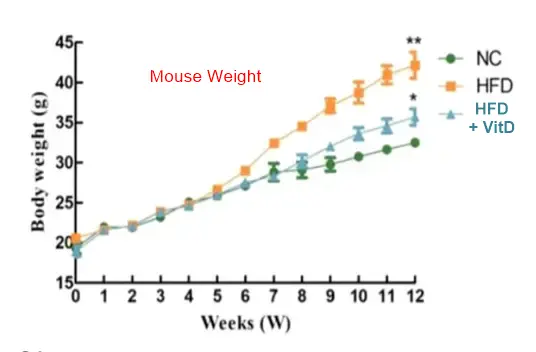
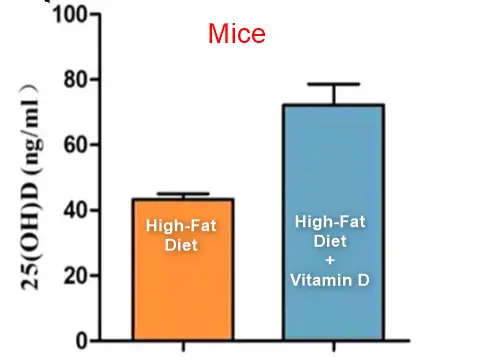
Less weight gain on high-fat diet if activated Vitamin D was added (mice)
Vitamin D alleviates obesity-related metabolic abnormalities by modulating the gut microbiota in older female mice on a high-fat diet
Front Cell Infect Microbiol. 2025 Dec 10:15:1703497. doi: 10.3389/fcimb.2025.1703497
Dandan Li 1 2, Dongmei Liu 1, Yali Wang 1, Qian Xu 1, Tao Wang 3, Pengsha Sun 1, Xinjun Yu 1
Introduction: Older women experience a significant decline in estrogen levels due to ovarian dysfunction, leading to a series of health issues such as lipid metabolism disorders, obesity, and increased risk of cardiovascular disease. Previous studies have shown that vitamin D deficiency can increase the risk of metabolic diseases.
Methods: This study used older female mice fed a high-fat diet as research subjects to investigate the effects of vitamin D on lipid metabolism abnormalities in older female mice and whether these effects are related to the regulation of the gut microbiota.
Results: Our results indicate that vitamin D supplementation reduces body weight, blood lipid levels, and mild inflammation in older female mice, improves hepatic steatosis and fibrosis, regulates the expression of fatty acid metabolism genes, and increases the expression of tight junction proteins in the gut. HepG2 fatty liver cells also validated these findings. Gut microbiota sequencing results showed that vitamin D supplementation significantly regulated the overall composition of the gut microbiota, reducing the abundance of microbiota associated with obesity and inflammation, increasing the abundance of beneficial bacteria, and reversing gut microbiota dysbiosis caused by a high-fat diet. Additionally, Spearman correlation analysis indicated that key microbial communities regulated by vitamin D were highly correlated with metabolic markers.
Conclusions: These results suggest that vitamin D could serve as a potential candidate drug for preventing lipid metabolism abnormalities caused by obesity in older female mice by regulating the gut microbiota.
1,25(OH)2D3 was dissolved in corn oil, with an oral dose of 1000 U/kg/day per mouse, probably per kg of feed, not per kg of mouse. Suspect they used fully activated Vitamin D so as to get it directly into the gut (no liver or kidney required avoids many gene problems as well)
Related in VitaminDWiki
- 40% of weight loss from GLP-1 is from muscle loss (not so if lose weight with Vitamin D)
- Weight loss and Vitamin D - many studies
- Weight loss on low-calorie diet: 7 lbs more lost if got lots of Vitamin D
- The Vitamin That Quadruples Weight Loss
- Why vitamin D is not advertised for weight loss - it was patented
- Obese lost 17 lbs in 3 months with diet and just 3 doses of semi-acivated vitamin D
- Vitamin D, Microbiome, Gut Health - Dr. Beltran