Iodine deficiency might cause obesity
Nutritional iodine status and obesity - 2021
Thyroid Research Volume 14, https://doi.org/10.1186/s13044-021-00116-y
Mariacarla Moleti, Maria Di Mauro, Giuseppe Paola, Antonella Olivieri & Francesco Vermiglio
Iodine is an essential component of the thyroid hormones, thyroxine and triiodothyronine. Its availability strictly depends on iodine content of foods, which may vary from very low to very high. Inadequate iodine intake (deficiency or excess) may affect thyroid function resulting in hypothyroidism or hyperthyroidism. Based on median urinary iodine concentrations, epidemiological criteria have been established for the categorization and monitoring of nutritional iodine status of a population (or subgroups of populations). Additional methods for iodine intake assessment include measurement of thyroid size (by thyroid palpation or ultrasonography) and of biochemical parameters, such as neonatal thyroid stimulating hormone, thyroglobulin and thyroid hormones.
Recent studies carried out in overweight/obese children and adults provide evidence that body mass index (BMI) may significantly influence the above indicators, thus theoretically affecting the epidemiological evaluation of nutritional iodine status in populations.
In this short review, we analyze current knowledge on the effects of overweight and obesity on indicators of adequacy and monitoring of iodine status, namely urinary iodine excretion and thyroid volume and echogenicity.
Data on urinary iodine excretion in overweight/obese children are divergent, as both increased and reduced levels have been reported in overweight/obese children compared to normal-weight controls.
Whether gastrointestinal surgery may affect iodine absorption and lead to iodine deficiency in patients undergoing bariatric surgery has been evaluated in a limited number of studies, which excluded iodine deficiency, thus suggesting that supplements usually recommended after bariatric surgery do not need to include iodine.
Albeit limited, evidence on thyroid volume and obesity is consistent with a direct relationship between thyroid volume and BMI, irrespective of nutritional iodine status. Finally, a higher frequency of thyroid hypoechoic pattern has been described in overweight/obese children. This finding has been recently related to an increased adipocyte infiltration and thyroid parenchyma imbibition mediated by inflammatory cytokines and should be considered when the frequency of thyroid hypoechoic pattern is used as non-invasive marker to indirectly assess thyroid autoimmunity in monitoring Universal Salt Iodization programs. Further studies, specifically addressing the role of schoolchildren body mass index as a factor potentially influencing iodine intake indicators are needed.
Obesity and Monitoring Iodine Nutritional Status in Schoolchildren: is Body Mass Index a Factor to Consider? - 2020
Thyroid 2020-nov 30] Vol 31, Issue 5 https://doi.org/10.1089/thy.2020.0189
Simona De Angelis, Marcello Bagnasco, […], and Antonella Olivieri antonella.olivieri@iss.it+14View all authors and affiliations
Background: The frequency of overweight (OW) and obese (OB) children has increased worldwide, particularly in economically developed countries. No studies have been conducted to verify whether the increasing frequency of OW and obesity in schoolchildren may affect the evaluation of iodine nutritional status in populations. The aim of this study was to verify whether urinary iodine concentration (UIC), thyroid volume (TV), and thyroid hypoechoic pattern may be affected by body mass index (BMI) in schoolchildren.
Methods: The children included in this study (aged 11–13 years) were a part of the schoolchildren recruited in the second nationwide survey (period 2015–2019) conducted in Italy to monitor by law (Atto di Intesa Stato-Regioni February 26, 2009) the nationwide iodine prophylaxis program. Specifically, 1281 schoolchildren residing in iodine-sufficient areas (IS group) and 384 children residing in a still mildly iodine-deficient area (ID group) were recruited between January and March 2015 in the first-degree secondary state schools. In all the children, spot UIC was measured, thyroid ultrasound was performed to evaluate TV, and hypoechogenicity was assessed to indirectly evaluate iodine-associated thyroid autoimmunity.
Results: The frequency of OW, OB, and adequate weight (AW) children was similar in the IS and ID groups at any age. After adjusting for sex and age, the regression analysis showed lower UIC values in OB children than in AW children of the IS group (beta coefficient = −34.09 [95% confidence interval −65.3 to −2.8]), whereas no significant differences were observed in the ID group. In both the IS and ID groups, the distribution of TV in AW children was significantly shifted toward lower values in comparison to the distribution of OB children (p < 0.001 in the IS group; p = 0.012 in the ID group). Furthermore, the frequency of thyroid hypoechogenicity was higher in the ID group than in the IS group (10.9% vs. 6.6%, p = 0.005); however, in both groups, it was significantly lower in AW children than in OB children (p < 0.01).
Conclusions: This study for the first time demonstrates that BMI may be a confounding factor in monitoring iodine nutritional status in schoolchildren. Since in Italy as in other Western countries the number of OW and OB children is high, BMI is a factor to consider in monitoring salt iodization programs worldwide.
Related in VitaminDWiki
- Obesity pandemic since 1975 - is it due to Vitamin D, Magnesium, Iodine, adenovirus, or what
- Adding Iodine to salt added 11 percent to goiter states income (how much might vitamin D add)
Vitamin D and Iodine are similar, and both are deficient and important to health
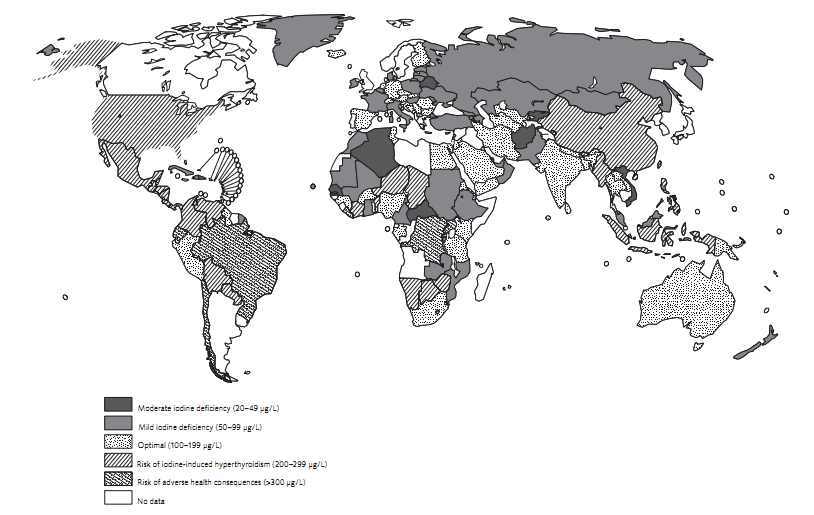
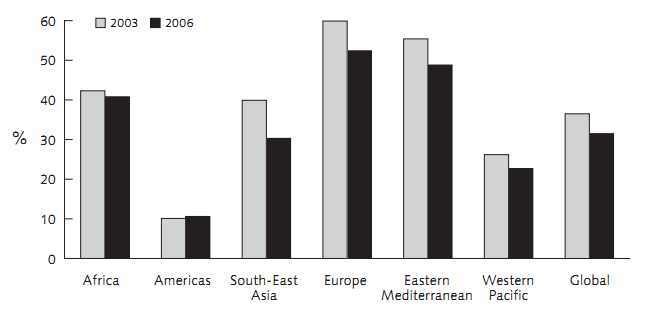
update by the same authors: has the following charts