
Allergic diseases (dermatitis, rhinitis, asthma, food) and Vitamin D - many studies
Umbrella analysis of Vitamin D and allergic diseases: no indication of dose size nor duration - July 2026
Effects of vitamin D levels and vitamin D supplementation on allergic diseases: an umbrella review
Front Allergy 2026 Jun 29:7:1841244. doi: 10.3389/falgy.2026.1841244. eCollection 2026.
Background: The association between vitamin D levels/supplementation and the risk of allergic diseases has been extensively studied. However, the strength and consistency of the existing evidence remain unclear, and most reviews have focused on single diseases. This umbrella review aims to systematically evaluate the current meta-analytic evidence on the associations between vitamin D and allergic diseases, in order to establish a hierarchy of evidence and identify research gaps.
Methods: PubMed, Embase, Cochrane Library, and Web of Science were systematically searched from inception to October 21, 2025. Summary effect estimates, 95% confidence intervals, I2 statistic, 95% prediction intervals, small study effects, p-value of the largest study, and excess significance bias were recalculated. The methodological quality of included studies was appraised using AMSTAR 2 (A Measurement Tool to Assess Systematic Reviews 2).
Results: A total of 14 eligible articles were included, yielding 16 associations (total population: 66,387). The credibility of evidence assessment revealed the following: the association between serum 25(OH)D levels and urticaria was graded as highly suggestive evidence (MD -9.35, -12.27 to -6.44, class II); the associations between serum 25(OH)D levels and allergic rhinitis and between vitamin D supplementation and urticaria were graded as suggestive evidence (SMD -1.29, -1.92 to -0.65, class III). Vitamin D supplementation significantly alleviated symptoms in allergic rhinitis (SMD -2.25, -3.05 to -1.43, class Ⅳ), reduced disease severity in atopic dermatitis (SMD -0.41, -0.65 to -0.17, class Ⅳ), and decreased clinical scores in urticaria (SMD -3.63, -5.72 to -1.54, class III). However, no significant effect was observed for vitamin D supplementation on asthma or food allergy. Prenatal vitamin D supplementation showed no significant preventive effect on the risk of offspring allergic rhinitis, atopic dermatitis, or asthma.
Conclusions: Lower vitamin D levels are consistently associated with several allergic diseases. The available evidence suggests that vitamin D supplementation demonstrates beneficial effects on symptom improvement for specific diseases (allergic rhinitis, atopic dermatitis, urticaria), but its efficacy is disease-specific. Future research requires greater standardization and precision to clarify the exact role and clinical utility of vitamin D in the prevention and management of different allergic diseases.
Systematic review registration: https://www.crd.york.ac.uk/prospero/. PDF
Vitamin D and allergic diseases - July 2024
Front. Immunol. , Volume 15 - 2024 | https://doi.org/10.3389/fimmu.2024.1420883
Panyu Zhang1 Qingxiu Xu1 Rongfei Zhu1,2*
1 Department of Allergy, Tongji Hospital, Tongji Medical College, Huazhong University of Science and Technology, Wuhan, China
2 Institute of Allergy and Clinical Immunology, Tongji Hospital, Tongji Medical College, Huazhong University of Science and Technology, Wuhan, China
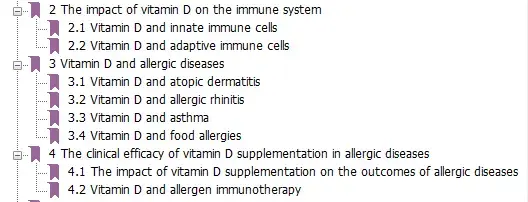
Table of Contents
All 4 are prevented and/or treated by Vitamin D
Their incidence have at least doubled in recent decades
% of people with low Vitamin D has also doubled in recent decades
All 4 are prevented and/or treated by Vitamin D
Their incidence have at least doubled in recent decades
% of people with low Vitamin D has also doubled in recent decades
In recent years, the relationship between vitamin D and allergic diseases has received widespread attention. As a fat-soluble vitamin, vitamin D plays a crucial role in regulating the immune system and may influence the onset and progression of diseases such as atopic dermatitis, allergic rhinitis, and asthma. To understand the underlying mechanisms, we have summarized the current research on the association between vitamin D and allergic diseases. We also discuss the impact of vitamin D on the immune system and its role in the course of allergic diseases, particularly focusing on how vitamin D supplementation affects the treatment outcomes of these conditions. We aim to provide a theoretical basis and practical guidance for optimizing the management and treatment of allergic diseases by modulating vitamin D levels.
Download the PDF from VitaminDWiki
17+ VitaminDWiki pages have DERMATITIS OR ECZEMA in the title
The list is automatically updated
{LIST()}