
Vitamin D3 vs calcifediol vs calcitriol: which form fits which patient - review
Vitamin D: Physiology, Pharmacology and Clinical Evidence for Supplementation—A Narrative Review
Basic & Clinical Pharmacology & Toxicology (Wiley), 2026; 139:e70315 (accepted 24 Sept 2026), https://doi.org/10.1111/bcpt.70315
Jyrki K. Virtanen
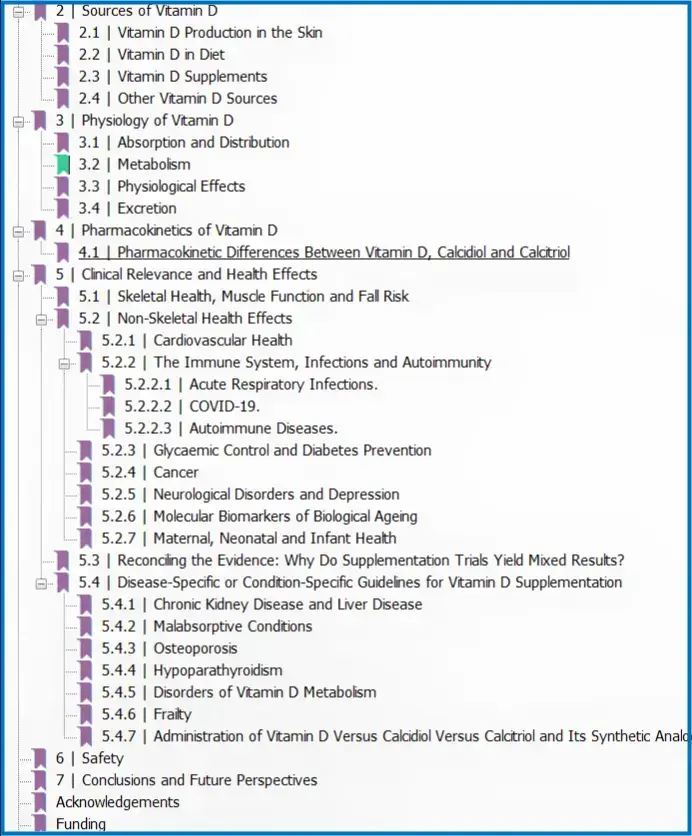
PDF Table of Contents
Summary by Claude Opus 5.5 - October 2026
Bottom line: Vitamin D with calcium clearly prevents and treats deficiency-related bone disease in high-risk groups, but the big "mega-trials" found few other benefits. This single-author, peer-reviewed narrative review (164 references, University of Eastern Finland) argues the null results "likely reflect methodological challenges rather than absence of biological effects."
Why the mega-trials disappointed
- Participants mostly started at 21–31 ng/mL, and placebo groups could take 400–1,000 IU/day on their own
- Fixed doses ignored wide individual response (100 IU/day raises 25(OH)D about 1 ng/mL on average, less with obesity)
- Large infrequent boluses switch on CYP24A1 breakdown and are linked to more falls; daily moderate D3 is preferred
- Possible missing cofactors: magnesium, zinc and vitamin K; excess vitamin A may antagonize vitamin D
Where benefits appeared
- Less progression from prediabetes to Type 2 diabetes, greatest in those who reached and kept ≥50 ng/mL [Pittas 2023]
- Modestly lower cancer mortality (not incidence), mainly with daily dosing [Kuznia 2023]
- 22% fewer autoimmune diseases in VITAL at 2,000 IU/day [Hahn 2022]
- Fewer repeat heart attacks suggested in TARGET-D, which titrated doses to reach 40–80 ng/mL [May 2026]
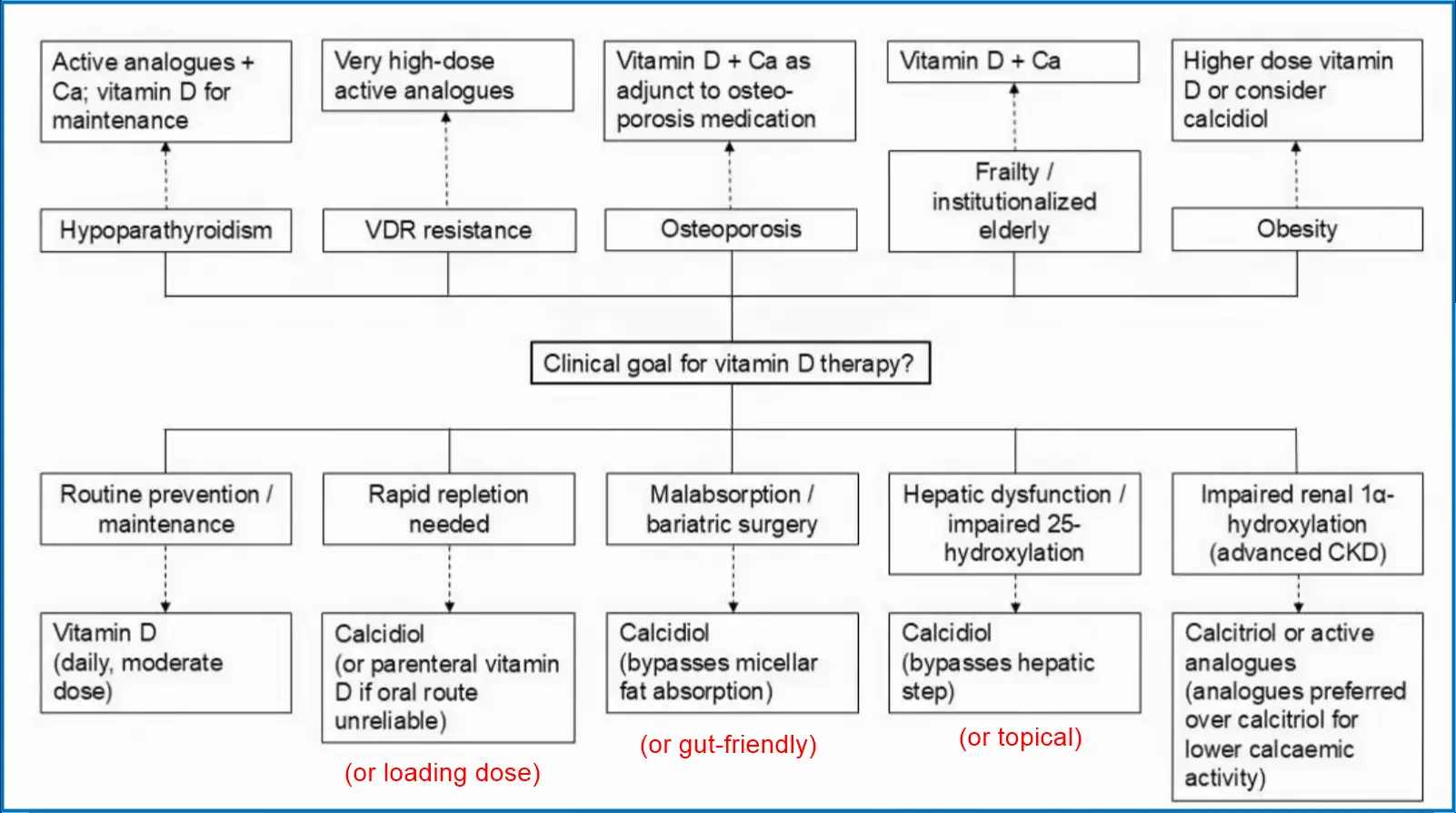
Forms and safety: Calcifediol is 2–6× more potent by weight and raises levels faster and more predictably, which helps in obesity, fat malabsorption, bariatric surgery or liver disease. Calcitriol acts directly on the VDR but does not correct a low 25(OH)D. Doses up to 10,000 IU/day have generally not caused severe toxicity.
What this does NOT show
- It is a narrative review: the author chose the studies, with no systematic search and no new data
- Most benefits listed come from subgroups, achieved-level analyses, or underpowered trials (TARGET-D missed its primary endpoint)
- It keeps 20 ng/mL as "sufficient" and calls >50–60 ng/mL generally not recommended, yet cites the best diabetes benefit at ≥50 ng/mL
- Little on loading doses or weight-based dosing
- The author reports travel support from Abiogen Pharma
Related in VitaminDWiki
- Overview Loading of vitamin D
- Loading Doses - when you need Vitamin D now, not months from now - video and summary
- Gut-Friendly Vitamin D
- Topical Vitamin D (nanoemulsion cream etc)