Loading Doses - when you need Vitamin D now, not months from now - video and summary
600,000 IU of Vitamin D? Loading Doses Explained
Summary by Claude AI
(00:09–01:33) Craig opens with the claim that 600,000 IU (sometimes 800,000) in a single sitting is a real, published hospital dose given routinely to children. His own start: a neurologist suggested D3 for cluster headache but wouldn't dose it; his GP called it toxic yet handed him 12 × 50,000 IU capsules. Eleven years later he's held ~100 ng/mL for over a decade.
(02:08–03:37) The problem loading solves is half-life, not ceiling. 25(OH)D has a circulating half-life of ~2–3 weeks, and pharmacokinetics require 4–5 half-lives to plateau — roughly three months on daily dosing regardless of compliance or product quality.
(03:37–04:45) For most people three months is fine; the justification for loading is_ only when something is actively wrong *now*_ and the treatment only works above a threshold. A loading dose doesn't raise your ceiling, it shortens your runway.
(04:45–06:26) "Stoss" therapy (German for push/shove) dates to 1940s pediatric rickets literature. Starship Children's Hospital in Auckland publishes it as a guideline: a superphysiologic dose redistributes into fat and supplies 2–3 months of stores. The stated rationale is adherence, not a belief that bigger is better.
(06:26–07:31) Age-based ladder from Sydney Children's Hospital: under 3 years, 200,000 IU; 3–12 years, 400,000 IU — dispensed as multiple 50,000 IU capsules under supervision.
(07:31–09:30) Counterweight: Kaur et al. (Chandigarh, Feb 2025), a registered GRADE-assessed systematic review/meta-analysis of four RCTs comparing low-dose (≤300,000) vs high-dose (300,000–600,000) for nutritional rickets. No significant difference in 25(OH)D at 12 weeks, radiological healing, PTH, or bone chemistry, and no serious adverse events. Doubling the dose buys nothing.
(09:30–10:50) Mittal et al. 2014 (300,000 vs 600,000 single oral dose in under-fives) found the doses comparable but described an "unacceptably high risk of hypercalcemia" in both arms, and neither normalized status in most patients by 3 months. His read: the argument is against sloppy high-dose D, not high-dose D as such.
(11:18–14:26) The key reframe — splitting 600,000 over one day vs ten days gives the same curve; what matters is what follows. Pattern 1: load to target, then hold with daily maintenance. Pattern 2: isolated bolus with nothing underneath, repeated on a schedule — where the harm signal lives. Sanders et al., JAMA 2010: annual 500,000 IU in Australian women 70+ raised falls and fractures, concentrated in the months right after each dose. NSW formulary echoes this: a single 600,000 IU infant dose caused prolonged excess and transient hypercalcemia; 100,000–200,000 every three months did not.
(17:09–19:49) Supporting cases for the "active disease" logic: Otago/Christchurch retrospective study of Kiwi children with IBD and deficiency — single age-based high dose, levels held sufficient for months, calcium essentially normal (one marginal reading resolved in 10 days), with disease activity score, platelets, ESR and CRP all falling significantly at 3 months (small, uncontrolled, retrospective). For cluster headache, bouts can end before a 12-week climb accomplishes anything.
(20:16–24:36) Two distinct jobs for the same molecule: (a) supervised therapeutic loading-then-maintaining high enough to suppress PTH for active autoimmune disease — the Coimbra approach, whose largest safety dataset (Nutrients 2022, Holick a co-author) covered several hundred patients with normal average calcium, creatinine and eGFR, and whose authors advise against unsupervised use; and (b) general wellness maintenance at ~60–80 ng/mL on 6,000–8,000 IU/day with the fattiest meal. The psoriasis example — Mahtani et al., Sept 2025, Indian dermatology journal, a retrospective chart series — gave 600,000 IU as 60,000/day × 10 days, then daily maintenance.
(25:03–28:38) Takeaways and cautions: loading is a timing tool only; load-plus-maintenance is categorically different from an isolated or annually repeated bolus. Hard preclusions warranting a doctor's involvement — sarcoidosis, TB, hyperparathyroidism, calcium-homeostasis disturbance, kidney stones or impairment. Get baseline 25(OH)D, calcium and PTH before aiming near 100 ng/mL, and try a 5,000–10,000 IU test dose the night before a 50,000–100,000 IU dose to rule out a reaction to lanolin or capsule excipients (per the D3 Regimen protocol documented by Pete Batchelor).
D3 is stored in the fat; semi-active vitamin D is stored in the muscle
By Claude AI - Sept 2026
Fat is a slow-leak reservoir of precursor that still has to be 25-hydroxylated before it's useful.
Muscle is the fast-access buffer for the metabolite you actually measure.
Parent D3 → fat. The bulk of a bolus stays as unmetabolized cholecalciferol and partitions into adipose. The cleanest human number comes from Tromsø: after 3–5 years of 20,000 IU/week, median adipose vitamin D3 was 209 ng/g versus 32 ng/g on placebo, while adipose 25(OH)D3 was only 3.8 vs 2.5 ng/g — a total body store of about 6.6 mg D3 (~264,000 IU) against 0.12 mg of 25(OH)D3 [Didriksen 2015]. So fat holds parent compound at roughly 50:1 over 25(OH)D. Cultured human adipocytes show why: they selectively retain D3 and rapidly clear the hydroxylated forms [Nutrients 2025].
25(OH)D → muscle and the DBP pool. Myotubes take up DBP by megalin/cubilin endocytosis; internalized DBP binds cytoplasmic actin, creating a large array of high-affinity sites for 25(OH)D, and the repeated passage in and out accounts for its long residence time in blood [Abboud 2013], [Mason review]. Uptake is VDR-modulated, so it isn't simple lipid partitioning [Girgis 2014].
Liver: a processing plant, not a warehouse. Chylomicron remnants dump a large fraction there within minutes, but it doesn't stay. Mawer's cadaveric work found only ~2% of injected labeled D in viscera, with most of it in adipose, marrow, skin and skeletal muscle [Mawer 1972]. Fish are the exception — cod liver oil is a fish thing, not a mammal thing.
What a superphysiologic bolus actually does:
- Serum D3 spikes within 12–24 h, then falls with a 1–2 day half-life as it partitions into fat. 25(OH)D peaks around day 7–14.
- A meaningful slice is burned, not stored. A single 100,000 IU dose significantly raises 24,25(OH)2D and the 24,25/25(OH)D ratio — CYP24A1 induction, with catabolism favored over 1,25(OH)2D production [Saleh 2017]. At 600,000 IU the catabolic shift and an FGF23 rise are unmistakable. Biliary excretion of polar metabolites rises too.
- Conversion efficiency is not linear. Hepatic CYP2R1 is downregulated by high substrate load, obesity, and fasting, so doubling the bolus does not double the 25(OH)D.
- The fat depot does release, but slowly and passively, proportional to concentration. Stored adipose D3 was still measurably supporting serum 25(OH)D a full year after a 5-year trial ended [Martinaityte 2017]. That's the real argument for loading doses — and also why they're inefficient in the obese, whose total body stores are larger despite lower serum levels [Carrelli 2017].
Related in VitaminDWiki
-
- Loading doses are given all in 1 day, or spread across 3 days, 1 week, 10 days, etc.
Nanoemulsion vitamin D may have a much faster response time when swished (absorbed) in the mouth
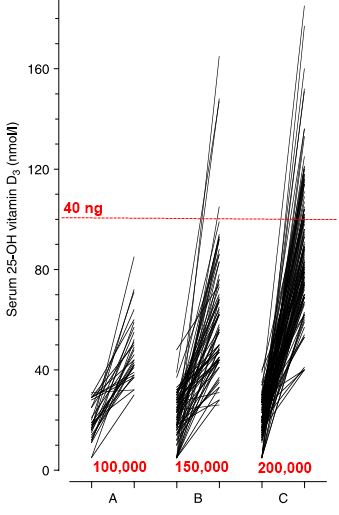
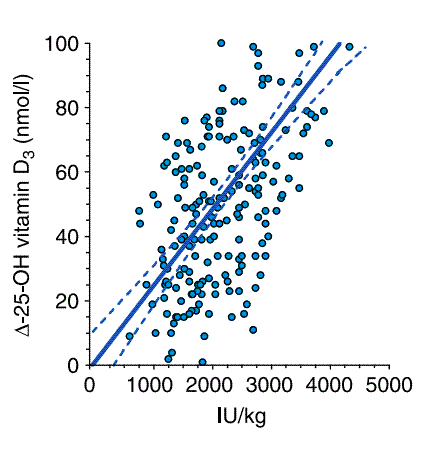
There is a HUGE variation in response between individuals
Response to weekly or biweekly dosing for a total of 100,000 IU, 150,000 IU, and 200,000 IU varies a lot between individuals
- Vitamin D loading doses typically helped critically ill, but never harmed (21 RCTs)
- Surgery complications cut in half by 300,000 IU of vitamin D 2 weeks before (hip and knee) – RCT
- Breastfeeding Vitamin D loading dose of 300,000 IU is OK - UK govt.
- Large dose Vitamin D before surgery was found to help by 35 studies
- Vitamin D loading doses quickly and safely raise levels – meta-analysis
- Vitamin D loading dose was as effective as daily dosing (rickets in this case) – RCT
- Those getting high-dose vitamin D were 7 X less likely to die of COVID-19
- ICU adults getting 540,000 IU of Vitamin D were 2X more likely to be alive 30 days later – RCT
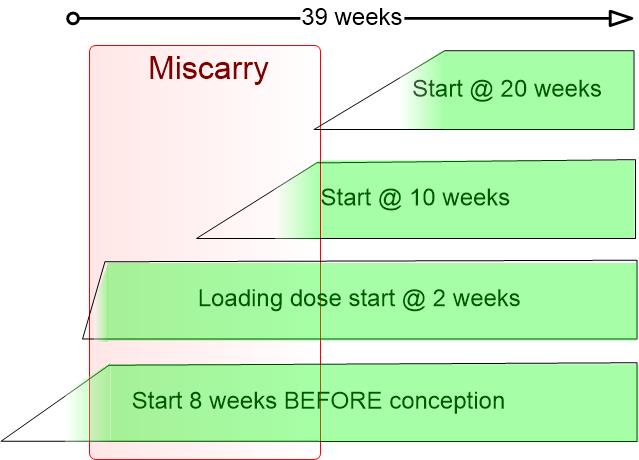
- Need loading dose before at conception or at the start of pregnancy