Medicine started moving from prevention to treatment in 1979
Editorial, Academia Medicine and Health, April 2026 — Markou-Pappas, Fugazzola, Ansaloni (University of Pavia)
Claude AI summary
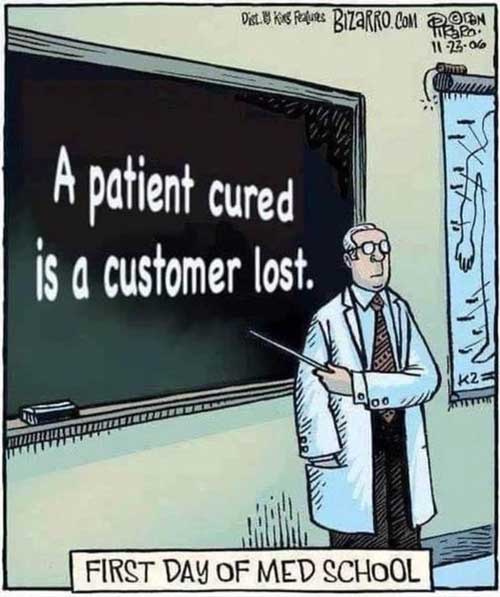
This editorial argues that over the past century the concept of health expanded outward — from the WHO's 1948 definition (complete physical, mental, and social well-being), through the 1978 Alma-Ata Declaration (health embedded in social and economic development), the 1986 Ottawa Charter, and on to Global Health and One Health — while medicine as actually practiced contracted toward what is "manageable, measurable, and profitable."
The authors locate the hinge in 1979, when a New England Journal of Medicine paper introduced "selective primary health care": discrete, disease-centered, cost-effectiveness-driven interventions that displaced Alma-Ata's comprehensive, community-anchored vision. They characterize this shift as a deliberate political and economic project that "quietly and deliberately" converted health into a commodity. The piece then turns to surgical care and armed conflict as the settings where the cost of that retreat is most measurable, and frames the journal's renaming (adding "Health") as a corrective.
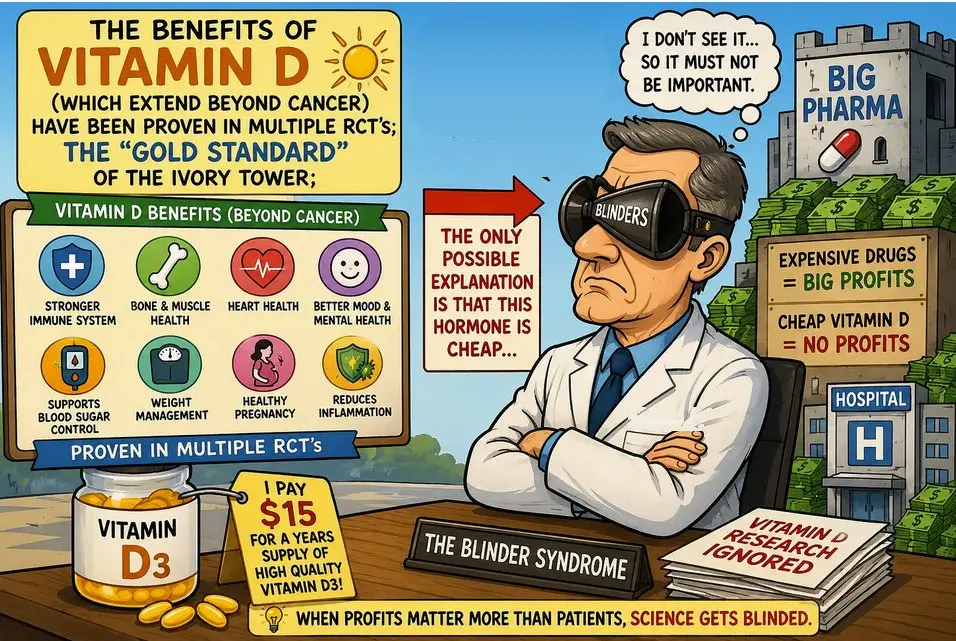
There is no vitamin D, nutrition, or prevention content in it. What it offers is a clear, citable articulation of the same mechanism this site invokes repeatedly: health systems systematically abandon the unprofitable and the preventive first, while resources concentrate on the discrete, billable, and patentable. The editorial applies that logic to global surgery and primary care; the parallel to underresearched, unpatentable interventions like vitamin D is left for the reader to draw.
Key claims:
- The idea of health has moved consistently away from the clinic and toward the world — more inclusive, ecological, political, and human across a century of WHO-era scholarship.
- Medicine moved the opposite way, pulled back toward the measurable and profitable; the 1979 "selective primary health care" paper is named as the turning point.
- The Lancet Commission on Global Surgery is cited for the scale of the gap: roughly five billion people lacking access to safe surgical and anaesthesia care, ~143 million additional procedures needed annually, ~90% of the burden in low- and middle-income countries.
- Prevention, preparedness, and education are "health projected forward" — and the first investments cut when medicine narrows its self-definition.
⚠ What this editorial does NOT show:
- It presents no new evidence. Every empirical figure is borrowed from cited sources (chiefly the 2015 Lancet Commission); nothing here is original data.
- The central historical claim — that selective primary health care was a "systematic dismantling" and "a political and economic project" — is the strong interpretive reading, presented without its counter-reading. Even the authors' own cited source (Cueto 2004) tells a more mixed story: selective PHC also arose from genuine, good-faith arguments that comprehensive primary care was too diffuse to fund or measure, and from targeted interventions (immunization, oral rehydration) that demonstrably saved lives. Treat the commodification narrative as a contestable argument, not settled historiography.
- The surgery-and-war material, while the emotional core of the piece, is illustrative rather than evidentiary for the broader thesis about health-vs-medicine divergence.
Bottom line: Useful as a well-sourced, eloquent statement of the structural-incentive argument — citable when explaining why unprofitable interventions get neglected — but it is an opinion editorial, and its strongest historical claim should be flagged as one interpretation among several.
Related in VitaminDWiki
- Vitamin D is unprofitable, so medicine ignores it
- American Dental Association, like the AMA, follows the money not the science
- How might hospitals be incentivised to have healthier patients
- How Health Insurance could profit from vitamin D
- Doctors are incentivised to prescribe medicines, not improve health
- What if we paid doctors to keep people healthy - TedTalk 2017
- Concierge doctors can benefit by preventing health problems with Vitamin D
- 21 reasons why doctors are reluctant to accept Vitamin D
- Sick people are more profitable than healthy ones
Curing patients is not a sustainable business model – Goldman Sachs