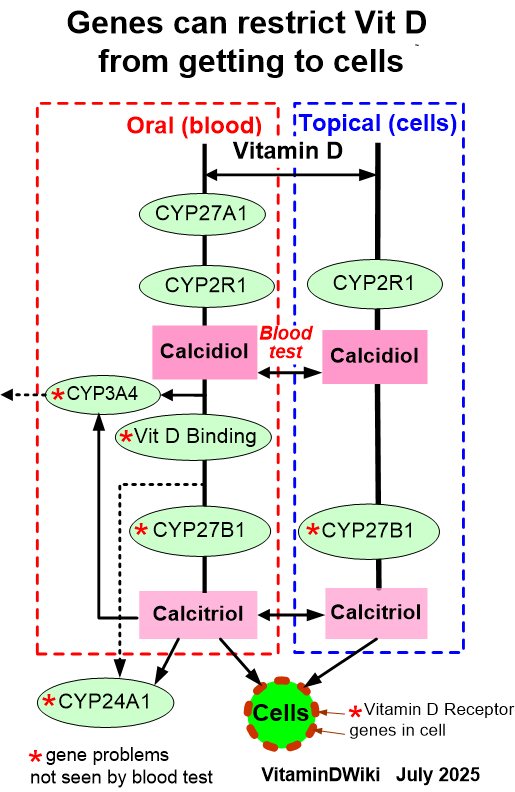
Tendon pain 7 X more likely if very poor response to weekly 50,000 IU Vitamin D
Association of vitamin D deficiency and supplementation with clinical outcomes in multi-tendon chronic tendinopathy: a retrospective clinical study
Eur J Med Res. 2026 Mar 3. doi: 10.1186/s40001-026-04157-7
Volkan Kizilkaya 1, Sefa Erdem Karapinar 2, Namik Kemal Kilinccioglu 3, Mehmet Melih Asoglu 1, Mustafa Cukurlu 4, Fatih Enzin 5, Ali Levent 1 Turkey
Background: Tendinopathy is a common musculoskeletal condition associated with persistent pain and functional limitation. Although vitamin D deficiency has been widely implicated in musculoskeletal disorders, its association with clinical outcomes in tendinopathy remains incompletely understood. This study investigated the association between serum vitamin D levels, clinical severity of tendinopathy, and the effects of vitamin D supplementation.
Methods: This retrospective observational study included 350 patients with tendinopathy treated at a tertiary referral center between 2023 and 2025. Patients were classified into a vitamin D supplementation group (n = 221), receiving 50,000 IU weekly for 4 weeks followed by 2000 IU daily for 8 weeks, and a nonsupplemented group (n = 129). Pain intensity (VAS), functional status (0-100 scale), disease duration, chronicity, and ultrasonographic inflammation severity were evaluated.
Results: Patients with serum vitamin D levels below 20 ng/mL exhibited
- significantly higher pain scores (7.3 ± 1.2 vs. 5.7 ± 1.3, p < 0.001),
- longer disease duration (8.2 vs. 4.1 months, p < 0.001), and a
- higher prevalence of chronic tendinopathy (79.6% vs. 24.0%, p < 0.001).
Following supplementation, serum vitamin D levels increased from 14.2 to 38.4 ng/mL (p < 0.001), accompanied by significant reductions in pain and improvements in functional status compared with the nonsupplemented group (p < 0.001). Severe vitamin D deficiency (< 10 ng/mL) was independently associated with a sevenfold increased likelihood of severe and chronic tendinopathy (OR: 7.2, p < 0.001).
Conclusions: Vitamin D deficiency is strongly associated with greater clinical severity and chronicity of tendinopathy. Vitamin D supplementation is associated with meaningful improvements in pain and functional outcomes, suggesting that vitamin D status represents a clinically relevant and potentially modifiable factor in tendinopathy management. Clinical trial registration Clinical trial number: not applicable. This study was a retrospective observational study and was, therefore, not registered as a clinical trial.
Related in VitaminDWiki
- Tendon health is associated with vitamin D – review of 14 studies
- Response to Vitamin D – 25% high, 24% low (ignores other than genes)
- No response to vitamin D 7X more likely if poor CYP24A1 or VDBP genes
- No response to Vitamin D was 11 X more likely to have if poor Binding gene
- Overview Vitamin D Dose-Response
- Note; if the tendon is near to the skin surface, Topical Vitamin D
should be considered, as it is blocked by far fewer genes - Genetics has the following chart