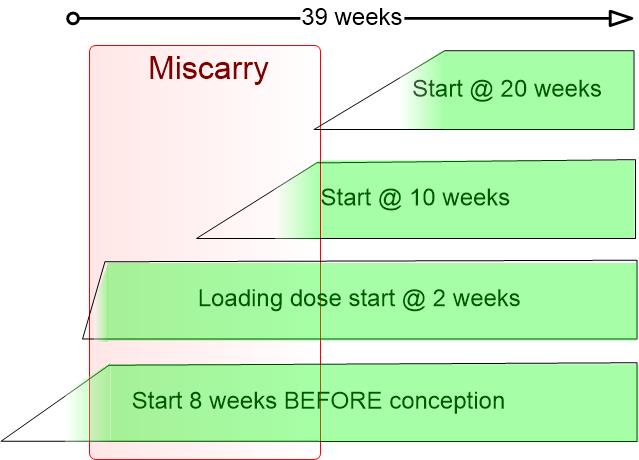
Prenatals rarely provide > 1,000 IU of Vitamin D
Vitamin D content of prenatal vitamins
Comparison table (verified from current product labels)
Sorted by vitamin D content. All forms confirmed as D3 (cholecalciferol).
| Product | Vitamin D | Form | Serving | Notes |
|---|---|---|---|---|
| FullWell Women's Prenatal | 4,000 IU (100 mcg) | D3 | 8 caps | Formulated on the Hollis/Wagner dose; iron-free |
| Seeking Health Optimal Prenatal | 4,000 IU | D3 | 8 caps | Recently raised from 2,000 IU |
| TheraNatal (Theralogix) | 3,000 IU | D3 | — | ~5× the 600 IU RDA |
| Ritual Essential Prenatal | 2,000 IU (50 mcg) | D3 (lichen) | 2 caps | Vegan; best-selling "clean" brand |
| Perelel Core Prenatal | 2,000 IU | D3 | — | OB/GYN-panel formulated |
| SmartyPants Organic (gummy) | 1,200 IU | D3 | — | No iron (typical of gummies) |
| Bird&Be (Female) | 1,000 IU | D3 | — | Pairs with a 1,000 IU Cal/Mag booster → 2,000 IU |
| Life Extension | 1,000 IU | D3 | — | Top of the conventional range |
| Nature Made Prenatal + DHA | 1,000 IU (25 mcg) | D3 | 1 softgel | Best-selling U.S. prenatal brand |
| New Chapter One Daily Prenatal | 1,000 IU (25 mcg) | D3 | 1 tablet | Fermented |
| Thorne Basic Prenatal | 1,000 IU (25 mcg) | D3 | 3 caps | Active B-vitamin forms |
| One A Day Prenatal 1 / Advanced | 600 IU (100% DV) | D3 | 1–2 pills | #1 OB/GYN-recommended OTC brand; sits at the RDA floor |
Observation: the single most-recommended OTC brand (One A Day) delivers the lowest dose in this set — exactly the RDA of 600 IU — while the products that match the trial evidence are all in the practitioner/direct-to-consumer channel. Popularity and dose are inversely related here.
Summary: The figure repeated throughout the clinical literature — that a typical prenatal contains 400 IU of vitamin D — is now out of date at the product level. The best-selling branded prenatals have quietly moved up to 600–1,000 IU, with the premium tier at 2,000 IU and a small evidence-driven group at 3,000–4,000 IU. Even so, the modern mainstream dose still falls well short of the 4,000 IU shown to reliably achieve maternal and neonatal sufficiency in randomized trials.
The "400 IU" figure is a stale citation
Nearly every review, guideline document, and consumer article still asserts that most prenatals contain 400 IU of vitamin D. That number traces back to the 1997/2010 IOM framing (AI 200 IU, later EAR 400 / RDA 600) and gets copied forward from one paper to the next — it appears in the ACOG committee opinion, the Hollis/Wagner RCT introduction, and countless secondary sources.
At the shelf, it no longer holds:
- Nature Made — the highest-volume prenatal brand in the U.S. — is now at 1,000 IU, not 400.
- New Chapter and Thorne are likewise at 1,000 IU.
- The clean/premium tier (Ritual, Perelel) normalized at 2,000 IU.
- 400 IU now survives mainly in bargain/store-brand multivitamins, some gummies, and older formulations.
For anyone relying on secondary literature, this is a trap: the cited "typical" value understates what is actually on the market by roughly 2–3×, while simultaneously the market still understates the evidence-based target. Both gaps are worth stating explicitly.
Why the mainstream dose is still not enough
The reference trial remains Hollis, Wagner et al. (MUSC, double-blind RCT; J Bone Miner Res 2011; and the AJOG analyses). Comparing 400 / 2,000 / 4,000 IU/day from ≤16 weeks to delivery, 4,000 IU was the dose required to achieve vitamin D sufficiency across all women and their neonates regardless of skin color, and was reported safe. It was the lowest dose at which the large majority of women reached adequacy at birth.
Supporting real-world context:
- In a study of women taking 600 IU/day plus two glasses of fortified milk, 76% of mothers and 81% of newborns were still deficient (<20 ng/mL).
- Baseline deficiency in pregnancy runs ~40–60% in the general U.S. population, and higher among those with darker skin, limited sun exposure, higher BMI, or residence at northern latitudes.
Implication for dosing: a 1,000 IU prenatal — the current mainstream ceiling — supplies roughly a quarter of the trial-supported dose. For a woman starting deficient (i.e. most of them), nine months at 1,000 IU does not reliably close the gap. The effect is worse at high latitude, where the winter sun angle essentially eliminates cutaneous synthesis for months, so the starting deficit is deeper than the national average the trials assumed.
The tolerable upper intake level in pregnancy is 4,000 IU (IOM), and multiple groups (including the AAP Committee on Nutrition) have noted that intake above the RDA is likely needed to maintain maternal sufficiency. 4,000 IU therefore sits at — not above — the upper limit, which is why the higher-dose prenatals stop there.
D2 vs. D3 — a shrinking but real concern
Among the mainstream branded prenatals surveyed above, D3 is now effectively universal, including the vegan options (Ritual uses lichen-derived D3). The D2 (ergocalciferol) concern has largely migrated to:
- inexpensive generic/store-brand multivitamins,
- some gummy formulations, and
- older stock still on shelves.
D3 raises and maintains serum 25(OH)D more effectively than D2, so a label reading "1,000 IU" is not equivalent across products unless the form is specified. When comparing products, always record the form alongside the dose.
Sources
- ACOG, Vitamin D: Screening and Supplementation During Pregnancy (Committee Opinion)
- Hollis BW, Johnson D, Hulsey TC, Ebeling M, Wagner CL. Vitamin D supplementation during pregnancy: double-blind, randomized clinical trial of safety and effectiveness.
- American Pregnancy Association, Vitamin D and Pregnancy / Prenatal Vitamins ; https://americanpregnancy.org/healthy-pregnancy/pregnancy-health-wellness/prenatal-vitamins/
Product labels:
Related in VitaminDwiki
- Many prenatal supplements contain only 1,000 IU of Vitamin D - proven by RCT to be of no benefit
- Prenatal Vitamin D Deficiency - Wagner video
- Prenatal VITAMIN D is more important than other prenatal vitamins
- Ensure a healthy pregnancy and baby - take Vitamin D 8 weeks before conception