
Native Americans' pregnancy death rates are 4X higher than those of white pregnant Americans
Native American Leaders Target High Maternal Mortality in Indian Country
Kaiser Family Foundation Jan 2026
CDC 2024
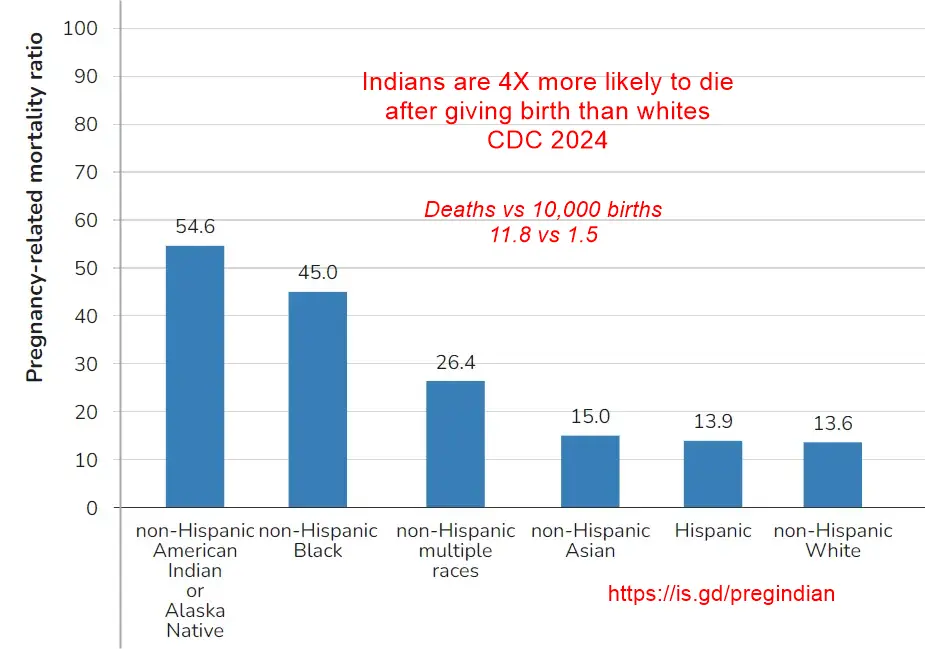
May get worse in 2026: Reduced Medicaid funding implies reduced Indian Health Service funding
Indian Health Services (IHS) has two funding streams, and Medicaid is the critical one
IHS receives its base funding through congressional appropriations — currently around $8 billion annually, far below the estimated need of $73 billion. But on top of that, Medicaid has accounted for about two-thirds of third-party revenue for tribal health providers, creating financial stability and helping facilities pay operational costs. Concretely, Medicaid accounts for 30–60% of overall funding at many IHS facilities.
The exposure is real
The IHS projected billing Medicaid about $1.3 billion this fiscal year. This is money that flows directly into clinic operations — staffing, equipment, services — beyond what congressional appropriations cover.
Tribal facilities have a special 100% federal match — but it's still at risk
While the federal government normally matches states' Medicaid costs at a specified percentage, services provided to AI/AN enrollees in IHS and tribal health facilities are matched at 100 percent. This means states don't bear the cost — but it also means cuts at the federal level hit IHS facilities directly with no state buffer.
The "One Big Beautiful Bill" created some exemptions, but advocates say they're insufficient
The proposed reductions include nearly $900 million in cuts to the IHS budget and the elimination of IHS advance appropriations, which are crucial for protecting IHS funding from government shutdowns. And even where tribal exemptions exist in the Medicaid legislation, a senior Biden White House health official noted that just because Native Americans are exempt doesn't mean they won't feel the impact of cuts made throughout the rest of the program.
The funding situation is precarious on two fronts simultaneously: direct IHS appropriations are being cut, and Medicaid — which fills the gap between appropriations and actual need — is also under pressure. "IHS is already underfunded," according to Dean Seneca, an epidemiologist and Seneca Nation member who spent years at the CDC. "Any kind of cut to the IHS would literally cripple the agency. There will be tribes that won't be able to provide services."