
Microplastics and health - what do we know?
Human biomonitoring evidence of microplastics: What do we really know about internal exposure and health risk?
Hybrid Advances Volume 13, June 2026, https://doi.org/10.1016/j.hybadv.2026.100669
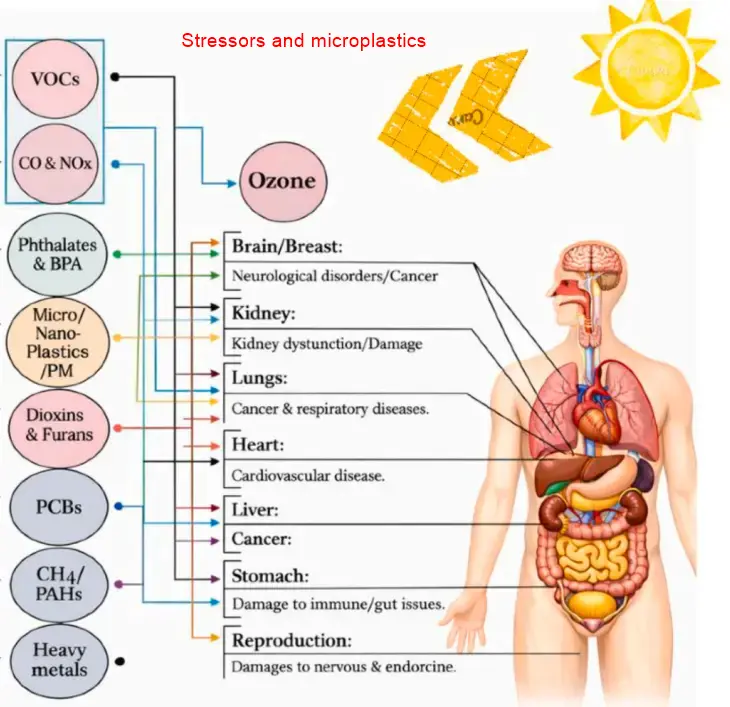
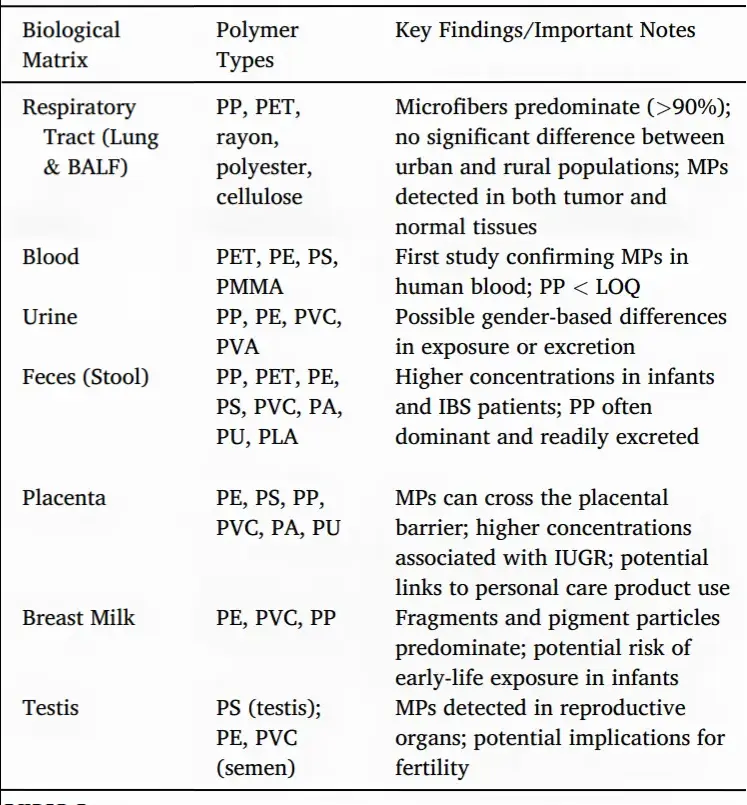
The environmental prevalence of microplastics (MPs) and nanoplastics (NPs) is a growing concern due to their potential for human exposure. Human biomonitoring (HBM) studies have detected MPs in biological samples such as blood, feces, placenta, and respiratory tissues; however, significant uncertainty remains regarding their associated health risks. This systematic review combines bibliometric analysis and content synthesis of 197 Scopus-indexed articles (2015–2025) to critically assess the evidence on internal exposure and health risk. Although MPs are frequently measured in the surrounding environment, including air, water, food, and various tissues, the biologically relevant internal dose (i.e., the fraction that undergoes absorption, systemic distribution, and retention in target organs) remains largely unknown. Ingestion and inhalation are the primary routes of exposure; however, the mere presence of MPs in biological matrices does not indicate a quantifiable internal dose.
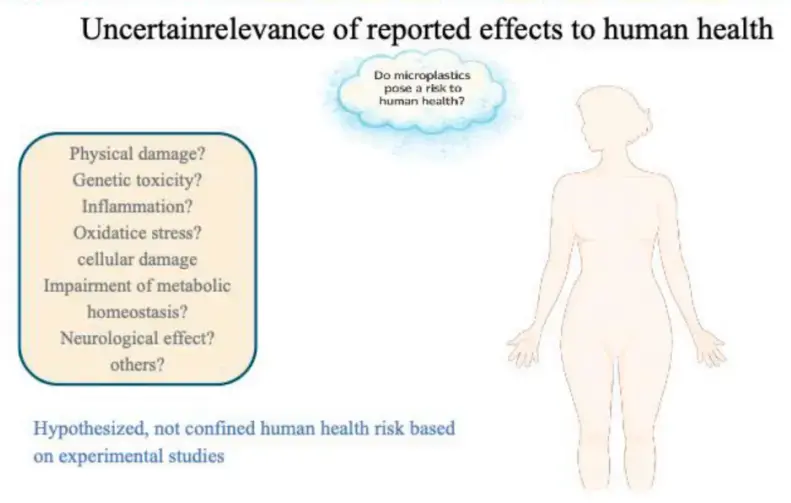
Moreover, no study has demonstrated a direct causal relationship between MP detection and clinically adverse health effects in humans. Existing evidence is limited by methodological heterogeneity, the absence of standardized dose metrics, and a heavy reliance on animal studies, where exposure levels often exceed realistic human conditions by several orders of magnitude.
Therefore, current evidence does not support a causal link between internally accumulated microplastics and adverse health outcomes in humans. Future research should prioritize harmonized approaches to internal dose assessment, biokinetic modeling, and well-designed epidemiological studies that directly link biomonitoring data to clinically relevant health outcomes.
It is important to clarify that the detection of MPs in human matrices including blood, placenta, and feces is not in question; rather, the critical gap lies in translating these detection data into a quantifiable internal dose and establishing causal links with adverse health outcomes.
Related in VitaminDwiki
- Pilot study found plastic detox restored fertility in 3 months
- Prostate Cancers have 2.5 X more microplastics than non-tumor sections
- Microplastics increase the risk of Colorectal Cancer by 11x, Heart attack by 4X, etc.
- Microplastics and Nanoplastics associated with 8 Cancers
- Microplastics increasing asthma, COPD, lung cancer etc. Dec 2025
- Microplastics reduce Vitamin D and Magnesium, Vitamin D reduces MP toxicity
- Microplastics causing problems in humans, etc. (Vitamin D can help) - many studies
- 20+ chronic stressors result in poor health (most are fought by Vitamin D)
many more stressors than just microplastics