Low Calcium (Hypocalcemia) in infants: the principal cause is low Vitamin D
Severe pediatric hypocalcemia in Vietnam: etiologic profile, clinical outcomes and risk factors in 246 cases
Front Endocrinol (Lausanne). 2026 Feb 2:17:1701713. doi: 10.3389/fendo.2026.1701713. eCollection 2026.
Thanh T Nguyen 1 2, Giang T K Dang 1, Phuong Thao Bui 1, Mai Kieu Anh 3, Pham Thi Thuy Hoa 4, Dongryeol Ryu 2, Vu Chi Dung 1 5
Background: Severe hypocalcemia in children can precipitate life-threatening neurologic and cardiovascular events, including seizures and cardiac dysfunction. Etiologies range from nutritional deficiency to genetic syndromes, yet local epidemiologic and clinical data remain limited, particularly in Southeast Asia.
Methods: We retrospectively reviewed 246 children (newborns to 18 years) admitted with severe hypocalcemia at the Vietnam National Children's Hospital (2018 - 2024), the leading tertiary center in Northern Vietnam. Demographic, clinical, and comprehensive biochemical data were collected. Descriptive, bivariate, and multivariable logistic regression analyses identified independent predictors of major clinical outcomes.
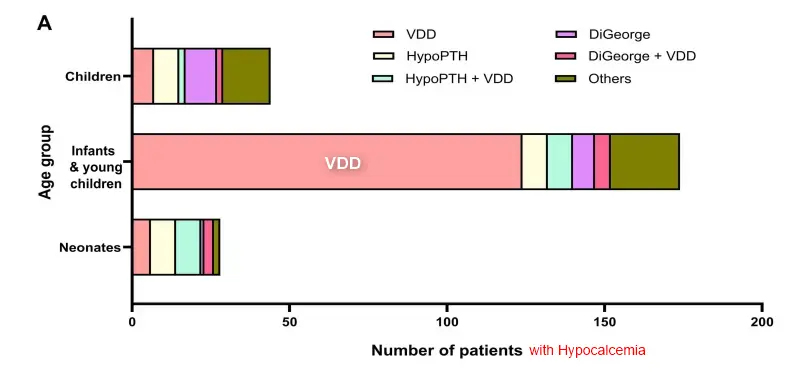
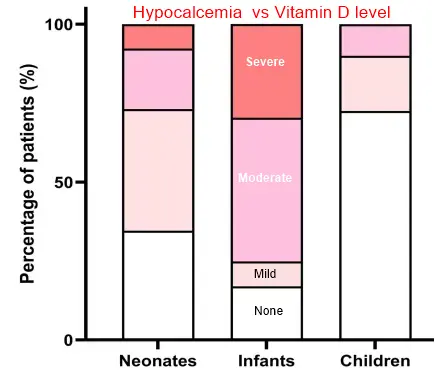
Results: Among 246 children, infants and young children predominated (70.7%; median age 67 days). Seizures occurred in 79.2%, while vitamin D deficiency (67.1%) and hypoparathyroidism (28.0%) were the leading causes of severe hypocalcemia. The mean ionized calcium level was profoundly low (0.66 ± 0.13 mmol/L). Patients with vitamin D deficiency had markedly low 25(OH)D levels (mean 18.4 nmol/L) and high PTH (mean 261.7 pg/mL), consistent with secondary hyperparathyroidism. Conversely, those with hypoparathyroidism showed low PTH levels (22.2 pg/mL) despite significant hypocalcemia. Children with DiGeorge syndrome had even lower PTH levels (6.3 pg/mL) and preserved phosphate. In multivariate analyses, lower ionized calcium and lower 25-hydroxyvitamin D levels were independent predictors of seizures. Cardiac complications (cardiogenic shock and/or acute heart failure) occurred in 5.7% and were associated with more severe hypocalcemia.
Conclusion: Severe pediatric hypocalcemia in Vietnam predominantly affects infants and young children and is largely attributable to preventable vitamin D deficiency. While vitamin D deficiency is globally recognized, this study provides novel region-specific insight into the high frequency of symptomatic presentations, including seizures and cardiac events, in a tropical setting with presumed adequate sunlight exposure. It also emphasizes distinct biochemical phenotypes that allow early etiological stratification. These findings reinforce the urgency of proactive vitamin D supplementation policies and biochemical screening protocols tailored for high-risk populations, particularly in resource-limited settings.
Related in Google Scholar