
Long COVID still affects ~6% of US adults - Oct 2026
Long COVID in Primary Care: A Practical Approach to Evaluation and Management
J Gen Intern Med (Springer Nature), October 9, 2026, https://doi.org/10.1007/s11606-026-10901-w
Anita Chopra, Hector F. Bonilla, Abby L. Cheng
Summary by Claude Opus 5.5 - October 2026
Long COVID can be recognized and managed in ordinary 15-minute primary-care visits, even when routine tests are normal.
This is a focused narrative review (~50 references, no new data) by three US Long COVID clinicians, peer-reviewed and published in the Journal of General Internal Medicine.
Key points:
- About 6% of US adults still have Long COVID; ~25% of patients still have symptoms after 1 year, ~10% after 2 years
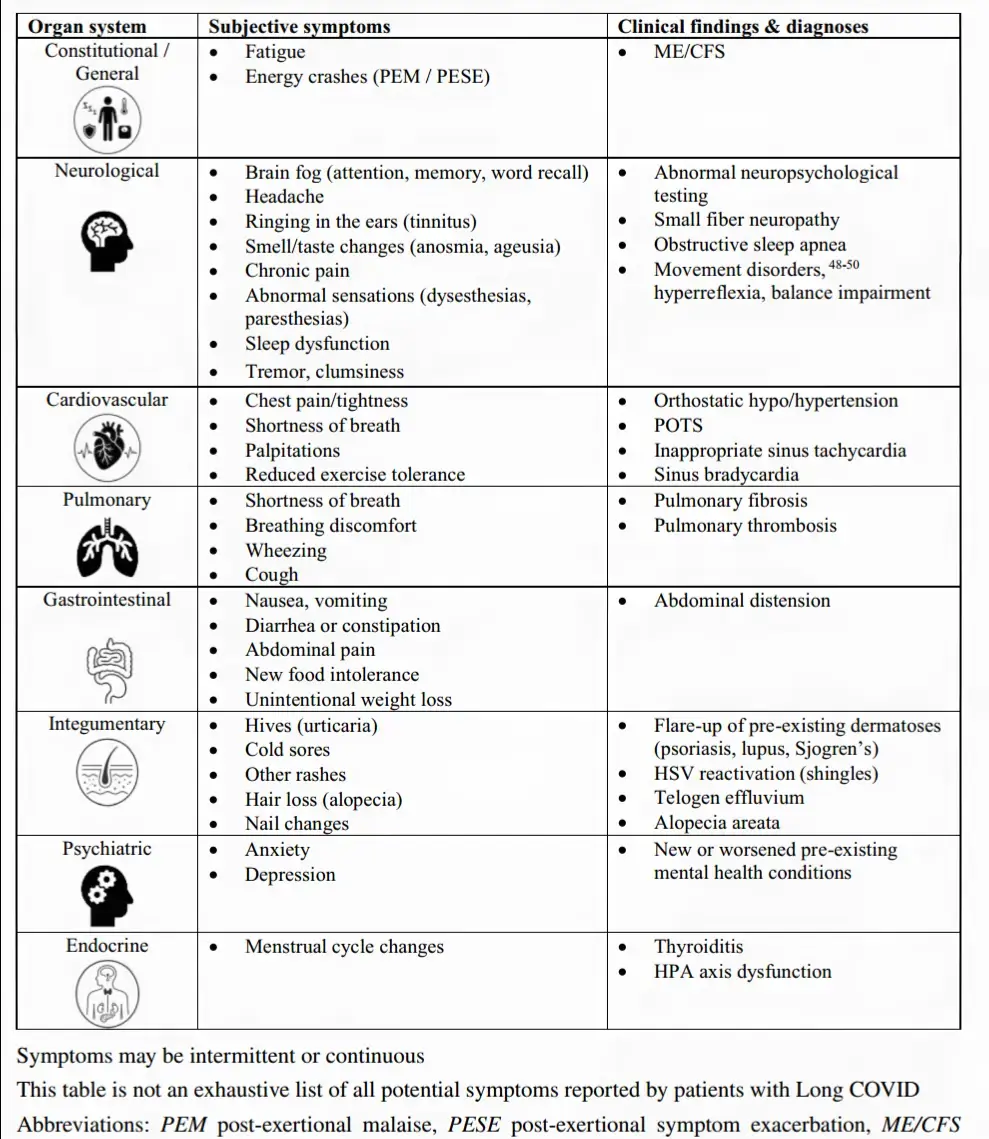
- Most common symptoms: fatigue, post-exertional malaise (PEM, "crashing" after minor effort), brain fog, and lightheadedness on standing
- Three types: lasting organ damage, new or worsened chronic disease, and ongoing biological dysregulation (persistent virus, immune and gut problems, mitochondrial dysfunction, micro-clotting); the last is hardest to treat
- The authors note there is "no clinically available biomarker to confirm or rule out the diagnosis"
- Suggested labs: CBC, CMP, TSH; consider ESR, CRP, CK, and vitamins D, B1 and B12
- Management: pace activity and avoid push/crash cycles; graded exercise only with extreme caution if PEM; for POTS, 2.5–3.5 L fluid and 2.8–4 g sodium daily plus compression garments; symptom-based drugs, including off-label low-dose naltrexone and H1 + H2 antihistamines
- Prevention: vaccination, masks, clean indoor air; early treatment reported to lower Long COVID risk: ensitrelvir 45%, metformin 41%, nirmatrelvir/ritonavir 26%, molnupiravir 14% (relative reductions)
Vitamin D appears only once, as an optional blood test. The review does not consider vitamin D, or any supplement, for prevention or treatment, and gives no 25(OH)D target.
What this does NOT show
- No new evidence: a narrative review without systematic search, pooling, or quality grading
- The prevention percentages come from different designs (two RCTs: metformin, ensitrelvir; two observational: nirmatrelvir, molnupiravir) and are not directly comparable
- Nothing for or against vitamin D, since it was not examined
- One author reports grant support from Pfizer, maker of nirmatrelvir/ritonavir (Paxlovid)