
Less spinal pain if higher Vitamin D - 2026
Dietary and supplemental vitamin D intake and pain interference in adults with chronic spine-related pain: a cross-sectional survey study
Front. Nutr., 06 May 2026, Sec. Clinical Nutrition. Vol 13 - 2026 | https://doi.org/10.3389/fnut.2026.1815557
Tao Chen 1, Yong Chen 1, Qiang Li 1. Li Su 2, Deng Zhao 3. Zhengjun Hu 4, Wenjing Zhang 5, .... CHINA
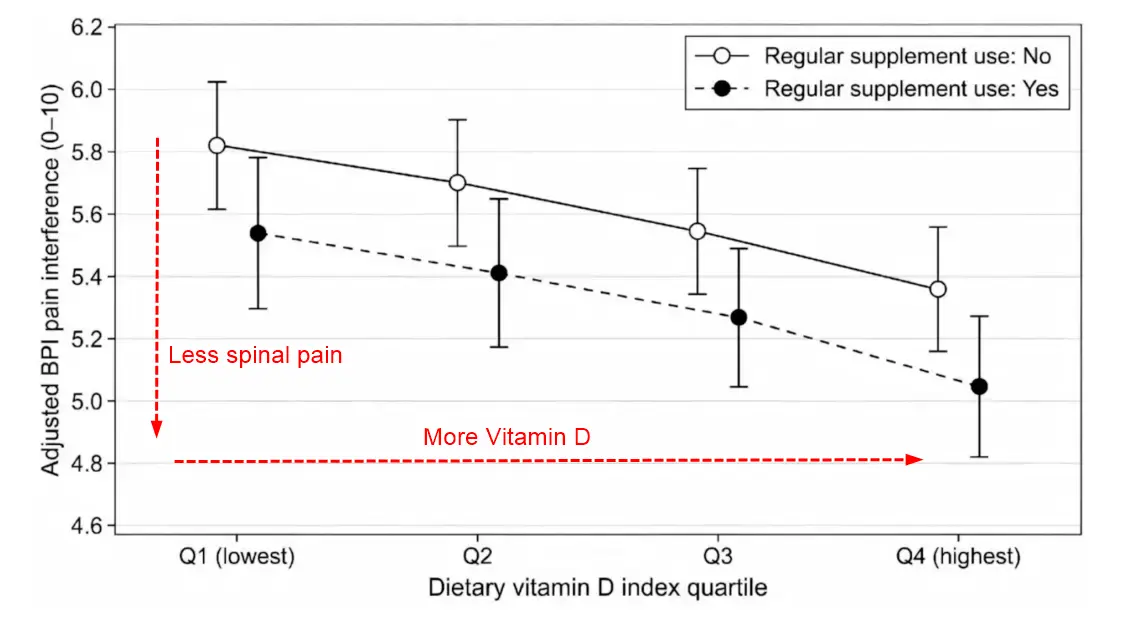
Background/objectives: Chronic spine-related pain is a leading driver of global disability, yet the role of modifiable nutritional factors in relation to functional impairment remains inadequately characterized. This study evaluated the associations between dietary vitamin D exposure ranking, vitamin D supplementation, and pain-related functional interference among adults in tertiary care settings.
Methods: A multi-center cross-sectional survey was conducted at four tertiary hospitals in China, including 698 adults with spine-related pain persisting for at least 3 months. Dietary vitamin D intake was operationalized as a standardized ranking index derived from a semi-quantitative food frequency screener. Vitamin D supplementation was categorized by current and regular use. The primary outcome was the Brief Pain Inventory (BPI) interference mean score. Given the observational cross-sectional design, analyses were interpreted as associations rather than causal effects. Multivariable linear regression adjusted for confounders including age, BMI, physical activity, sleep quality, depressive symptoms, and sun exposure proxies.
Results: Higher dietary vitamin D index was significantly associated with lower pain interference in the fully adjusted model (β = −0.18 per 1 SD increase; 95% CI: −0.29 to −0.07; p = 0.002). Regular vitamin D supplementation was also independently associated with reduced interference (β = −0.31; 95% CI: −0.52 to −0.10; p = 0.004). Associations were stronger for functional interference than for pain severity. Prespecified subgroup analyses revealed more pronounced dietary associations among participants with BMI ≥ 24 kg/m2 (pinteraction = 0.041) and those with low physical activity (pinteraction = 0.021).
Conclusion: Higher dietary vitamin D exposure ranking and regular supplementation were independently associated with lower functional interference in this chronic spine pain population. Because the study was observational and cross-sectional, the findings should be interpreted as hypothesis-generating associations rather than evidence of therapeutic benefit, particularly in higher-risk phenotypes.
Related in VitaminDWiki
- Complex Regional Pain Syndrome 14X more likely if low Vitamin D
- Pain more intense if low Vitamin D
- Vitamin D reduces 5 types of chronic pain
- Expert consensus: Osteoporosis needs Vitamin D
- History of Vitamin D from 500 million years ago to orthopaedic practice today – 2019
Back Pain
- Back Pain
- Low back pain over age 30 – about 1 in 10 – Review
- Vitamin D3 substantially reduced lumbar degenerative disease
- Lower back pain treated by 600,000 IU of Vitamin D – RCT
Back pain in adults 2 times more likely if less than 12 ng of vitamin D – Review
Low back pain – 72 percent have low vitamin D – meta-analysis
- Vitamin D before surgery improves outcome (spinal in this case)