
Hypothesis: Pineal gland calcification due to Fluoride and other stresses increase the risk of Alzheimer's, etc. - May 2026
A Hypothesis Paper Prepared for submission to Medical Hypotheses / Frontiers in Aging Neuroscience
Sayer Ji Substack Preprint?
Background and Purpose:
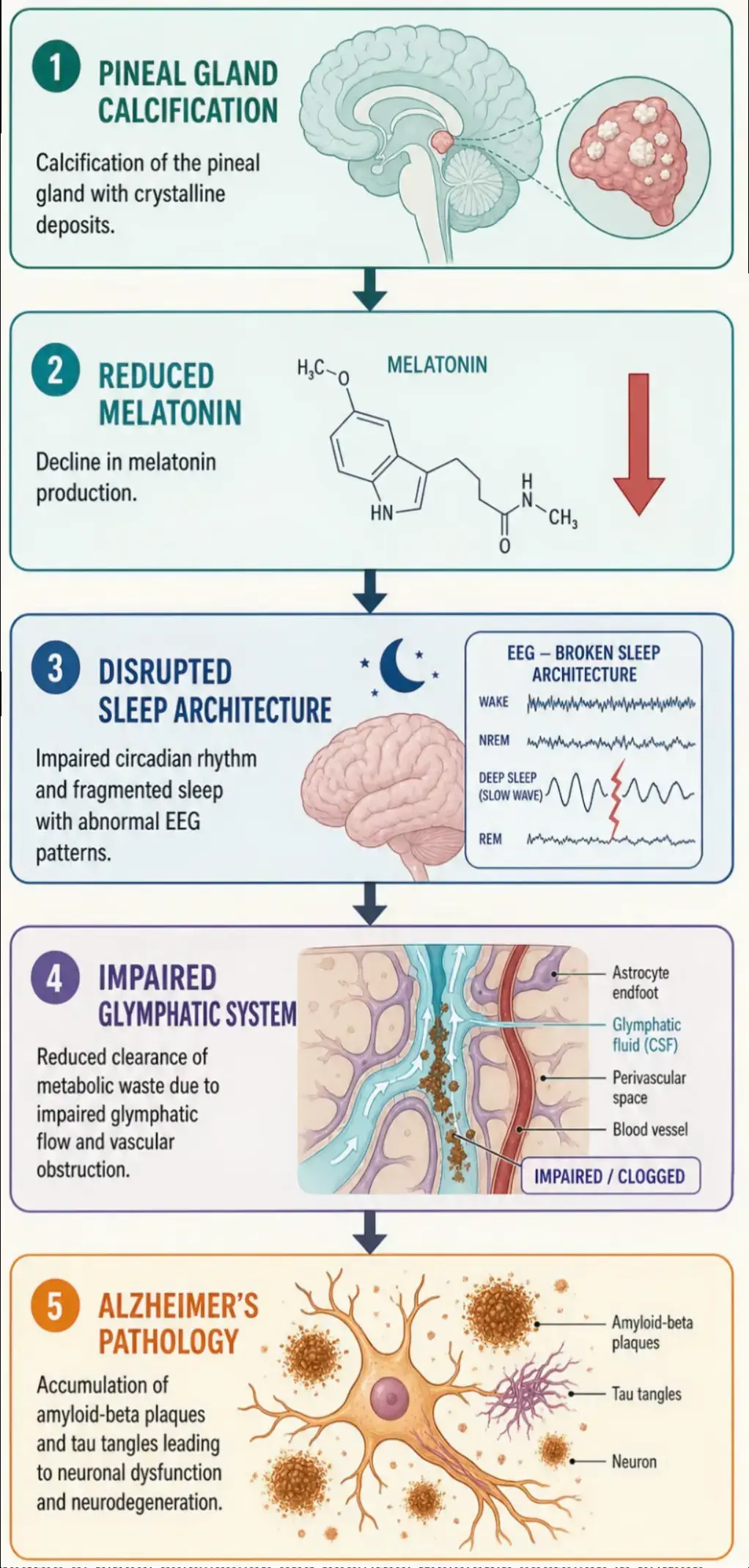
Pineal gland calcification (PGC) affects over 60% of adults globally yet is routinely classified as a benign incidental radiological finding. This paper argues that PGC represents a significant and underinvestigated convergent mechanism in age-related pathology, with downstream consequences spanning circadian dysregulation, melatonin decline, oxidative stress, amyloid-beta accumulation, and neuropsychiatric vulnerability.
Methods
We synthesize peer-reviewed evidence across five domains: (1) epidemiology of PGC prevalence; (2) biochemistry of hydroxyapatite formation and its inhibitors; (3) environmental and physiological contributors including fluoride exposure and chronic stress; (4) melatonin pathway disruption and its systemic consequences; and (5) associations between PGC and neurological disease, including Alzheimer’s disease, schizophrenia, bipolar disorder, and Parkinson’s disease.
Conclusions
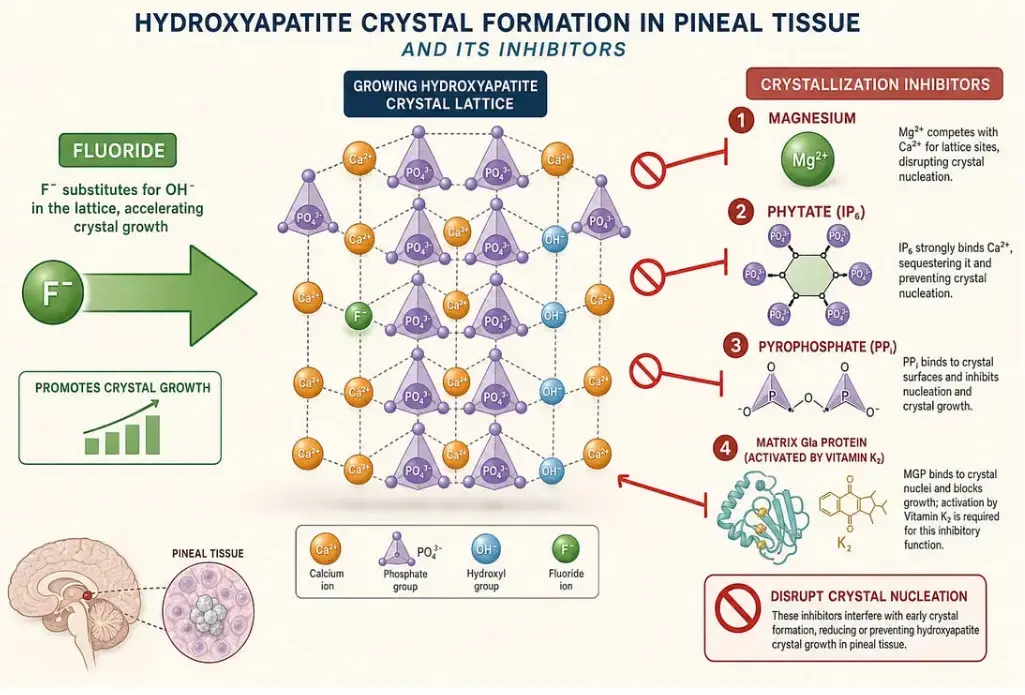
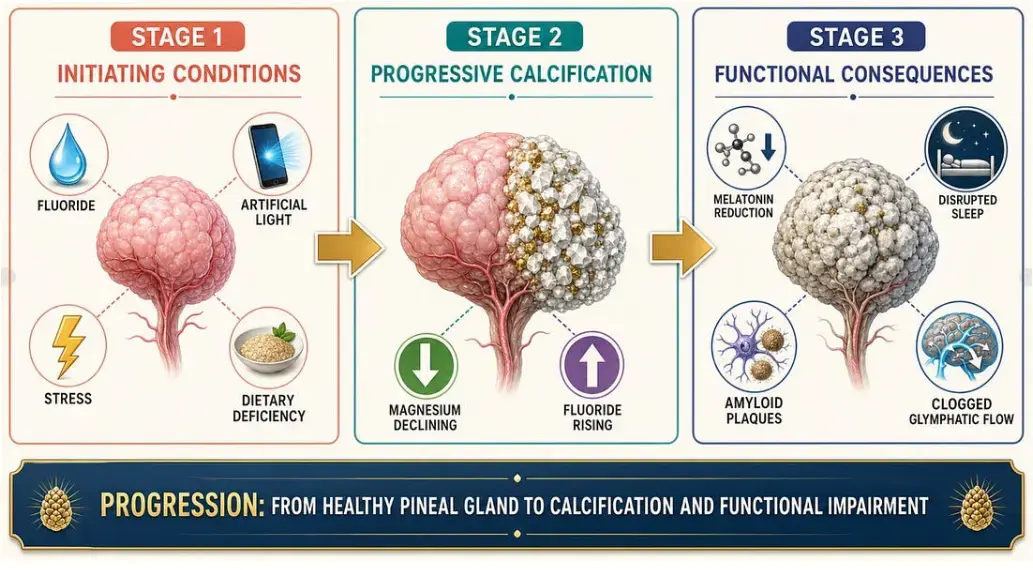
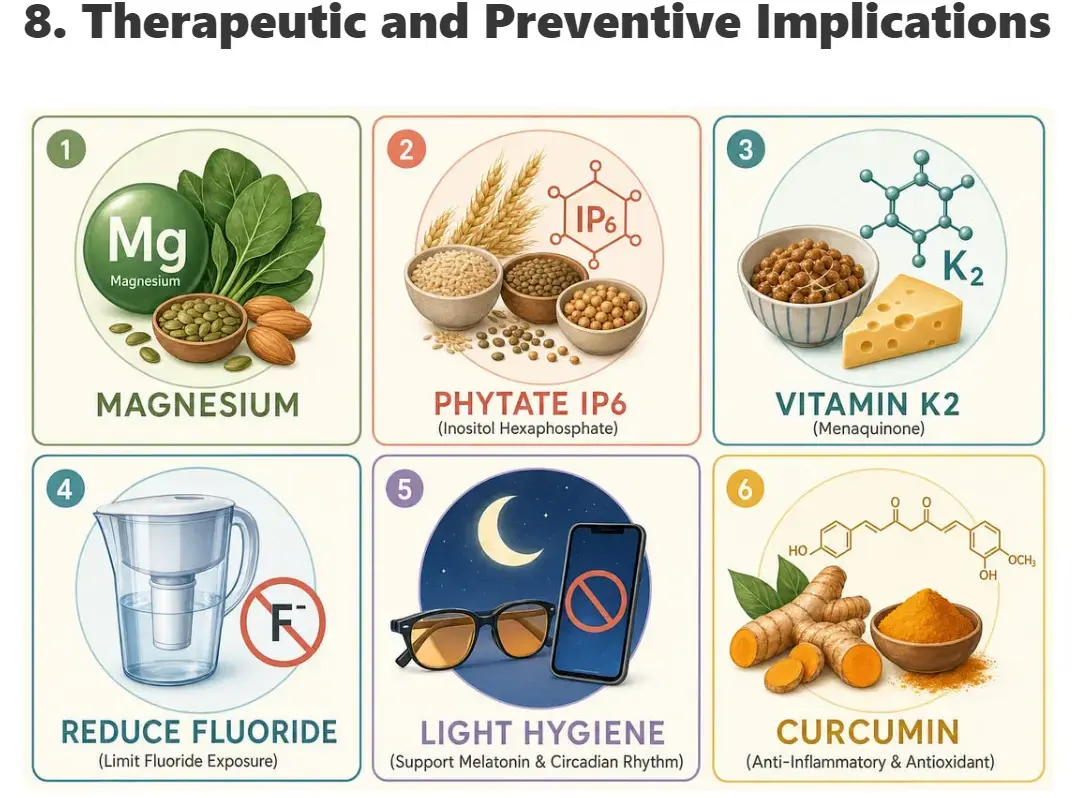
Convergent mechanistic and epidemiological evidence supports reconceptualizing PGC as a modifiable pathological process rather than an incidental finding. Known crystallization inhibitors -- magnesium, phytate, pyrophosphate, and vitamin K2 -- represent plausible preventive interventions warranting prospective clinical investigation. We propose a unified three-stage mechanistic model and a research agenda for longitudinal and interventional studies.
Keywords
Pineal gland calcification; hydroxyapatite; melatonin; circadian dysregulation; Alzheimer’s disease; fluoride; magnesium; phytate; neurodegeneration; soft tissue calcification
Total Fluoride appears to be a problem for children ( tea, food, dental products, and water)
- urine integrates tea, food, dental products, and water together.
Children's IQ / neurodevelopment with high exposure
The 2024 NTP State-of-the-Science Monograph concluded with moderate confidence that higher estimated fluoride exposures are consistently associated with lower IQ in children, where "higher" was defined as drinking-water fluoride above 1.5 mg/L — roughly double the U.S. fluoridation level. Among the high-quality studies, the signal was strikingly consistent:
* of 19 high-quality studies examining fluoride and children's IQ,
* 18 reported an inverse association.
The companion DTT meta-analysis published in JAMA Pediatrics in January 2025 synthesized 74 epidemiological studies across 12 countries and reported an inverse association between fluoride exposure and children's IQ scores.
The determination rested primarily on studies from Canada, China, India, Iran, Pakistan, and Mexico where exposures exceeded 1.5 mg/L, and the monograph itself notes that an association indicates a connection, not cause and effect. Whether the 0.7 mg/L community fluoridation level causes harm remains genuinely contested — the NTP did not establish that, and some long-term U.S. and Australian cohorts suggest no harm at recommended levels.
Related on the web
- Fluoride accumulates 600x more in the pineal than other tissues,
- According to a 2023 systematic review and meta-analysis, pineal calcification 2023
now affects 33% of teenagers, 60% of 40-year-olds, and 70% of seniors - The pineal gland in aging and alzheimer’s disease: age-related molecular changes Jan 2026
https://doi.org/10.1186/s13643-023-02205-5 - Investigating the role of microcalcification in Alzheimer’s disease progression PhD dissertation - Nov 2025 PDF
Related in VitaminDWiki (nothing about Pineal Gland nor Calcification)
- Overview Alzheimer's-Cognition and Vitamin D
- Overview Parkinson's and Vitamin D
- Overview Schizophrenia and Vitamin D
- How Vitamin D fights neurodegeneration (Multiple Sclerosis, Alzheimer’s, Dementia, etc)
- Fluoride problems include reduced IQ
- Brain health improved by Vitamin D - review of 90 studies
- Vitamin D and neurodegenerative diseases
Stressors
- High fluoride in water: 5X more likely to be Vitamin D deficient
Fluoride reduces Vitamin D levels - Off topic : Fluoridation fails to reduce tooth decay but succeeds in causing health problems
- 20+ chronic stressors result in poor health (most are fought by Vitamin D)
- [Physical Inactivity is another body stressor](/pages/physical-inactivity-is-another-body-stresso