Hypothesis: Circadian Rhythm and Vitamin D are associated via CYP11A1 - Dec 2025
Is Vitamin D Signaling Regulated by and Does It Regulate Circadian Rhythms?
FASEB J. 2025 Dec 31;39(24):e71321. doi: 10.1096/fj.202503003R.
A T Slominski 1 2 3, R M Slominski 4, M Kamal 5, M F Holick 6, R C Tuckey 7, R J Reiter 8, W Li 5, A M Jetten 9
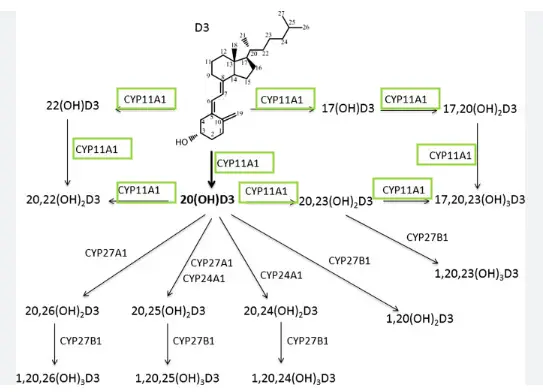
Since recent reports have indicated that vitamin D3 (D3) can affect sleep behavior, we asked the question of whether activation of D3 is regulated by the circadian clock and whether active forms of vitamin D3 regulate its molecular elements. While current evidence does not support circadian regulation of 25(OH)D3 and 1,25(OH)2D3 production, there is experimental and molecular evidence that the circadian network may regulate CYP11A1 activity and by inference, the production of downstream D3-hydroxyderivatives. D3-hydroxyderivatives act as inverse agonists on RORα and γ, and as agonists on AhR, while molecular modeling indicated that D3-hydroxyderivatives can also act on RORβ and REV-ERBs. RORs and REV-ERBs regulate the transcription of several clock genes by binding ROR responsive elements (ROREs) in their promoter region. These data raise the concept that D3-hydroxyderivatives may directly regulate circadian clock genes via these receptors. Finally, literature data suggest that D3-hydroxyderivatives can affect the circadian clock indirectly via changes in systemic levels of melatonin. While these hypotheses remain to be experimentally validated, they open exciting areas of research on UVB regulation of the circadian system and possible circannual/seasonal rhythms through the generation of D3, its photoderivatives, or its hydroxylated metabolites. An open question remains whether such UVB-induced regulatory mechanisms are conserved through the animal and plant kingdoms. In summary, we propose that vitamin D3 signaling can both be regulated by the circadian network and that it can directly regulate the molecular clock through action on RORα/β/γ, REV-ERBα/β or AhR.
References
T. Mortimer, J. G. Smith, P. Muñoz‐Cánoves, and S. A. Benitah, “Circadian Clock Communication During Homeostasis and Ageing,” Nature Reviews Molecular Cell Biology 26 (2025): 314–331.
F. Fagiani, D. Di Marino, A. Romagnoli, et al., “Molecular Regulations of Circadian Rhythm and Implications for Physiology and Diseases,” Signal Transduction and Targeted Therapy 7 (2022): 41.
M. Adlanmerini and M. A. Lazar, “The REV‐ERB Nuclear Receptors: Timekeepers for the Core Clock Period and Metabolism,” Endocrinology 164 (2023): bqad069.
A. M. Jetten, J. Y. Beak, A. T. Slominski, and B. Jensen, “Retinoic Acid‐Related Orphan Receptor (ROR) Inverse Agonists: Potential Therapeutic Strategies for Multiple Inflammatory Diseases?,” in Nuclear Receptors: The Art and Science of Modulator Design and Discovery, ed. M. Z. Badr (Springer International Publishing, 2021), 349–377.
T. K. Sato, S. Panda, L. J. Miraglia, et al., “A Functional Genomics Strategy Reveals Rora as a Component of the Mammalian Circadian Clock,” Neuron 43 (2004): 527–537.
Y. Takeda, R. Jothi, V. Birault, and A. M. Jetten, “RORγ Directly Regulates the Circadian Expression of Clock Genes and Downstream Targets In Vivo,” Nucleic Acids Research 40 (2012): 8519–8535.
Y. Takeda, H. S. Kang, J. Freudenberg, L. M. DeGraff, R. Jothi, and A. M. Jetten, “Retinoic Acid‐Related Orphan Receptor γ (RORγ): A Novel Participant in the Diurnal Regulation of Hepatic Gluconeogenesis and Insulin Sensitivity,” PLoS Genetics 10 (2014): e1004331.
Y. Takeda, H. S. Kang, F. B. Lih, H. Jiang, W. S. Blaner, and A. M. Jetten, “Retinoid Acid‐Related Orphan Receptor γ, RORγ, Participates in Diurnal Transcriptional Regulation of Lipid Metabolic Genes,” Nucleic Acids Research 42 (2014): 10448–10459.
D. N. Cook, H. S. Kang, and A. M. Jetten, “Retinoic Acid‐Related Orphan Receptors (RORs): Regulatory Functions in Immunity, Development, Circadian Rhythm, and Metabolism,” Nuclear Receptor Research 2 (2015): 101185.
Y. Takeda, H. S. Kang, M. Angers, and A. M. Jetten, “Retinoic Acid‐Related Orphan Receptor γ Directly Regulates Neuronal PAS Domain Protein 2 Transcription In Vivo,” Nucleic Acids Research 39 (2011): 4769–4782.
K. Begemann, O. Rawashdeh, I. Olejniczak, et al., “Endocrine Regulation of Circadian Rhythms,” Npj Biological Timing and Sleep 2 (2025): 10.
G. Maestroni, “Circadian Regulation of the Immune‐Hematopoietic System,” Exploration of Neuroscience 2 (2023): 123–139.
K. B. Megha, A. Arathi, S. Shikha, R. Alka, P. Ramya, and P. V. Mohanan, “Significance of Melatonin in the Regulation of Circadian Rhythms and Disease Management,” Molecular Neurobiology 61 (2024): 5541–5571.
A. Ishida, T. Mutoh, T. Ueyama, et al., “Light Activates the Adrenal Gland: Timing of Gene Expression and Glucocorticoid Release,” Cell Metabolism 2 (2005): 297–307.
N. A. Hameed and A. F. Barber, “Circadian Regulation of Sleep: From Genes to Circuits,” in Genetics of Sleep and Sleep Disorders, ed. P. Gehrman, C. A. Keene, and S. Grant (Springer International Publishing, 2024), 343–392.
S. P. Feeney, J. M. McCarthy, C. R. Petruconis, and J. C. Tudor, “Sleep Loss Is a Metabolic Disorder,” Science Signaling 18 (2025): eadp9358.
M. F. Holick, “Vitamin D: A Millenium Perspective,” Journal of Cellular Biochemistry 88 (2003): 296–307.
A. T. Slominski, T. K. Kim, Z. Janjetovic, et al., “Melatonin and the Skin: Current Progress and Perspectives for Human Health,” Journal of Investigative Dermatology 145 (2025): 1345–1360.
R. J. Reiter, R. Sharma, D. X. Tan, et al., “Dual Sources of Melatonin and Evidence for Different Primary Functions,” Frontiers in Endocrinology 15 (2024): 1414463.
R. M. Stein, H. J. Kang, J. D. McCorvy, et al., “Virtual Discovery of Melatonin Receptor Ligands to Modulate Circadian Rhythms,” Nature 579 (2020): 609–614.
M. F. Holick and A. T. Slominski, “Photobiology of Vitamin D,” in Feldman and Pike's Vitamin D, vol. 1, ed. M. Hewison, R. Bouillon, E. Giovannucci, D. Goltzman, B. M. Meyer, and J. Welsh (Academic Press, 2024), 27–45.
M. N. Culver, B. A. Linder, D. E. Lyons, et al., “Do Not Sleep on Vitamin D: Vitamin D Is Associated With Sleep Variability in Apparently Healthy Adults,” American Journal of Physiology. Regulatory, Integrative and Comparative Physiology 328 (2025): R262–R273.
S. Fustinoni, R. Mercadante, E. Polledri, et al., “Steroid Hormones, Vitamin D and Melatonin in Rapidly Rotating Shift Female Hospital Workers,” Toxicology Letters 403 (2025): 32–39.
A. Arabi, D. Nasrallah, S. Mohsen, et al., “Association Between Serum Vitamin D Status and Circadian Syndrome: A Cross‐Sectional Study,” Nutrients 16 (2024): 2111.
L. Lamnis, C. Christofi, A. Stark, et al., “Differential Regulation of Circadian Clock Genes by UV‐B Radiation and 1,25‐Dihydroxyvitamin D: A Pilot Study During Different Stages of Skin Photocarcinogenesis,” Nutrients 16 (2024): 254.
J. Jung, J. Kang, and T. Kim, “Attenuation of Homeostatic Sleep Response and Rest‐Activity Circadian Rhythm in Vitamin D Deficient Mice,” Chronobiology International 40 (2023): 1097–1110.
J. J. Durocher and E. Mutai, “Sleep Tight With Vitamin d's Might,” American Journal of Physiology. Regulatory, Integrative and Comparative Physiology 328 (2025): R557–R558.
F. Romano, G. Muscogiuri, E. Di Benedetto, et al., “Vitamin D and Sleep Regulation: Is There a Role for Vitamin D?,” Current Pharmaceutical Design 26 (2020): 2492–2496.
M. Mosavat, A. Smyth, D. Arabiat, and L. Whitehead, “Vitamin D and Sleep Duration: Is There a Bidirectional Relationship?,” Hormone Molecular Biology and Clinical Investigation 41 (2020): 20200025.
P. Maissan and C. Carlberg, “Circadian Regulation of Vitamin D Target Genes Reveals a Network Shaped by Individual Responsiveness,” Nutrients 17 (2025): 1204.
M. Kawai, S. Kinoshita, M. Yamazaki, et al., “Intestinal Clock System Regulates Skeletal Homeostasis,” JCI Insight 4 (2019): e121798.
R. M. Slominski, J. Y. Chen, C. Raman, and A. T. Slominski, “Photo‐Neuro‐Immuno‐Endocrinology: How the Ultraviolet Radiation Regulates the Body, Brain, and Immune System,” Proceedings of the National Academy of Sciences of the United States of America 121 (2024): e2308374121.
M. Hewison, R. Bouillon, E. Giovannucci, D. Goltzman, B. M. Meyer, and J. Welsh, Feldman and Pike's Vitamin D Vol. 1 and 2 (Academic Press, 2023).
D. Bikle and S. Christakos, “New Aspects of Vitamin D Metabolism and Action—Addressing the Skin as Source and Target,” Nature Reviews. Endocrinology 16 (2020): 234–252.
A. T. Slominski, T. K. Kim, Z. Janjetovic, et al., “Biological Effects of CYP11A1‐Derived Vitamin D and Lumisterol Metabolites in the Skin,” Journal of Investigative Dermatology 144 (2024): 2145–2161.
R. M. Slominski, C. Raman, A. M. Jetten, and A. T. Slominski, “Neuro‐Immuno‐Endocrinology of the Skin: How Environment Regulates Body Homeostasis,” Nature Reviews. Endocrinology 21 (2025): 495–509.
W. L. Miller and R. J. Auchus, “The Molecular Biology, Biochemistry, and Physiology of Human Steroidogenesis and Its Disorders,” Endocrine Reviews 32 (2011): 81–151.
R. C. Tuckey, “Progesterone Synthesis by the Human Placenta,” Placenta 26 (2005): 273–281.
A. T. Slominski, T. K. Kim, J. Chen, et al., “Cytochrome P450scc‐Dependent Metabolism of 7‐Dehydrocholesterol in Placenta and Epidermal Keratinocytes,” International Journal of Biochemistry & Cell Biology 44 (2012): 2003–2018.
A. T. Slominski, R. C. Tuckey, C. Jenkinson, W. Li, and A. M. Jetten, “Alternative Pathways for Vitamin D Metabolism,” in Feldman and Pike's Vitamin D, vol. 1, ed. M. Hewison, R. Bouillon, E. Giovannucci, D. Goltzman, B. M. Meyer, and J. Welsh (Academic Press, 2024), 85–109.
A. T. Slominski, M. A. Zmijewski, I. Semak, et al., “Sequential Metabolism of 7‐Dehydrocholesterol to Steroidal 5,7‐Dienes in Adrenal Glands and Its Biological Implication in the Skin,” PLoS One 4 (2009): e4309.
O. Guryev, R. A. Carvalho, S. Usanov, A. Gilep, and R. W. Estabrook, “A Pathway for the Metabolism of Vitamin D3: Unique Hydroxylated Metabolites Formed During Catalysis With Cytochrome P450scc (CYP11A1),” Proceedings of the National Academy of Sciences of the United States of America 100 (2003): 14754–14759.
A. Slominski, J. Zjawiony, J. Wortsman, et al., “A Novel Pathway for Sequential Transformation of 7‐Dehydrocholesterol and Expression of the P450scc System in Mammalian Skin,” European Journal of Biochemistry / FEBS 271 (2004): 4178–4188.
A. Slominski, T. K. Kim, M. A. Zmijewski, et al., “Novel Vitamin D Photoproducts and Their Precursors in the Skin,” Dermato‐Endocrinology 5 (2013): 7–19.
M. A. Zmijewski, W. Li, J. Chen, et al., “Synthesis and Photochemical Transformation of 3beta,21‐Dihydroxypregna‐5,7‐Dien‐20‐One to Novel Secosteroids That Show Anti‐Melanoma Activity,” Steroids 76 (2011): 193–203.
M. A. Zmijewski, W. Li, J. K. Zjawiony, et al., “Photo‐Conversion of Two Epimers (20R and 20S) of Pregna‐5,7‐Diene‐3beta, 17alpha, 20‐Triol and Their Bioactivity in Melanoma Cells,” Steroids 74 (2009): 218–228.
T. K. Kim, R. M. Slominski, E. Pyza, et al., “Evolutionary Formation of Melatonin and Vitamin D in Early Life Forms: Insects Take Centre Stage,” Biological Reviews of the Cambridge Philosophical Society 99 (2024): 1772–1790.
A. T. Slominski, M. A. Zmijewski, P. M. Plonka, J. P. Szaflarski, and R. Paus, “How UV Light Touches the Brain and Endocrine System Through Skin, and Why,” Endocrinology 159 (2018): 1992–2007.
M. C. Shih, N. C. Hsu, C. C. Huang, T. S. Wu, P. Y. Lai, and B. C. Chung, “Mutation of Mouse Cyp11a1 Promoter Caused Tissue‐Specific Reduction of Gene Expression and Blunted Stress Response Without Affecting Reproduction,” Molecular Endocrinology 22 (2008): 915–923.
M. Hatori, T. Hirota, M. Iitsuka, et al., “Light‐Dependent and Circadian Clock‐Regulated Activation of Sterol Regulatory Element‐Binding Protein, X‐Box‐Binding Protein 1, and Heat Shock Factor Pathways,” Proceedings of the National Academy of Sciences of the United States of America 108 (2011): 4864–4869.
A. Z. Baburski, S. J. Sokanovic, M. M. Janjic, et al., “Melatonin Replacement Restores the Circadian Behavior in Adult Rat Leydig Cells After Pinealectomy,” Molecular and Cellular Endocrinology 413 (2015): 26–35.
S. A. Rahman, L. K. Grant, J. J. Gooley, S. M. W. Rajaratnam, C. A. Czeisler, and S. W. Lockley, “Endogenous Circadian Regulation of Female Reproductive Hormones,” Journal of Clinical Endocrinology & Metabolism 104 (2019): 6049–6059.
M. Witzig, A. Grimm, K. Schmitt, et al., “Clock‐Controlled Mitochondrial Dynamics Correlates With Cyclic Pregnenolone Synthesis,” Cells 9 (2020): 2323.
M. Chustecka, N. Blügental, P. M. Majewski, and I. Adamska, “24 Hour Patterning in Gene Expression of Pineal Neurosteroid Biosynthesis in Young Chickens (Gallus gallus Domesticus L.),” Chronobiology International 38 (2021): 46–60.
G. H. Son, S. Chung, H. K. Choe, et al., “Adrenal Peripheral Clock Controls the Autonomous Circadian Rhythm of Glucocorticoid by Causing Rhythmic Steroid Production,” Proceedings of the National Academy of Sciences 105 (2008): 20970–20975.
G. Russell and S. Lightman, “The Human Stress Response,” Nature Reviews Endocrinology 15 (2019): 525–534.
W. K. Shea‐Eaton, M. J. Trinidad, D. Lopez, A. Nackley, and M. P. McLean, “Sterol Regulatory Element Binding Protein‐1a Regulation of the Steroidogenic Acute Regulatory Protein Gene*,” Endocrinology 142 (2001): 1525–1533.
R. Chen, Y. Qin, J. Du, et al., “Circadian Clock Gene BMAL1 Regulates STAR Expression in Goose Ovarian Preovulatory Granulosa Cells,” Poultry Science 102 (2023): 103159.
C. M. B. Focke and K. J. Iremonger, “Rhythmicity Matters: Circadian and Ultradian Patterns of HPA Axis Activity,” Molecular and Cellular Endocrinology 501 (2020): 110652.
A. Kalsbeek, R. van der Spek, J. Lei, E. Endert, R. M. Buijs, and E. Fliers, “Circadian Rhythms in the Hypothalamo–Pituitary–Adrenal (HPA) Axis,” Molecular and Cellular Endocrinology 349 (2012): 20–29.
J. Drouin, “60 YEARS OF POMC: Transcriptional and Epigenetic Regulation of POMC Gene Expression,” Journal of Molecular Endocrinology 56 (2016): T99–T112.
B. Lamolet, G. Poulin, K. Chu, F. o. Guillemot, M.‐J. Tsai, and J. Drouin, “Tpit‐Independent Function of NeuroD1(BETA2) in Pituitary Corticotroph Differentiation,” Molecular Endocrinology 18 (2004): 995–1003.
A. Blondet, M. Doghman, P. Durand, M. Bégeot, and D. Naville, “An E‐Box‐Containing Region Is Involved in the Tissue‐Specific Expression of the Human MC2R Gene,” Journal of Molecular Endocrinology 32 (2004): 811–823.
A. T. Slominski, W. Li, T. K. Kim, et al., “Novel Activities of CYP11A1 and Their Potential Physiological Significance,” Journal of Steroid Biochemistry and Molecular Biology 151 (2015): 25–37.
R. C. Tuckey, C. Y. S. Cheng, and A. T. Slominski, “The Serum Vitamin D Metabolome: What We Know and What Is Still to Discover,” Journal of Steroid Biochemistry and Molecular Biology 186 (2019): 4–21.
A. T. Slominski, T. K. Kim, Y. Takeda, et al., “RORalpha and ROR Gamma Are Expressed in Human Skin and Serve as Receptors for Endogenously Produced Noncalcemic 20‐Hydroxy‐ and 20,23‐Dihydroxyvitamin D,” FASEB Journal 28 (2014): 2775–2789.
A. T. Slominski, T. K. Kim, J. V. Hobrath, et al., “Endogenously Produced Nonclassical Vitamin D Hydroxy‐Metabolites Act as “Biased” Agonists on VDR and Inverse Agonists on RORalpha and RORgamma,” Journal of Steroid Biochemistry and Molecular Biology 173 (2017): 42–56.
P. Brzeminski, A. Fabisiak, R. M. Slominski, et al., “Chemical Synthesis, Biological Activities and Action on Nuclear Receptors of 20S(OH)D(3), 20S,25(OH)(2)D(3), 20S,23S(OH)(2)D(3) and 20S,23R(OH)(2)D(3),” Bioorganic Chemistry 121 (2022): 105660.
A. T. Slominski, T. K. Kim, R. M. Slominski, et al., “Metabolic Activation of tachysterol3 to Biologically Active Hydroxyderivatives That Act on VDR, AhR, LXRs, and PPARgamma Receptors,” FASEB Journal 36 (2022): e22451.
A. T. Slominski, T. K. Kim, S. Qayyum, et al., “Vitamin D and Lumisterol Derivatives Can Act on Liver X Receptors (LXRs),” Scientific Reports 11 (2021): 8002.
J. Yang and Y. Zhang, “Protein Structure and Function Prediction Using I‐TASSER,” Current Protocols in Bioinformatics 52 (2015): 5.8.1–5.8.15.
S. A. Tischkau, “Mechanisms of Circadian Clock Interactions With Aryl Hydrocarbon Receptor Signalling,” European Journal of Neuroscience 51 (2020): 379–395.
A. Q. Khazaal, N. Haque, C. R. Krager, et al., “Aryl Hydrocarbon Receptor Affects Circadian‐Regulated Lipolysis Through an E‐Box‐Dependent Mechanism,” Molecular and Cellular Endocrinology 559 (2023): 111809.
A. Salminen, “Aryl Hydrocarbon Receptor (AhR) Impairs Circadian Regulation: Impact on the Aging Process,” Ageing Research Reviews 87 (2023): 101928.
A. T. Slominski, T. K. Kim, Z. Janjetovic, et al., “Differential and Overlapping Effects of 20,23(OH)(2)D3 and 1,25(OH)(2)D3 on Gene Expression in Human Epidermal Keratinocytes: Identification of AhR as an Alternative Receptor for 20,23(OH)(2)D3,” International Journal of Molecular Sciences 19 (2018): 3072.
Y. Song, R. M. Slominski, S. Qayyum, et al., “Molecular and Structural Basis of Interactions of Vitamin D3 Hydroxyderivatives With Aryl Hydrocarbon Receptor (AhR): An Integrated Experimental and Computational Study,” International Journal of Biological Macromolecules 209, no. Pt A (2022): 1111–1123.
T. W. Fischer, T. W. Sweatman, I. Semak, R. M. Sayre, J. Wortsman, and A. Slominski, “Constitutive and UV‐Induced Metabolism of Melatonin in Keratinocytes and Cell‐Free Systems,” FASEB Journal 20 (2006): 1564–1566.
A. T. Slominski, I. Semak, T. W. Fischer, et al., “Metabolism of Melatonin in the Skin: Why Is It Important?,” Experimental Dermatology 26 (2017): 563–568.
H.‐W. Korf, “Photoneuroendocrine, Circadian and Seasonal Systems: From Photoneuroendocrinology to Circadian Biology and Medicine,” Cell and Tissue Research 400 (2025): 217–240.
A. J. Lewy and R. L. Sack, “The Role of Melatonin and Light in the Human Circadian System,” Progress in Brain Research 111 (1996): 205–216.
R. J. Reiter, “Pineal Melatonin: Cell Biology of Its Synthesis and of Its Physiological Interactions,” Endocrine Reviews 12 (1991): 151–180.
R. J. Reiter, “The Melatonin Rhythm: Both a Clock and a Calendar,” Experientia 49 (1993): 654–664.
A. Balsalobre, S. A. Brown, L. Marcacci, et al., “Resetting of Circadian Time in Peripheral Tissues by Glucocorticoid Signaling,” Science 289 (2000): 2344–2347.
S. H. Yoo, S. Yamazaki, P. L. Lowrey, et al., “PERIOD2::LUCIFERASE Real‐Time Reporting of Circadian Dynamics Reveals Persistent Circadian Oscillations in Mouse Peripheral Tissues,” Proceedings of the National Academy of Sciences of the United States of America 101 (2004): 5339–5346.
N. Nader, G. P. Chrousos, and T. Kino, “Interactions of the Circadian CLOCK System and the HPA Axis,” Trends in Endocrinology and Metabolism 21 (2010): 277–286.
R. J. Reiter, L. G. De Almeida Chuffa, V. A. Simão, et al., “Melatonin and Vitamin D as Potential Synergistic Adjuvants for Cancer Therapy (Review),” International Journal of Oncology 65 (2024): 114.
A. T. Slominski, T. K. Kim, J. V. Hobrath, et al., “Characterization of a New Pathway That Activates Lumisterol In Vivo to Biologically Active Hydroxylumisterols,” Scientific Reports 7 (2017): 11434.
R. C. Tuckey, W. Li, D. Ma, et al., “CYP27A1 Acts on the Pre‐Vitamin D3 Photoproduct, Lumisterol, Producing Biologically Active Hydroxy‐Metabolites,” Journal of Steroid Biochemistry and Molecular Biology 181 (2018): 1–10.
R. C. Tuckey, A. T. Slominski, C. Y. Cheng, et al., “Lumisterol Is Metabolized by CYP11A1: Discovery of a New Pathway,” International Journal of Biochemistry & Cell Biology 55 (2014): 24–34.
M. F. Holick, “Biological Effects of Sunlight, Ultraviolet Radiation, Visible Light, Infrared Radiation and Vitamin D for Health,” Anticancer Research 36 (2016): 1345–1356.
T. K. Kim, V. Atigadda, P. Brzeminski, et al., “Detection of 7‐Dehydrocholesterol and Vitamin D3 Derivatives in Honey,” Molecules 25 (2020): 2583.
D. Oonincx, P. van Keulen, M. D. Finke, F. M. Baines, M. Vermeulen, and G. Bosch, “Evidence of Vitamin D Synthesis in Insects Exposed to UVb Light,” Scientific Reports 8 (2018): 10807.
R. B. Japelt and J. Jakobsen, “Vitamin D in Plants: A Review of Occurrence, Analysis, and Biosynthesis,” Frontiers in Plant Science 4 (2013): 136.
Z. M. Weil, J. C. Borniger, Y. M. Cisse, B. A. Abi Salloum, and R. J. Nelson, “Neuroendocrine Control of Photoperiodic Changes in Immune Function,” Frontiers in Neuroendocrinology 37 (2015): 108–118.
C. Skobowiat, J. C. Dowdy, R. M. Sayre, R. C. Tuckey, and A. Slominski, “Cutaneous Hypothalamic‐Pituitary‐Adrenal Axis Homolog: Regulation by Ultraviolet Radiation,” American Journal of Physiology. Endocrinology and Metabolism 301 (2011): E484–E493.
C. Skobowiat and A. T. Slominski, “UVB Activates Hypothalamic‐Pituitary‐Adrenal Axis in C57BL/6 Mice,” Journal of Investigative Dermatology 135 (2015): 1638–1648.
C. Skobowiat, R. Nejati, L. Lu, R. W. Williams, and A. T. Slominski, “Genetic Variation of the Cutaneous HPA Axis: An Analysis of UVB‐Induced Differential Responses,” Gene 530 (2013): 1–7.
A. T. Slominski, M. A. Zmijewski, B. Zbytek, D. J. Tobin, T. C. Theoharides, and J. Rivier, “Key Role of CRF in the Skin Stress Response System,” Endocrine Reviews 34 (2013): 827–884.
C. Skobowiat, A. E. Postlethwaite, and A. T. Slominski, “Skin Exposure to Ultraviolet B Rapidly Activates Systemic Neuroendocrine and Immunosuppressive Responses,” Photochemistry and Photobiology 93 (2017): 1008–1015.
Related in VitaminDwiki