
Great apes in European zoos have much higher levels of Vitamin D if they have outdoor access - preprint
Vitamin D Status in European Zoo-Housed Great Apes – preprint
Research Square preprint Oct 2026 https://doi.org/10.21203/rs.3.rs-10569779/v1
Rachel Jarvis Martin University of Nottingham Sophie Moittié St. George's University Stephan Bandelow St. George's University Sarah Byrne Dublin Zoo Phillipa Dobbs Twycross Zoo Kerstin Baiker Veterinary Pathology Group Melissa M. Grant University of Birmingham and Birmingham Community Healthcare Foundation Trust, Christopher Reeves Manchester University NHS Foundation Trust Kate White University of Nottingham Matyas Liptovszky
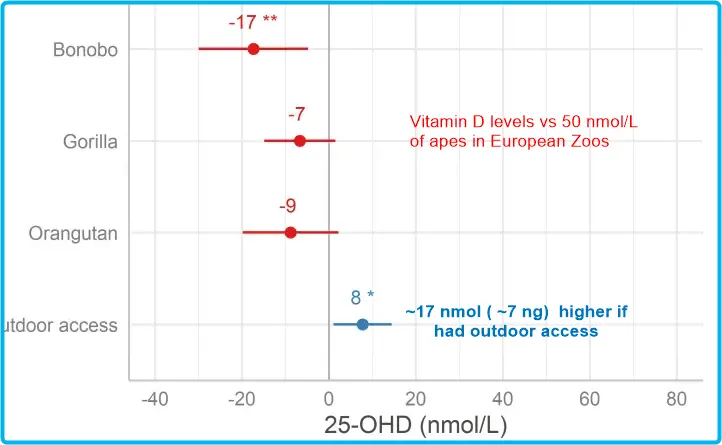

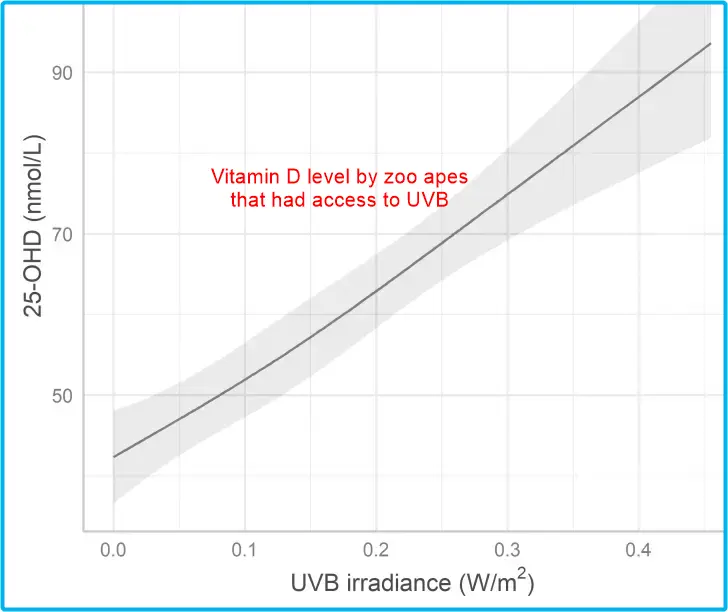
Vitamin D is crucial for physiological homeostasis and cardiovascular health. Zoo-housed great apes in Europe face significant risks of vitamin D deficiency due to limited ultraviolet B (UVB) exposure, potentially exacerbating conditions such as idiopathic myocardial fibrosis. This multi-centre observational study evaluated 25-hydroxyvitamin D (25-OHD) concentrations using liquid chromatography-tandem mass spectrometry in 480 opportunistic serum and plasma samples from 334 individuals across five great ape species (bonobo, chimpanzee, Western lowland gorilla, Sumatran orangutan, and Bornean orangutan) housed in 56 European zoos. Mixed-effects models were utilised to investigate the impact of individual, environmental, and husbandry factors on 25-OHD status.
Using human reference intervals, 45.7% of samples were classified as deficient or insufficient (< 50 nmol/L). Insufficiency was most prevalent in bonobos (71.4%) and orangutans (58.6%). Local UVB irradiance and dietary fortification via commercial pellet in the diet emerged as the strongest positive predictors of 25- OHD levels.
Unrestricted outdoor access also correlated with significantly higher concentrations. Chimpanzees exhibited the highest baseline levels among the species studied. There is a high prevalence of inadequate vitamin D status among European zoo-housed great apes. Husbandry interventions, including maximising UVB exposure, providing unrestricted outdoor access, and ensuring targeted dietary supplementation, are important to mitigating deficiency risks and safeguarding longterm cardiovascular and systemic health. This is the first study which describes vitamin D status in all commonly kept non-human great ape species in human care across a broad geographical range.
Great apes in zoos - Vitamin D_CompressPdf.pdf