
Fewer preemies if higher Vitamin D
Maternal vitamin D status and preterm birth: an eight-year retrospective cohort study in the Southeastern United States
J Perinatol 2026 Jul;46(7):1300-1306. doi: 10.1038/s41372-026-02757-z
Anjali G Borsum 1, Maya F Andrade 2, Myla D Ebeling 3, Jeffrey E Korte 4, Donna D Johnson 5, Roger B Newman 5, Bruce W Hollis 3, Carol L Wagner 3
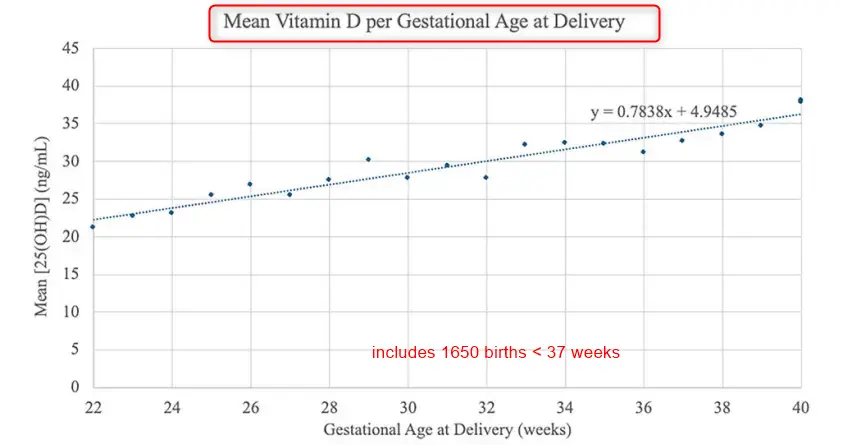
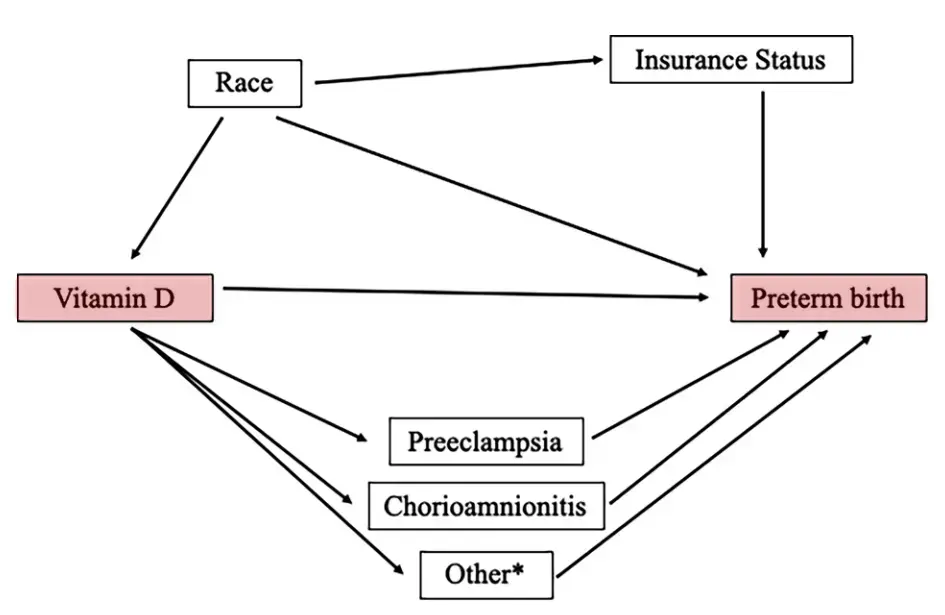
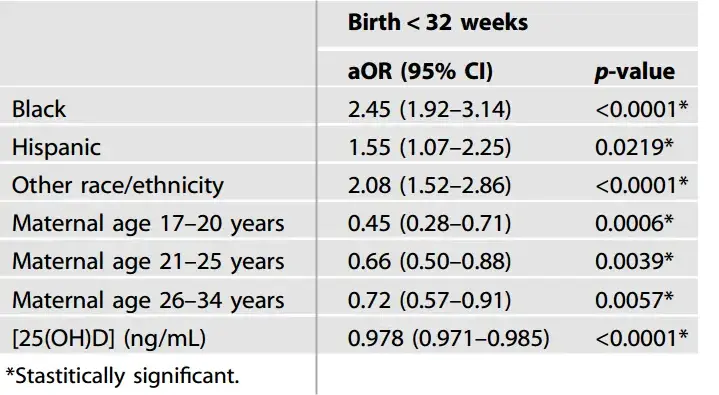
Objective: Investigate the association between vitamin D status (as measured by 25-hydroxyvitamin D concentration [25(OH)D]) and gestational age at delivery.
Study design: This was a retrospective chart review of electronic medical records (n = 15,506) from women delivering at the Medical University of South Carolina, with first maternal 25(OH)D concentrations measured from January 2016 to March 2024.
Result: Women delivering <37 weeks (n = 1652; 31.3 ± 17.8 ng/mL) had lower 25(OH)D concentrations compared to those delivering at 37 weeks or later (n = 13,451; 34.8 ± 17.3 ng/mL), with a mean difference of -3.46 ng/mL (95% Confidence Interval (CI): -4.54 to -2.38, p < 0.0001). This difference was even more pronounced among women delivering before 32 weeks (n = 385; 26.2 ± 14.9 ng/mL), who had substantially lower 25(OH)D concentrations than term deliveries, with a mean difference of -8.56 ng/mL (95% CI: -10.70 to -6.42, p < 0.0001).
Conclusion: Maternal vitamin D status was associated with gestational age at delivery. Lower maternal 25(OH)D concentrations were observed among women who delivered preterm compared with those delivering at term. These findings suggest a potential relationship between vitamin D status and preterm birth and support further research into whether optimizing vitamin D status during pregnancy may improve perinatal outcomes.
Related in VitaminDWiki
- Preterm birth 2.5 times more likely if low Vitamin D
- Preterm birth rate reduced 60% by Vitamin D (40 ng)
- Preterm births are VERY costly
- Preterm births reduced in half if 40 ng of vitamin D in 3rd trimester
Preeclampsia
- Preeclampsia reduced by Vitamin D - many studies
- Preeclampsia reduced by Vitamin D (50,000 IU bi-weekly) and Calcium
- Vitamin D reduces preeclampsia, gestational diabetes and hypertension - 38th meta-analysis
Darker Skinned Pregnancies
- Problem pregnancies (perinatal morbidities) 3.8 X less likely in blacks taking 4,400 IU of Vitamin D - RCT
- Blacks have more preterm births due to low nutrients such as vitamin D
- Preterm Birth 2.7X more likely if low vitamin D (dark skin in this case)
- 78 percent of pregnant immigrants in Sweden had less than 10 ng low vitamin D
- Dark skin pregnancies and Vitamin D - many studies