
Elderly get worse respiratory infections — low vitamin D and aging gut bacteria may combine - review
Aging and Viral Respiratory Infections: Focus on Vitamin D and Microbiota
BioMed Research Int. (formerly Hindawi), Sept 2026; https://doi.org/10.1155/bmri/8581187 IRAN
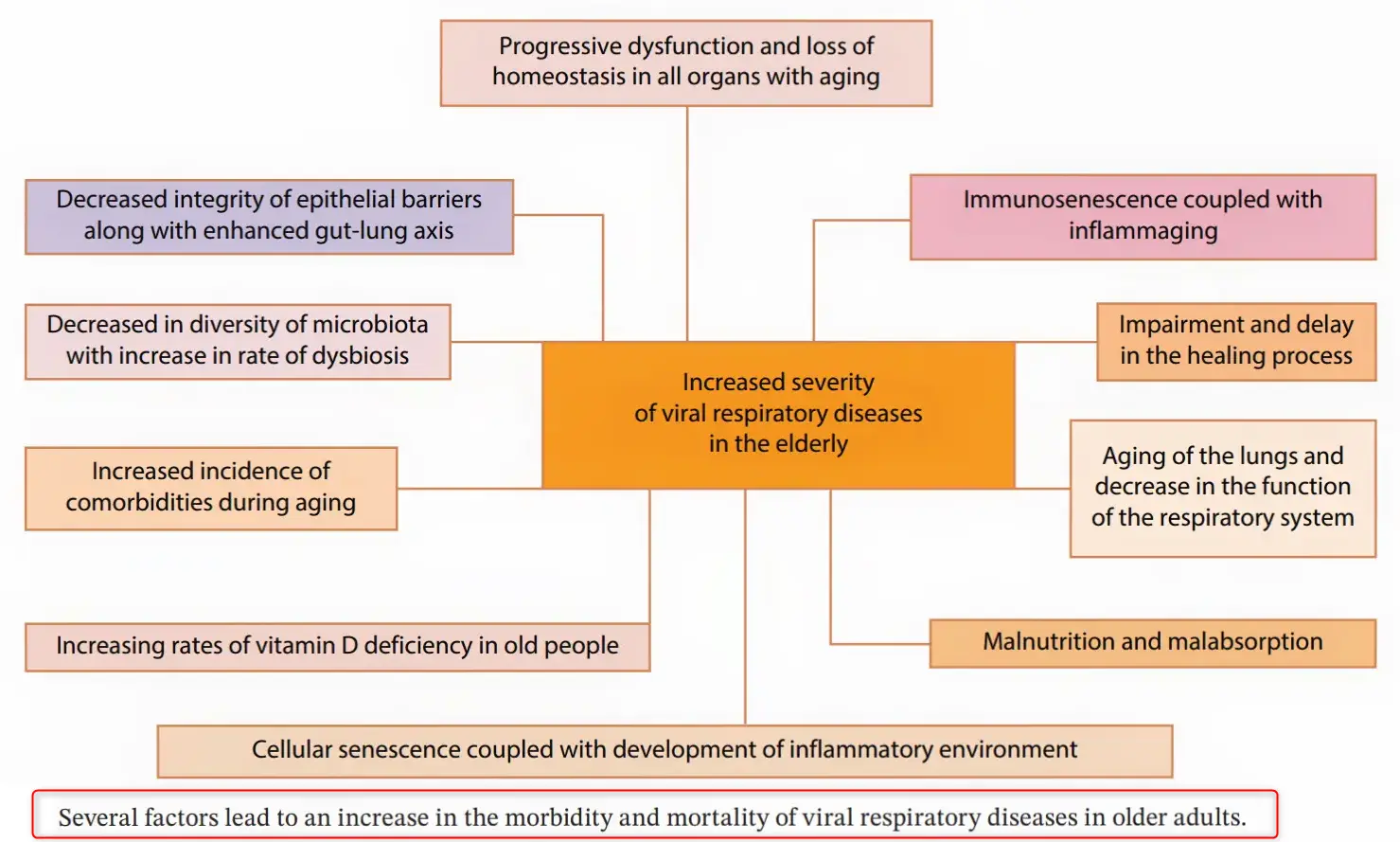
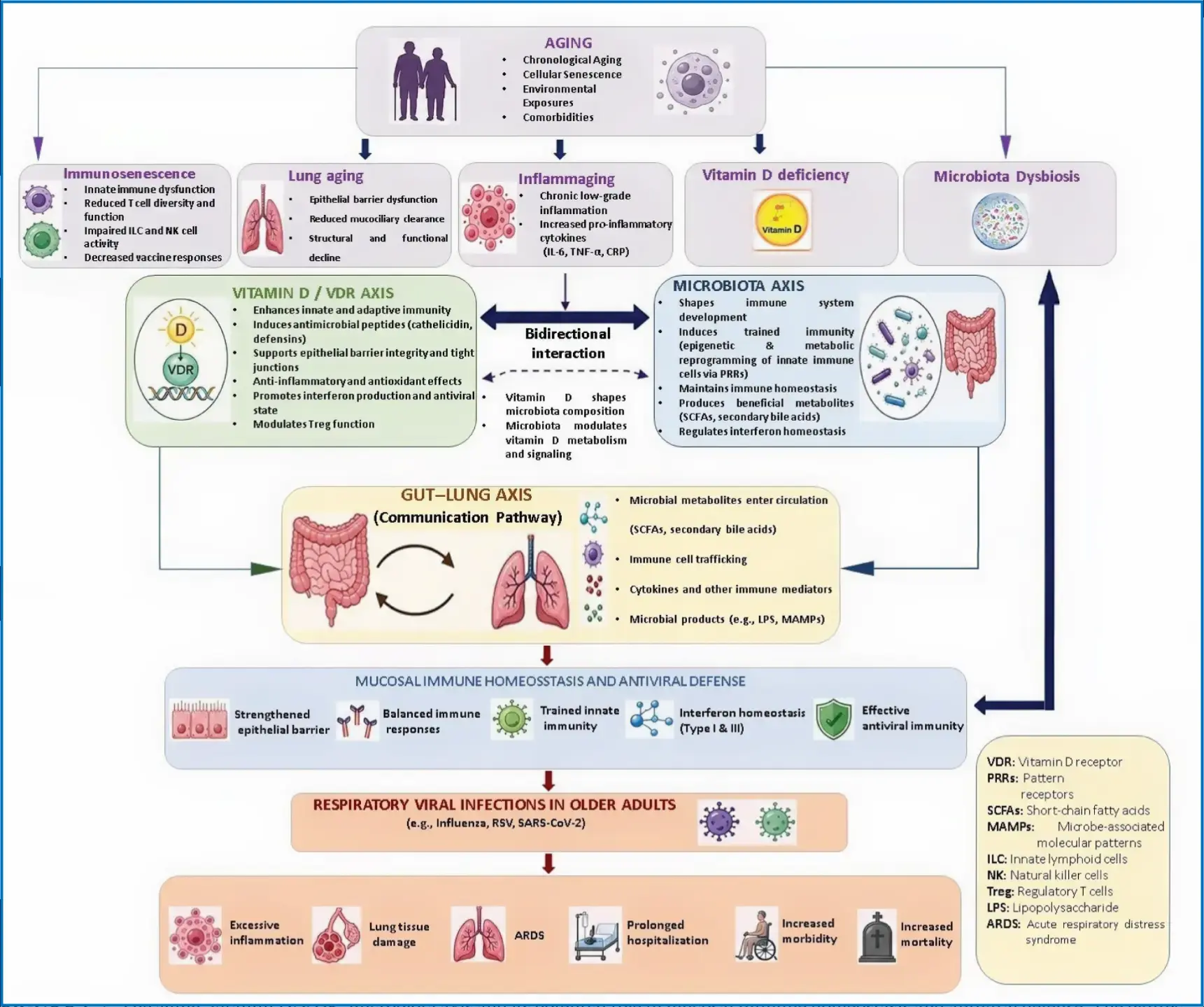
Viral respiratory infections in older adults tend to be more severe and linked to increased mortality. Factors such as lung aging and changes in its structure and function; aging of the immune system and decrease in its function with age; and inflammaging, the accumulation of senescent cells with age with senescence-associated secretory phenotype (SASP) (is a secretory profile that includes the secretion of inflammatory cytokines, growth factors, chemokines, and matrix-metalloproteinases) leads to an increase in the susceptibility and vulnerability of older adults to respiratory infections.
Malnutrition and micronutrient deficiencies, including rising rates of vitamin D deficiency, can also exacerbate respiratory infections in older adults. Vitamin D plays a role in maintaining epithelial integrity and has anti-inflammatory properties.
Vitamin D enhances innate immune responses and suppresses adaptive immune responses, thereby restoring the immune system to homeostasis.
Vitamin D deficiency is associated with microbiota dysbiosis and inflammation, and higher vitamin D levels are associated with greater abundance of beneficial, protective microbiota against respiratory infections. A more profound comprehension of the advantageous impacts of vitamin D in respiratory viral infections, particularly the relationship between vitamin D and the microbiota, will provide new perspectives on the importance of vitamin D assessment and standardization.
Related in VitaminDWiki
- Vitamin D improves the Gut Microbiota - review
- Vitamin D levels change Gut Microbiota – 25 study review
- Aging of the Immune system (Immunosenescence): micronutrients and gut microbiota
- Respiratory deaths in seniors – 40 percent are attributable to low vitamin D
- Supplement seniors with Vitamin D without testing: >75 years Endocrine Society
- Seniors get about 4X less vitamin D from the sun or UVB
- Butyrate, a short-chain fatty acid, helps the gut and may help the brain
- Flu
- Inflammation markers reduced by Vitamin D - umbrella meta-analysis