
Drinking lots of coffee is associated with lower Vitamin D
Related in VitaminDWiki
- 4 cups of coffee increases risk of fracture - meta-analysis 2014
- The more caffeine while pregnant (coffee, cola) the more bone pain in premature infants
- 1.5X more likely to be Vitamin D deficient if drink lots of coffee
- Caffeine decreases Vitamin D in blood and cells - many studies
- Vitamin D prevents smoke lung damage in mice _(If you must smoke, take vitamin D) Similarly, if you must drink lots of coffee, take Vitamin D
Coffee Consumption and Vitamin D Levels: A Critical Analysis of the Evidence Perplexity AI - Jan 2026
The relationship between coffee consumption and vitamin D status has emerged as a scientifically intriguing question with potential public health implications. Given that coffee ranks among the world's most widely consumed beverages and vitamin D deficiency affects an estimated 1 billion people globally, understanding whether habitual coffee intake meaningfully impacts vitamin D levels warrants careful examination of the available evidence.
Executive Summary
Current epidemiological evidence suggests a modest inverse association between higher coffee or caffeine consumption and serum 25-hydroxyvitamin D [25(OH)D] levels, with most cross-sectional studies demonstrating that individuals who consume substantial amounts of coffee exhibit lower vitamin D status. However, the evidence base suffers from significant methodological limitations, including the absence of randomized controlled trials, substantial potential for confounding, and one notable contradictory finding. While biological mechanisms supporting such an association exist, the clinical significance and causal nature of this relationship remain uncertain.
Overview of the Epidemiological Evidence (table)
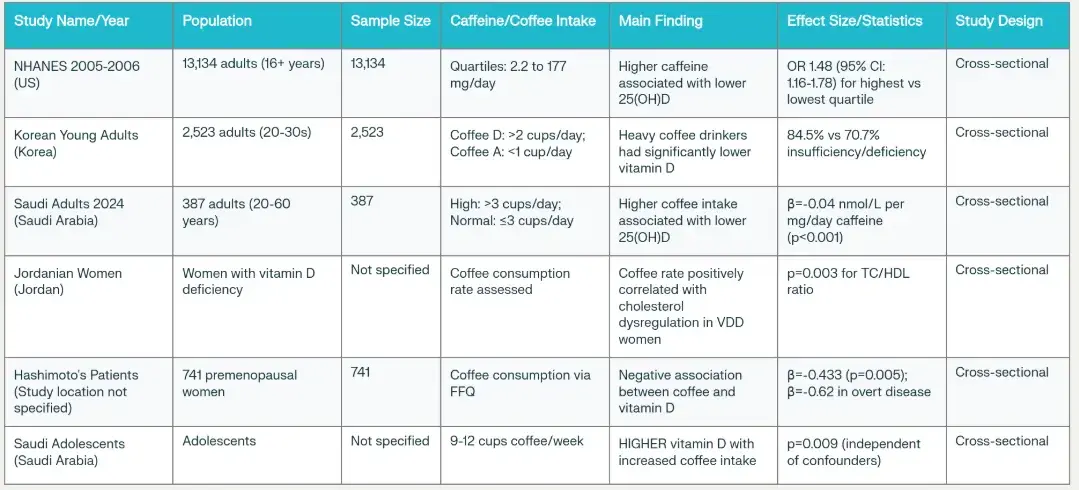
Studies Demonstrating Negative Associations (Saudi 2026)
The most comprehensive investigation to date analyzed data from 13,134 American adults participating in the National Health and Nutrition Examination Survey (NHANES) 2005-2006. Investigators divided participants into caffeine intake quartiles ranging from 2.19±1.04 mg/day in the lowest quartile to 177±156 mg/day in the highest.
After adjustment for age, sex, race, body mass index, smoking, physical activity, occupation, and macronutrient intake, individuals in the highest caffeine consumption quartile exhibited 48% higher odds of vitamin D deficiency compared to those in the lowest quartile (OR 1.48; 95% CI: 1.16-1.78). Importantly, this dose-response relationship persisted across all intermediate quartiles, with the second and third quartiles showing odds ratios of 1.17 and 1.18, respectively. econtent.hogrefe This finding has been corroborated in multiple international cohorts.
A Korean study of 2,523 young adults (aged 20-30 years) found that individuals consuming more than two cups of coffee daily had substantially lower vitamin D concentrations, with 84.5% exhibiting vitamin D insufficiency or deficiency compared to 70.7% among those drinking less than one cup daily. The effect appeared particularly pronounced among young women who consumed coffee frequently. pmc.ncbi.nlm.nih
More recently, a 2024 Saudi Arabian study of 387 adults demonstrated that high coffee consumers (>3 cups/day) had significantly lower serum 25(OH)D levels compared to normal consumers (≤3 cups/day), with p=0.05. Multivariable linear regression revealed that each milligram of daily caffeine intake was associated with a 0.04 nmol/L decrease in serum 25(OH)D (95% CI: -0.055 to -0.027; p<0.001). High coffee consumers also exhibited higher body mass index (p=0.043) and more frequently reported arousal-related symptoms including sleep disturbance, sweating, and elevated heart rate. pubmed.ncbi.nlm.nih
Note by VitaminDWiki: 400+ mg caffine ==> 6 ng less Vitamin D
400 mg caffeine X 0.04 nmol/L decreased D/ 2.5
A cross-sectional analysis of 741 premenopausal women with Hashimoto's thyroiditis identified a negative association between coffee consumption and vitamin D levels (β=-0.433, p=0.005), with effect sizes substantially larger among those with overt, prolonged disease (β=-0.62, p=0.008). Similarly, research in Jordanian women with vitamin D deficiency found that higher coffee consumption rates correlated with adverse lipid profiles, particularly elevated total cholesterol-to-HDL ratios (p=0.003). journals.sagepub
The Saudi Adolescent Anomaly (more C ==> more D)
Notably, one large study presents contradictory findings that complicate the narrative. Research conducted at King Saud University's Biomarkers Research Program examined Saudi adolescents and found that circulating 25(OH)D levels were significantly elevated among those consuming coffee 9-12 times per week, even after adjusting for age, gender, body mass index, physical activity, and sun exposure.
Both coffee and tea consumption at this frequency were associated with higher vitamin D levels (p=0.009 for tea consumption). The authors acknowledged this represented "the first time a dose-dependent relationship between circulating vitamin D levels in relation to coffee and tea consumption" had been documented in this direction. pmc.ncbi.nlm.nih
VitamminDWiki: A bit more caffeine in a cup of Saudi than other coffees
Perplexity AI Several explanations may account for this discrepancy. The study population consisted of adolescents rather than adults, potentially reflecting different metabolic responses to caffeine. Saudi Arabia's geographic location provides extremely high ambient ultraviolet B radiation, which may create ceiling effects or different biological dynamics. Additionally, the study lacked comprehensive data on outdoor physical activity and diet quality beyond the frequency questionnaires, introducing substantial potential for unmeasured confounding. Socioeconomic factors may also play a role if coffee consumption serves as a proxy for better overall nutrition or healthcare access in this specific population. Nevertheless, this finding cannot be dismissed and highlights the complexity of the relationship. pmc.ncbi.nlm.nih
Biological Mechanisms (chart)
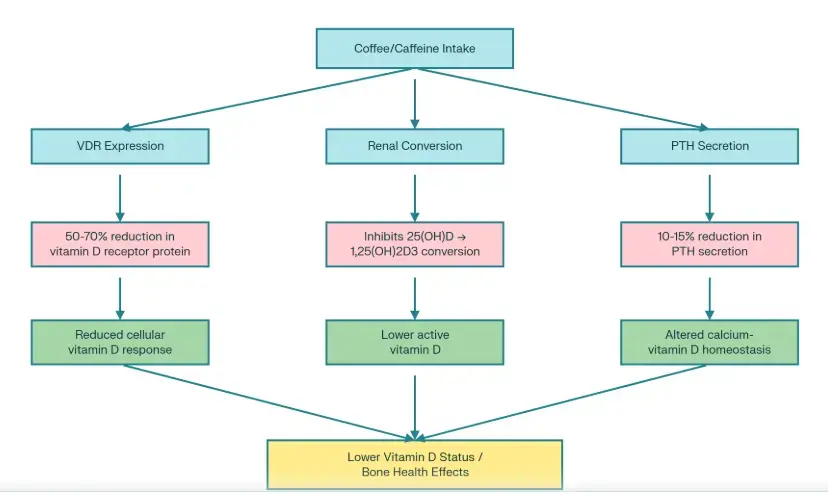
Multiple plausible biological pathways could mediate an adverse effect of caffeine on vitamin D status, though most evidence derives from in vitro studies and animal models rather than human interventional research.
Vitamin D Receptor Downregulation (not noticed by VitaminD test)
The most extensively characterized mechanism involves caffeine-induced suppression of vitamin D receptor (VDR) protein expression. Pioneering work by Rapuri and colleagues demonstrated that caffeine dose-dependently decreased VDR protein expression in human osteoblast cell cultures. At concentrations of 1 mM and 10 mM—within the range of physiological caffeine levels following consumption—VDR expression declined by approximately 50% and 70%, respectively. This reduction occurred in parallel with decreased alkaline phosphatase activity, a marker of osteoblastic differentiation and bone formation. sciencedirect
The VDR functions as a nuclear hormone receptor critical for mediating 1,25-dihydroxyvitamin D₃ [1,25(OH)₂D₃] actions in target tissues, including bone, intestine, and kidney. Reduced VDR expression would theoretically diminish cellular responsiveness to vitamin D, even when circulating 25(OH)D levels remain normal. Subsequent research has revealed this effect exhibits biphasic characteristics and varies by cell type, with normal human osteoblasts showing significant decreases in calcitriol-inducible genes including CYP24A1, TNFSF11, and SPP1 following caffeine exposure. direct-ms
Impaired Renal Vitamin D Metabolism
A second mechanism involves interference with the enzymatic conversion of 25-hydroxyvitamin D₃ to its active form, 1,25-dihydroxyvitamin D₃, which occurs primarily in the kidney. Research using isolated chick renal tubules demonstrated that the methylxanthines theophylline and caffeine inhibit this conversion at concentrations known to elevate renal tubule cyclic AMP levels. Interestingly, this inhibition did not occur in isolated renal mitochondria, suggesting the effect operates through alterations in intracellular calcium homeostasis rather than direct enzymatic inhibition. pubmed.ncbi.nlm.nih
Supporting this pathway, animal studies administering theophylline (a methylxanthine chemically similar to caffeine) to Sprague-Dawley rats for eight weeks documented decreased serum 25-D₃ and reduced activity of hepatic 25-hydroxylases, alongside diminished serum 1,25-(OH)₂D₃, increased parathyroid hormone, and elevated fibroblast growth factor-23. Remarkably, co-administration of 25-D₃ with theophylline completely prevented the drug-induced osteopenia and calcium homeostasis alterations, suggesting that prophylactic vitamin D supplementation could be osteoprotective in individuals exposed to methylxanthines. osti
Note by VitaminDWiki: Rats getting caffeine AND Vitamin D did not develop osteoporosis
Parathyroid Hormone Suppression
A third mechanism centers on caffeine's effects on parathyroid gland function. Studies examining human parathyroid adenoma cells found that physiologically relevant caffeine concentrations (50 μM) caused a 10.4% reduction in parathyroid hormone (PTH) secretion and a 15.3% decrease in PTH mRNA expression. This effect appears mediated through decreased intracellular cyclic AMP levels and reduced adenosine receptor A1 (ADORA1) gene expression. Since PTH plays a crucial role in calcium homeostasis and stimulates renal 1,25(OH)₂D₃ production, caffeine-induced PTH suppression could disrupt the tightly regulated calcium-vitamin D endocrine axis. pubmed.ncbi.nlm.nih
Calcium Metabolism Interference
Caffeine has long been recognized to influence calcium balance through multiple routes. It reduces renal tubular calcium reabsorption and may impair intestinal calcium absorption efficiency. While the magnitude of urinary calcium loss is relatively modest—equivalent to that offset by adding 1-2 tablespoons of milk to coffee—chronic effects over years could theoretically impact both calcium and vitamin D metabolism, given their interdependence in bone remodeling. pmc.ncbi.nlm.nih
Genetic Susceptibility and Individual Variation
Individual responses to caffeine vary substantially based on genetic polymorphisms affecting caffeine metabolism and vitamin D receptor function. The CYP1A2 gene, responsible for encoding the enzyme that handles 90-95% of caffeine metabolism in the liver, exhibits a common single nucleotide polymorphism (rs762551, -163C>A) that creates distinct metabolizer phenotypes. Individuals with the AA genotype are slow caffeine metabolizers, while those with AC or CC genotypes metabolize caffeine rapidly. pmc.ncbi.nlm.nih
This genetic variation appears to modulate caffeine's effects on bone health. A longitudinal study of postmenopausal women found that those with the VDR TaqI TT genotype who consumed more than 300 mg/day of caffeine experienced approximately 9-10% greater spinal bone mineral density loss over three years compared to other genetic variants or lower caffeine consumers. This gene-environment interaction suggests that specific subpopulations may be particularly vulnerable to adverse effects of high caffeine intake on vitamin D-dependent processes. mygenefood
Emerging research indicates that CYP1A2 polymorphisms may also influence vitamin B₁₂ and folate status in the context of caffeine consumption, potentially through effects on hepatic enzyme induction and nutrient retention. Patients with metabolic syndrome carrying the AA genotype who consumed moderate coffee (1-2 cups/day) exhibited significantly higher folate and B₁₂ levels compared to AC or CC carriers, with implications for homocysteine metabolism and overall metabolic health. pmc.ncbi.nlm.nih
Coffee Composition: Beyond Caffeine
Coffee represents a complex mixture of over 1,000 chemical compounds, including carbohydrates, lipids, nitrogenous compounds, vitamins, minerals, alkaloids, and phenolic compounds. This compositional complexity raises the question of whether caffeine alone drives observed associations with vitamin D status or whether other bioactive constituents contribute. pmc.ncbi.nlm.nih
Chlorogenic Acids and Polyphenols
Coffee serves as the most abundant dietary source of chlorogenic acids (CGAs), particularly 5-O-caffeoylquinic acid (5-CQA), which possess potent antioxidant and anti-inflammatory properties. While these compounds confer numerous health benefits—including reduced risks of type 2 diabetes, cardiovascular disease, and certain cancers—they can also bind minerals in the gastrointestinal tract and potentially interfere with nutrient absorption, analogous to their well-documented effects on non-heme iron. pmc.ncbi.nlm.nih
Filtered Versus Unfiltered Coffee
The method of coffee preparation substantially affects its biochemical composition and health implications. Unfiltered coffee—including French press, Turkish coffee, and espresso—contains approximately 30 times more diterpenes (cafestol and kahweol) than paper-filtered coffee. These diterpenes elevate plasma cholesterol and homocysteine concentrations; a randomized trial found that consuming 1 liter of unfiltered coffee daily for two weeks increased fasting plasma homocysteine by 10% (from 12.8 to 14.0 μmol/L). wild-kaffee
Since elevated homocysteine represents a risk factor for cardiovascular disease and may interfere with folate-dependent and vitamin D-related metabolic processes, the choice between filtered and unfiltered coffee could theoretically influence vitamin D status through pathways independent of caffeine content. However, no studies have directly compared the effects of filtered versus unfiltered coffee on vitamin D levels while controlling for caffeine dose. pubmed.ncbi.nlm.nih
Critical Evaluation of Study Quality and Limitations
Strengths of the Evidence Base
The evidence supporting an inverse association between coffee consumption and vitamin D status derives from multiple large, well-conducted cross-sectional studies spanning diverse geographic regions and ethnic populations. The NHANES analysis, with over 13,000 participants, provides a nationally representative sample with standardized laboratory methods and comprehensive covariate data. The consistency of findings across Korean, Saudi Arabian, and Jordanian populations strengthens confidence that the association is not an artifact of a single study or population. econtent.hogrefe
The demonstration of dose-response relationships—wherein higher caffeine intake correlates with progressively lower vitamin D status—enhances biological plausibility. Furthermore, the existence of coherent mechanistic pathways involving VDR expression, renal vitamin D metabolism, and PTH regulation provides theoretical support for causation. sciencedirect
Fundamental Limitations
Despite these strengths, the evidence base suffers from critical methodological constraints that preclude definitive conclusions about causation.
Cross-Sectional Design: Every major epidemiological study examining this relationship has employed cross-sectional methodology, capturing caffeine intake and vitamin D status at a single time point. This design cannot establish temporal sequence—a prerequisite for inferring causation. Reverse causation represents a plausible alternative explanation: individuals with lower vitamin D status (whether due to indoor occupations, chronic illness, or reduced mobility) may spend less time outdoors and consequently consume more coffee as an indoor beverage. A longitudinal cohort study or intervention trial would be required to resolve this ambiguity, yet none have been published to date. econtent.hogrefe
Absence of Randomized Controlled Trials: The gold standard for establishing causation—randomized controlled trials comparing vitamin D levels among individuals assigned to consume different amounts of caffeine—is entirely absent from the literature. Without such trials, attribution of causality remains speculative.
Confounding by Lifestyle Factors: Coffee consumption correlates with numerous lifestyle and behavioral characteristics that independently influence vitamin D status. Outdoor physical activity represents a particularly important confounder, as it increases both sun exposure (raising vitamin D synthesis) and may inversely correlate with coffee consumption patterns. While most studies attempted to adjust for physical activity and sun exposure, these adjustments relied on self-reported questionnaires of uncertain validity. Residual confounding likely persists. pmc.ncbi.nlm.nih
Socioeconomic status, dietary quality, smoking, alcohol consumption, and occupation (indoor versus outdoor work) all covary with both coffee intake and vitamin D status. Although investigators included many of these variables in multivariable models, unmeasured confounding cannot be excluded. hsrc.himmelfarb.gwu
Measurement Error: Caffeine intake was typically assessed via single 24-hour dietary recalls or food frequency questionnaires, which may not accurately capture habitual long-term consumption patterns. Similarly, few studies specified coffee preparation methods (filtered, unfiltered, espresso, instant) or whether subjects consumed caffeinated versus decaffeinated coffee. These distinctions matter given the differential content of bioactive compounds across preparation methods. pmc.ncbi.nlm.nih
Effect Size Magnitude: While statistically significant, the effect sizes observed in most studies are modest. The NHANES analysis documented an odds ratio of 1.48 for vitamin D deficiency in the highest versus lowest caffeine quartile. This represents a meaningful but not dramatic elevation in risk. The Saudi study found a decrease of 0.04 nmol/L per mg of daily caffeine—a relationship that would require substantial caffeine consumption to produce clinically significant vitamin D decrements. Whether these modest associations translate to meaningful health outcomes (e.g., increased fracture risk, impaired immune function) remains uncertain. pubmed.ncbi.nlm.nih
Dose-Response Considerations and Threshold Effects
Evidence suggests that adverse effects on bone health and potentially vitamin D metabolism become more pronounced at caffeine intakes exceeding 300 mg/day—equivalent to approximately three standard cups of coffee. The Linus Pauling Institute recommends limiting coffee consumption to three or fewer cups daily while ensuring adequate calcium (≥700-1,000 mg/day) and vitamin D intake to prevent potential adverse effects on calcium absorption and bone health. mdlinx
The genetic data reinforce this threshold concept. Postmenopausal women carrying the VDR TaqI TT genotype experienced accelerated bone loss only when caffeine intake exceeded 300 mg/day; lower intakes were not associated with adverse outcomes. This suggests that moderate coffee consumption—defined as 1-3 cups daily—may be compatible with optimal vitamin D and bone health for most individuals, with higher intakes posing risks primarily in genetically susceptible subgroups. mygenefood
Interestingly, a 2025 meta-analysis examining coffee and tea consumption in relation to osteoporosis found that long-term consumption was associated with reduced osteoporosis risk, with evidence of a dose-dependent protective effect. Similarly, research in older women demonstrated that moderate coffee consumption (2-3 cups daily) had no effect on bone mineral density, while only consumption of five or more cups was linked to reduced bone density. These findings complicate the narrative and suggest that coffee's net effects on skeletal health may be non-linear and influenced by multiple competing mechanisms. health
Practical Implications and Recommendations
For Healthcare Providers
While current evidence does not justify widespread vitamin D screening or supplementation specifically for coffee drinkers, clinicians should consider caffeine intake when evaluating patients at high risk for vitamin D deficiency. Individuals consuming more than 300-400 mg of caffeine daily (approximately 3-4 cups of coffee), particularly those with additional risk factors such as limited sun exposure, dark skin pigmentation, obesity, malabsorption disorders, or diets low in vitamin D-containing foods, may warrant vitamin D status assessment.
The 2024 Endocrine Society guidelines do not recommend routine vitamin D testing for most populations, instead advocating targeted supplementation in high-risk groups including older adults (≥75 years), pregnant women, individuals with prediabetes, and those with conditions affecting vitamin D absorption or metabolism. Coffee consumption alone does not constitute an indication for screening under current guidelines, though it may represent an additive risk factor worth considering in clinical context. myadlm
Vitamin D Supplementation Timing
For individuals taking vitamin D supplements who also consume coffee, emerging evidence suggests that temporal separation may optimize absorption. Caffeine and polyphenols can inhibit vitamin D receptor function in the gut, potentially reducing absorption from both foods and supplements. While definitive data are lacking, waiting at least one to two hours between coffee consumption and vitamin D supplement ingestion represents a reasonable precautionary strategy. mdlinx
Vitamin D supplements should be taken with meals containing dietary fat to maximize absorption, as vitamin D is fat-soluble. For most individuals, breakfast represents an optimal time to establish consistent supplementation habits, though any meal containing healthy fats (avocado, nuts, olive oil, fatty fish, eggs, full-fat dairy) will suffice. Some evidence suggests that high-dose vitamin D taken at night may interfere with melatonin production and sleep quality, making morning or midday administration preferable. nakednutrition
Dietary Strategies
Coffee drinkers concerned about potential vitamin D interactions should ensure adequate calcium intake, as calcium and vitamin D metabolism are intimately linked. Adding 1-2 tablespoons of milk to coffee not only offsets the small amount of urinary calcium loss induced by caffeine but also provides calcium, vitamin D (if fortified), and protein. Dairy milk, fortified soy milk, and other fortified plant-based milks can contribute meaningfully to daily calcium (30% of daily value per cup) and vitamin D requirements. mdlinx
Consuming vitamin D-rich foods—including fatty fish (salmon, mackerel, sardines), egg yolks, fortified dairy products, and fortified cereals—alongside a moderate coffee habit likely mitigates any adverse effects. Ensuring 15-30 minutes of midday sun exposure on face, arms, and legs several times weekly (without sunscreen, adjusted for latitude, season, and skin pigmentation) remains the most efficient means of maintaining optimal vitamin D status. outsideonline
Coffee Consumption Guidance
For the general population without specific risk factors, consuming up to three cups of coffee daily appears compatible with optimal vitamin D status, provided that calcium intake is adequate and other vitamin D sources (sun exposure, diet, supplementation) are sufficient. Individuals in high-risk categories for vitamin D deficiency may benefit from limiting caffeine intake to 200-300 mg/day or ensuring prophylactic vitamin D supplementation. mdlinx
Choosing filtered coffee over unfiltered varieties offers cardiovascular benefits by reducing diterpene exposure, which elevates cholesterol and homocysteine. Whether filtered coffee confers advantages for vitamin D metabolism specifically remains unexplored but represents a prudent choice given broader health considerations. wild-kaffee
Research Gaps and Future Directions
Multiple critical knowledge gaps impede translation of current evidence into definitive clinical recommendations:
Randomized Controlled Trials: Well-designed intervention studies assigning participants to different caffeine intake levels and measuring changes in serum 25(OH)D over time would establish whether the association is causal. Such trials should span at least 6-12 months to allow detection of meaningful changes in vitamin D status.
Longitudinal Cohort Studies: Prospective studies tracking both coffee consumption and vitamin D levels over years could clarify temporal relationships and account for seasonal variations in both sun exposure and coffee drinking patterns.
Dose-Response Precision: Current evidence lacks precise delineation of safe versus harmful caffeine thresholds. Studies examining narrow dose increments (e.g., 50 mg increases) could identify inflection points where risk meaningfully increases.
Coffee Component Isolation: Comparing pure caffeine versus decaffeinated coffee versus caffeinated coffee would determine whether caffeine alone drives observed associations or whether other constituents (chlorogenic acids, diterpenes) contribute. Similarly, comparing filtered and unfiltered coffee while controlling for caffeine content would clarify the role of preparation methods.
Supplementation Interaction Studies: Research examining whether vitamin D supplementation overcomes any adverse effects of high caffeine intake would inform clinical practice. The animal data suggesting that co-administration of vitamin D with theophylline completely prevented osteopenia warrant replication in human studies. osti
Genetic Subgroup Analyses: Large-scale studies incorporating genotyping for VDR and CYP1A2 polymorphisms could identify individuals at elevated risk who might benefit from personalized caffeine intake recommendations.
Health Outcomes Research: Ultimately, what matters is whether coffee consumption increases clinically meaningful outcomes such as fractures, infections, or other vitamin D deficiency-related morbidities. Current evidence focuses almost exclusively on biomarker changes rather than health outcomes.
Conclusion
The preponderance of cross-sectional evidence indicates that higher coffee and caffeine consumption associates with modestly lower serum 25-hydroxyvitamin D levels across diverse populations. Multiple plausible biological mechanisms—including VDR downregulation, impaired renal vitamin D conversion, and PTH suppression—lend theoretical support to a causal relationship. However, fundamental methodological limitations, including the absence of intervention trials and substantial potential for confounding, preclude definitive conclusions about causation.
For most individuals consuming moderate amounts of coffee (1-3 cups daily) with adequate calcium intake and normal sun exposure, available evidence does not suggest cause for concern regarding vitamin D status. Those consuming higher amounts (>3-4 cups daily), particularly individuals with additional risk factors for vitamin D deficiency or specific genetic susceptibilities, may benefit from vitamin D monitoring and potentially from supplementation.
The answer to whether coffee consumption truly causes lower vitamin D levels remains incompletely resolved. While the weight of observational evidence leans toward a modest adverse association, proving causation will require controlled intervention studies that have not yet been conducted. In the interim, individuals can mitigate potential risks through adequate sun exposure, consumption of vitamin D-rich foods, appropriate supplementation when indicated, and moderation in caffeine intake—strategies that confer broader health benefits beyond their effects on vitamin D metabolism.
The relationship between coffee and vitamin D exemplifies the complexity inherent in nutritional epidemiology, where widely consumed beverages exert multifaceted effects through diverse biological pathways, confounding pervades observational studies, and translating association into actionable guidance requires humility about the limits of current knowledge.
🧪 Observational Studies: Mixed Associations ChatGPT Jan 2026
Some human observational studies have found that people who consume more coffee or caffeine have lower measured levels of vitamin D in their blood, while other studies show no strong or consistent effect:
- A recent cross-sectional study of adults in Saudi Arabia reported that higher coffee intake was associated with lower serum 25-hydroxyvitamin D (the main marker of vitamin D status) even after adjusting for other factors. ([PubMed][1])
- Data from a large Korean survey found that groups with higher coffee consumption tended to have lower average vitamin D levels, though nearly all participants were vitamin D deficient overall regardless of coffee intake. ([PMC][2])
- Some studies show no clear significant difference in vitamin D levels across different coffee intake groups. ([SpringerLink][3])
These kinds of studies show correlation, not causation — meaning heavy coffee drinkers might have lower vitamin D for other reasons (e.g.,
- different lifestyle habits,
- less time outdoors,
- diet differences) rather than coffee directly lowering their vitamin D.
🧠 4 Possible Mechanisms Are Being Studied
There are a few biologically plausible ways caffeine/coffee might influence vitamin D, but the evidence isn’t definitive:
1. Interference with vitamin D receptor activity (in cells)
Lab research (in cultured human bone cells) suggests caffeine can reduce the expression of vitamin D receptors, which theoretically could affect how vitamin D works in the body — but this doesn’t directly prove it lowers levels in the bloodstream in real-world conditions. ([PubMed][4])
2. Indirect effects via calcium metabolism
Caffeine is known to increase calcium excretion slightly and can modestly reduce calcium absorption in some studies. Because vitamin D and calcium metabolism are linked, there’s speculation this might indirectly influence vitamin D status, but the effects appear small and context-dependent. ([Livestrong][5])
3. Dietary timing and absorption
Some sources suggest that if vitamin D supplements or vitamin D–rich foods are consumed at the same time as coffee, caffeine might interfere with absorption — though the magnitude and clinical importance of this are not well established. ([Workwell][6])
📌 Important Context & Limitations
- Most evidence is observational: It can’t prove heavy coffee causes lower vitamin D levels, only that they are associated in some populations.
- Other factors matter more for vitamin D status: Sun exposure, skin pigmentation, geographic location, BMI, dietary intake, and supplement use all have much larger and better-established effects on vitamin D levels than coffee does.
- Effects, if real, are likely small: Current research does not support the idea that moderate coffee consumption (e.g., 1–3 cups/day) dramatically depletes vitamin D in people with otherwise adequate sun exposure or diet.
🧑⚕️ Bottom Line
There is some evidence that higher coffee/caffeine intake is associated with modestly lower vitamin D levels in some groups, but the relationship is inconsistent and not definitively causal. Other lifestyle and dietary factors are much more important determinants of your vitamin D status. If you’re concerned about deficiency or are supplementing, timing your coffee a bit apart from taking vitamin D might be prudent, but cutting out moderate coffee intake is unlikely to be a major solution on its own.
If you’re tracking your vitamin D status or worried about low levels, the best approach is to talk to a healthcare provider, who can consider your sun exposure, diet, and other factors in context.
- [1]: https://pubmed.ncbi.nlm.nih.gov/41418945/?utm_source=chatgpt.com "Coffee Consumption and its Association with Vitamin D Level, Lifestyle Factors, and Mental Health Symptoms Among Adults in Saudi Arabia - PubMed"
- [2]: https://pmc.ncbi.nlm.nih.gov/articles/PMC5734948/?utm_source=chatgpt.com "Serum Vitamin D Level Related to Coffee Consumption in Korean Young Adults Using the 5th Korea National Health and Nutrition Examination Survey - PMC"
- [3]: https://nutritionj.biomedcentral.com/articles/10.1186/1475-2891-11-56?utm_source=chatgpt.com "Tea and coffee consumption in relation to vitamin D and calcium levels in Saudi adolescents | Nutrition Journal | Full Text"
- [4]: https://pubmed.ncbi.nlm.nih.gov/17223552/?utm_source=chatgpt.com "Caffeine decreases vitamin D receptor protein expression and 1,25(OH)2D3 stimulated alkaline phosphatase activity in human osteoblast cells - PubMed"
- [5]: https://www.livestrong.com/article/464884-does-caffeine-affect-the-absorption-of-vitamins-or-minerals/?utm_source=chatgpt.com "Does Caffeine Affect the Absorption of Vitamins or Minerals? | livestrong"
- [6]: https://workwell.gr/does-coffee-affect-vitamin-and-nutrient-absorption/?utm_source=chatgpt.com "Does Coffee Affect Vitamin and Nutrient Absorption? | Workwell"