
Children eating Ultra-Processed Foods were more likely to increase adiposity a year later- small study
Ultraprocessed Food Intake, Striatal Response to Food Cues, and Adiposity Gain in Children
JAMA Network Open. 2026;9(10):e2640252. doi:10.1001/jamanetworkopen.2026.40252
Jasmin M. Alves, PhD; Ella Morgan, BA; Brendan Angelo, MS; Kianna Le, BS; Jared Smith, MS; Ting Chow, PhD; Kay Jann, PhD; Anny H. Xiang, PhD; Kathleen A. Page, MD
46 children of healthy weight (mean [SD] age, 8.7 [1.1] years; 26 [57%] female; baseline BMI range, 13.8-19.9; body fat percentage range, 12.7%-32.2%)
CONCLUSIONS AND RELEVANCE
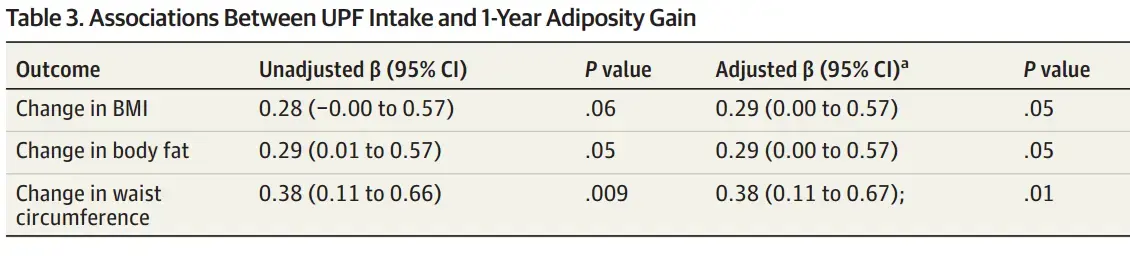
In this cohort study of children of healthy weight, higher habitual UPF intake was associated with greater dorsal striatal responses to food cues and prospective increases in adiposity. These findings suggest that reward-related brain responses may be involved in associations between UPF consumption and adiposity gain during childhood
Related in VitaminDWiki
- 81% of the baby foods in one US city were ultra-processed
- 3 lbs weight gain in just 3 weeks from Ultra-processed foods - RCT Oct 2025
- Ultra-Processed Food problems are fought by Vitamin D, Berberine, and Glutathione
- US vs Italy: Ultra-processed foods: 74%, 14%, Obesity 40%, 24%, Lifespan 78 vs 82
- Both Microplastics and Ultra-processed foods decrease Glutathione
- If you eat ultra-processed foods, you need Vitamin D
- 100+ Studies, One Verdict: The Lancet's Case Against Ultra-Processed Foods
