
Chemotherapy is more successful if higher levels of Vitamin D
Vitamin D Status and Response to Chemotherapy and Systemic Cancer Therapy:
A Primary-Source Evidence Map (September 2026) Claude AI - deep research
Low baseline 25(OH)D reliably predicts worse outcomes on chemotherapy and antibody therapy in several cancers. But when supplementation was tested head-to-head in adequately powered, double-blind randomized trials during systemic therapy — SOLARIS in metastatic colorectal cancer (n=455), ILyAD in rituximab-treated indolent lymphoma (n=206) and ViDMe in resected melanoma (n=436) — it did not improve the primary endpoint.[1][2] The Dalgleish/Von Hoff claim ("no patient responded to any chemotherapy if vitamin D was low") has no primary source I could find, and the randomized data directly contradict it.
TL;DR
- Prognostic, yes; causal for treatment response, not shown. Low 25(OH)D predicts worse survival within cooperative-group trials in colorectal cancer, DLBCL, follicular lymphoma and CLL (typical adjusted HRs 1.4–3.6 for low vs high). But Mendelian randomization of colorectal cancer survival is null (IVW HR 1.04 for cancer-specific survival), and 25(OH)D behaves as a negative acute-phase reactant — so a large part of the signal is plausibly reverse causation and confounding.
- The decisive RCTs are negative or confined to subgroups. SOLARIS (the phase III confirmation of SUNSHINE) gave a PFS HR of 0.92 (95% CI 0.73–1.16). ILyAD found no EFS benefit with rituximab. ViDMe gave a melanoma RFS HR of 1.27 (0.79–2.03). What remains genuinely suggestive: small breast-cancer neoadjuvant RCTs (pCR roughly doubled; pooled RR 2.09, 95% CI 1.40–3.13, I²=0%, in a PROSPERO-registered three-trial meta-analysis published as a 2026 JNCCN abstract), the SOLARIS left-sided subgroup, AMATERASU's p53-immunoreactive post hoc subgroups, and a reduction in total cancer mortality with daily (not bolus) dosing in prevention meta-analyses.
- The Von Hoff claim fails on the data. The only published Von Hoff vitamin D analysis (MPACT, n=422) found no association between 25(OH)D and overall survival (sufficient vs insufficient HR 0.99, 95% CI 0.76–1.29). In SUNSHINE, the control arm's median 25(OH)D stayed at 18.7 ng/mL, yet its objective response rate was 63%. No major oncology guideline recommends measuring or repleting vitamin D to improve treatment efficacy; correcting deficiency for bone health and general nutrition is endorsed.
Key Findings
The motivating claim (Dalgleish citing Von Hoff)
- I found no abstract, paper, conference talk or TGen publication showing that Von Hoff retrospectively reviewed about 4,000 chemotherapy-trial patients and found no responders among the vitamin D-deficient. The claim appears only in interview/podcast settings (e.g., Dalgleish on the Dr John Campbell podcast, October 2024).[3] It should be treated as unverified hearsay.
- The one published Von Hoff analysis points the other way. It is a post hoc analysis of the phase III MPACT trial (nab-paclitaxel + gemcitabine vs gemcitabine) in metastatic pancreatic cancer, published in The Oncologist in 2021:[4]
- 422 of 861 randomized patients had measurable plasma 25(OH)D: 200 below 20 ng/mL, 121 at 20 to <30, and 101 at ≥30.[4][5]
- Median OS was 7.9, 9.4 and 7.8 months respectively.[4]
- HR for relatively insufficient vs insufficient: 0.85 (0.66–1.10). HR for sufficient vs insufficient: 0.99 (0.76–1.29).[4]
- The authors concluded: "No association was observed between plasma 25(OH)D levels and survival."[4]
- The paper reported no response rates by vitamin D status. Samples were drawn at various time points, pre- and post-treatment. The analysis was funded by Bristol Myers Squibb/Celgene.[4]
- The strongest empirical refutation of "no response if low" comes from SUNSHINE itself. In the standard-dose arm, median 25(OH)D was 18.7 ng/mL at baseline and still 18.7 ng/mL at first restaging, yet the objective response rate was 63%. That is higher than the 58% in the high-dose arm.[6]
Where the evidence stands, by category
- Well established: Low 25(OH)D at or after diagnosis is an independent adverse prognostic marker in CRC, B-cell lymphomas and CLL, even after adjustment for standard prognostic indices.[7][8][9] 25(OH)D falls with systemic inflammation.[10] Correcting deficiency is safe; toxicity was not increased with 4,000 IU/d alongside FOLFOX/FOLFIRI plus bevacizumab.[11]
- Biologically plausible but unproven: Vitamin D restoring rituximab-mediated ADCC (demonstrated ex vivo in 7 of 7 deficient patients).[8][12] Enhancement of checkpoint-inhibitor response.[13] VDR-mediated stromal reprogramming improving gemcitabine delivery in pancreatic cancer (preclinical).[4][14]
- Contradicted by randomized evidence: Adding vitamin D3 in unselected patients — 4,000 IU/d with first-line mCRC chemotherapy, 2,000 IU/d with rituximab in indolent NHL, 100,000 IU monthly in resected melanoma — does not improve PFS, EFS or RFS.[2][11][12][15][16] The universal "no response if deficient" claim is also contradicted.
- Absent: Any RCT of "replete to a target 25(OH)D before starting chemotherapy." Any RCT in DLBCL with R-CHOP, in myeloma, in pancreatic cancer on chemotherapy, or with anti-PD-1 therapy. Any trial enriched for severe deficiency (e.g., <12 ng/mL) receiving systemic therapy.
Details
1. Observational and prognostic evidence
Colorectal cancer - CALGB/SWOG 80405 (Yuan et al., Clinical Cancer Research 2019). 1,041 patients with untreated advanced/metastatic CRC had baseline plasma 25(OH)D measured within a phase III trial of first-line chemotherapy plus bevacizumab and/or cetuximab.[17] - 63% were deficient (<20 ng/mL) and 31% insufficient (20 to <30).[17] - Highest vs lowest quintile: multivariable OS HR 0.65 (0.51–0.83; P=.001), with a 21% improvement in PFS.[18] - This is the best-quality prognostic dataset: uniform treatment, prospective collection, adjustment for prognostic factors. But blood was drawn at the time of metastatic disease, when tumour burden and inflammation are greatest. - CALGB/SWOG 80702 (stage III colon cancer, adjuvant FOLFOX). 1,437 patients.[9] - Deficiency (<12 ng/mL) affected 13% overall and 32% of Black patients.[9] - Non-deficient vs deficient multivariable HRs: DFS 0.68 (0.51–0.92), OS 0.57 (0.40–0.80), time to recurrence 0.71 (0.52–0.98).[9] - The authors ran a mediation analysis with CRP, IL-6 and sTNF-R2.[9] This implicitly concedes that inflammation lies on, or confounds, the pathway. - Italian mCRC cohort (Cancers 2022). A data-driven cutoff of 10 ng/mL gave median OS of 12.3 vs 24.5 months (HR 2.03, 1.29–3.26). The association did not depend on RAS/BRAF status.[19]
Breast cancer (neoadjuvant chemotherapy) - I-SPY 1 (CALGB 150007/150015/ACRIN 6657). 82 HER2-negative patients; mean 25(OH)D 22.7 ng/mL; 72% below 30 ng/mL.[20] Pretreatment vitamin D was not significantly associated with residual cancer burden. The sample was small. - Iowa + Montpellier registries (BMC Cancer 2018). 327 women; deficiency (<20 ng/mL) was associated with failure to achieve pCR (P=.04).[21] - Pooled cohort meta-analysis (International Journal of Surgery; search to October 2024). Six retrospective cohorts with 1,291 patients. Pretreatment deficiency was associated with 50% higher odds of non-pCR (OR 1.50, 95% CI 1.11–2.03, P=.008, I²=0%). The EFS trend did not reach significance (HR 1.27, 0.92–1.75, P=.139), and definitions of response varied. - Neoadjuvant breast cancer is the one setting where small RCTs have been positive (see section 3).
Lung cancer
- Most lung data are post-resection, not chemotherapy, data.
- The Akiba RCT is covered in section 3.
- For EGFR-mutant NSCLC on gefitinib, a Tata Memorial cohort (Noronha et al., 2024) examined baseline 25(OH)D.[22] This is a thin, single-centre literature, and I would not draw treatment-response conclusions from it.
Pancreatic cancer
- MPACT (Von Hoff 2021): null for OS (numbers above).[4]
- Prediagnostic cohorts (Yuan et al., JCO 2016). 493 patients from five US prospective cohorts, with blood drawn before diagnosis.[4][23]
- Sufficient (≥30) vs insufficient (<20): HR for death 0.66 (0.49–0.90); P-trend .01.[23]
- The association was strongest when blood was drawn within 5 years of diagnosis (HR 0.58, 0.35–0.98).[23]
- Prediagnostic sampling largely removes reverse causation from the tumour itself. But the finding that proximity to diagnosis strengthens the association fits both a causal effect and a subclinical-disease effect.
Hematologic malignancies — the strongest mechanistic-clinical link
- Mayo/Iowa SPORE Molecular Epidemiology Resource (Drake et al., JCO 2010). In newly diagnosed NHL, 25(OH)D insufficiency in DLBCL gave:
- EFS HR 1.41 (0.98–2.04), which is borderline.[24]
- OS HR 1.99 (1.27–3.13), adjusted for IPI and treatment.[24]
- A similar pattern was seen in T-cell lymphoma.[24]
- RICOVER-60 / German High-Grade NHL Study Group (Bittenbring et al., JCO 2014).
- Design: 359 elderly (61–80 y) DLBCL patients, with pretreatment 25(OH)D3 measured by chemiluminescent assay. The deficiency threshold was very low (≤8 ng/mL).[8][25]
- With rituximab (R-CHOP-14), deficient vs not:
- 3-year EFS 59% vs 79%; OS 70% vs 82%.[8]
- IPI-adjusted HRs: EFS 2.1 (P=.008), OS 1.9 (P=.040).[8]
- With CHOP alone:
- EFS HR 1.2 (P=.388), which is null; OS HR 1.8 (P=.025).[25]
- Validation in RICOVER-noRTh (n=63): EFS HR 4.0 (P=.003).[25]
- Mechanistic arm: rituximab-mediated cellular cytotoxicity rose significantly (P<.001) in 7 of 7 deficient individuals after repletion.[8][26]
- The EFS signal was specific to rituximab. The OS signal appeared with or without rituximab — the pattern expected if part of it is general frailty.
- Hohaus et al. (Cancer Medicine 2018).
- In aggressive B-cell lymphoma on R-CHOP, <20 ng/mL at diagnosis and IPI were independent predictors of inferior EFS.[27]
- After a practice change, 116 patients received cholecalciferol loading followed by 25,000 IU weekly; 56% normalized.[27]
- Those who normalized had better EFS than those who stayed deficient.[27] This is confounded by who responds to supplementation: sicker, more inflamed patients normalize less.
- Follicular lymphoma.
- SWOG/LYSA (Kelly et al., JCO 2015): 15% deficient (<20 ng/mL). PFS HR 2.00 (P=.011), OS HR 3.57 (P=.003) in the SWOG cohort, with the OS finding replicated in LYSA.[26][28]
- Mayo MER (Tracy et al., Blood Cancer Journal 2017), n=642:[29]
- Insufficiency (<20) predicted EFS12 (OR 2.05, 1.18–3.54), OS (HR 2.35, 1.37–4.02) and lymphoma-specific survival (HR 2.97, 1.52–5.80).[29]
- Among immunochemotherapy-treated patients: EFS12 OR 3.00 (1.26–7.13).[29]
- CLL (Shanafelt et al., Blood 2011). Of 390 discovery-cohort patients, 30.5% were insufficient.[7] Insufficiency predicted shorter time-to-treatment and OS, and this was confirmed in an independent cohort. This is a prognostic finding, largely before treatment, rather than a treatment-response finding.
- Multiple myeloma. I did not identify cooperative-group-quality data linking baseline 25(OH)D to response to modern myeloma therapy. This remains a gap in this review, not evidence of absence.
- CAR-T. A Mayo-linked analysis of vitamin D insufficiency and outcomes with CAR-T in large B-cell lymphoma exists (Transplantation and Cellular Therapy).[30] It extends the same prognostic pattern into cellular therapy.
Melanoma and checkpoint inhibitors
- Galus et al. (Cancer 2023). 200 patients on first-line nivolumab or pembrolizumab.[31]
- Comparison: 25(OH)D >30 ng/mL at baseline or reached through supplementation vs ≤30 without supplementation.[31]
- ORR 56.0% vs 36.2% (P=.0111). Median PFS 11.25 vs 5.75 months (P=.0378). OS 31.5 vs 27 months (not significant).[13][31][32]
- The authors acknowledge the key flaw: a retrospectively evaluated population was compared with a prospectively supplemented one, so period effects and selection are uncontrolled.[13]
- PROVIDENCE (Bersanelli et al., Cancer Immunology, Immunotherapy 2023). Prospective cohort, mixed tumours on immune checkpoint inhibitors. Systematic supplementation was associated with better outcomes and fewer thyroid immune-related adverse events.[33] Non-randomized.
- Hepatocellular carcinoma on atezolizumab–bevacizumab. A 2026 multicentre Japanese analysis (International Journal of Clinical Oncology) reports that pretreatment 25(OH)D predicted efficacy.[33] Prognostic only.
2. The confounding problem
- 25(OH)D is a negative acute-phase reactant.
- A systematic review of longitudinal studies of acute inflammatory insults (Nutrition Research, 2014 search) found that 25(OH)D fell after the insult in 6 of 8 studies, abruptly when measured early.[10]
- Reid et al. (University of Glasgow; AJCN 2011;93:1006–11) sampled 33 primary knee-arthroplasty patients before surgery, 6–12 hours after, and each morning thereafter, relating plasma 25(OH)D to the acute rise in CRP after this standardized inflammatory insult.
- Surgical stress has been associated with roughly a 40% fall from preoperative values.[34]
- Kushner and colleagues (Cleveland Clinic Journal of Medicine 2023) give the mechanism: more than 85% of circulating 25(OH)D is carried by vitamin D-binding protein and albumin, both negative acute-phase proteins. When they fall, total 25(OH)D falls without any change in stores.[35]
- Cancer-specific evidence. In colorectal cancer, preoperative 25(OH)D correlates inversely with neutrophil count, CRP (P=.0021), NLR and IL-6.[36] These are the same markers that independently predict poor chemotherapy outcomes.
- Mendelian randomization — the most informative test for survival.
- Zhang et al. (British Journal of Cancer 2024), SOCCS plus UK Biobank:[37]
- Observational lowest vs highest 25(OH)D: cancer-specific survival HR 0.65 (0.55–0.76) and OS HR 0.66 (0.58–0.75), highly significant.[37]
- Individual-level polygenic score: CSS HR 0.98 (0.80–1.19).[37]
- Summary-level MR, IVW: CSS HR 1.04 (0.85–1.28), OS HR 1.10 (0.93–1.31).[37]
- A systematic review of 31 MR studies (Nutrients 2023) found no significant causal association for total, colorectal, breast, prostate, lung or pancreatic cancer. The one exception was ovarian cancer in one consortium (OR 0.78 per 20 nmol/L), which UK Biobank did not replicate.[38]
- Caveat, relevant to your framework: MR instruments shift lifelong 25(OH)D by modest amounts, mostly within the replete range. They are weak tests of the threshold hypothesis ("harm only below ~10–12 ng/mL"). One MR analysis cited in that review showed a protective trend for cancer mortality confined to individuals below 25 nmol/L.[39]
- Zhang et al. (British Journal of Cancer 2024), SOCCS plus UK Biobank:[37]
- Prediagnostic cohorts. These reduce but do not eliminate reverse causation — see pancreatic cancer above (HR 0.66). In the colorectal cohorts, prediagnostic associations with survival are weaker than postdiagnostic ones. That pattern is what you would expect if disease-driven depletion inflates the postdiagnostic signal.
- Interpretation. Taken together — the RICOVER CHOP-only OS signal, the inflammation mediation in 80702, null MR for CRC survival, and null large RCTs — the most defensible reading is this: baseline 25(OH)D in treated cancer patients is largely a composite marker of inflammation, cachexia, performance status, adiposity and sun exposure. A modest causal component, especially in severe deficiency or particular biological subsets, cannot be excluded.
3. Randomized trial evidence
| Trial | Setting | n | Intervention | Primary result | |
|---|---|---|---|---|---|
| SUNSHINE (Ng, JAMA 2019) | 1st-line mCRC, mFOLFOX6 + bev | 139 | 8,000 IU/d ×2 wk then 4,000 IU/d vs 400 IU/d | mPFS 13.0 vs 11.0 mo; log-rank P=.07; adjusted HR 0.64 (1-sided CI 0–0.90)[6] | |
| SOLARIS (Alliance A021703; ESMO 2024 LBA26; JAMA 2026) | 1st-line mCRC, FOLFOX/FOLFIRI + bev | 455 | Same as SUNSHINE | mPFS 11.8 vs 10.3 mo; HR 0.92 (0.73–1.16); 1-sided P=.25[40] | |
| AMATERASU (Urashima, JAMA 2019) | Resected stage I–III digestive tract cancer | 417 | 2,000 IU/d vs placebo | 5-yr RFS 77% vs 69%; HR 0.76 (0.50–1.14)[41] | |
| Akiba (Clin Cancer Res 2018) | Resected NSCLC | 155 | 1,200 IU/d ×1 yr vs placebo | 5-yr RFS 65% vs 57%; OS 76% vs 78%; NS[42][43] | |
| ILyAD (Friedberg, eClinicalMedicine 2024) | Low-tumour-burden indolent NHL, rituximab | 206 (2:1) | 2,000 IU/d vs placebo | No EFS or response benefit[44] | [12][45] |
| ViDMe (De Smedt, Br J Dermatol 2024) | Resected melanoma IA–III | 436 | 100,000 IU monthly vs placebo | RFS HR 1.27 (0.79–2.03); adjusted 1.20 (0.74–1.94)[16] | [15] |
| Omodei (Nutr Cancer 2025) | Breast neoadjuvant chemotherapy | 80 | 2,000 IU/d vs placebo | pCR 43% vs 24% (P=.04)[46] | |
| Özkurt (World J Surg 2025) | Breast neoadjuvant systemic therapy | 227 | 50,000 IU weekly vs none[47] | pCR 39.5% vs 16.8%; adjusted OR 2.33 (1.20–4.53)[47][48] |
SUNSHINE - Results: - Median baseline 25(OH)D was 16.1 ng/mL (high dose) vs 18.7 (standard dose). At first restaging it was 32.0 vs 18.7.[6] - Events: 49 vs 62 PFS events.[6] - ORR 58% vs 63% (no benefit). Median OS 24.3 vs 24.3 months.[6] - Criticisms: - The unadjusted primary log-rank test was not significant; the "positive" result depends on a multivariable model with one-sided alpha. - The adjusted HR was driven by chance baseline imbalances (age, sex, race, BMI, ECOG, metastatic sites) in a 139-patient phase II. - There was no response or OS signal. - The accompanying JAMA editorial (Barry, Passarelli and Baron, "Vitamin D as Cancer Therapy?") framed it as hypothesis-generating.[6]
SOLARIS — the key update - Design: phase III, double-blind, 151 US sites, enrolment October 2019 to December 2022. It excluded patients already taking ≥2,000 IU/d. Stratified by chemotherapy backbone, performance status and sidedness.[1][49][50] - First presented at ESMO 2024 (LBA26), with full publication in JAMA in 2026. Funding: NCI plus Pharmavite. Median follow-up 20 months.[1][49][50][51] - Main results: - PFS HR 0.92 (0.73–1.16); multivariable-adjusted HR 0.92 (0.72–1.17).[40] - ORR 51% vs 44% (P=.12).[1] - Median OS 25.6 vs 27.0 months (1-sided P=.66), with 232 deaths.[1][40] - Safety: grade ≥3 toxicity was similar, including neutropenia 32% vs 30%. Vitamin D-related toxicity was rare. Adherence was 96%.[1][11] - Left-sided subgroup: - Prespecified, with a significant sidedness interaction (P=.02).[52] - Median PFS 13.8 vs 10.2 months in left-sided tumours.[50] - A secondary summary of the supplementary data reports an adjusted left-sided HR of 0.67 (0.49–0.93), interaction P=.004.[52] I could not verify this in the primary supplement myself. - The investigators call it exploratory.[50] - Why SOLARIS may have diverged from SUNSHINE, per the authors: - Baseline 25(OH)D was higher than in SUNSHINE.[50] - Levels rose unexpectedly in the 400 IU/d control arm, narrowing the exposure contrast.[11][50] - These are legitimate explanations, but they cut both ways. If benefit exists only in severe deficiency, the population-level effect is small, and no trial has yet enrolled on that basis.
AMATERASU
- Design: post-operative, not specifically chemotherapy.
- Primary result: HR 0.76 (0.50–1.14), not significant.[41]
- Post hoc findings (single centre, multiple subgroup analyses):
- p53-positive tumours (n=226): 5-year RFS 79% vs 57%, HR 0.52.[53][54]
- p53-immunoreactive subgroup (JAMA Network Open 2023; n=80): relapse or death in 9/54 vs 14/26; 5-year RFS 80.9% vs 30.6%, a reported 73% risk reduction. Holick's editorial called this a "game changer,"[54][55] which overstates an 80-patient post hoc subgroup.
- Intermediate baseline 25(OH)D of 18–28 ng/mL, identified by machine learning (MARS): HR 0.49 (0.25–0.96).[56]
- Further analyses have examined PTH and bioavailable 25(OH)D as effect modifiers.[57][58]
- Assessment: consistent with a real effect in biologically defined subsets, but also exactly the pattern produced by subgroup mining of a null trial. It needs prospective, biomarker-stratified confirmation.
Lung (Akiba)
- Overall result null.[43]
- In the subgroup with early-stage adenocarcinoma and low 25(OH)D (<20 ng/mL): 5-year RFS 86% vs 50% (P=.04) and OS 91% vs 48% (P=.02).[43] A small post hoc stratum.
Lymphoma (ILyAD)
- This is the direct test of the rituximab/ADCC hypothesis generated by the Mayo and German data.[26][44]
- Design: 206 evaluable patients (135 vitamin D, 71 placebo), 2,000 IU/d, rituximab monotherapy, median EFS follow-up 19.6 months.[2][45]
- Result: no benefit in response or EFS. The investigators concluded there is "no benefit to routine vitamin D supplementation in patients with indolent lymphoma treated with rituximab."[2][12][44][59]
- Limitations:
- Rituximab monotherapy in low-burden disease, not R-CHOP in DLBCL.[59]
- 2,000 IU/d, which may repair severe deficiency only slowly.
- Relatively short follow-up.
- The RICOVER-type hypothesis (severe deficiency ≤8 ng/mL, R-CHOP, elderly DLBCL) remains untested.
Breast neoadjuvant RCTs — the most positive randomized signal
- Omodei et al. (Brazil, Nutrition and Cancer 2025): n=80, 2,000 IU/d vs placebo.[46]
- 25(OH)D at the end of chemotherapy: 28.0 vs 20.2 ng/mL.[46]
- pCR 43% vs 24% (P=.04).[46]
- Achieving ≥20 ng/mL: adjusted OR 3.65 (1.09–12.8).[46]
- Özkurt et al. (Turkey, World Journal of Surgery 2025): n=227, 50,000 IU weekly vs no supplementation (no placebo).[47][60]
- Supplementation was an independent predictor of pCR (OR 2.33, 1.20–4.53).[47]
- JNCCN 2026 abstract meta-analysis (CLO26-127; PROSPERO-registered, search to October 2025) of three RCTs: vitamin D "doubled the likelihood of achieving pCR (RR=2.09; 95% CI 1.40–3.13; p=0.0003) with no heterogeneity (I2=0%)"; residual tumour RR 0.81 (0.70–0.95). Two trials showed pCR 43% vs 24% and 39.5% vs 16.8%; the third was a non-significant 9 vs 7 patients. Two of the three trials were rated "some concern" for risk of bias.
- Caveats:
- Small samples; one open-label trial.
- Benefit concentrated in HER2+ and triple-negative subtypes.[60]
- pCR is a surrogate.
- Published letters have questioned the methods.[61][62]
- Still, this is the one indication where a confirmatory, placebo-controlled, adequately powered trial is clearly justified.
Melanoma RCTs - ViDMe: null, as above. Median follow-up 52 months. Melanoma deaths 10 vs 11.[16] - Italian stage II trial (Nutrients 2021): n=104, 100,000 IU every 50 days. Too small to judge efficacy. Its reported HR of 4.81 (1.44–16.09) for relapse relates to persistently low 25(OH)D with Breslow ≥3 mm — a prognostic finding, not a treatment effect. It also showed that patients with thicker tumours raised their 25(OH)D less for the same dose, a direct illustration of disease-driven depletion.[63] - MelaViD: terminated for poor accrual.[15] - Neither trial tested vitamin D alongside checkpoint inhibitors, so the Galus signal remains untested.
VITAL and the Keum meta-analyses (cancer mortality, not treatment response) - VITAL: 25,871 adults, 2,000 IU/d D3, median 5.3 years.[64] - Cancer incidence HR 0.96 (0.88–1.06).[64] - Cancer death HR 0.83 (0.67–1.02), from 341 deaths.[65] - Excluding year 1: 0.79 (0.63–0.99). Excluding years 1–2: 0.75 (0.59–0.96), 112 vs 149 deaths. The NEJM paper notes these latency analyses were not protocol-specified.[66][67] - Keum and Giovannucci (BJC 2014): cancer mortality RR 0.88 (0.78–0.98); incidence null.[68] - Keum et al. (Annals of Oncology 2019): 5 trials, 1,591 deaths; mortality RR 0.87 (0.79–0.96). Daily dosing: RR 0.87 (0.78–0.96). Bolus dosing: no reduction.[69][70][71] - Keum et al. (BJC 2022): incidence 0.99 (0.94–1.03), with an inverse association confined to normal-weight participants on daily dosing (0.76, 0.64–0.90).[72] The mortality benefit was again restricted to daily-dosing trials. - Individual-patient-data meta-analysis (Kuznia, Schöttker, Brenner et al., DKFZ; Ageing Research Reviews 2023). 14 RCTs, about 105,000 participants, 1,928 cancer deaths. The overall analysis was null. The 10 daily-dosing trials (400–4,000 IU/d) showed "a statistically significant twelve percent reduction in cancer mortality"; the 4 bolus trials (60,000–120,000 IU monthly or less often) showed "no effect on cancer mortality." - Counterpoint: a 2022 meta-analysis in Heliyon found no significant effect on cancer mortality (RR 0.93, 0.84–1.03).[73] - Relevance: an incidence-null, mortality-positive pattern implies an effect on progression or lethality rather than initiation. That is the biological basis for the treatment hypothesis. Yet the treatment-setting RCTs have not reproduced it. The daily-vs-bolus distinction does not rescue ViDMe (monthly bolus) as an informative negative, but SOLARIS, ILyAD and AMATERASU all used daily dosing and still missed their primary endpoints.
"Replete to target before chemotherapy" - No RCT has tested this strategy. - SUNSHINE and SOLARIS started loading at the same time as chemotherapy (8,000 IU/d for 14 days). Levels normalized quickly — roughly 32 ng/mL at first restaging in SUNSHINE — so the trials largely tested repletion during the early chemotherapy window.[6][74] - Hohaus is the closest analogue, and it is observational.
4. Mechanism (brief)
- ADCC/rituximab. This is the strongest translational link: the ex vivo rise in rituximab-mediated cytotoxicity after repletion in all 7 deficient patients (Bittenbring), and the rituximab-specific EFS signal in RICOVER-60.[8] ILyAD shows this does not translate to benefit, at least with rituximab monotherapy in low-burden indolent disease.[2][12]
- Checkpoint inhibitors. Proposed mechanisms involve tumour-infiltrating lymphocytes and CD8 T-cell regulation via VDR in immune cells.[13] The clinical data (Galus, PROVIDENCE) are non-randomized.
Chemosensitization, preclinical.
- Calcitriol enhances gemcitabine activity in pancreatic cancer models by promoting apoptosis (Yu et al., Cell Cycle 2010).[14]
- VDR-ligand stromal reprogramming (Sherman et al., Cell 2014) suppresses pancreatic stellate-cell activation and improves gemcitabine efficacy.[4][14]
- Such effects typically need supraphysiological VDR agonism (calcitriol or analogues), not the 25(OH)D levels achieved by D3 supplementation.
- Toxicity vs efficacy.
- SOLARIS showed no increase in grade ≥3 toxicity with 4,000 IU/d.[11]
- A 241-patient pilot at Dalgleish's own London clinic found no difference in chemotherapy toxicity by vitamin D status (P=.78) and concluded routine measurement "does not appear to be necessary." Note it measured 1,25(OH)2D.[75]
- PROVIDENCE reported fewer thyroid immune-related adverse events with supplementation.[33]
5. Guidelines and practice
ESPEN 2017 cancer guideline (Arends et al.), reaffirmed in the 2021 ESPEN practical guideline. Recommendation B2-4 (strong recommendation, low evidence): "We recommend that vitamins and minerals be supplied in amounts approximately equal to the RDA and discourage the use of high-dose micronutrients in the absence of specific deficiencies."[76][77] Rationale: "it is not known whether using vitamin D supplements to normalize vitamin D levels in states of deficiency will improve prognosis in cancer patients."[77]
ESPEN micronutrient guideline (2022; practical version 2024). Lists vitamin D deficiency as a feature of cancer cachexia. Recommends that "C-reactive protein should be determined at the same time as any micronutrient analysis" — an explicit acknowledgment of the acute-phase problem.[78][79] The practical upshot: a low 25(OH)D with elevated CRP should not be read naively as depleted stores.
ASCO.
- The 2019 osteoporosis guideline for survivors of non-metastatic cancer recommends calcium 1,000–1,200 mg/d and vitamin D at least 800–1,000 IU/d, with supplements if intake falls short.[80][81] The rationale is bone health only.
- The ASCO/SIO integrative oncology guidelines (breast 2018; fatigue 2024) make no vitamin D efficacy recommendation. The fatigue update cites "insufficient evidence."[82][83]
- NCCN and ESMO. I found no recommendation to measure or replete vitamin D to improve systemic-therapy efficacy. NCCN content is login-restricted, so absence there is not fully verified.
- WCRF/AICR. "Do not use supplements for cancer prevention," unless advised by a qualified health professional for a specific need.[84][85] Survivors are directed to follow the prevention recommendations.
- Dietitian vs physician guidance. Nutrition bodies (ESPEN) are more explicit than oncology bodies about identifying and correcting deficiency and about interpreting levels alongside CRP.[86] Neither frames vitamin D as an efficacy adjunct.
- The rationale for not recommending it: the RCTs are negative (SOLARIS, ILyAD, ViDMe), and observational associations are confounded.
Recommendations
- For VitaminDWiki framing: Present 25(OH)D in treated cancer patients as a strong prognostic marker with an unproven, and largely unconfirmed, causal role in treatment response. Retire or explicitly flag the Dalgleish/Von Hoff "no responders" claim as unsourced and contradicted: the MPACT OS HR was 0.99, and SUNSHINE's control arm had a 63% ORR at a median 18.7 ng/mL.
- For practice: Measuring 25(OH)D (with CRP) at the start of therapy and correcting frank deficiency with daily D3 is low-risk and consistent with ESPEN and bone-health guidance. It should not be sold as improving chemotherapy efficacy, and delaying treatment to "replete first" has no evidential basis.
- Where the hypothesis is still alive: (1) HER2+/triple-negative breast cancer on neoadjuvant chemotherapy; (2) left-sided mCRC (SOLARIS subgroup); (3) severe deficiency (≤8–12 ng/mL) with R-CHOP in DLBCL; (4) anti-PD-1 therapy; (5) p53-immunoreactive GI cancers. Each needs a placebo-controlled trial enrolling on deficiency or on the biomarker, with daily dosing and loading, ideally with CRP-adjusted or free 25(OH)D stratification.
Caveats
- The SOLARIS left-sided adjusted HR (0.67) comes from a secondary summary of the supplementary data. I verified the primary results from the JAMA abstract and PMC full text, but not the supplement itself.
- The myeloma and lung chemotherapy/targeted-therapy literature was not reviewed in depth. Absence of data here reflects search depth as well as the literature.
- NCCN guideline text could not be accessed directly.
- Several positive signals (Galus, AMATERASU subgroups, Özkurt) come from single-centre, non-placebo, or post hoc designs, which are the settings most prone to false positives. Several negatives (ILyAD, ViDMe) used doses and settings that proponents can reasonably argue were suboptimal. The honest summary is that no trial has yet tested the most favourable version of the hypothesis: severe deficiency, loading to target, and an antibody- or immune-dependent therapy.
Sources
- 1. Addition of High-Dose Vitamin D3 to Standard Treatment in Patients With Metastatic Colorectal Cancer: The SOLARIS Randomized Clinical Trial (Alliance A021703) - PubMed
- 2. Vitamin D in patients with low tumor-burden indolent non-Hodgkin lymphoma treated with rituximab therapy (ILyAD): a randomized, phase 3 clinical trial - PubMed
- 3. November 1, 2024
- 4. Analysis of the Role of Plasma 25‐Hydroxyvitamin D Levels in Survival Outcomes in Patients from the Phase III MPACT Trial of Metastatic Pancreatic Cancer
- 5. Analysis of the Role of Plasma 25‐Hydroxyvitamin D Levels in Survival Outcomes in Patients from the Phase III MPACT Trial of Metastatic Pancreatic Cancer - Von Hoff - 2021 - The Oncologist - Wiley Online Library
- 6. Effect of High-Dose vs Standard-Dose Vitamin D3 Supplementation on Progression-Free Survival Among Patients With Advanced or Metastatic Colorectal Cancer: The SUNSHINE Randomized Clinical Trial - PubMed
- 7. Vitamin D insufficiency and prognosis in chronic lymphocytic leukemia - Mayo Clinic
- 8. Vitamin D Deficiency Impairs Rituximab-Mediated Cellular Cytotoxicity and Outcome of Patients With Diffuse Large B-Cell Lymphoma Treated With but Not Without Rituximab | Journal of Clinical Oncology
- 9. Plasma 25-hydroxyvitamin D levels and survival in stage III colon cancer: Findings from CALGB/SWOG 80702 (Alliance) - PMC
- 10. Does serum 25-hydroxyvitamin D decrease during acute-phase response? A systematic review - ScienceDirect
- 11. High-Dose Vitamin D3 Fails to Improve PFS in Phase 3 Metastatic CRC Trial | AJMC
- 12. Paper: Ilyad: A Phase III Double Blind, Randomized Trial Evaluating Vitamin D (Cholecalciferol) in Patients with Low Tumor-Burden Indolent Non-Hodgkin Lymphoma Treated with Rituximab Therapy
- 13. Vitamin D supplementation increases objective response rate and prolongs progression‐free time in patients with advanced melanoma undergoing anti–PD‐1 therapy - Galus - 2023 - Cancer - Wiley Online Library
- 14. Expression of vitamin D receptor as a potential prognostic factor and therapeutic target in pancreatic cancer - Wang - 2015 - Histopathology - Wiley Online Library
- 15. (PDF) Adjuvant therapy with high dose vitamin D following primary treatment of melanoma at high risk of recurrence: A placebo controlled randomised phase II trial (ANZMTG 02.09 Mel-D)
- 16. ORBi: High-dose vitamin D supplementation does not improve outcome in a cutaneous melanoma population: results of a randomized double-blind placebo-controlled study (ViDMe trial). - 2024
- 17. Plasma 25-Hydroxyvitamin D Levels and Survival in Patients with Advanced or Metastatic Colorectal Cancer: Findings from CALGB/SWOG 80405 (Alliance) - PMC
- 18. Higher Vitamin D Levels Linked to Improved Colorectal Cancer Survival
- 19. Immune Response in Vitamin D Deficient Metastatic Colorectal Cancer Patients: A Player That Should Be Considered for Targeted Vitamin D Supplementation - PMC
- 20. Pretreatment vitamin D level and response to neoadjuvant chemotherapy in women with breast cancer on the I-SPY trial (CALGB 150007/150015/ACRIN6657)
- 21. Impact of vitamin D on pathological complete response and survival following neoadjuvant chemotherapy for breast cancer: a retrospective study
- 22. The Impact of Baseline Vitamin D Level in Patients Receiving Gefitinib-Directed Therapy for EGFR-Mutant Non–Small-Cell Lung Cancer - Vanita Noronha, Manali Kolkur, R ArunKumar, Supriya Adak, Vijay Patil, Nandini Menon, Minit Shah, Kumar Prabhash, 2024
- 23. Prediagnostic Plasma 25-Hydroxyvitamin D and Pancreatic Cancer Survival | Journal of Clinical Oncology
- 24. Vitamin D Insufficiency and Prognosis in Non-Hodgkin's Lymphoma | Journal of Clinical Oncology
- 25. Vitamin D Deficiency Worsens Response to Rituximab ...
- 26. Indolent Lymphoma and Vitamin D (ILyAD): A Double-Blind, Randomized, Placebo-Controlled Trial to Evaluate the Supplemental Effect of Vitamin D on Event-Free Survival in Patients with Low Tumor Burden Indolent Non-Hodgkin Lymphoma Treated with Rituximab | Blood | American Society of Hematology
- 27. Vitamin D deficiency and supplementation in patients with aggressive B-cell lymphomas treated with immunochemotherapy - PubMed
- 28. Vitamin D Levels May Be Linked With Follicular Lymphoma Outcomes | CancerNetwork
- 29. Vitamin D insufficiency is associated with an increased risk of early clinical failure in follicular lymphoma | Blood Cancer Journal
- 30. Vitamin D Insufficiency and Clinical Outcomes with Chimeric Antigen Receptor T-Cell Therapy in Large B-cell Lymphoma - ScienceDirect
- 31. Normal Vitamin D Level May Up Anti-PD-1 Response in Melanoma
- 32. Vitamin D supplementation may improve immunotherapy response in advanced melanoma
- 33. Pretreatment serum vitamin D levels predict the therapeutic efficacy of atezolizumab plus bevacizumab therapy in advanced hepatocellular carcinoma: a multicenter analysis | International Journal of Clinical Oncology | Springer Nature Link
- 34. Low Serum Levels of 25-Hydroxyvitamin D Accompany Severe COVID-19 Because it is a Negative Acute Phase Reactant - PMC
- 35. Why 25-dehydroxyvitamin D is a negative acute-phase reactant | Cleveland Clinic Journal of medicine
- 36. Decreased preoperative serum 25-Hydroxyvitamin D levels in colorectal cancer are associated with systemic inflammation and serrated morphology
- 37. Circulating 25-hydroxyvitamin D and survival outcomes of colorectal cancer: evidence from population-based prospective cohorts and Mendelian randomisation
- 38. Serum 25-Hydroxyvitamin D and Cancer Risk: A Systematic Review of Mendelian Randomization Studies
- 39. Serum 25-Hydroxyvitamin D and Cancer Risk: A Systematic Review of Mendelian Randomization Studies
- 40. Addition of High-Dose Vitamin D3 to Standard Treatment in Patients with Metastatic Colorectal Cancer: The SOLARIS Randomized Clinical Trial (Alliance A021703) - PMC
- 41. Reduced Relapse-Free Survival in Colorectal Cancer Patients with Elevated Soluble CD40 Ligand Levels Improved by Vitamin D Supplementation
- 42. The Impact of Baseline Vitamin D Level in Patients Receiving Gefitinib-Directed Therapy for EGFR-Mutant Non–Small-Cell Lung Cancer - PMC
- 43. Replenishing Vitamin D Deficiency Improves Lung Cancer Prognosis | Natural Medicine Journal
- 44. Vitamin D in patients with low tumor-burden indolent non-Hodgkin lymphoma treated with rituximab therapy (ILyAD): a randomized, phase 3 clinical trial - eClinicalMedicine
- 45. Vitamin D in patients with low tumor-burden indolent non-Hodgkin lymphoma treated with rituximab therapy (ILyAD): A randomized, phase 3 clinical trial
- 46. Vitamin D Supplementation Improves Pathological Complete Response in Breast Cancer Patients Undergoing Neoadjuvant Chemotherapy: A Randomized Clinical Trial: Nutrition and Cancer: Vol 77 , No 6 - Get Access
- 47. Vitamin D Supplementation During Neoadjuvant Chemotherapy for Breast Cancer Improves Pathological Complete Response: A Prospective Randomized Clinical Trial
- 48. CLO26-127: Potential Efficacy of Vitamin D in Improving Pathological Complete Response among Breast Cancer Patients Undergoing Neoadjuvant Chemotherapy: A Systematic Review and Meta-Analysis in: Journal of the National Comprehensive Cancer Network Volume 24 Issue 3.5 (2026)
- 49. LBA26 SOLARIS (Alliance A021703): A multicenter double-blind phase III randomized clinical trial (RCT) of vitamin D (VitD) combined with standard chemotherapy plus bevacizumab (bev) in patients (pts) with previously untreated metastatic colorectal cancer (mCRC) - Annals of Oncology
- 50. High-Dose Vitamin D3 Does Not Improve PFS in Metastatic Colorectal Cancer - The ASCO Post
- 51. High-Dose Vitamin D3 Does Not Provide Benefit for Metastatic Colorectal Cancer - The ASCO Post
- 52. Vitamin D3 and Colorectal Cancer: The Full SOLARIS Results Are Finally Published
- 53. Effect of Vitamin D on Relapse-Free Survival in a Subgroup of Patients with p53 Protein–Positive Digestive Tract Cancer: A Post Hoc Analysis of the AMATERASU Trial | Cancer Epidemiology, Biomarkers & Prevention | American Association for Cancer Research
- 54. ‘Game changer’ data for vitamin D in digestive tract cancers | MDedge
- 55. Effect of Vitamin D Supplements on Relapse or Death in a p53-Immunoreactive Subgroup With Digestive Tract Cancer: Post Hoc Analysis of the AMATERASU Randomized Clinical Trial - PubMed
- 56. Applying Machine Learning to Determine 25(OH)D Threshold Levels Using Data from the AMATERASU Vitamin D Supplementation Trial in Patients with Digestive Tract Cancer
- 57. Parathyroid Hormone Modifies the Effect of Vitamin D Supplementation on Risk of Relapse or Death in Patients with Digestive Tract Cancer: A Post Hoc Subgroup Analysis of the AMATERASU Randomized Clinical Trial - PubMed
- 58. Effect of Vitamin D Supplementation on Survival of Digestive Tract Cancer Patients with Low Bioavailable 25-Hydroxyvitamin D Levels: A Post Hoc Analysis of the AMATERASU Randomized Clinical Trial
- 59. Ilyad: A Phase III Double Blind, Randomized Trial Evaluating Vitamin D (Cholecalciferol) in Patients with Low Tumor-Burden Indolent Non-Hodgkin Lymphoma Treated with Rituximab Therapy - ScienceDirect
- 60. A Retrospective Interventional Study Examining Whether Successful Replacement Therapy After a Confirmed Vitamin D Deficiency Correlates with Improved Disease-Free Survival in the Curative Intent Treatment of HER2+ Breast Cancer - PMC
- 61. Vitamin D May Improve Chemo Response in Small Trial
- 62. Letter to the Editor: Comment on "Vitamin D Supplementation Improves Pathological Complete Response in Breast Cancer Patients Undergoing Neoadjuvant Chemotherapy" - PubMed
- 63. Vitamin D Supplementation and Disease-Free Survival in Stage II Melanoma: A Randomized Placebo Controlled Trial
- 64. Principal results of the VITamin D and OmegA-3 TriaL (VITAL) and updated meta-analyses of relevant vitamin D trials - ScienceDirect
- 65. Vitamin D Supplements and Prevention of Cancer and Cardiovascular Disease - PubMed
- 66. Vitamin D Supplements and Prevention of Cancer and Cardiovascular Disease | New England Journal of Medicine
- 67. Vitamin D and Omega-3 Trial (VITAL)
- 68. Vitamin D supplements and cancer incidence and mortality: a meta-analysis | British Journal of Cancer
- 69. Vitamin D supplementation and total cancer incidence and mortality: a meta-analysis of randomized controlled trials - Annals of Oncology
- 70. Vitamin D supplementation and total cancer incidence and mortality: a meta-analysis of randomized controlled trials - ScienceDirect
- 71. Vitamin D supplementation and total cancer incidence and mortality: a meta-analysis of randomized controlled trials - PubMed
- 72. Vitamin D supplementation and total cancer incidence and mortality by daily vs. infrequent large-bolus dosing strategies: a meta-analysis of randomised controlled trials | British Journal of Cancer
- 73. Vitamin D supplementation for the prevention of total cancer incidence and mortality: An updated systematic review and meta-analysis - ScienceDirect
- 74. High-dose vitamin D shows benefit in patients with advanced colorectal cancer
- 75. The relationship between vitamin D and chemotherapy-induced toxicity – a pilot study
- 76. ESPEN practical guideline: Clinical Nutrition in cancer - Clinical Nutrition
- 77. https://www.espen.org/files/ESPEN-Guidelines/ESPEN_guidelines_on_nutrition_in_cancer_patients.pdf
- 78. ESPEN practical short micronutrient guideline - ScienceDirect
- 79. https://www.espen.org/files/ESPEN-Guidelines/ESPEN-practical-short-micronutrient-guideline.pdf
- 80. Management of Osteoporosis in Survivors of Adult Cancers With Nonmetastatic Disease: ASCO Clinical Practice Guideline | Journal of Clinical Oncology
- 81. ASCO Provides Guidance on Managing Osteoporosis in Cancer Survivors
- 82. Guidelines for Integrative Therapies During and After Breast Cancer Treatment - The ASCO Post
- 83. Management of Fatigue in Adult Survivors of Cancer: ASCO-Society for Integrative Oncology Guideline Update - PubMed
- 84. Supplements and cancer | World Cancer Research Fund
- 85. Do not use supplements for cancer prevention | Recommendation evidence | World Cancer Research Fund
- 86. Journal of Evidence-Based Care (Apr 2022)
Related in VitaminDWiki
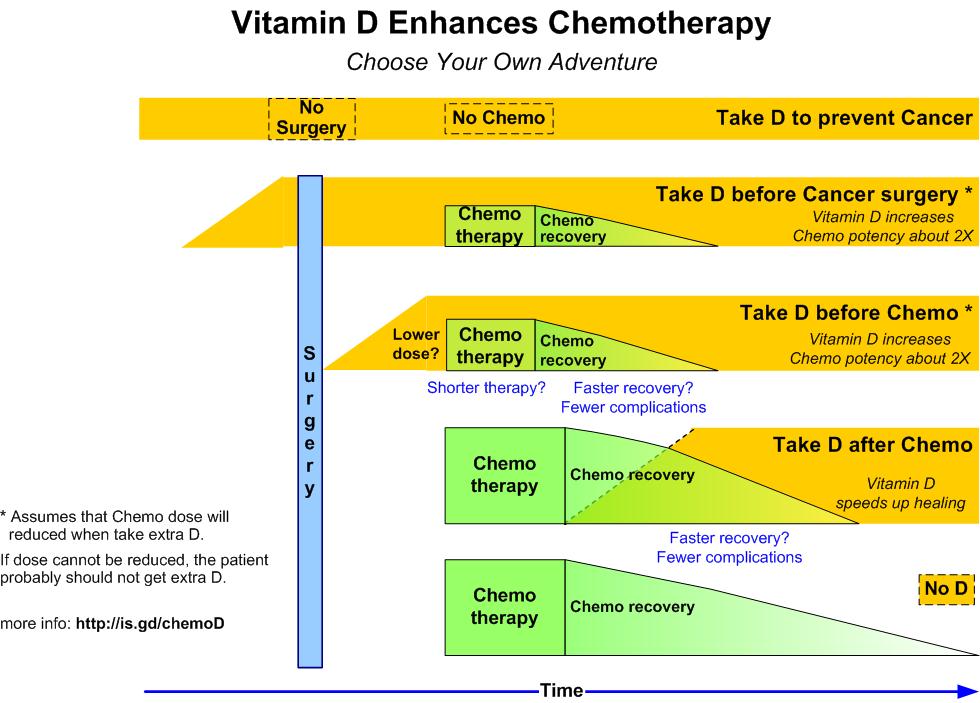
The power of some Chemo drugs are increased 2X by Vitamin D - Chemo could become deadly