
BMI decreased by Vitamin D (none of the trials used enough D for long enough) – meta-analysis
Is Vitamin D Supplementation Useful for Weight Loss Programs? A Systematic Review and Meta-Analysis of Randomized Controlled Trials
Medicina 2019, 55(7), 368; https://doi.org/10.3390/medicina55070368
Simone Perna
Department of Biology, College of Science, University of Bahrain, Sakhir Campus P. O. Box 32038, Bahrain
(This article belongs to the Special Issue The Role of Vitamin D in Obesity)
📄 Download the PDF from VitaminDWiki
Background and Objectives: The controversy about the impact of vitamin D supplementation on weight loss treatment was observed in several randomized controlled trials (RCTs). This meta-analysis investigates the effects of vitamin D supplementation (cholecalciferol or ergocalciferol) on weight loss through holistic measurements of Body Mass Index (BMI), weight and waist circumference.
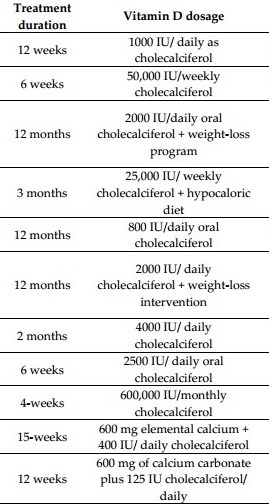
Materials and Methods: Google Scholar, WOS, PubMed and Scopus were explored to collect relevant studies. The selected articles focused on vitamin D supplementation in overweight and obese individuals with different conditions. Eleven RCTs were included into this meta-analysis with a total of 947 subjects, with a mean of the follow-up from 1 to 12 months and different vitamin D interventions (from 25,000 to 600,000 IU/monthly of cholecalciferol). Results:
The meta-analyzed mean differences for random effects showed that cholecalciferol supplementation deceases the
BMI by –0.32 kg/m2 (CI95% –0.52, –0.12 kg/m2, p = 0.002) and the
waist circumference by –1.42 cm (CI95% –2.41, –0.42 cm, p = 0.005),
but does not statistically affect weight loss –0.43 kg (CI95% –1.05, +0.19 kg, p = 0.17).
Conclusions: This meta-analysis lays the foundation for defining the potential clinical efficacy of vitamin D supplementation as a potential therapeutic option for weight loss programs, but further studies are needed to confirm the validity of these findings and delineate potential underlying mechanisms.