
Simple, cheap way to increase hair growth in less than 2 weeks using Vitamin D and DMSO
How the Founder of VitaminDWiki quickly got substantial hair growth
- DMSO is an excellent solvent that allow many supplements to get thru the skin
- Had read that DMSO applied to the scalp helped hair growth
- Had experienced that topical vitamin D helps skin-related problems about 100 X better than taking it orally
- Added 40,000 IU of topical vitamin D to 1 tablespoon of DMSO ( I used cream from Amazon , DMSO liquid is about 4X lower cost (since should dilute the oil about 3X with water)
- First, shampooed the scalp
- Applied about 1/4 tablespoon to scalp
- Shampooed again 4 to 30 hours later. (Sometimes two treatments before the next shampoo)
- By the 4th application, there was a noticeable increase in hair thickness
- I have repeated the procedure about twice a year since Feb 2024
- If I wanted even more hair growth, I would probably repeat the treatments more times, more often, or add a Vitamin D receptor activator - there are many to choose from
Related in VitaminDWiki
- Temporary hair loss (Telogen Effluvium) is 15X more likely if poor Vitamin D Receptor
- Hair loss strongly associated with poor vitamin D receptors
- Vitamin D reduces hair loss - many studies
- Vitamin D reduces hair loss - many studies
- Chronically Itchy skin treated by topical Vitamin D – meta-analysis
- Psoriasis is treated by topical Vitamin D, etc.
- Topical Vitamin D provides more benefits than oral sometimes - many studies
- Transcutaneous enhancers (DMSO, etc) for Vitamin D, Vitamin C, Resveratrol, Magnesium, etc.
- Which Vitamin D Receptor activator for which health problem - Perplexity AI
23 ways the Vitamin D Receptor helps hair growth D - Dec 2025
The role of vitamin D receptor signaling in hair follicle health and alopecia: Current understanding and therapeutic implications
J Cell Commun Signal 2025 Dec 29;20(1):e70060. doi: 10.1002/ccs3.70060. eCollection 2026 Mar
Liancheng Guan 1, Fan Yang 1, Meijuan Li 1, Yujia Chen 1, Zexin Zhao 1, Hongxia Li 1, Deping Luo 1, Qian Li 2, Yunzhi Chen 2
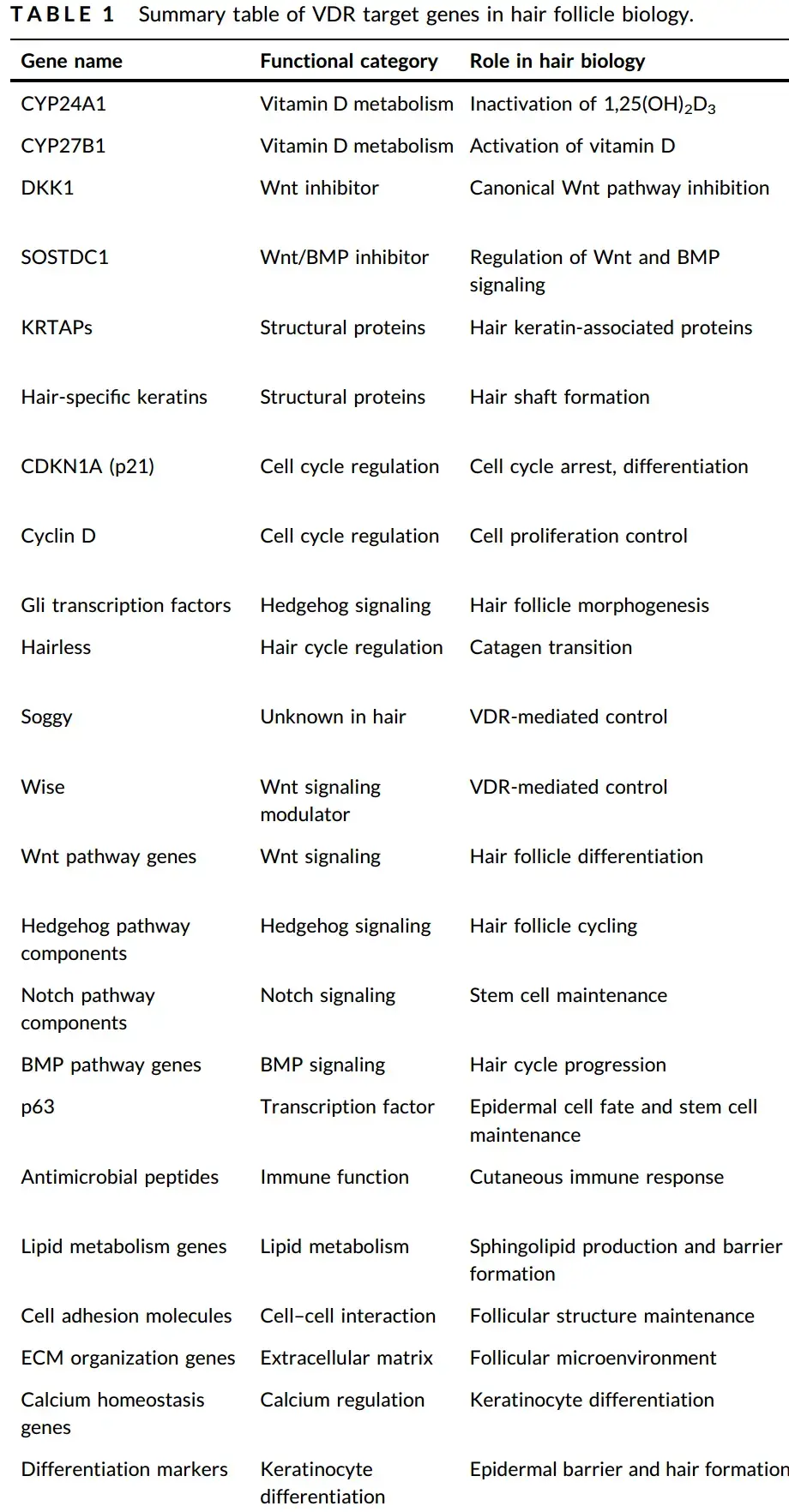

Vitamin D receptor (VDR) signaling plays a crucial role in hair follicle biology and represents a promising therapeutic target for various forms of alopecia. This review comprehensively examines the molecular mechanisms of VDR signaling in hair follicle development, cycling, and pathology. We discuss key molecular mechanisms of VDR-dependent gene regulation through chromatin remodeling, transcriptional regulation, and recruitment of coregulatory complexes, which collectively regulate hair follicle homeostasis. Recent advances in understanding VDR genetic polymorphisms and their impact on treatment responses have provided new insights into personalized therapeutic approaches. The review explores current therapeutic strategies, from conventional vitamin D supplementation to emerging targeted delivery systems and combination therapies. We also analyze the challenges and limitations in current research, including the need for improved delivery systems and reliable biomarkers for treatment response prediction. The integration of molecular insights with clinical applications suggests promising directions for developing more effective, personalized treatments for various forms of alopecia. This comprehensive analysis underscores the significance of VDR-targeted approaches in the future management of hair disorders and highlights the importance of continued research in this field.
Do hair loss supplements, such as Viviscal, Hair La Vie, and Nutrafol, or topical essential oils work?
Consumerlab: 2 page preview of 50 page article is free
ConsumerLab gives a FREE 2-week trial for all of their excellent reports.
The Founder of VitaminDWiki has had an annual subscription since about 2005