
The Vagus Nerve is helped by Vitamin D
Response by Perplexity AI Feb 2024
Click here for 12 references, images, videos, etc
The relationship between vitamin D and the vagus nerve, a critical component of the autonomic nervous system, has been explored in various studies, suggesting that vitamin D may indeed play a role in supporting vagus nerve function and, by extension, autonomic nervous system health.
Vitamin D and Autonomic Nervous System
Vitamin D is traditionally known for its role in calcium homeostasis and bone health, but emerging research has highlighted its broader physiological effects, including on the autonomic nervous system (ANS). The ANS regulates involuntary bodily functions, including heart rate, digestion, respiratory rate, and reflexes. The vagus nerve is a significant component of the ANS, primarily responsible for the parasympathetic (rest and digest) response.
Evidence Linking Vitamin D and Vagus Nerve Function
Cardiovascular and Autonomic Regulation: Vitamin D has been shown to mediate several nongenomic actions that involve transmembrane receptors and secondary messenger systems, which are crucial for cardiovascular health and autonomic regulation. Activated vitamin D coordinates molecular mechanisms that may contribute to the function of the cardiac autonomic nervous system (ANS), thereby influencing cardiovascular disease risk 1.
Vasovagal Syncope in Children and Adolescents: A study found that children and adolescents with vitamin D deficiency exhibited lower cardiac vagal tone, suggesting that vitamin D plays a role in cardiovascular autonomic nervous system function. The study indicated a positive correlation between serum 25-hydroxyvitamin D levels and measures of cardiac vagal tone 2 .
Vagus Nerve Stimulation Benefits: The activation of parathyroid hormone for converting vitamin D3 to active vitamin D relies on the vagus nerve. This connection underscores the importance of vitamin D in the context of vagus nerve function and its impact on mental and physical health 3.
Cardiac Autonomic Activity in Healthy Humans: Research has demonstrated that vitamin D levels are associated with cardiac autonomic activity. Specifically, exposure to 1,25-dihydroxy vitamin D attenuated rapid heart contractility, suggesting a relationship between vitamin D and vagal inhibitory outflow. This indicates that vitamin D may augment autonomic vagal control, potentially through its ability to cross the blood-brain barrier and bind directly to nuclear vitamin D receptors 4.
- Conclusion The evidence suggests that vitamin D plays a role in supporting vagus nerve function and, by extension, the autonomic nervous system. This relationship is particularly evident in the context of cardiovascular health, where vitamin D deficiency has been linked to decreased cardiac vagal tone and altered autonomic balance. These findings highlight the potential of vitamin D supplementation or adequate sunlight exposure as strategies to support vagus nerve function and overall autonomic nervous system health. However, further research is needed to fully understand the mechanisms underlying these effects and to establish concrete recommendations for vitamin D intake in the context of vagus nerve health.
Vagus Nerve is a portion of the Parasympathetic Nervous System
https://www.physio-pedia.com/Vagus_Nerve
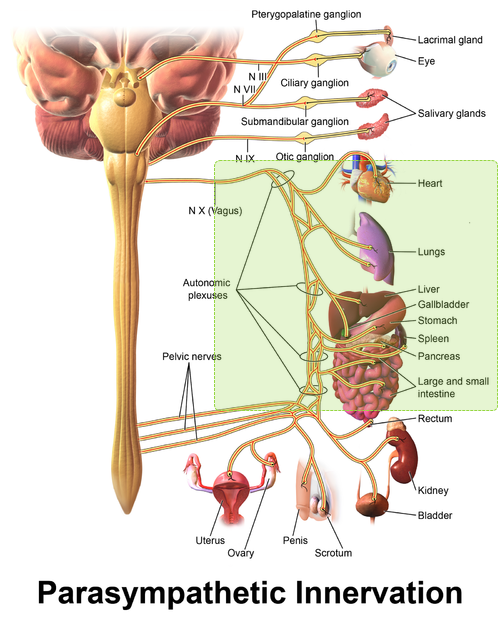
Great Vagus Nerve chart and 1 hour video and book
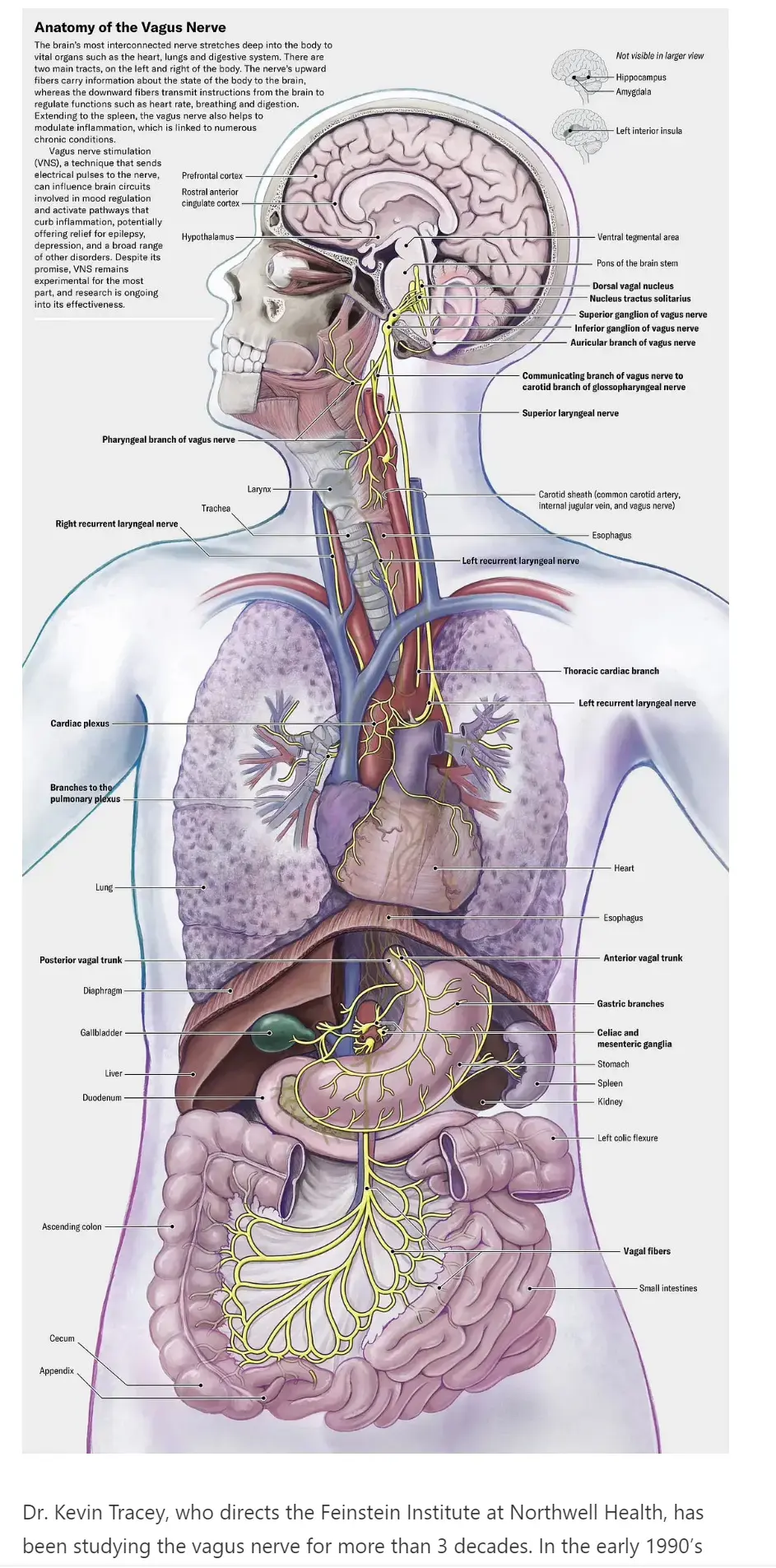
1 hour video Feb 2026 I have gathered extensive information about "The Great Nerve" by Dr. Kevin J. Tracey. Let me now compile a comprehensive summary of this book.
The Great Nerve: A Comprehensive Summary
The Great Nerve: The New Science of the Vagus Nerve and How to Harness Its Healing Reflexes is a groundbreaking 2025 book by Dr. Kevin J. Tracey, a neurosurgeon and pioneering researcher at the Feinstein Institutes for Medical Research. The 320-page work chronicles the revolutionary discovery of the inflammatory reflex and introduces readers to bioelectronic medicine—a field that uses electrical stimulation of nerves to treat chronic diseases without drugs. penguin.co
The book's title references the historical name given to the vagus nerve by the ancient Greek physician Galen, who called it "the great nerve" during his second-century anatomical demonstrations, recognizing its life-sustaining importance. Centuries later, anatomists renamed it the "wandering nerve" (vagus in Latin) due to its extensive branching throughout the body. science
The Author's Personal Journey
Tracey's lifelong quest to understand the connection between the nervous and immune systems began with profound childhood trauma. When he was five years old, his mother died from glioblastoma multiforme, a devastating brain tumor. Watching her deteriorate—experiencing headaches, memory lapses, and progressive loss of motor skills—planted a question about the brain's control over bodily health that would drive his career. His grandfather's suggestion that perhaps young Kevin could one day "do something about that" became a defining mission: to produce knowledge that cures disease and prevents suffering. insta
As a neurosurgery resident in the 1980s, Tracey lost a young patient to an immune system overreaction, further galvanizing his determination to understand how inflammation could turn deadly. These formative experiences shaped his research trajectory and ultimate discovery of the inflammatory reflex. aamc
The Central Discovery: The Inflammatory Reflex
The Accidental Breakthrough
In 1996, Tracey experienced what he describes as the "surprise of his life"—a serendipitous laboratory accident that revolutionized immunology. His team was studying a biological drug called CNI-1493 (Semapimod) that reduced levels of tumor necrosis factor-alpha (TNF-α), a key inflammatory cytokine. When a researcher accidentally injected an astronomically smaller dose—100,000 times lower than intended—into the brains of mice, the team expected nothing to happen. erictopol.substack
Instead, the minimal brain dose produced a massive anti-inflammatory effect throughout the entire body, dramatically lowering TNF levels in the lungs, liver, kidneys, and spleen. This suggested the brain possessed the capacity to communicate with and control the immune system—a paradigm-shattering revelation, as the nervous and immune systems were believed to operate independently. linkedin
Confirming the Neural Pathway
To test whether this communication traveled through the vagus nerve, Tracey's team surgically cut the nerve in experimental animals. Without the vagus connection, inflammation returned, and the brain-administered drug no longer affected the body. Electrical stimulation of the vagus nerve, conversely, suppressed inflammatory cytokine production. These experiments definitively established that the vagus nerve mediates a reflexive control mechanism over inflammation, which Tracey termed the "inflammatory reflex". pmc.ncbi.nlm.nih
This bidirectional circuit works as follows: afferent vagus nerve fibers detect inflammatory molecules (like TNF, IL-1β, and IL-6) in peripheral tissues and transmit signals to the brain. The brain processes this information and responds through efferent vagus nerve fibers, releasing neurotransmitters that ultimately trigger acetylcholine release. Acetylcholine binds to alpha-7 nicotinic acetylcholine receptors (α7nAChR) on immune cells, particularly macrophages, inhibiting the production of pro-inflammatory cytokines through molecular pathways involving NF-κB signaling. nature
The Science of the Vagus Nerve
Anatomy and Function
The vagus nerve is the longest cranial nerve in the body, composed of approximately 200,000 fibers that create a communication superhighway between the brain and major organs. The book describes how these fibers send thousands of electrical signals every second to coordinate critical involuntary functions. literatibookstore
As a key component of the parasympathetic nervous system, the vagus nerve controls the body's "rest and digest" response, regulating: en.wikipedia
- Heart rate and cardiovascular function: The vagus nerve helps lower heart rate and blood pressure, with high vagal tone associated with increased heart rate variability (HRV)—a marker of cardiovascular health massgeneral
- Digestion: It regulates intestinal motility, glandular secretion, and smooth muscle contractions throughout the digestive tract pmc.ncbi.nlm.nih
- Respiratory function: It coordinates breathing patterns en.wikipedia
- Immune responses: Through the inflammatory reflex, it modulates cytokine production and systemic inflammation pmc.ncbi.nlm.nih
Approximately 80-90% of vagus nerve fibers are afferent (sensory), carrying information from organs to the brain, while 10-20% are efferent (motor), transmitting commands from brain to body. pmc.ncbi.nlm.nih
Historical Context
The book traces the vagus nerve's discovery to ancient times. Galen of Pergamon (129-216 CE), physician to Roman emperors, performed public vivisections demonstrating the nerve's vital functions. In one dramatic experiment, he cut the vagus nerve of a squealing pig, instantly silencing the animal and proving that the brain—not the heart, as commonly believed—controlled vocalization and served as the body's command center. This established the foundation for understanding neural control of bodily functions, though the vagus nerve's immunoregulatory role remained hidden for nearly two millennia. ki
Bioelectronic Medicine: From Lab to Clinic
Clinical Applications
The book's most compelling content involves patient transformation stories that demonstrate bioelectronic medicine's potential. penguinrandomhouse
Kelly Owens serves as the book's emblematic patient. Diagnosed with Crohn's disease at age 13 after a sports injury led to massive knee swelling, Kelly spent 15 years battling debilitating inflammation that affected not only her intestines but also her joints. By her late twenties, she was largely confined to a wheelchair, unable to work, and had cycled through every available medication without sustained relief. tim
After enrolling in a clinical trial, surgeons implanted a small device on her cervical vagus nerve that delivers one minute of electrical stimulation daily. The results were dramatic and nearly immediate: Kelly regained the ability to walk, returned to work, and experienced sustained symptom relief that lasted longer than any pharmaceutical intervention. healthrising
Other patient narratives include: pmc.ncbi.nlm.nih - A rheumatoid arthritis patient who lived on his couch in pain for eight years, then started playing tennis during the trial healthrising - A woman with severe RA who couldn't lift a pencil after 16 years of disease, who began riding a bicycle within months of receiving the implant pmc.ncbi.nlm.nih - A young woman who spent 15 years cycling between wheelchair use and experimental medications, who now works in Tracey's office after successful vagus nerve stimulation healthrising
The RESET-RA Clinical Trial
The FDA approval of vagus nerve stimulation for rheumatoid arthritis in July 2025 represented a watershed moment for bioelectronic medicine. The approval was based on the RESET-RA trial (Rheumatoid arthritis Evaluation of SetPoint Electrical TReatment), a rigorous randomized, double-blind, sham-controlled phase 3 study involving 242 patients. rheumatologyadvisor
Study Design and Population: All participants received surgical implantation of the SetPoint System device on their left cervical vagus nerve, then were randomized to receive either active electrical stimulation (treatment group) or non-active stimulation (control group) for 12 weeks. The patient population was notably difficult to treat—60% had failed multiple biologic or targeted synthetic disease-modifying antirheumatic drugs (DMARDs), with an average disease duration of 13 years. empr
Primary Outcomes: rheumnow - At 12 weeks, 35.2% of the treatment group achieved ACR20 response (20% improvement in American College of Rheumatology criteria) compared to 24.2% of controls (p=0.0209) - Treatment difference was 11% (95% CI: 0.6-23.1) - Significantly more patients in the treatment group achieved low disease activity or remission (DAS28-CRP ≤3.2) at week 12 (p=0.0154) - After crossover at 12 weeks, when all participants received active stimulation, ACR20 response improved to 51.5% in the original treatment group and 53.1% in the crossover group by 24 weeks - At 12 months, 75% of patients remained free of biologic or targeted synthetic DMARDs, suggesting sustained benefit without additional immunosuppressive medications empr
Safety Profile: rheumatologyadvisor - Only 1.7% of patients experienced serious adverse events related to the device or procedure - The most common side effect was vocal cord dysfunction associated with the implantation procedure - No participants discontinued due to adverse events - Critically, no increased rates of serious infections, malignancies, major adverse cardiovascular events (MACE), or venous thromboembolism—common concerns with immunosuppressive drug therapies rheumatologyadvisor
The SetPoint System consists of an implantable pulse generator placed under the skin, connected via wire to an electrode cuff on the vagus nerve. After a minimally invasive outpatient surgical procedure, the device automatically delivers pre-programmed electrical stimulation for one minute daily for up to 10 years, with patients needing only to recharge the battery for a few minutes weekly. setpointmedical
Diseases and Conditions Addressed
The book explores vagus nerve stimulation's therapeutic potential across numerous conditions: books.google
Currently Approved or in Advanced Trials
Rheumatoid Arthritis: The inflammatory reflex discovery led directly to FDA-approved treatment, as described above. en.wikipedia
Inflammatory Bowel Disease: Clinical trials in Crohn's disease patients have shown promising results, with reduced inflammation and improved symptoms. The mechanism involves suppressing TNF-α and other pro-inflammatory cytokines that damage intestinal tissue while affecting other organs. nature
Epilepsy: Vagus nerve stimulation has been FDA-approved for treatment-resistant epilepsy since 1997, predating Tracey's inflammatory reflex discovery. The therapy helps prevent seizures by modulating brain excitability. nature
Depression: FDA-approved for treatment-resistant depression, VNS modulates mood-related brain circuits. The book discusses evidence suggesting comparable efficacy to pharmacotherapy. xiahepublishing
Stroke Rehabilitation: When paired with physical therapy, vagus nerve stimulation enhances neuroplasticity—the brain's ability to form new neural connections. Patients receive brief electrical pulses while performing repetitive motor tasks (grasping, reaching, lifting), which strengthens new neural pathways and improves hand and arm function. Clinical implementation began in 2025 at major medical centers. hospital.uillinois
Emerging Applications
Multiple Sclerosis: The book discusses preclinical and early clinical evidence. In experimental autoimmune encephalomyelitis (EAE), the rat model of MS, vagus nerve stimulation decreased disease severity and duration, reduced inflammatory lesions and demyelination, prevented blood-brain barrier disruption, and shifted microglia toward a repair phenotype. SetPoint Medical received FDA approval to initiate a pilot study in relapsing-remitting MS in late 2025, enrolling up to 60 patients. pnas
Parkinson's Disease: VNS influences dopamine production in the substantia nigra and improves gait parameters in animal models. The therapy may also reduce neuroinflammation, oxidative stress, and abnormal protein accumulation characteristic of Parkinson's pathology. neurologicwellnessinstitute
Alzheimer's Disease: Preclinical studies suggest neuroprotective effects through anti-inflammatory mechanisms and modulation of brain-derived neurotrophic factor. Clinical evidence remains preliminary, with small trials showing enhanced memory task performance. pubmed.ncbi.nlm.nih
Obesity and Diabetes: The book explores the vagus nerve's role in metabolic regulation. Non-invasive auricular VNS has produced significant weight loss in preclinical studies—one battery-free device triggered by stomach peristalsis produced 38% weight loss maintained over 100 days in rats. The inflammatory reflex influences insulin resistance, glucose homeostasis, and appetite regulation through effects on the hypothalamic-pituitary-adrenal axis. pmc.ncbi.nlm.nih
Cardiovascular Disease: Through regulation of heart rate variability and blood pressure, vagus nerve modulation may benefit heart failure and hypertension. pmc.ncbi.nlm.nih
Lifestyle Strategies for Vagus Nerve Activation
Beyond medical devices, Tracey evaluates popular lifestyle interventions theorized to stimulate the vagus nerve naturally. The book emphasizes examining scientific evidence rather than promoting unproven methods. youtube
Cold Exposure
Mechanism: Cold water immersion or facial cold exposure triggers the "dive response," a mammalian reflex that strongly activates the vagus nerve. When cold water contacts facial trigeminal nerve receptors (especially around the eyes and forehead), signals travel through the trigeminal-vagal reflex arc to activate vagal output. urbanicetribe
Evidence Base: Research demonstrates that cold stimulation, particularly in the neck and cheek regions, increases parasympathetic activity, reduces heart rate, and elevates heart rate variability—markers of enhanced vagal tone. One study using the "Cold Face Test" (facial immersion in cold water) successfully reduced acute psychosocial stress responses through vagal activation. Multiple studies have confirmed cardiovascular reactivity patterns consistent with cardiac-vagal activation following cold exposure. pmc.ncbi.nlm.nih
Practical Applications: ptsduk - Splashing cold water on the face - Cold showers, beginning at 65°F and gradually decreasing temperature - Ice baths or cold plunge pools - Cold compresses applied to the neck or chest for seconds to minutes - Progressive adaptation recommended—start with brief exposures and gradually increase duration
Breathing Exercises
Mechanism: Deep, conscious "belly breathing" with breath retention engages the parasympathetic nervous system and settles vagal tone. Respiratory sinus arrhythmia—the natural variation in heart rate with breathing—reflects vagal control of cardiac function. ptsduk
Evidence: The vagus nerve coordinates respiratory patterns, and controlled breathing exercises demonstrably shift autonomic balance toward parasympathetic dominance. However, Tracey notes that while breathing techniques show benefits, direct evidence that effects are mediated specifically through vagus nerve activation remains incomplete. massgeneral
Meditation and Mindfulness
Evidence Assessment: The book acknowledges research supporting meditation's anti-inflammatory effects and inflammation reduction. However, Tracey maintains scientific caution, noting it remains uncertain whether these benefits result from vagus nerve activation specifically or through alternative mechanisms. He emphasizes the need for more rigorous studies to establish causality. publishersweekly
Exercise
Tracey discusses exercise's potential to influence vagal tone and inflammation but emphasizes that mechanisms remain under investigation. Regular physical activity consistently correlates with improved heart rate variability and reduced inflammatory markers, though the specific contribution of vagal pathways requires further clarification. literatibookstore
Molecular Mechanisms: How the Inflammatory Reflex Works
The book delves into the cellular and molecular biology underlying vagus nerve-mediated immune regulation. nature
The Splenic Connection
A key insight is that the vagus nerve does not directly innervate the spleen—a major immune organ where immune responses are coordinated. Instead, efferent vagus signals trigger a cascade: nature
- Vagus nerve activation releases norepinephrine from splenic nerve endings
- Norepinephrine stimulates β2 adrenergic receptors on specialized CD4+ T cells (CD4+CD44high CD62Llow)
- These T cells express choline acetyltransferase (ChAT) and produce acetylcholine
- Acetylcholine activates α7 nicotinic acetylcholine receptors on macrophages
- Receptor activation suppresses pro-inflammatory cytokine production while promoting anti-inflammatory mediators
Molecular Signaling Pathways
When acetylcholine binds to α7nAChR on macrophages, it initiates intracellular signaling that: pubmed.ncbi.nlm.nih
- Inhibits NF-κB nuclear translocation: NF-κB is a master transcription factor for pro-inflammatory genes. Vagal signaling prevents its movement to the nucleus, blocking transcription of TNF-α, IL-1β, IL-6, and other inflammatory mediators pmc.ncbi.nlm.nih
- Suppresses JAK/STAT pathways: These signaling cascades amplify inflammatory responses; vagal input dampens their activity nature
- Modulates inflammasome activity: The NLRP3 inflammasome, responsible for IL-1β maturation, is regulated by cholinergic anti-inflammatory signaling pmc.ncbi.nlm.nih
- Promotes specialized pro-resolving mediators (SPMs): Vagus nerve stimulation enhances production of lipid mediators like resolvins and lipoxins that actively resolve inflammation and promote tissue repair pnas
Macrophage-to-Macrophage Communication
Recent research highlighted in the book reveals that α7nAChR activation enhances macrophage-macrophage interactions in the spleen. This cell-to-cell signaling amplifies anti-inflammatory effects throughout the immune system, but occurs only under inflammatory conditions—demonstrating the reflex's intelligent, context-dependent operation. nature
The Cytokine Theory of Disease
To contextualize the inflammatory reflex, Tracey traces the history of cytokine biology—the understanding that immune signaling molecules can cause disease manifestations. pubmed.ncbi.nlm.nih
TNF's Discovery and Dual Nature
Baby Janice's Mystery: The book opens with a haunting clinical case from Tracey's early career. An infant named Janice, recovering from burn injuries, suddenly suffered catastrophic physiological collapse—plummeting blood pressure, chaotic heart rhythm, respiratory failure—and died despite aggressive resuscitation. No infection or bacterial toxins were detected, leaving Tracey convinced that something within the body's own inflammatory processes had become lethal. insta
TNF as Culprit and Cure: Tumor necrosis factor was originally identified in the 1970s for its ability to kill tumor cells, hence the name. However, researchers discovered TNF's darker side—when produced in excess, it causes shock, organ failure, and death. The same molecule essential for mobilizing immune defenses against invaders can, when dysregulated, attack the body itself. pmc.ncbi.nlm.nih
This paradox underlies the cytokine theory of disease: immune signaling molecules (cytokines) like TNF, IL-1β, IL-6, and others produce the signs, symptoms, and damaging aftereffects of inflammatory diseases. Tracey's experiments in the 1980s and 1990s confirmed that administering TNF to healthy animals reproduced the complete syndrome of septic shock. Conversely, blocking TNF prevented lethal outcomes. jci
Clinical Validation
The cytokine theory achieved clinical validation in the 1990s when anti-TNF drugs proved remarkably effective for rheumatoid arthritis and inflammatory bowel disease. These biological drugs—which Tracey himself helped develop—generated a market valued at $24.1 billion by 2024. However, Tracey's subsequent research led him to conclude that vagus nerve stimulation offers a superior therapeutic approach with fewer side effects and lower costs. aamc
The Book's Structure and Narrative Approach
Chapter Organization
Based on available summaries, the book follows a logical progression: insta
Chapter 1: How Electricity Could Replace Your Medications introduces the central premise through Kelly Owens's transformation story, then traces Tracey's childhood loss and his lifelong mission. It culminates with the revolutionary discovery that the nervous and immune systems communicate. insta
Chapter 2: The Great Nerve Reveals Itself provides historical context, describing Galen's ancient anatomical demonstrations and the vagus nerve's journey from "great nerve" to "wandering nerve" as anatomists mapped its extensive branching. insta
Chapter 3: Your Body's Healing Reflexes explores homeostatic mechanisms—the unconscious, automatic processes maintaining physiological balance. It returns to baby Janice's case, introduces TNF as both healing force and lethal threat, and develops the concept of dysregulation underlying disease. insta
Chapter 4: The Path to Stimulation and Early Experiments with Epilepsy presumably details the development of electrical stimulation technologies and their application to neurological conditions, providing foundation for later inflammatory disease applications. insta
Subsequent chapters likely explore specific disease applications, lifestyle strategies, future directions, and implications for healthcare transformation, though detailed summaries were not available.
Writing Style
Reviewers consistently praise Tracey's accessible, engaging prose. Publishers Weekly notes his "knack for explaining complicated biological phenomena in an approachable style" with a "measured outlook" that "highlights noteworthy potential without overselling". The narrative balances rigorous science with human stories, making complex neuroscience and immunology comprehensible to general readers while maintaining scientific integrity. publishersweekly
The book employs vivid patient anecdotes to illustrate abstract concepts, grounding theoretical biology in lived human experience. Tracey writes as both scientist and physician, combining laboratory insights with clinical wisdom. penguinrandomhouse
Broader Implications and Future Directions
Paradigm Shift in Medicine
The inflammatory reflex discovery fundamentally challenges medical paradigms that have persisted for centuries. For most of medical history, the nervous system was understood to control voluntary movement and sensation, while the immune system operated autonomously to defend against pathogens. Tracey's work revealed these systems as intimately integrated, with the brain actively regulating immune responses through neural circuits. en.wikipedia
This integration opens radical therapeutic possibilities: instead of suppressing the immune system with drugs that have systemic side effects, bioelectronic devices can precisely modulate specific neural pathways, activating the body's endogenous anti-inflammatory mechanisms. As Tracey describes it, the approach "enlists the vagus nerve to help the body heal itself". tedmed
Economic and Healthcare System Impact
Cost Considerations: A single surgical implantation procedure provides up to 10 years of automated therapy. While upfront costs are substantial, this potentially offers better economics than continuous biologic drug therapy, which can cost tens of thousands of dollars annually with ongoing administration requirements. wewillcure
Treatment Burden Reduction: Once programmed, the SetPoint System requires minimal patient involvement—one minute of automatic daily stimulation and brief weekly battery charging. This contrasts sharply with frequent injections, intravenous infusions, or daily pills required by conventional therapies. setpointmedical
Reduced Side Effects: By avoiding systemic immune suppression, vagus nerve stimulation eliminates major concerns like increased infection risk, malignancy, cardiovascular events, and venous thromboembolism associated with immunosuppressive drugs. This is particularly important for patients with comorbidities who cannot tolerate standard therapies. empr
Expanding Applications
The book discusses ongoing and planned clinical investigations: setpointmedical
- Multiple sclerosis: Pilot study initiated in late 2025 setpointmedical
- Inflammatory bowel disease: Trials in Crohn's disease showing promise tim
- Post-traumatic stress disorder (PTSD): Evidence for reduced symptoms through vagal modulation of autonomic nervous system dysfunction aamc
- Alzheimer's and other neurodegenerative diseases: Preclinical neuroprotective effects under investigation mayoclinic
- Cardiovascular disease: Potential applications for heart failure and arrhythmias today.ucsd
- Metabolic syndrome: Integration of inflammation control with metabolic regulation pmc.ncbi.nlm.nih
Technological Evolution
The book addresses next-generation bioelectronic medicine developments: pmc.ncbi.nlm.nih
Closed-Loop Systems: Future devices will incorporate bidirectional communication—not only delivering electrical stimulation but also sensing bioelectronic signals, biomarkers, and physiological responses in real time. These systems could automatically adjust stimulation parameters based on detected inflammation levels or disease activity, creating truly adaptive, personalized therapy. pmc.ncbi.nlm.nih
Non-Invasive Approaches: While current FDA-approved systems require surgical implantation, research is advancing transcutaneous auricular vagus nerve stimulation (taVNS) and transcutaneous cervical VNS (cVNS). These non-invasive methods eliminate surgical risks and could dramatically expand accessibility. clinicaltrials
Multimodal Integration: Future implants may combine neuromodulation with biosensing, drug delivery, and other therapeutic capabilities. This convergence could enable precision medicine approaches tailored to individual patient physiology. pmc.ncbi.nlm.nih
Focused Ultrasound: Emerging technologies use focused ultrasound to stimulate specific neural pathways non-invasively, potentially offering the precision of implanted devices without surgery. pmc.ncbi.nlm.nih
Diagnostic Applications
A particularly intriguing future direction mentioned in the book involves using bioelectronic signals as diagnostic tools. Since the body produces unique time-series patterns of neural and immune activity in response to different pathogens, these "bioelectronic signatures" could identify disease-causing agents and guide treatment selection. This would represent a paradigm shift from bioelectronic medicine as purely therapeutic to encompassing diagnosis and monitoring. today.ucsd
Critical Perspective and Limitations
While enthusiastically presenting vagus nerve stimulation's potential, Tracey maintains scientific rigor by acknowledging limitations and uncertainties. publishersweekly
Evidence Gaps
For lifestyle interventions like meditation, ice baths, and breathing exercises, the book notes that while correlative evidence exists, direct proof of vagus nerve mediation remains incomplete. Some effects may operate through alternative mechanisms. publishersweekly
Individual Variability
Not all patients respond to vagus nerve stimulation. In the RESET-RA trial, roughly two-thirds achieved meaningful benefit at 12 weeks, meaning one-third did not reach ACR20 response criteria. Understanding predictors of response remains an active research area. rheumnow
Methodological Challenges
Clinical trials in bioelectronic medicine face unique challenges: frontiersin - Sham control design: Creating effective placebo controls for implanted devices is ethically and practically difficult nature - Smaller participant numbers: Device trials typically involve fewer participants than drug studies, though with longer follow-up periods pmc.ncbi.nlm.nih - Stimulation parameter optimization: Ideal frequency, intensity, duration, and timing of electrical pulses vary by condition and potentially by individual coe.miami - Mechanistic variability: Different diseases may require different stimulation approaches (afferent vs. efferent fiber targeting, continuous vs. intermittent protocols) frontiersin
Long-Term Questions
While 12-month data from RESET-RA show sustained benefit, decades-long safety and efficacy data will accumulate only over time. Questions about device longevity, battery life management, and potential tolerance development require ongoing investigation. rheumnow
Cultural and Philosophical Dimensions
Changing Medical Culture
Tracey acknowledges that widespread adoption of bioelectronic medicine will require cultural transformation in medical practice. Most physicians "haven't thought about the vagus nerve since medical school," and integrating neuroimmunology concepts into clinical decision-making represents a significant educational challenge. aamc
The shift from pharmaceutical to device-based therapy alters fundamental aspects of medical care—surgical implantation replaces prescription writing, programming replaces dose titration, and neural circuit modulation replaces biochemical intervention. This requires new interdisciplinary collaboration between rheumatologists, gastroenterologists, neurologists, neurosurgeons, and biomedical engineers. tedmed
Redefining "Cure"
When asked what "cure" means to him, Tracey emphasizes that while individual patients can achieve remission or transformation (like Kelly Owens), the broader goal is advancing knowledge that benefits humanity. His childhood loss and early clinical experiences taught him that death and suffering are inevitable, but preventable suffering through medical advancement represents medicine's highest calling. wewillcure
The book ultimately presents vagus nerve stimulation not as a panacea but as a fundamentally new approach that activates innate healing reflexes, offering hope for millions suffering from chronic inflammatory and autoimmune conditions who have exhausted conventional options. literatibookstore
Reception and Impact
Critical Acclaim
Early reviews have been overwhelmingly positive. Publishers Weekly calls it "an edifying study" and "a robust introduction to a promising area of scientific inquiry," praising Tracey's ability to explain complex biology without oversimplification. The book has appeared on bestseller lists. penguinrandomhouse
Endorsements from prominent scientists and physicians emphasize both scientific rigor and human impact: literatibookstore
- Wim Hof (cold exposure pioneer): Called it "a masterpiece and a timeless document for those who want to see what science is all about: faith, focus, patience, and hard work" penguin.co
- Will Bulsiewicz, MD (New York Times bestselling author): "A game changer... learn how the connection between your brain, gut, and immune system can transform your health" penguin.co
- Terry Wahls, MD: Described it as "groundbreaking" and "hopeful," showing how vagus nerve stimulation "will reshape medical treatments in the future" literatibookstore
- Cori Bargmann, PhD (neurobiologist): Praised Tracey's ability to communicate his "passion and style to a broad audience" through a kaleidoscope of medical history, patient stories, and careful investigation literatibookstore
Media Coverage and Public Interest
The book's May 2025 publication coincided with FDA approval of vagus nerve stimulation for rheumatoid arthritis, generating substantial media attention. Dr. Eric Topol, a prominent cardiologist and medical commentator, featured Tracey on his Substack newsletter shortly after publication, discussing the FDA approval and the book's implications. erictopol.substack
The convergence of compelling patient stories, rigorous science, historical context, and regulatory validation has positioned The Great Nerve as a definitive introduction to bioelectronic medicine for both professional and general audiences. penguinrandomhouse
Conclusion: A New Chapter in Medicine
The Great Nerve chronicles one of the most significant medical discoveries of recent decades—the inflammatory reflex—and its translation into clinical reality through bioelectronic medicine. By revealing the vagus nerve as a master regulator of inflammation and immune function, Tracey opened a new therapeutic frontier that harnesses the body's innate healing mechanisms rather than suppressing them. en.wikipedia
The book succeeds on multiple levels: as scientific history, documenting the serendipitous discovery and decades of validation; as medical narrative, presenting transformation stories that illustrate abstract concepts; as popular science, making complex neuroscience and immunology accessible; and as advocacy, building the case for paradigm change in how medicine approaches chronic inflammatory disease. publishersweekly
For readers interested in the vagus nerve, nutritional science, and preventive health—themes aligned with VitaminDWiki's mission—The Great Nerve offers complementary insights into how the nervous system regulates physiological processes including inflammation, metabolism, and disease susceptibility. Tracey's emphasis on evidence-based evaluation of lifestyle interventions like cold exposure, breathing exercises, and meditation resonates with a scientific approach to wellness optimization. urbanicetribe
Ultimately, the book presents bioelectronic medicine not as displacing pharmaceutical approaches but as expanding the therapeutic toolkit, offering new hope for patients who have exhausted conventional options while potentially reducing treatment burden, side effects, and healthcare costs. As Tracey frames the choice: "If you're debilitated by or at risk of death from an inflammatory condition, do you continue taking expensive drugs with side effects, or do you try a 30-minute outpatient procedure that provides a lifetime of therapy?" wewillcure
The answer, for thousands of patients already treated and millions potentially to benefit, may fundamentally reshape 21st-century medicine's landscape. empr