
The more polystyrene microplastics, the worse the fertility (rats)
Impact of polystyrene microplastic exposure at low doses on male fertility: an experimental study in rats
Scientific Reports | (2026) 16:7474 https://doi.org/10.1038/s41598-026-38385-y
Aisha H. A. Alsenousy1®, Asmaa Hassan Younis Khalaf2, Hesham Zaki Ibrahim2, Maher A. Kamel1® & Mokhtar Ibrahim Yousef2
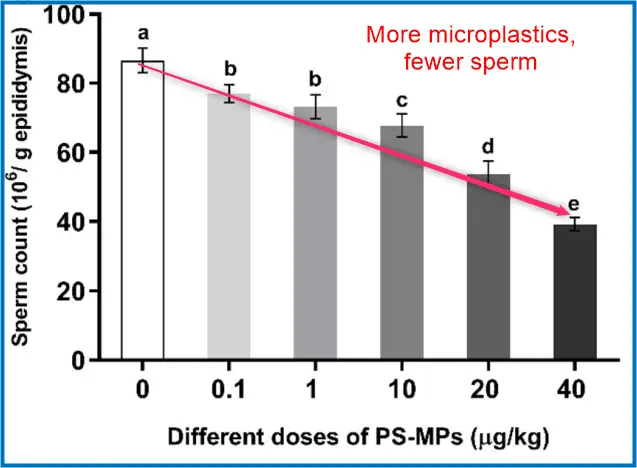
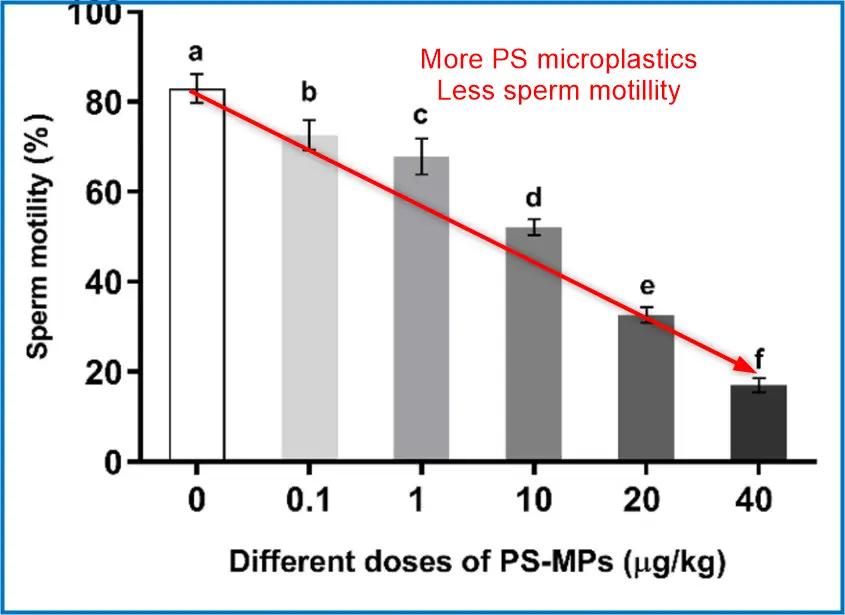
Polystyrene microplastics (PS-MPs), widely used in commercial and pharmaceutical products, are emerging endocrine-disrupting pollutants with potential reproductive toxicity. This study evaluated the dose-dependent effects of PS-MPs on adult male rats by assessing semen quality, reproductive hormones, oxidative stress, mitochondrial and inflammatory markers, and testicular histology.
Rats were assigned to six groups: a control group and five groups receiving PS-MPs orally (0.1, 1, 10, 20, or 40 pg/kg BW) for 45 days. PS-MP exposure reduced sperm count and motility, increased abnormal sperm, decreased testosterone, and elevated FSH and LH. Mitochondrial biogenesis/function markers (PGC-1a, UCP1, TFAM) were downregulated, while NF-kB, caspase-3, and TBARS were increased, accompanied by significant depletion of antioxidant defenses (GSH, GR, GPx, SOD, GST, CAT, TAC) and pronounced testicular histopathology. These effects were dose-dependent, and PS-MPs were detected in testicular tissue by pyrolysis-GC/MS at the doses of 10 pg/kg and higher.
Collectively, the data identify mitochondrial dysfunction-driven oxidative stress and associated inflammation as a key mechanism by which PS-MPs induce spermatogenic failure, hormonal disruption, and testicular damage, highlighting their potential as potent male reproductive toxicants.
Related in VitaminDWiki
- Pilot study found plastic detox restored fertility in 3 months
- Nanoplastics might result in more health problems than microplastics
- Microplastics suspected to cause Digestive, Reproductive, and Respiratory problems (mice and women)
- Microplastics causing problems in humans, etc. (Vitamin D can help) - many studies