
Some groups are giving Vitamin D before pregnancy
VitaminDWiki wants to give lots of Vitamin D not only during but also before and after pregnancies
Reaching Women Before Conception for Vitamin D: Which Groups Exist, What the Evidence Shows, and Where to Start
Claude - Research - Sept 2026
Yes, such groups exist. The most practical ones with a hospital link are fertility (REI/IVF) clinics, maternal-fetal medicine preconception consults, and interconception programs for women who have already had a preterm birth. Preconception supplementation of healthy women has already been done at scale internationally, most notably in the NiPPeR trial (1,729 women in the UK, Singapore and New Zealand).[1][2] In the US, however, no hospital or Medicaid plan was found that currently gives vitamin D routinely before conception. And the randomized evidence that vitamin D makes conception easier, replaces IVF or prevents preterm birth is still weak or mixed.
TL;DR
Groups exist and can be reached months before conception. The best US entry points are:
- REI/IVF clinics, where treatment start dates are known weeks to months ahead.
- Hospital preconception clinics, which ask women to come 3–6 months before trying.
- Interconception and Healthy Start programs.
- The Boston University PRESTO online cohort.
- Contraception-removal visits.
Internationally, NiPPeR (UK/Singapore/NZ), S-PRESTO (Singapore) and the Southampton Women's Survey (UK) all enrolled women before pregnancy. NiPPeR also supplemented them, with vitamin D as one component of a multi-nutrient product.
The evidence is promising but not proven.
- Observational studies, such as the NIH EAGeR analysis, link a sufficient preconception level (≥75 nmol/L, about 30 ng/mL) to more live births and fewer pregnancy losses.
- Randomized IVF trials are mostly null, including a single 600,000 IU dose (SUNDRO) and 50,000 IU weekly in poor responders.
- The 2024 Cochrane review rates the effect of pregnancy vitamin D on preterm birth as very uncertain.
"Eliminating the need for IVF" is not supported by any trial.
- What to do: start with an REI clinic or a Medicaid interconception program. Run the project as a pragmatic standard-of-care or quality-improvement (QI) protocol, as MUSC did in 2015, or as an IRB-approved trial with an FDA consultation on whether an IND is needed. An IND is generally required if the study aims to prevent disease such as preterm birth. Consider daily or weekly dosing rather than a large-bolus design.
Key Findings
1. Existing groups that reach women before conception
| Group / program | Institution & location | Size | How early before conception | Supplementation ever given? | |
|---|---|---|---|---|---|
| NiPPeR RCT | Univ. of Southampton; NUS/KK Hospital Singapore; Univ. of Auckland | 1,729 women (870 intervention, 859 control), aged 18–38 | Recruited while planning; supplement started preconception | Yes – multi-nutrient product incl. vitamin D vs standard supplement | |
| S-PRESTO cohort | KK Women's and Children's Hospital, Singapore | 1,032 women; 373 births | Up to 12 months | Observational only | [3] |
| Southampton Women's Survey | MRC Lifecourse Epidemiology Unit, UK | 12,583 non-pregnant women; 3,158 births | Months to years | Observational only | [4] |
| PRESTO | Boston University School of Public Health, US/Canada | 2,421 women in first 99 weeks; ongoing | Trying ≤6 cycles, or up to 6 months before stopping contraception | Observational only | [5] |
| EAGeR trial | NICHD; 4 US sites | 1,228 women with 1–2 prior losses | Up to 6 cycles preconception | Yes – low-dose aspirin, not vitamin D | [6][7] |
| FAZST trial | NICHD; 4 US REI centers | Couples seeking infertility care | Preconception | Yes – male folic acid/zinc | [8] |
| HKU IVF vitamin D RCT (NCT04547530) | Queen Mary & Kwong Wah Hospitals, Hong Kong | Not reported | Randomized 1 month before IVF | Yes – 50,000 IU weekly ×4, then every 2 weeks | |
| Zhejiang PCOS IVF RCT (NCT04082650) | Women's Hospital, Zhejiang Univ., China | 860 planned | About 12 weeks, until trigger day | Yes – 4,000 IU/day vs placebo | |
| Hospital preconception clinics | e.g., UChicago, UT Southwestern, University Hospitals Cleveland, Penn Medicine, Brigham | Not reported | 3–6 months advised | Not reported | [9][10][11][12] |
| Healthy Start | HRSA; 100 programs in 37 states + DC | Varies by site | Preconception and interconception | Nutrition counseling; no vitamin D program found | [13] |
| Natural Cycles app ("Plan a Pregnancy") | Natural Cycles; LSHTM/Plymouth research | 5,376 in a TTC study | Whole TTC period | No | [14] |
2. What the evidence says
Fertility and time to pregnancy (natural conception)
EAGeR (Mumford 2018, Lancet Diabetes Endocrinol). In 1,191 women with prior losses, a preconception 25(OH)D of ≥75 nmol/L was associated with:
- higher clinical pregnancy (RR 1.10, 95% CI 1.01–1.20);
- higher live birth (RR 1.15, 1.02–1.29);
- less pregnancy loss.
Early-pregnancy levels were not associated with loss.[15] This is the strongest human signal that preconception timing matters, but it is observational.[16]
PRESTO. Serum 25(OH)D showed only "suggestive" and imprecise links with fecundability: higher at ≥50 ng/mL and lower at <20 ng/mL.[17] Dietary vitamin D intake was not associated with fecundability.[18]
- NiPPeR. The supplement contained vitamin D plus myo-inositol, probiotics and B vitamins.[19] It did not shorten time to natural conception and did not raise clinical pregnancy rates. It did reduce preterm delivery, preterm pre-labour rupture of membranes and major postpartum haemorrhage (adjusted RR 0.44) as secondary outcomes. More than 90% of participants had marginal or low levels of at least one of folate, riboflavin, B12 or vitamin D before conception.[1] Because the product had many components, the preterm benefit cannot be attributed to vitamin D.
IVF / assisted reproduction
- The randomized trials are mostly null:
- SUNDRO: a single 600,000 IU dose did not improve clinical pregnancy.[20][21]
- A 2020 Cochrane review of two RCTs found no difference in live birth.[21]
- A 2025 RCT in Reproductive Sciences in 70 vitamin D-deficient poor responders found 50,000 IU weekly for 6–8 weeks raised 25(OH)D to 40.95 ± 15.22 ng/mL but did not improve IVF outcomes.
- A 2022 trial-sequential meta-analysis of 5 RCTs suggested a higher chemical pregnancy rate but flagged a likely false-positive result.[22]
- A 2025 Iraqi frozen-embryo-transfer RCT reported live birth of 51.7% vs 30.0% with 4,000 IU/day. It is posted on Zenodo rather than in a major journal and needs independent replication.[23]
- Observational IVF data from Hong Kong show a lower cumulative live birth rate when 25(OH)D is <50 nmol/L.[24]
Preterm birth
- Cochrane 2024 (Palacios). After removing 20 trials judged untrustworthy, the review rated the evidence on preterm birth, preeclampsia and gestational diabetes as very uncertain.[25] A companion regimen review found that ≥4,000 IU/day vs lower doses may make little or no difference to preterm birth.[26]
- MUSC randomized trials.
- The 2011 NICHD trial (400/2,000/4,000 IU/day, started at 12–16 weeks) found no safety problems.[27]
- Secondary analyses tied higher 25(OH)D to less preterm birth (OR 0.50 per 10 ng/mL, p=0.002).[28]
- These are dose-response analyses by achieved level, not comparisons of randomized arms.
- MUSC clinical program.
- In September 2015 MUSC began universal testing, with supplementation to reach ≥40 ng/mL.[28][29]
- Among 1,064 women, ≥40 ng/mL was associated with a 62% lower preterm birth risk than <20 ng/mL (McDonnell et al., PLOS One 2017).
- A 2026 MUSC analysis by Borsum and Wagner in the Journal of Perinatology, covering more than 15,000 pregnancies (2016–2025), linked profound deficiency to more preterm births. MUSC's September 16, 2026 release says the findings "demonstrate an association rather than causation."
- Rostami 2018 (JCEM, Iran). The screen-and-treat city had preterm birth of 8% vs 14%. However, the cities were chosen rather than randomized.[30][31]
- Iranian RCTs have used exactly this regimen in pregnancy. In Mojibian 2015 (n=500), gestational diabetes fell to 6.7% vs 13.4% with 400 IU/day (OR 0.46, 0.24–0.87), with no difference in preterm labour.[32] This work reported no hypercalcemia, though calcium reporting was thin.[33] Cochrane rated one of these trials at high risk of selective reporting.[34]
- The HKU IVF trial uses nearly your protocol (50,000 IU weekly ×4, then every 2 weeks through early pregnancy) under hospital ethics approval.[35] That is a useful precedent.
There are two concerns about intermittent large doses:
- Harm in older adults. Very large or monthly boluses caused more falls and fractures in adults aged ≥70: Sanders 2010 used 500,000 IU once a year (fracture RR 1.26); Bischoff-Ferrari 2016 used 60,000 IU monthly (66.9% vs 47.9% fell).[36][37]
- Lower efficacy. In the Martineau 2017 BMJ meta-analysis, dosing that included a bolus did not protect against respiratory infection (aOR 0.97), whereas daily or weekly dosing did (aOR 0.81).[38]
The MUSC team itself argues that "bolus is bogus."[39] Your 2-weekly dose is far smaller than those boluses. Still, reviewers are likely to ask why you chose not to use daily or weekly dosing.
Details by category
1. Hospital preconception and MFM consults.
- UChicago advises a visit at least 3 months before trying, and UT Southwestern 3–6 months.[9][12]
- University Hospitals Cleveland and Penn Medicine offer MFM/OB preconception visits.[10][11]
- Brigham and Women's describes combined "pregnancy planning, prevention and risk evaluation" clinics for medically complex patients.[40]
2. Interconception care after preterm birth.
- A 12-state Medicaid claims study found preterm birth recurred in 28.1% of subsequent births.[41]
- Only 54.7% of women had any preventive visit in the year after the index birth, and those visits were not associated with less recurrent preterm birth.[41]
- This is a high-risk, reachable, under-served group. Useful touchpoints are pediatric/NICU "dyad" care management (found acceptable in a Philadelphia qualitative study), Medicaid MCO care managers, and Healthy Start.[42]
- Healthy Start explicitly enrolls preconception and interconception women and their partners. Its interconception window runs up to 24 months postpartum or the next pregnancy.[43][44]
3. Fertility clinics. REI practices are the single most feasible setting:
- Patients have defined start dates and are highly motivated.
- Clinics already draw labs and routinely give supplements.
- US couples-based data (FAZST, four REI centers) linked preconception 25(OH)D in both partners to live birth.[45] That fits your plan to include fathers.
4. Preconception research cohorts.
- PRESTO is the largest ongoing preconception cohort. It recruits online across the US and Canada at $146 per participant (2013 US$), which Wise et al. (2015) report is half the cost of a traditional cohort. 57% of women invited their male partners, and 50% of those partners enrolled.
- S-PRESTO is run from KK Hospital; 475 of its women conceived within a year.[3]
- The Southampton Women's Survey showed that few women planning pregnancy follow advice: only 2.9% of those who conceived within 3 months took ≥400 µg folic acid and kept alcohol low.[46] That argues for delivering the supplement rather than just advising it.
5. Contraception discontinuation and Title X.
CDC/OPA quality family planning guidance tells Title X and other publicly funded clinics to offer preconception care.\[47\] However, only 29% of publicly funded clinics had written protocols for all preconception screenings for women.\[48\] IUD/implant removal "to conceive" visits are a clear, dated signal but are not systematically tracked.6. Apps.
- Natural Cycles users in "Plan Pregnancy" mode recognized pregnancy at about 31 days after the last period, and a US dataset covered 23,728 pregnancies.[49]
- Research links exist (LSHTM/Plymouth Freyja study; PRESTO's partnership with a fertility-tracking app).[50][51]
- These are good recruitment channels for a decentralized trial, but they have no hospital affiliation.
7. Military, VA and IHS.
This research did not verify any TRICARE, VA or IHS preconception vitamin D program.8. MUSC's program.
- MUSC Health's 2017 announcement called itself the first US provider to recommend 4,000 IU/day for deficient pregnant patients.[52]
- Bruce Hollis said then that the next step would be high-dose supplementation "in women who want to get pregnant."[53]
- Your report that MUSC has since dropped testing could not be confirmed from public sources. Carol Wagner's 2026 Journal of Perinatology publication indicates the team remains active.
Regulatory pathway (US)
- The IND question depends on intent. Under FDA's IND guidance, a study of a dietary supplement's effect on normal structure or function needs no IND. A study intended to prevent or treat a disease, such as preterm birth or infertility, generally does.[54] MUSC's pregnancy trials ran under FDA IND #66,346.[55]
- 2015 partial stay. FDA partially stayed parts of the 2013 guidance as they apply to food and supplement studies.[56] Have your IRB or FDA confirm how the stay applies to your design.
Lower-burden options:
- Standard-of-care change plus IRB-approved outcome surveillance, the MUSC 2015 model. The health system adopts a clinical protocol, and researchers analyze de-identified records.[28]
- Pragmatic cluster or stepped-wedge rollout across clinics or MCO regions, with IRB review and a waiver of consent where the protocol is standard care.
- A formal RCT with a pre-IND meeting. FDA review time for an initial IND is 30 days.[57]
Any intervention in women who may become pregnant needs IRB review. Pregnant women fall under 45 CFR 46 Subpart B.
Recommendations
- Lead with an REI/IVF clinic partnership. It gives dated start points, receptive physicians and live-birth outcomes that can be measured within months. Model the design on the HKU trial and contact its team (Ernest Ng, Raymond Li, University of Hong Kong).[58]
- In parallel, target women after a preterm birth through your Medicaid MCO's maternal care-management or NICU-discharge workflow, or a Healthy Start grantee. Frame it as interconception standard of care with outcome surveillance, which avoids per-patient testing costs.
- Approach existing preconception platforms about a nested or add-on study: PRESTO at BU (Lauren Wise, Elizabeth Hatch), the NiPPeR/EpiGen investigators (Keith Godfrey, Shiao-Yng Chan, Wayne Cutfield), and NICHD epidemiologists (Sunni Mumford, EAGeR/FAZST).
- Adjust the protocol to answer the questions reviewers will ask:
- Offer a daily (4,000 IU) or weekly arm alongside the 2-weekly one.
- Drop the undefined "compatibility test" dose, or justify it.
- Pre-specify hypercalcemia monitoring in a subsample.
- Choose outcomes (live birth, preterm birth <37 weeks) that can be pulled from claims.
- Present the claims honestly. "Easier conception" and "fewer preemies" are hypotheses to test. The trial is worth running because the observational signal is consistent while the RCT evidence remains inconclusive.
Caveats
- Most supporting data are observational and vulnerable to confounding: healthier and wealthier women have higher vitamin D levels.
- NiPPeR's preterm benefit comes from a multi-ingredient product.
- The Rostami and some Iranian trials have methodological weaknesses, and one Iraqi IVF trial is not in a peer-reviewed indexed journal.
- Participant counts for many clinical programs (hospital clinics, Healthy Start sites) are not published.
- Kaiser, Intermountain, Geisinger, TRICARE and IHS programs were not verified.
Sources
- Maternal B-vitamin and vitamin D status before, during, and after pregnancy and the influence of supplementation preconception and during pregnancy: Prespecified secondary analysis of the NiPPeR double-blind randomized controlled trial
- Study links nutritional supplementation taken preconception and in pregnancy to a reduced risk of preterm birth | University of Southampton
- About S-PRESTO PREconception Study of long-Term maternal and child Outcomes
- Southampton Women's Survey - CLOSER
- Design and Conduct of an Internet-Based Preconception Cohort Study in North America: Pregnancy Study Online - PubMed
- The Effect of Preconception Vitamin D Levels on Live Birth and…
- Preconception vitamin D status and subsequent risk of preeclampsia: A secondary cohort analysis from the EAGeR trial - PMC
- Target trial emulation of preconception serum vitamin D status on fertility outcomes: a couples-based approach - Fertility and Sterility
- Planning Your Pregnancy: Schedule a Preconception Consultation - UChicago Medicine
- Preconception Counseling | OB/GYN & Women’s Health Services | University Hospitals
- Pre-Pregnancy Planning | Penn Medicine
- Preconception Counseling | Conditions & Treatments | UT Southwestern Medical Center
- Introduction to the Special Issue on Healthy Start
- Time to Pregnancy for Women Using a Fertility Awareness Based Mobile Application to Plan a Pregnancy - Carlotta Favaro, Jack T. Pearson, Simon P. Rowland, Anne Marie Jukic, Magda Chelstowska, Elina Berglund Scherwitzl, Raoul Scherwitzl, Kristina Gemzell Danielsson, Joyce Harper, 2021
- Preconception serum 25 hydroxyvitamin D levels are associated with increased live birth and reduced pregnancy loss: a prospective cohort study - PMC
- Association of preconception serum 25-hydroxyvitamin D concentrations with livebirth and pregnancy loss: a prospective cohort study - The Lancet Diabetes & Endocrinology
- Pre-conception 25-hydroxyvitamin D (25(OH)D) and fecundability | Human Reproduction | Oxford Academic
- Dairy intake and fecundability in 2 preconception cohort studies - ScienceDirect
- Higher Plasma Myo-Inositol in Pregnancy Associated with Reduced Postpartum Blood Loss: Secondary Analyses of the NiPPeR Trial
- Impact of Vitamin D Supplementation on IVF Outcomes in Vitamin D-Deficient Poor Responders: a Randomized Controlled Trial
- Full article: Effect of vitamin D supplementation on frozen embryo transfer cycle outcomes
- Frontiersin
- Published September 30, 2025 | Version v1
- 100 YEARS OF VITAMIN D: Effect of serum vitamin D level before ovarian stimulation on the cumulative live birth rate of women undergoing in vitro fertilization: a retrospective analysis | Endocrine Connections | Bioscientifica Journals
- Cochrane Review: Does Vitamin D Supplementation Improve Pregnancy Outcomes? - The ObG Project
- Regimens of vitamin D supplementation for women during pregnancy | Cochrane
- Vitamin D supplementation during pregnancy: double-blind, randomized clinical trial of safety and effectiveness - PubMed
- Preventing Health Disparities During Pregnancy Through Vitamin D Supplementation
- Maternal 25(OH)D concentrations ≥40 ng/mL associated with 60% lower preterm birth risk among general obstetrical patients at an urban medical center | PLOS One
- Response to Letter to the Editor: “Effectiveness of Prenatal Vitamin D Deficiency Screening and Treatment Program: A Stratified Randomized Field Trial” | The Journal of Clinical Endocrinology & Metabolism | Oxford Academic
- Effectiveness of Prenatal Vitamin D Deficiency Screening and Treatment Program: A Stratified Randomized Field Trial
- Iranian Journal of Reproductive Medicine (Nov 2015)
- The effects of vitamin D supplementation on maternal and neonatal outcome: A randomized clinical trial
- CD013446 tblf 0022
- Effect of Vitamin D Supplementation in Live Birth Rate of in Vitro Fertilization Outcome | Clinical Research Trial Listing
- Monthly High-Dose Vitamin D Treatment for the Prevention of Functional Decline: A Randomized Clinical Trial - PubMed
- Annual high-dose oral vitamin D and falls and fractures in older women: a randomized controlled trial - PubMed
- Health Technology Assessment (Jan 2019)
- Vitamin D: Bolus Is Bogus—A Narrative Review
- Pregnancy planning, prevention, and risk evaluation clinics: rethinking the traditional preconception consult - PubMed
- Interconception Preventive Care and Recurrence of Pregnancy Complications for Medicaid-Insured Women - Emily F. Gregory, Molly Passarella, Lisa D. Levine, Scott A. Lorch, 2022
- Acceptability of dyad care management after preterm birth: A qualitative study - PMC
- Healthy Start: Lessons Learned on Interconception Care - ScienceDirect
- ` APRIL 2021 B-4 93.926 1 93.926 HEALTHY START INITIATIVE
- Target trial emulation of preconception serum vitamin D status on fertility outcomes: a couples-based approach - PMC
- Women's compliance with nutrition and lifestyle recommendations before pregnancy: general population cohort study - PubMed
- Providing Quality Family Planning Services: Recommendations of CDC and the U.S. Office of Population Affairs
- Preconception Care in Publicly Funded U.S. Clinics That Provide Family Planning Services - PMC
- Full article: Time to pregnancy recognition among users of an FDA-cleared fertility application
- New study into role of Natural Cycles in ‘Plan a Pregnancy’ mode | Natural Cycles News
- Pregnancy Study Online (PRESTO)
- Vitamin D research leads to first-of-its-kind recommendation for pregnant patients | MUSC Health
- Vitamin D research leads to first-of-its-kind recommendation for pregnant patients | MUSC
- Dietary Supplements | Emory University | Atlanta GA
- Health Characteristics and Outcomes of Two Randomized Vitamin D Supplementation Trials during Pregnancy: A Combined Analysis - PMC
- News & Analysis as of
- Investigational New Drugs and Biologics | Human Research Protection Program (HRPP)
- Association of serum vitamin D level and live birth rate in women undergoing frozen embryo transfer—a retrospective cohort study - PMC
Related in VitaminDWiki
- Pregnancies helped by Vitamin D)
- Miscarriage 1.6 X more likely if low vitamin D – meta-analysis
- In vitro fertilization and Vitamin D – many studies
- PMS symptoms and "the pill": no change for most, some better, some worse
Ensure a healthy pregnancy and baby - take Vitamin D before conception
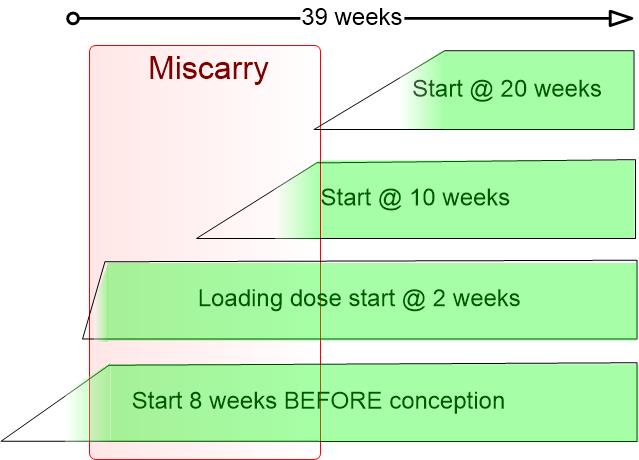
- Miscarriage: 3-18 weeks after conception