
Psoriasis: treated by 20 UVB sessions or a single nano Vitamin D session
Suspect that while UVB treatments last longer, UVB is expensive.
The founder of VitaminDwiki applies 10 cents of topical vitamin D nanoemulsion to his knee psoriasis. The 10-second procedure is done about 4 times a year.
The initial treatment, in 2017, may have required several treatments
Approximately a single drop per 4 square inches of psoriasis
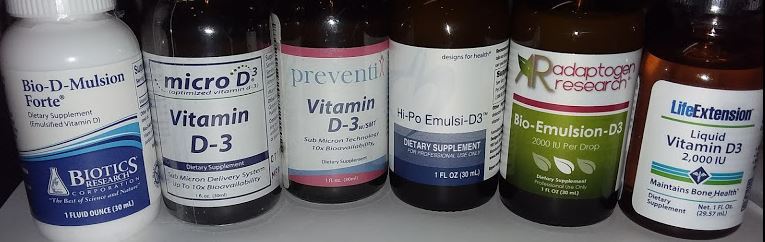
Tried 6, and ended up using Micro D for psoriasis, inhaling, and fast response (to fight COVID, flus, and colds
Real-World Predictors of Relapse-Free Duration After Narrowband UVB in Pediatric Psoriasis: A Multicenter Study
Photodermatol Photoimmunol Photomed. 2026 Mar;42(2) doi: 10.1111/phpp.70076.
Berna Solak 1, Burhan Engin 2, Zeynep Güngör 3, Ömer Faruk Tolun 2, Zafer Türkoğlu 4, Dilay Baştuğ 4, Harbiye Dilek Canat 4, Tubanur Çetinarslan 5, Aylin Türel Ermertcan 5, Selen Gezmen 6, Özge Zorlu 7, Hülya Albayrak 7, Nazlı Caf 8, Ümit Türsen 6
Background: Narrowband ultraviolet B (NB-UVB) phototherapy is a well-established, safe, and effective treatment for pediatric psoriasis; however, relapse after therapy remains a major challenge. Data regarding prognostic factors influencing remission durability in children are limited.
Objectives: To evaluate treatment response, relapse patterns, and predictors of relapse-free duration in pediatric psoriasis patients treated with NB-UVB phototherapy, with a particular focus on concomitant topical corticosteroid and calcipotriol use, and clinical features such as nail involvement.
Methods: This multicenter retrospective study included 114 pediatric psoriasis patients treated with NB-UVB across six tertiary dermatology centers in Türkiye. Treatment response was defined as ≥ 75% improvement in the Psoriasis Area and Severity Index (PASI75). Relapse was defined as clinically significant recurrence requiring renewed NB-UVB or systemic therapy within 6 months after treatment completion. Multivariable linear regression identified independent predictors of relapse-free duration.
Results: Of 114 patients (mean age 12.2 ± 3.6 years; 52.6% male), 65.8% achieved PASI75 and 42.1% PASI90. Responders received significantly higher cumulative doses and more sessions than nonresponders (p < 0.001). Relapse occurred in 24.0% of responders within 6 months. In multivariate analysis, concomitant topical corticosteroid use independently predicted longer relapse-free duration (β = 0.578, p = 0.001), whereas nail involvement predicted shorter remission (β = -0.520, p = 0.002). Topical calcipotriol and disease subtype were not significant predictors. NB-UVB was well tolerated, with mild erythema and pruritus as the most frequent adverse events (16.7%).
Conclusion: NB-UVB phototherapy provides high efficacy and an acceptable safety profile in pediatric psoriasis. Concomitant topical corticosteroid use may prolong remission, while nail involvement identifies patients at higher relapse risk, supporting closer monitoring and individualized follow-up and maintenance strategies.
Perplexity AI Feb 2026
Narrowband UVB phototherapy generally gives longer remission (months to a year or more after a course) than topical vitamin D analogues, which are effective but usually need ongoing use to maintain control. pubmed.ncbi.nlm.nih
NB-UVB remission duration
- In a retrospective study of NB‑UVB 5 times/week for 4 weeks plus topical vitamin D, 56% of psoriasis cases had remission lasting longer than 12 months before needing more than topical therapy. pubmed.ncbi.nlm.nih
- Other series report that a standard NB‑UVB course (2–3 sessions/week for 12–16 weeks) can keep patients clear or much improved for roughly 3.5–6 months on average, with some remaining clear for years. philadelphiadermatology
- Repeated NB‑UVB cycles may shorten remission over time, especially in patients with more severe disease or prior systemic/phototherapy exposure. pubmed.ncbi.nlm.nih
Topical vitamin D duration pattern
- Topical vitamin D analogues such as calcipotriol, calcitriol, and tacalcitol are established as safe and effective long‑term treatments; importantly, they show no tachyphylaxis and “can be continued indefinitely.” pmc.ncbi.nlm.nih
- Guidance documents and recent reviews position topical vitamin D (often combined with corticosteroids) as suitable for prolonged or intermittent maintenance after short steroid courses, especially when longer than 4–8 weeks of steroid therapy would otherwise be needed. medicaid.nv
- However, when topical vitamin D is stopped, lesions typically recur over weeks to months; the benefit persists as long as treatment continues rather than giving a defined off‑therapy remission window comparable to NB‑UVB. academic.oup
Practical interpretation
- If “lasts longer” means off‑treatment remission after a finite course, NB‑UVB usually provides longer disease‑free periods than a finite course of topical vitamin D alone. isrctn
- If “lasts longer” includes continuous use, topical vitamin D can be safely used for very long durations as maintenance, whereas NB‑UVB is typically delivered in time‑limited courses with cumulative‑dose considerations. pmc.ncbi.nlm.nih
- Combination strategies are common: NB‑UVB to induce clearance, then topical vitamin D (often with a steroid) to maintain control and potentially prolong remission or reduce the frequency of new NB‑UVB courses. pmc.ncbi.nlm.nih
Related in VitaminDwiki
- Best psoriasis treatment was combo of Vitamin D, UVA, and Calcium – meta-analysis
- Psoriasis paradigm shift – use topicals, like Vitamin D
- Scalp psoriasis – Vitamin D was a component of every successful topical treatment – Cochrane
- Nanoemulsion Vitamin D is faster and better - many studies
- Nanoemulsion Vitamin D may be a substantially better form