
Hantaviruses are enveloped. Vitamin D fights most enveloped viruses
- Hantaviruses are enveloped, negative-sense, single-stranded RNA viruses with tripartite genome.
- Since enveloped viruses are generally more susceptible to the antimicrobial peptides and immune mechanisms that vitamin D upregulates (cathelicidin, defensins, interferon responses), hantavirus fits the pattern of viruses where vitamin D status likely matters.
- Worldwide, it is estimated that from 10,000 to over 100,000 infections occur each year, with the largest burden in Asia and Europe. More specifically, there are an estimated 60,000 to 100,000 cases of HFRS (hemorrhagic fever with renal syndrome—the Asian/European form) worldwide each year, with China accounting for about half
- The time from infection with the hantavirus to the start of illness is usually about 2 to 3 weeks.
A large dose of fast-acting forms of vitamin D will start to fight most health problems within 48 hours - Case fatality rates:
HPS in the Americas: up to 50%
HFRS in Asia and Europe: <1–15% - HPS stands for Hantavirus Pulmonary Syndrome, also called hantavirus cardiopulmonary syndrome.
- "No published human data exists on vitamin D status and hantavirus outcomes—an evidence gap worth addressing."
Comparison of HPS and HFRS (Claude AI May 2026)
| Aspect | HPS (Americas) | HFRS (Asia/Europe) |
|---|---|---|
| Geography | Hantaviruses found in the Western Hemisphere, including the U.S., can cause hantavirus pulmonary syndrome (HPS) | Hemorrhagic fever with renal syndrome (HFRS) is a group of clinically similar illnesses caused by hantaviruses found mostly in Europe and Asia |
| Primary organ damage | In the Americas, infection leads to hantavirus cardiopulmonary syndrome (HCPS), a rapidly progressive condition affecting the lungs and heart | In Europe and Asia hantaviruses cause haemorrhagic fever with renal syndrome (HFRS), which primarily affects the kidneys and blood vessels |
| Case fatality rate | Up to 50% in the Americas | <1–15% in Asia and Europe |
| Incubation period | Most often 9-33 days, can appear as early as one week or as late as eight weeks | Symptoms appear within 1 to 2 weeks after exposure |
| Early symptoms | Fever, chills, muscle aches, headaches, nausea, vomiting, and shortness of breath, rapid heartbeat, and gastrointestinal problems | Headaches, abdominal pain and nausea that can develop into low blood pressure, internal bleeding and acute kidney failure |
| Disease progression | Disease progresses rapidly, with abnormal fall in blood pressure and lungs filling with fluid. Severe respiratory failure resulting in death can occur within a few days | Slower progression, kidney-focused complications |
| Global burden | About 200 cases of hantavirus pulmonary illness occur each year worldwide | An estimated 60,000 to 100,000 cases of HFRS worldwide each year, with China accounting for about half |
| Person-to-person transmission | Only Andes strain (South American) is known to have spread person-to-person, though this is rare | Not typical |
Key takeaway: HFRS affects far more people globally but kills a smaller proportion. HPS is much rarer but far deadlier and progresses with terrifying speed—which makes early vitamin D status potentially more consequential for prevention.
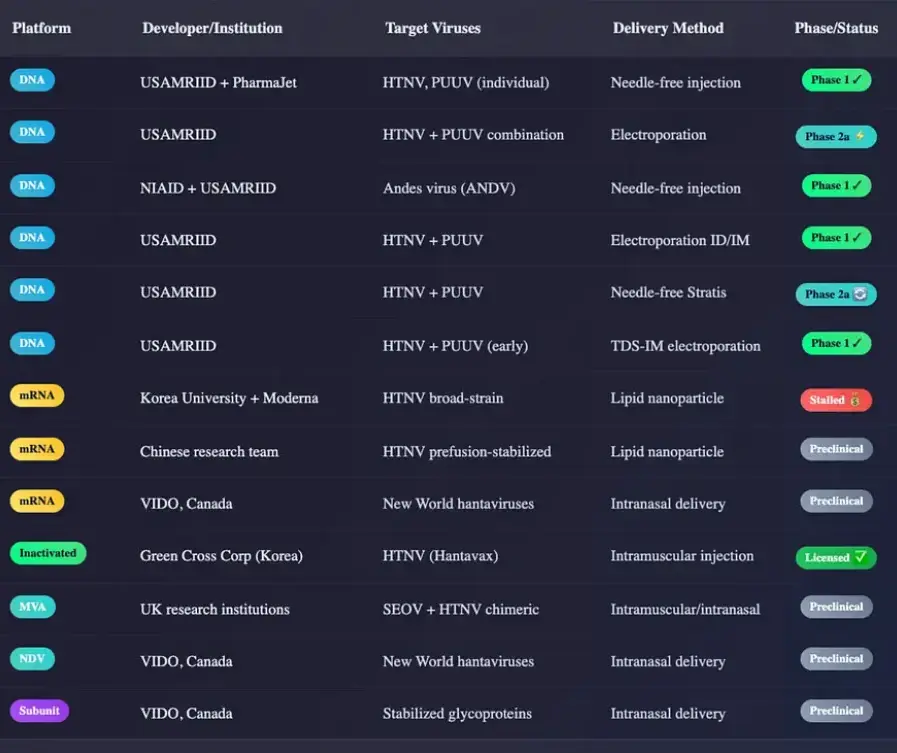
13 Hantavirus Vaccines and Gene Therapies in development - May 2026
WHO Blunder Imperils Remaining Passengers
Focal Points - Peter A. McCullough
"Locked-down in cabins, HVAC system not sterilized from rodent excrement dust carrying virions, passengers are sitting ducks for fatal illness"
Andes Hantavirus is NOT transmitted from human to human - May 2026
Focal Points - Peter A. McCullough
Why Ivermectin and Hydroxychloroquine Could Work for Hantavirus - May 2026
"Ivermectin’s Strong Track Record Against RNA Viruses"
Reminder: Vitamin Has a Strong Track record against enveloped viruses (Hanta is both)
Claude AI - May 2026 list of some enveloped viruses
RNA viruses - Coronavirus - Hepatitis A - Hepatitis C - HMPV - Zika - HIV - Dengue - Yellow fever - Measles - Mumps - Ebola - Rabies - Influenza, including H5N1 - West Nile - Lassa fever - Hemorrhagic fever — generally RNA
DNA viruses - Herpes simplex - Shingles / varicella-zoster - Epstein-Barr - Hepatitis B - Smallpox / variola - Monkeypox / - African Swine Fever virus
Calm down, Nothing to get excited about - May 11, 2026
- No, cruise ship outbreaks are not increasing. They just get more media attention.
- "That said, there are some sensible people in charge this time. CDC and NIH director Jay Bhattacharya was all over the media telling people to calm down. The virus is rare and doesn’t spread easily. There is nothing novel about this and no need for panic, much less lockdowns. "
Related in VitaminDWiki
- 19 Viruses have each caused more than 100 deaths/year, most are enveloped
- Vitamin D can inhibit enveloped virus (e.g. Corona, Herpes, Bird Flu, Epstein, Hepatitis, RSV, etc.)
- Vitamin D fights most enveloped viruses. Mpox, Borealpox, Buffalopox and Camelpox are enveloped
Natural Red Algae Protein Slashes Hantavirus Viral Load by >99.99% in Lab Models and Protects 80% of Mice from Lethal Infection
Griffithsin, a non-toxic, natural protein originally isolated from a species of red marine algae. In a 2020 laboratory study, researchers at the CDC showed that Griffithsin was remarkably effective in cell culture against two of the most important New World hantaviruses (Andes virus and Sin Nombre virus).
It reduced hantavirus infection of cells by up to 95% and slashed infectious viral load by more than 99.99% — a greater than 4-log (10,000-fold) drop — by physically blocking the virus from entering human cells through its binding to specific sugar molecules on the viral surface glycoproteins.