
Many problems with the Emulsifiers in 40% of Ultra-Processed Foods
Emulsifiers in Ultra-Processed Foods: A Comprehensive Analysis
Executive Summary
Research examining the global food supply reveals that 31.5% to 53.8% of ultra-processed foods (UPF) contain emulsifiers, with prevalence varying by geographic region, study methodology, and food category. When considering broader cosmetic additives beyond emulsifiers alone—including thickeners, stabilizers, and other texture-modifying agents—this figure rises substantially, with up to 82.1% of ultra-processed foods containing at least one such additive. pmc.ncbi.nlm.nih
The variance in reported percentages stems from methodological differences: studies examining general food products versus specifically classified ultra-processed foods, variation in emulsifier definitions (narrow versus broad categorizations), and regional differences in food processing practices. The most conservative estimates place emulsifier prevalence at approximately one-third of ultra-processed foods, while studies using comprehensive additive classifications find emulsifiers in more than half of examined products.
Defining Ultra-Processed Foods and Emulsifier Classification
Ultra-processed foods, as defined by the NOVA classification system, represent industrial formulations containing ingredients rarely used in home kitchens. These products are characterized by substances extracted from foods (oils, fats, sugar, starch) combined with industrial additives including emulsifiers, which fall under 12 classes of cosmetic additives: flavor enhancers, colors, emulsifiers, emulsifying salts, sweeteners, thickeners, anti-foaming agents, bulking agents, carbonating agents, foaming agents, gelling agents, and glazing agents. openknowledge.fao
Emulsifiers function as surface-active agents that stabilize mixtures of immiscible substances—primarily oil and water—preventing separation and improving texture, mouthfeel, and shelf stability. The European Union recognizes approximately 330 authorized food additives, with emulsifiers predominantly spanning International Numbering System (INS) codes 400-495, though notable exceptions include lecithins (E322). Mono- and diglycerides comprise approximately 75% of all emulsifiers added to food products globally, reflecting their versatility and functional effectiveness across diverse applications. processedfoodsite
Geographic and Methodological Variation in Prevalence Studies
Regional Findings
A comprehensive UK food supply analysis examining 12,844 ultra-processed products from major supermarket chains (Tesco, Sainsbury's, Asda, and Morrisons) found emulsifiers present in 51.7% of products. This landmark study, the first to systematically map emulsifier occurrence across the UK food supply, revealed that 51% of emulsifier-containing foods contained multiple emulsifiers, with a median of two emulsifiers per product. pubmed.ncbi.nlm.nih
In contrast, a German study using the Oxford WebQ food frequency questionnaire identified emulsifiers in 35.7% of ultra-processed foods, making emulsifiers the second most frequent ultra-processing marker after added flavors (58.4%). The combination of flavors and emulsifiers together detected 72.7% of all ultra-processed products examined, demonstrating the synergistic use of these additives in food formulation. pmc.ncbi.nlm.nih
A Netherlands/European Union analysis of 45,851 food products found that 31.5% contained at least one emulsifier, thickener, or stabilizer (ETS). Among products containing these additives, 60% had more than one: 40% contained one ETS, 32% had two, 12% had three, and 16% contained four or more. This study's broader definition—encompassing thickeners and stabilizers alongside emulsifiers—provides context for understanding the prevalence of texture-modifying additives across the food supply. pmc.ncbi.nlm.nih
French research using the Open Food Facts database, which catalogs 126,556 packaged food products, reported that 53.8% of all food products contained at least one food additive, with more than 10% containing five or more additives. While this figure encompasses all additive classes rather than emulsifiers exclusively, subsequent analyses of the French NutriNet-Santé cohort revealed that seven of the ten most consumed food additives among French adults were classified as emulsifiers: modified starches, lecithins, xanthan gum, pectins, mono- and diglycerides of fatty acids, carrageenan, and guar gum. pmc.ncbi.nlm.nih
Latin American data from newly launched products (2018-2023) across 11 countries showed ultra-processed food prevalence ranging from 69% in Venezuela to 85% in Costa Rica, with "other additives" (a category including emulsifiers and thickeners) found in 49-70% of products. This variation reflects both developmental differences in food processing infrastructure and regional regulatory frameworks. pmc.ncbi.nlm.nih
Methodological Considerations
The reported prevalence range of 31.5% to 53.8% reflects several methodological factors. Studies focusing specifically on NOVA Group 4 ultra-processed foods typically report higher percentages than those examining general food products, as emulsifiers serve as defining markers of ultra-processing. Database studies relying on ingredient list analysis may undercount emulsifiers when manufacturers use functional class names ("emulsifier") rather than specific additive codes, or when certain emulsifiers are considered processing aids not requiring label declaration. academic.oup
Furthermore, definitions of "emulsifier" vary across regulatory jurisdictions. Some studies include only substances with primary emulsifying functions, while others incorporate multifunctional additives that provide emulsification alongside thickening or stabilizing properties. Modified starches (E14xx), for instance, exhibit emulsifying properties but are primarily classified as thickeners. This definitional ambiguity explains why studies using narrow emulsifier classifications report lower prevalence than those employing broader categorizations. bmj
Food Category-Specific Prevalence
Emulsifier distribution across food categories demonstrates marked heterogeneity, with certain product types showing near-universal emulsifier use while others contain minimal or no emulsifiers. The UK study revealed dramatic variation by category: pubmed.ncbi.nlm.nih
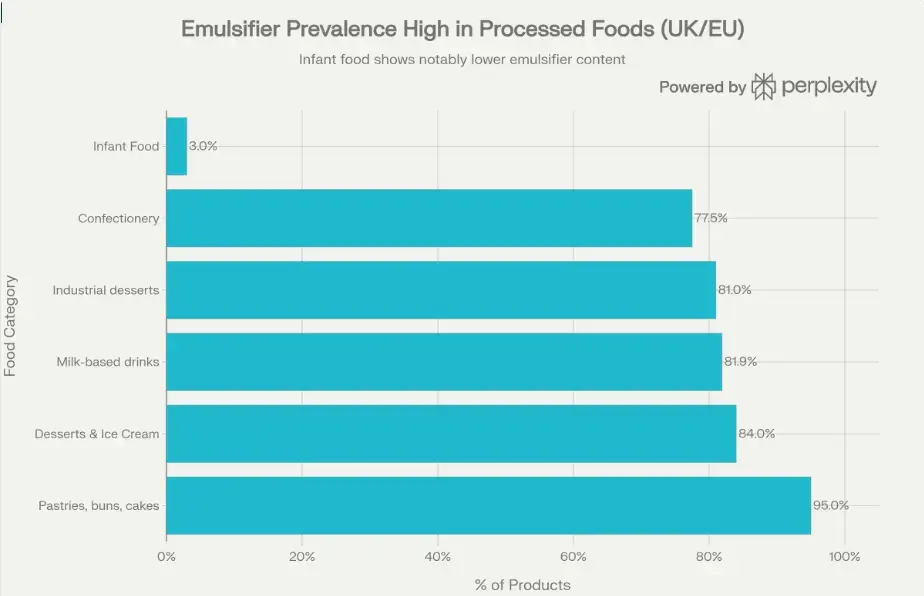
Highest prevalence categories: - Pastries, buns, and cakes: 95.0% contain emulsifiers - Industrial desserts: 81.0% - Milk-based drinks: 81.9% - Confectionery: 77.5%
Lowest prevalence category: - Infant food: 3.0%
The Netherlands/EU analysis similarly identified desserts and ice cream as the category with highest emulsifier, thickener, and stabilizer content, with 84% of the 1,396 examined products containing at least one such additive. Bakery, cakes, and pastries followed at 66%, while infant food showed the lowest prevalence at only 3% (10 of 340 products). pmc.ncbi.nlm.nih
This categorical variation reflects functional necessity and regulatory constraints. Bakery products require emulsifiers for dough conditioning, volume enhancement, and crumb structure improvement. Ice cream and frozen desserts use emulsifiers to control ice crystal formation, improve overrun (air incorporation), and prevent fat separation during freeze-thaw cycles. Conversely, infant food formulations face stringent regulatory restrictions on additive use, with both the European Union and United States limiting permissible additives to those with clearly demonstrated safety profiles in vulnerable populations. pmc.ncbi.nlm.nih
A study of commercially produced complementary foods (CPCF) across Southeast Asia found that 34.8% contained cosmetic additives, with emulsifiers, colors, and thickeners being most prevalent. Emulsifiers appeared in 19.5% of all CPCF products, though prevalence varied substantially by country, ranging from 16.5% in Thailand to 45.6% in Indonesia. Dry/instant cereals and snack/finger foods showed the highest cosmetic additive content (49.8% and 45.1% respectively), while purees/meals and condiments contained fewer additives (9.4% and 11.8%). pmc.ncbi.nlm.nih
| Food Category | Emulsifier Prevalence | Study Source |
|---|---|---|
| Pastries, buns, cakes | 95.0% | UK Food Supply pubmed.ncbi.nlm.nih |
| Desserts & Ice Cream | 84.0% | Netherlands/EU pmc.ncbi.nlm.nih |
| Milk-based drinks | 81.9% | UK Food Supply pubmed.ncbi.nlm.nih |
| Industrial desserts | 81.0% | UK Food Supply pubmed.ncbi.nlm.nih |
| Confectionery | 77.5% | UK Food Supply pubmed.ncbi.nlm.nih |
| Bakery, Cakes & Pastries | 66.0% | Netherlands/EU pmc.ncbi.nlm.nih |
| Dry/Instant Cereals (CPCF) | 49.8% | Southeast Asia pmc.ncbi.nlm.nih |
| Snacks/Finger Foods (CPCF) | 45.1% | Southeast Asia pmc.ncbi.nlm.nih |
| Infant Food | 3.0% | Netherlands/EU pmc.ncbi.nlm.nih |
Most Common Emulsifiers in Ultra-Processed Foods
Research consistently identifies a core group of emulsifiers dominating the food supply, with lecithin and mono- and diglycerides appearing most frequently across global markets.
UK Food Supply Analysis
The UK study identified the five most common emulsifiers as percentages of all examined products: pubmed.ncbi.nlm.nih
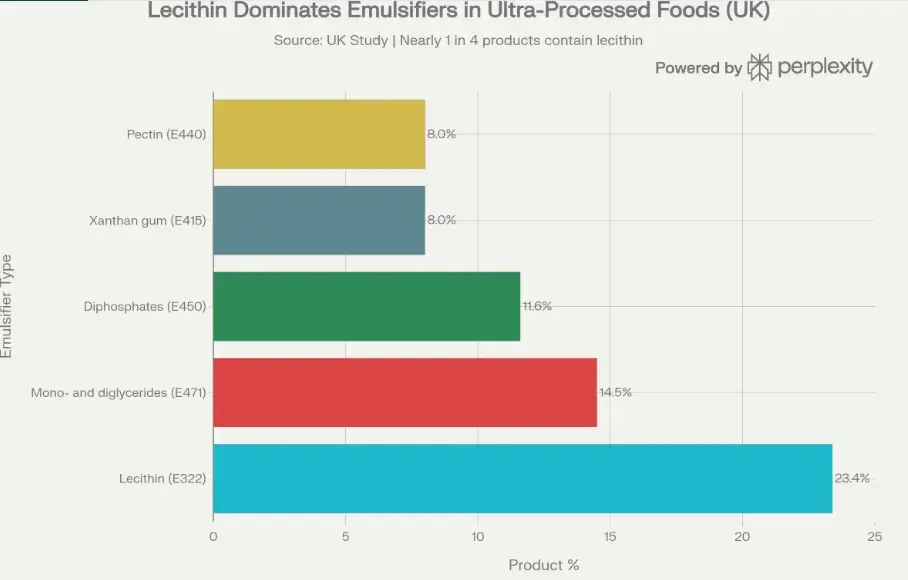
- Lecithin (E322): 23.4% of all products
- Mono- and diglycerides of fatty acids (E471): 14.5%
- Diphosphates (E450): 11.6%
- Xanthan gum (E415): 8.0%
- Pectin (E440): 8.0%
French Population Intake Patterns
Analysis of French dietary intake patterns revealed a different hierarchy when examining emulsifier contribution to total consumption rather than product prevalence: bmj
- Modified starches (E14xx): 33.5% of total emulsifier intake
- Sodium bicarbonate (E500): 26.9%
- Pectins (E440): 6.4%
- Diphosphates (E450): 5.1%
- Mono- and diglycerides of fatty acids (E471): 5.0%
The discrepancy between product prevalence and dietary intake proportion reflects dosage differences. Modified starches and sodium bicarbonate, while present in fewer products, are typically used in larger quantities per serving than lecithin or mono- and diglycerides. Notably, sodium bicarbonate (baking soda) and modified starches together account for more than 60% of emulsifier consumption in the French population, though these substances are commonly found in home kitchens and may not align with consumer perceptions of synthetic additives. sciencemediacentre
Netherlands/EU Findings
The Netherlands study found that mono- and diglycerides of fatty acids (E471) appeared in 53% of dessert and ice cream products and 46% of bakery products, representing the single most prevalent emulsifier in these categories. Pectin (E440) emerged as the most frequent emulsifier found alone (without co-occurring emulsifiers), particularly in processed fruits and vegetables. pmc.ncbi.nlm.nih
Global Market Share
Food emulsifier market analyses corroborate these prevalence findings. Lecithin represents approximately 35-38% of the global food emulsifier market share, valued for its natural origin, versatility, and clean-label appeal. Mono- and diglycerides account for 28-33% of food emulsifier applications, making them the second most widely used emulsifier class globally. Industry forecasts project lecithin will maintain its dominance, though mono- and diglycerides represent the fastest-growing segment due to their exceptional functionality in stabilizing oil-water emulsions and improving texture in bakery products. persistencemarketresearch
Sorbitan esters, polyglycerol esters, and sodium stearoyl lactylates constitute secondary emulsifier categories with smaller but significant market shares. Carboxymethylcellulose (CMC) and polysorbate-80, while less prevalent in product counts, have received substantial research attention due to their demonstrated effects on gut microbiota and metabolic parameters. straitsresearch
Co-Occurrence Patterns and Multiple Emulsifier Use
A defining characteristic of modern ultra-processed foods is the frequent co-occurrence of multiple emulsifiers within single products. The UK study found that 51% of all emulsifier-containing foods contained multiple emulsifiers, with 26.4% containing two or more distinct emulsifiers. Among emulsifier-containing products, the distribution showed: 40% contained exactly one emulsifier, 32% contained two, 12% contained three, and 16% contained four or more. pmc.ncbi.nlm.nih
Product-level analysis revealed that some ultra-processed foods contain as many as eleven different emulsifiers, though such extreme formulations represent outliers. The median number of emulsifiers in products containing these additives is two, suggesting that dual-emulsifier systems represent the industry standard for achieving desired functional properties. pubmed.ncbi.nlm.nih
The Netherlands study provided detailed co-occurrence analysis, revealing that certain emulsifier combinations appear more frequently than would be expected if their use were independent. In desserts and ice cream, the pairwise combination of pectin (E440) and phosphates (E450-E452) showed threefold enrichment over expected random co-occurrence. Three-way combinations of cellulose (E460), carboxymethyl cellulose (E466), and fatty acid derivatives (E470-E477) demonstrated strong enrichment, while a four-way combination of carrageenan (E407), guar gum (E412), cellulose (E460), and fatty acid derivatives exhibited the highest fold enrichment at five times expected frequency. pmc.ncbi.nlm.nih
Guar gum (E412) and xanthan gum (E415) emerged as the most frequently enriched combination, appearing as the highest enriched pair in four of eight food groups analyzed and present in 24% of all fats, margarines, and spreads, and 12% of premade food and dinner kits. This pairing reflects the synergistic stabilizing properties these hydrocolloids provide when used together, offering superior viscosity control and freeze-thaw stability compared to either emulsifier used alone. pmc.ncbi.nlm.nih
Negative correlations—indicating that certain emulsifiers are rarely used together—also emerged from the analysis. Lecithin (E322) and xanthan gum (E415) showed weak negative correlation (rho = -0.22), suggesting that manufacturers tend to select one or the other rather than combining them. Such patterns likely reflect functional redundancy, where the emulsifiers provide similar technological benefits, or potential incompatibilities in certain food matrices. pmc.ncbi.nlm.nih
| Number of Emulsifiers | Percentage of ETS-Containing Products |
|---|---|
| One emulsifier | 40% |
| Two emulsifiers | 32% |
| Three emulsifiers | 12% |
| Four or more emulsifiers | 16% |
These co-occurrence patterns raise important questions about additive interactions and cumulative exposure effects. Current regulatory frameworks evaluate emulsifier safety individually, establishing Acceptable Daily Intake (ADI) values based on single-substance toxicology studies. However, the widespread practice of combining multiple emulsifiers in single products means consumers are routinely exposed to complex mixtures whose interactive effects remain poorly characterized. food-safety
Broader Context: Cosmetic Additives in Ultra-Processed Foods
While this analysis focuses specifically on emulsifiers, understanding their prevalence requires situating them within the broader landscape of cosmetic additives—substances added to ultra-processed foods primarily for sensory appeal rather than nutritional value.
A Brazilian study examining 9,851 packaged foods found that 82.1% of ultra-processed foods contained at least one cosmetic additive, while 71.4% contained flavors or colors. Among ultra-processed foods containing only cosmetic additives (without excess critical nutrients), 78.3% had emulsifiers, 74.2% had thickeners, 71.9% had flavorings, and 60.3% had colors. When combining the presence of either cosmetic additives or excess critical nutrients (sugars, salt, saturated fat), 98.8% of ultra-processed foods met at least one criterion. nature
This near-universal additive presence in ultra-processed foods extends beyond emulsifiers alone. German research found that flavors appeared in 58.4% of ultra-processed products, making them the single most frequent marker of ultra-processing, followed by emulsifiers (35.7%) and colors (26.5%). The combination of just three markers—flavors, emulsifiers, and colors—detected 79.2% of all ultra-processed products, increasing to 88.4% when including three additional markers (fiber, dextrose, and firming agents). pmc.ncbi.nlm.nih
Temporal trends indicate increasing additive prevalence in processed foods. United States household food purchase data showed the proportion of products containing additives increased from 49.6% in 2001 to 59.5% in 2019—a 10 percentage point increase over 18 years. The mean number of additives per product rose from 3.7 to 4.5 during this period. By 2019, more than half of all packaged food and beverage products purchased by U.S. households contained three or more additives. pmc.ncbi.nlm.nih
Particularly concerning, baby food showed a 20% increase in the proportion of purchases containing additives and a 15% increase in products containing three or more additives between 2001 and 2019. This category exhibited the largest percent increase in additive-containing purchases among all major food categories examined. pmc.ncbi.nlm.nih
Dietary Exposure and Consumption Patterns
The prevalence of emulsifiers in food products translates directly into population-level dietary exposure. Ultra-processed foods now account for 50-60% of total caloric intake in the United States and United Kingdom, approximately 30% in France and throughout Europe, and rising proportions in Latin America and Asia. eurekalert
Population-Level Intake Estimates
The U.S. Food and Drug Administration estimated total average daily intake from all emulsifiers at 395 mg per person per day as of 2006. A more recent U.S. population study examining seven common emulsifiers found mean exposure to lecithin at 55 mg/kg body weight/day and mono- and diglycerides at 80 mg/kg body weight/day, representing the highest exposure levels. Carboxymethylcellulose exposure averaged 27 mg/kg body weight/day, while polysorbate-80 showed relatively low exposure at 8 mg/kg body weight/day. processedfoodsite
French prospective cohort data from the NutriNet-Santé study revealed mean daily emulsifier intake of 4,275 mg, though this figure includes all substances classified as emulsifiers, including modified starches and sodium bicarbonate. Total emulsifier intake showed substantial variation across intake tertiles, ranging from a mean of 1,525 mg/day in the lowest tertile to 7,614 mg/day in the highest tertile. pmc.ncbi.nlm.nih
Asian dietary exposure assessments found considerable variation by country and emulsifier type. Korean population studies examining nine food emulsifiers (four polysorbates and five fatty acid esters) identified variable exposure patterns, though specific intake levels were not consistently reported across studies. Southeast Asian analyses of commercially produced complementary foods found median additive counts of six per product among products containing additives, with maximum counts reaching 43 additives in extreme cases. pmc.ncbi.nlm.nih
Dietary Sources
Processed fruits and vegetables contribute 18.8% of total emulsifier intake in the French population, followed by cakes and biscuits (14.7%) and dairy products (9.9%). This distribution reflects both the prevalence of emulsifiers in these categories and their contribution to overall dietary intake patterns. bmj
The relationship between ultra-processed food consumption and emulsifier exposure is nearly linear. French cohort data showed that participants in the highest tertile of emulsifier consumption had ultra-processed food intake of 20.2% daily weight intake compared to 14.2% in the lowest tertile. This dose-response relationship underscores that reducing ultra-processed food consumption represents the most effective strategy for minimizing emulsifier exposure. pmc.ncbi.nlm.nih
Regulatory Framework and Safety Assessment
Approval Systems
Emulsifiers undergo safety assessment before approval for use in foods, though regulatory philosophies differ between jurisdictions. The European Union operates under Regulation EC 1333/2008, which requires pre-market authorization for all food additives. Manufacturers seeking to use an additive not already approved must file an application with the European Commission, which conducts safety assessment, evaluates technological necessity, and considers potential consumer deception. Approved additives are assigned "E numbers" and added to a positive list specifying permitted uses and maximum levels. academic.oup
The United States employs a different approach under the 1938 Federal Food, Drug, and Cosmetic Act. The FDA requires companies to prove a new additive is safe before use, but substances "Generally Recognized As Safe" (GRAS) by qualified experts can be used without FDA approval if sufficient scientific evidence is submitted. Mono- and diglycerides, for instance, are affirmed as GRAS under 21 CFR 184.1505 for direct addition to food. Lecithin similarly holds GRAS status with widespread approval across multiple functional applications. sunitahydrocolloids
The Joint FAO/WHO Expert Committee on Food Additives (JECFA) provides international guidance, establishing Acceptable Daily Intake (ADI) values that inform national regulatory decisions. For mono- and diglycerides, JECFA has determined the ADI to be "not limited" when used as emulsifiers, reflecting their assessment that these substances pose no appreciable risk at typical consumption levels. eufic
Acceptable Daily Intake and Safety Margins
The ADI is defined as an estimate of the amount of a food additive, expressed on a body weight basis, that can be ingested daily over a lifetime without appreciable risk to health. ADI derivation begins with the No Observed Adverse Effect Level (NOAEL)—the highest dietary intake level at which no adverse effects are observed in animal studies, expressed as mg/kg body weight/day. Regulators then apply a safety factor, typically 100, accounting for potential differences between animal species and humans (10-fold factor) and variation among human populations including sensitive subgroups (additional 10-fold factor). eufic
This safety margin means that exceeding the ADI on any given day is not cause for concern, as the ADI references lifetime exposure situations rather than single-occasion consumption. However, if intake data suggest certain population sectors regularly exceed the ADI, regulatory authorities may recommend reduced usage levels or restricted food categories for specific additives. eufic
Notably, several of the most commonly consumed emulsifiers lack established ADI values. JECFA has not published ADI reports for mono- and diglycerides, lecithin, or carboxymethylcellulose—the three emulsifiers with highest mean and 90th percentile exposure in population studies. This regulatory gap reflects historical safety assessments concluding these substances pose minimal risk, but emerging evidence of gut microbiota effects has prompted calls for ADI reassessment. anti-a
Emerging Safety Concerns
Recent epidemiological studies have associated higher emulsifier intake with increased risk of cardiovascular disease, type 2 diabetes, and metabolic syndrome, raising questions about whether current regulatory frameworks adequately protect public health. bmj
French prospective cohort analyses linked specific emulsifiers to cardiovascular outcomes. Mono- and diglycerides of fatty acids (E471) showed association with higher risk of overall cancer (HR = 1.15 per high versus low intake category). Lactic ester of monoglycerides and diglycerides (E472b) was associated with 1.06-fold increased CVD risk and 1.11-fold increased cerebrovascular disease risk. Carrageenans (E407) showed 3% increased risk per 100 mg/day increment, while tripotassium phosphate (E340) exhibited 15% increased risk per 500 mg/day increment. eurekalert
Type 2 diabetes associations emerged from the same cohort, with carrageenans, tripotassium phosphate, and mono- and diacetyltartaric acid esters (E472e) showing positive correlations with T2D incidence. Exploratory analyses suggested potential interactions between food additives characteristic of commonly consumed mixtures. mordorintelligence
Mechanistic Evidence from Experimental Studies
Animal and in vitro studies provide mechanistic insight into how emulsifiers may affect metabolic health. Mouse studies demonstrate that carboxymethylcellulose (CMC) and polysorbate-80 (P80) alter gut microbiota composition, increase Proteobacteria and Escherichia coli levels while reducing Bacteroides and Clostridia, elevate circulating lipopolysaccharide and flagellin, and promote low-grade inflammation. These emulsifiers thin the intestinal mucus layer, increase intestinal permeability, and allow bacteria to encroach upon the normally sterile inner mucus layer—all hallmarks of intestinal barrier dysfunction. frontiersin
Human randomized controlled trials have begun confirming these effects. A two-week CMC intervention in healthy participants increased postprandial abdominal discomfort, lowered gut microbiota diversity, decreased fecal short-chain fatty acids and free amino acids, and enhanced microbiota encroachment into the inner mucus layer in some individuals. These findings mirror patterns observed in animal models, though the magnitude of effects appears more variable in human populations. med.stanford
A 2024 mouse study examining lecithin, sucrose fatty acid esters, and CMC at doses ten times human exposure levels found that all three emulsifiers induced weight gain, altered glucose homeostasis, increased insulin resistance, and modified gut microbiota composition. Lecithin and sucrose fatty acid esters significantly reduced glucose uptake in insulin resistance cellular models, suggesting direct metabolic effects independent of microbiota alterations. nature
Despite these concerning findings, regulatory agencies maintain that emulsifiers remain safe at current consumption levels based on authoritative reviews by the FDA, European Food Safety Authority (EFSA), and JECFA. The disconnect between epidemiological associations, experimental evidence, and regulatory conclusions reflects the challenge of translating mechanistic insights into population-level risk assessment and the inherent uncertainty in extrapolating high-dose animal findings to human dietary exposures. foodingredientfacts
Temporal Trends and Market Dynamics
The food emulsifier market demonstrates sustained growth driven by expanding ultra-processed food consumption globally. Market valuation estimates place the global food emulsifiers sector at USD 4.1-4.3 billion in 2024-2026, with projections reaching USD 5.5-7.7 billion by 2031-2034, representing compound annual growth rates of 4.3-6.6%. futuremarketinsights
North America leads regional markets due to strong preference for processed and convenience foods. Europe follows with projected growth from USD 957 million in 2025 to USD 1,464 million by 2035 (4.3% CAGR), with Germany dominating at 27-31% market share. Asia-Pacific markets show particularly robust growth potential, with China capturing 7.6% market share driven by rapid food processing industry expansion, urbanization, and growing middle-class populations. finance.yahoo
Application segments reflect the prevalence patterns observed in food supply studies. Bakery and confectionery account for 31.95% of food emulsifier market share in 2025, supported by staple products like sandwich bread and molded chocolates. Dairy formulations increasingly challenge traditional bakery dominance as manufacturers develop complex products requiring sophisticated emulsification technology. mordorintelligence
Plant-based emulsifier segments are expanding particularly rapidly, projected to account for 55% of the food emulsifiers market in 2025. This growth reflects consumer demand for natural ingredients, clean-label products, and sustainable sourcing practices. Mono- and diglycerides, while technically synthetic in origin, maintain strong market position due to consistent regulatory acceptance, heat stability, and cost-effectiveness. persistencemarketresearch
The tension between natural and synthetic emulsifiers illustrates broader shifts in consumer preferences and industry responses. Natural emulsifiers command premium prices and appeal to health-conscious consumers through recognizable ingredient names. However, they often require higher dosages to achieve comparable functionality, exhibit batch-to-batch variability requiring additional quality controls, and demonstrate temperature sensitivity that limits applications. Synthetic emulsifiers offer consistent performance, reliable functionality at lower concentrations, and superior stability across processing conditions, but face consumer skepticism despite proven safety profiles. allanchem
Industry responses include hybrid approaches: engineering synthetic emulsifiers from naturally derived starting materials (e.g., lecithin from soybeans or sunflower seeds chemically modified for enhanced functionality), developing biotechnology-derived emulsifiers through fermentation processes, and marketing campaigns emphasizing the ubiquity of emulsifying compounds in whole foods (monoglycerides formed naturally during fat digestion). processedfoodsite
Implications for Dietary Guidance and Public Health
The high prevalence of emulsifiers in ultra-processed foods—ranging from one-third to over half of products depending on category and definition—has several implications for nutrition policy and consumer guidance.
Practical Challenges for Dietary Restriction
For individuals seeking to minimize emulsifier exposure due to health concerns or personal preference, avoiding ultra-processed foods represents the most straightforward strategy. The UK study explicitly noted that emulsifier occurrence across the food supply presents significant challenges for restricting dietary intake as part of therapeutic interventions for conditions like metabolic syndrome or inflammatory bowel disease. pmc.ncbi.nlm.nih
Category-specific avoidance may offer a middle path. Given that pastries, cakes, desserts, ice cream, and milk-based drinks show 77-95% emulsifier prevalence, eliminating or substantially reducing these categories would dramatically lower emulsifier exposure while allowing continued consumption of other ultra-processed categories. Infant foods, with only 3% prevalence, demonstrate that ultra-processed formulations need not universally contain emulsifiers when regulatory frameworks prioritize additive minimization. pmc.ncbi.nlm.nih
Labeling and Transparency
Current food labeling requirements vary by jurisdiction but generally mandate disclosure of emulsifiers either by specific name, E-number (Europe), or functional class ("emulsifier"). However, consumer comprehension of these labels remains limited. UK research revealed that 9 in 10 Britons struggle to spot ultra-processed foods on food labels, suggesting that technical ingredient names—whether "carboxymethylcellulose," "E466," or simply "emulsifier"—provide insufficient guidance for decision-making. sustainhealth
Some jurisdictions are exploring enhanced disclosure frameworks. California's recent ultra-processed food definition applies to products containing specific technical effects (including emulsifiers and emulsifying salts) combined with unfavorable sodium-to-calorie ratios, creating a more holistic UPF identification system. France's Siga classification system evaluates foods according to degree of processing, analyzing ingredient lists to identify ultra-processing markers and providing consumers with letter grades reflecting processing intensity. foodnavigator
Dietary Pattern Recommendations
Current dietary guidelines in most countries do not explicitly address ultra-processed foods or emulsifiers specifically, instead focusing on food groups, nutrients, and overall dietary patterns. However, mounting evidence linking ultra-processed food consumption with adverse health outcomes has prompted some national health authorities to recommend reducing UPF intake. ijhpm
Brazil's dietary guidelines explicitly advise limiting ultra-processed foods, recommending that 85% of diet consist of minimally or moderately processed foods with UPFs comprising no more than 15%—approximately two portions per day. France's National Nutrition and Health Programme registered reducing UPF intake as a priority, with recommendations for 20% reduction in consumption by 2021. foodnavigator
The challenge for consumers lies in distinguishing processing level from nutritional quality. Some minimally processed foods have poor nutrient profiles, while certain ultra-processed foods provide valuable nutrients (fortified cereals, whole grain breads with added emulsifiers). The correlation between UPF status and nutritional quality is strong but imperfect, with approximately 50% of products receiving favorable NutriScore ratings (A or B) classified as ultra-processed. pmc.ncbi.nlm.nih
Study Limitations and Research Gaps
Several limitations constrain current understanding of emulsifier prevalence and effects. Database studies rely on ingredient list analysis, which may not capture all emulsifiers if manufacturers use processing aids not requiring label declaration or employ ambiguous terms. Product reformulations occur frequently, meaning prevalence estimates represent snapshots of food supply composition at specific timepoints rather than stable, enduring patterns. academic.oup
Methodological heterogeneity across studies—varying emulsifier definitions, different NOVA classification implementation, and inconsistent food categorization systems—complicates direct comparisons. The absence of standardized, internationally harmonized food composition databases that systematically track additive content represents a significant barrier to monitoring population-level exposure trends.
Regarding health effects, most mechanistic evidence derives from animal models using emulsifier doses substantially exceeding human dietary exposure. The mouse study finding metabolic effects used doses ten times human exposure levels, while earlier research examined doses approaching 15,000 mg/day—far above the FDA's 2006 estimate of 395 mg/day average intake. Extrapolating high-dose findings to realistic human exposures requires caution, as dose-response relationships may not be linear and threshold effects may exist below which adverse outcomes do not manifest. processedfoodsite
Epidemiological studies linking emulsifier intake to cardiovascular disease and diabetes face residual confounding challenges. Higher emulsifier consumers tend to have higher overall ultra-processed food intake, lower diet quality, and different lifestyle patterns from low consumers. While statistical models adjust for measured confounders including total UPF consumption, unmeasured factors may contribute to observed associations. bmj
The paucity of research examining emulsifier mixtures represents perhaps the most significant knowledge gap. With 51-60% of emulsifier-containing products having multiple emulsifiers, and emerging evidence suggesting that specific combinations show enriched co-occurrence patterns, the potential for synergistic, additive, or antagonistic interactions warrants investigation. Current regulatory frameworks evaluate additives individually, establishing separate ADI values without considering cumulative exposure effects from mixtures routinely present in foods. pmc.ncbi.nlm.nih
Conclusion
The prevalence of emulsifiers in ultra-processed foods ranges from approximately one-third to more than half of products, with the specific percentage depending on geographic region, food category, and methodological approach. Conservative estimates based on narrow emulsifier definitions place prevalence at 31.5-35.7%, while comprehensive analyses including all texture-modifying additives report 51.7-53.8% prevalence. When considering all cosmetic additives beyond emulsifiers alone, more than 80% of ultra-processed foods contain at least one such substance. pmc.ncbi.nlm.nih
Category-specific variation is dramatic: pastries, cakes, desserts, and ice cream show 77-95% emulsifier prevalence, while infant foods contain emulsifiers in only 3% of products. The most common emulsifiers—lecithin, mono- and diglycerides, diphosphates, xanthan gum, and pectin—appear in 8-23% of all food products, with lecithin dominating across studies and geographic regions. pubmed.ncbi.nlm.nih
The widespread co-occurrence of multiple emulsifiers within single products, reported in more than half of emulsifier-containing foods, raises questions about cumulative exposure effects that current regulatory frameworks do not systematically address. Temporal trends show increasing additive prevalence, with the proportion of U.S. household food purchases containing additives rising from 49.6% to 59.5% between 2001 and 2019. pmc.ncbi.nlm.nih
Emerging epidemiological evidence linking specific emulsifiers to cardiovascular disease, type 2 diabetes, and metabolic outcomes, combined with experimental data demonstrating gut microbiota alterations and intestinal barrier effects, suggests the need for reassessment of emulsifier safety profiles despite current regulatory conclusions that these substances remain safe at typical exposure levels. bmj
For consumers seeking to reduce emulsifier exposure, minimizing ultra-processed food consumption—particularly from high-prevalence categories including bakery products, desserts, ice cream, and certain dairy products—represents the most effective strategy. The near-universal presence of emulsifiers in these categories means that even modest reductions in consumption can substantially lower overall additive exposure while improving dietary quality through increased whole food intake.
Food Emulsifiers and Health Risks: A Comprehensive Analysis of Emerging Evidence
Perplexity AI - Jan 2026, many images on-line
Executive Summary
Food emulsifiers—ubiquitous additives used to stabilize processed foods—have emerged as potential contributors to the epidemic of chronic inflammatory and metabolic diseases. Recent epidemiological studies, animal models, and mechanistic research reveal that these compounds can fundamentally alter gut microbiota composition, compromise intestinal barrier integrity, and promote systemic inflammation. While regulatory agencies have historically classified emulsifiers as "generally recognized as safe" (GRAS), mounting evidence suggests that chronic exposure at currently permitted levels may increase risks of cardiovascular disease, inflammatory bowel disease, metabolic syndrome, and certain cancers. This analysis synthesizes evidence across approximately 90 scientific sources to elucidate mechanisms of harm, quantify disease associations, and identify emulsifiers of particular concern.
Introduction: The Prevalence and Purpose of Emulsifiers
Emulsifiers represent the most widely used class of food additives, appearing in an estimated 18% of all food items. These compounds serve critical technological functions: they stabilize oil-water mixtures, improve texture, extend shelf life, and enhance consumer appeal of products ranging from salad dressings and mayonnaise to baked goods, ice cream, and infant formula. Common examples include carboxymethylcellulose (CMC, E466), polysorbate 80 (P80, E433), carrageenans (E407), monoglycerides and diglycerides of fatty acids (E471), lecithins (E322), and various gums including xanthan and guar. nature
Average daily emulsifier consumption ranges substantially. Studies indicate mean exposures of approximately 60 mg/kg body weight per day for lecithin, 80 mg/kg/day for monoglycerides and diglycerides, 30-40 mg/kg/day for CMC, and 15-20 mg/kg/day for polysorbate 80. In contemporary Western diets, total emulsifier intake averages over 4,000 mg per day, with primary sources being ultra-processed fruits and vegetables, baked goods, and dairy products. youtube
Mechanistic Foundations: How Emulsifiers Disrupt Gut Homeostasis

The health concerns surrounding emulsifiers stem from their detergent-like properties and direct interactions with the intestinal ecosystem. Research reveals multiple interconnected mechanisms through which these additives compromise gastrointestinal and systemic health.
Gut Microbiota Dysbiosis
Emulsifiers fundamentally alter the composition and function of gut microbiota. Comprehensive screening of 20 commonly used emulsifiers using the MiniBioReactor Array (MBRA) model demonstrated that numerous compounds—including CMC, P80, carrageenans, and various gums—directly modify microbiota density, composition, and gene expression in ways expected to promote inflammation. pmc.ncbi.nlm.nih
Specific compositional changes include significant reductions in beneficial taxa such as Faecalibacterium prausnitzii and Akkermansia muciniphila—bacteria recognized for anti-inflammatory properties—while concurrently increasing pro-inflammatory Proteobacteria, Escherichia coli, and mucus-degrading species. The CMC-treated microbiota exhibited decreased evenness and richness, while P80 exposure induced compositional shifts associated with increased bacterial motility and flagellin expression. pmc.ncbi.nlm.nih
These alterations manifest rapidly. CMC increased bioactive flagellin levels within one day of exposure in ex vivo human microbiota cultures, driven by altered gene expression rather than compositional changes. P80 induced flagellin increases more slowly (within seven days), primarily through species composition alterations. Both emulsifiers elevated levels of lipopolysaccharide (LPS), a potent TLR4 agonist that triggers inflammatory cascades. pmc.ncbi.nlm.nih
Short-Chain Fatty Acid Depletion
Emulsifier-induced dysbiosis severely impairs microbial production of short-chain fatty acids (SCFAs), particularly butyrate, which serves as the primary energy substrate for colonocytes and maintains intestinal barrier integrity. Sodium stearoyl lactylate reduced butyrate concentrations while increasing propionate in fecal cultures. Similar patterns were observed with CMC and P80, which shifted SCFA profiles toward pro-inflammatory metabolite production with butyrate reductions of up to 96% compared to controls. pmc.ncbi.nlm.nih
This metabolic shift carries profound implications. Butyrate stimulates intestinal mucus production, maintains tight junction integrity, regulates immune responses, and supports colonocyte health. Its depletion—combined with increased propionate and reduced bacterial diversity—creates a metabolic environment conducive to inflammation and barrier dysfunction. psychologytoday
Mucus Layer Disruption and Bacterial Encroachment
The intestinal mucus layer represents a critical first-line defense, maintaining spatial separation between the dense microbial community and the epithelial surface. Emulsifiers compromise this barrier through multiple mechanisms. In vitro studies using human gut lining cell cultures demonstrated that both CMC and P80 partially disrupt the protective mucus layer, reducing mucus thickness and altering its structural properties. nutritionfacts
In vivo studies confirmed these findings. Mice consuming CMC and P80 exhibited significant thinning of the colonic mucus layer and shortened distance between bacteria and intestinal epithelial cells, indicative of bacterial encroachment into normally sterile inner mucus zones. This encroachment was driven by the emulsifier-altered microbiota rather than direct chemical effects, as germ-free mice did not exhibit mucus thinning upon emulsifier exposure. nature
Bacterial proximity to the epithelium triggers innate immune activation. The encroaching flagellated bacteria stimulate pattern recognition receptors (TLR5, TLR4, NLRC4), initiating inflammatory gene expression and cytokine production. Fecal levels of flagellin, LPS, and TLR2 ligands increased 4-16 fold following dietary emulsifier exposure in animal models. pmc.ncbi.nlm.nih
Intestinal Barrier Permeability
Epithelial tight junctions form a selective barrier controlling paracellular permeability. Emulsifiers disrupt this architecture through multiple pathways. Studies using Caco-2 cell monolayers—an established model of human intestinal epithelium—demonstrated that polysorbate 80 at 0.2% concentration reduced transepithelial electrical resistance (TEER) by approximately 20% and increased lucifer yellow passage, indicating compromised barrier function. onlinelibrary.wiley
Molecular analysis revealed that P80 decreased expression of critical tight junction proteins including claudins (CLDN1, CLDN4, CLDN5), occludin (OCLN), and zonula occludens. Carrageenan similarly disrupted intercellular junctions by affecting actin filament organization and zonula occludens-1 proteins. These structural alterations increase paracellular permeability, facilitating translocation of bacterial products and allergens across the epithelial barrier. pmc.ncbi.nlm.nih
Functional consequences were demonstrated in tissue explant studies showing that P80 doubled the invasion rate of E. coli through human intestinal wall tissue compared to controls. Notably, addition of soluble plant fibers reversed this effect, reducing bacterial translocation and sealing the gut barrier twice as tightly. nutritionfacts
Metabolic Endotoxemia and Systemic Inflammation
Compromised barrier function permits translocation of bacterial LPS from the intestinal lumen into systemic circulation, establishing metabolic endotoxemia—a state of chronic, low-grade elevation of circulating endotoxin associated with obesity, insulin resistance, and metabolic syndrome. Emulsifier-treated mice exhibited significantly elevated serum LPS levels accompanied by systemic and tissue-specific inflammation in liver, skeletal muscle, and adipose tissue. nature
This phenomenon initiates inflammatory cascades through TLR4 activation on macrophages and adipocytes, stimulating production of pro-inflammatory cytokines (TNF-α, IL-6, IL-1β) and activating NF-κB pathways. The resulting chronic inflammation drives insulin receptor substrate phosphorylation, impairing insulin signaling and promoting insulin resistance—a key step toward type 2 diabetes development. pmc.ncbi.nlm.nih
Experimental validation demonstrated that continuous low-dose LPS infusion (300 μg/kg/day) in lean mice replicated metabolic derangements observed with high-fat feeding, including increased adiposity, glucose intolerance, and systemic inflammation. This causally links endotoxin exposure to obesogenic and diabetogenic outcomes. pmc.ncbi.nlm.nih
Cardiovascular Disease Risk
Large-scale prospective cohort studies provide compelling epidemiological evidence linking emulsifier consumption to cardiovascular outcomes. The NutriNet-Santé study, which followed over 95,000 French adults for an average of seven years, identified positive associations between intake of specific emulsifiers and cardiovascular disease (CVD) incidence. bmj
Quantified Risk Elevations
Higher intake of total celluloses (E460-E468) associated with a 5% increased risk of CVD per standard deviation increase in consumption (hazard ratio [HR] 1.05, 95% CI 1.02-1.09) and 7% increased risk of coronary heart disease (HR 1.07, 95% CI 1.02-1.12). Specifically, cellulose E460 linked to 5% higher CVD risk and 7% higher coronary heart disease risk. bmj
Monoglycerides and diglycerides of fatty acids (E471 and E472) showed particularly strong associations with all cardiovascular outcomes studied. Total intake correlated with 7% higher CVD risk (HR 1.07, 95% CI 1.04-1.11), 8% higher coronary heart disease risk (HR 1.08, 95% CI 1.03-1.14), and 7% higher cerebrovascular disease risk (HR 1.07, 95% CI 1.01-1.13). bmj
Within this group, lactic ester of monoglycerides and diglycerides (E472b) associated with 6% increased CVD risk (HR 1.06, 95% CI 1.02-1.10) and 11% increased cerebrovascular disease risk (HR 1.11, 95% CI 1.06-1.16). Citric acid ester (E472c) linked to 4% higher CVD risk and 6% higher coronary heart disease risk. bmjgroup
Trisodium phosphate (E339) showed a 6% elevated coronary heart disease risk, though this association did not survive correction for multiple testing. Notably, no associations were observed between lecithin or carrageenans and cardiovascular outcomes in this cohort. bmj
Mechanistic Plausibility
The cardiovascular risk likely reflects multiple pathways. Chronic low-grade inflammation driven by emulsifier-induced metabolic endotoxemia promotes atherosclerotic plaque development through endothelial dysfunction, oxidative stress, and macrophage foam cell formation. Additionally, emulsifier-induced alterations in lipid metabolism, insulin resistance, and adipose tissue inflammation create a cardiometabolic milieu conducive to vascular disease progression. pmc.ncbi.nlm.nih
Cancer Risk: Breast and Prostate Malignancies
The same NutriNet-Santé cohort revealed associations between emulsifier intake and cancer incidence. After seven years of follow-up during which 2,604 cancer cases were diagnosed, researchers identified concerning patterns particularly for hormone-sensitive malignancies. pmc.ncbi.nlm.nih
Cancer-Specific Associations
Higher dietary intake of monoglycerides and diglycerides of fatty acids (E471) associated with 15% increased overall cancer risk, 24% higher breast cancer risk, and 46% higher prostate cancer risk. Carrageenan (E407 and E407a) linked to 32% greater breast cancer risk in women compared to low-intake groups. anticancerlifestyle
Proposed Mechanisms
Multiple biological pathways may explain these associations. Chronic inflammation—a hallmark of emulsifier consumption—creates a microenvironment conducive to carcinogenesis through oxidative DNA damage, impaired DNA repair, and suppressed apoptosis. Experimental studies in mice demonstrated that dietary emulsifier consumption promoted low-grade inflammation that significantly increased colon tumor development and accelerated cancer progression. pmc.ncbi.nlm.nih
Emulsifier-induced alterations in gut microbiota composition may modulate cancer risk through production of genotoxic metabolites, altered estrogen metabolism (relevant for breast cancer), and disrupted bile acid metabolism (relevant for colorectal cancer). Additionally, increased intestinal permeability may enhance absorption of environmental carcinogens and endocrine disruptors present in food, amplifying carcinogenic exposures. nutritionfacts
The mechanisms connecting emulsifiers to cancer remain under investigation. The observational study design precludes definitive causal conclusions, though the biological plausibility is substantial given the established links between chronic inflammation, gut dysbiosis, and cancer development.
Type 2 Diabetes and Metabolic Syndrome
Emulsifier consumption correlates positively with type 2 diabetes (T2D) risk in prospective studies. Analysis of the NutriNet-Santé cohort with participants providing an average of 5.7 dietary records revealed multiple emulsifiers associated with elevated T2D incidence after controlling for age, sex, BMI, smoking status, and dietary patterns. youtube
Diabetogenic Emulsifiers
Total carrageenans showed the highest association, with a 3% increased T2D risk per 100 mg/day increment in consumption. Additional emulsifiers linked to higher diabetes risk included carrageenan gum, xanthan gum, and tripotassium phosphate. Seven individual emulsifiers and one emulsifier group demonstrated statistically significant positive associations with diabetes development. youtube
Metabolic Mechanisms
Animal models elucidate mechanisms underlying these associations. Emulsifier-treated mice developed glucose intolerance, insulin resistance, elevated fasting glucose, hyperinsulinemia, hepatic steatosis, and increased adiposity—collectively constituting metabolic syndrome. These metabolic derangements occurred even in wild-type mice on standard chow, demonstrating that emulsifier exposure alone—independent of obesogenic diet—suffices to trigger metabolic dysfunction. nature
The metabolic cascade initiates with gut microbiota alterations that reduce beneficial SCFA production while increasing circulating LPS levels. Metabolic endotoxemia activates inflammatory signaling in metabolically active tissues (liver, muscle, adipose), impairing insulin receptor signaling through serine phosphorylation of insulin receptor substrate. Adipose tissue inflammation attracts macrophages, creating crown-like structures that secrete pro-inflammatory adipokines (TNF-α, IL-6, resistin) while reducing insulin-sensitizing adiponectin. pmc.ncbi.nlm.nih
Hepatic inflammation combined with insulin resistance drives de novo lipogenesis and triglyceride accumulation, manifesting as non-alcoholic fatty liver disease (NAFLD)—a cardinal feature of metabolic syndrome strongly associated with T2D progression. These interconnected pathways establish a self-reinforcing cycle of inflammation, insulin resistance, and metabolic deterioration. pmc.ncbi.nlm.nih
Inflammatory Bowel Disease and Gastrointestinal Disorders
The association between emulsifier consumption and inflammatory bowel disease (IBD) rests on substantial mechanistic and observational evidence, though human intervention trials yield mixed results.
Epidemiological Patterns
Adults with the highest ultraprocessed food consumption—rich in emulsifiers—experienced 71% increased risk of developing Crohn's disease compared to those with lowest consumption. Additional research associated ultraprocessed food intake with heightened risks of irritable bowel syndrome, gastric ulcers, and colorectal cancer. Emulsifiers appear particularly implicated given their capacity to disrupt intestinal homeostasis through the mechanisms outlined above. nytimes
Studies examining emulsifier exposure in existing IBD patients found that these individuals consumed significantly more total emulsifiers daily than healthy controls (2.7 ± 1.8 vs. 2.3 ± 1.6 exposures per day, p=0.02). However, intake of the most inflammatory emulsifiers (P80, CMC) was low or nonexistent, suggesting their prevalence in food supplies may be overstated. pubmed.ncbi.nlm.nih
Carrageenan and IBD
Carrageenan deserves particular attention given its well-documented pro-inflammatory properties. This seaweed-derived polysaccharide activates the TLR4 receptor, alters macrophage activity, stimulates pro-inflammatory cytokine production (TNF-α, IL-6, IL-1β), and activates innate immune pathways including NF-κB signaling. In animal models, carrageenan administration induced colitis-like symptoms, increased intestinal permeability, altered gut microbiota composition (increased Bacteroidetes, decreased SCFA-producing bacteria), and exacerbated inflammatory responses. healthline
Human studies, though limited, support these findings. A randomized crossover trial in ulcerative colitis patients found that carrageenan supplementation (above amounts found well-tolerated in preliminary testing) induced disease relapse in several participants, with three of five patients in the carrageenan group experiencing flares compared to minimal changes in the placebo group. Another study reported increased intestinal permeability and inflammatory markers in overweight men consuming higher carrageenan amounts. reddit
Individuals with pre-existing IBD represent the population most vulnerable to carrageenan's harmful effects. Some patients report symptom improvement when eliminating emulsifiers from their diets, though controlled evidence remains limited. nytimes
Human Intervention Trials: Nuanced Findings
Recent double-blind, placebo-controlled trials provide important context. A 2025 study randomizing 60 healthy participants to consume emulsifiers (CMC, P80, carrageenan, lecithin, or rice starch) versus placebo for four weeks after a two-week emulsifier-free diet found that emulsifier supplementation significantly lowered SCFA concentrations—particularly in the CMC group—compared to placebo. However, emulsifiers did not impact intestinal inflammation markers, systemic inflammation, gut permeability, or metabolic endpoints over this timeframe. pubmed.ncbi.nlm.nih
Similarly, a randomized feeding study in adults with symptomatic Crohn's disease comparing high-emulsifier versus low-emulsifier diets (both modeled on healthy eating guidelines) found no significant differences in disease activity, sonographic inflammation indices, quality of life, or fatigue after four weeks. Both diet groups showed improvements in Harvey-Bradshaw Index scores, bowel wall thickness, and inflammatory markers, leading authors to conclude that emulsifier content—in the context of an overall healthy diet—did not influence disease activity over four weeks. pubmed.ncbi.nlm.nih
These negative findings warrant careful interpretation. The relatively short intervention period (4 weeks) may be insufficient to detect effects of chronic emulsifier exposure that develop over months or years. Additionally, the context of an overall healthy diet rich in fiber and whole foods may mitigate emulsifier-induced harms through protective mechanisms (increased SCFA production from dietary fiber, antioxidant and anti-inflammatory phytonutrients). The discrepancy between mechanistic studies, animal models, and human epidemiology versus short-term controlled trials highlights the complexity of translating laboratory findings to real-world dietary patterns.
Transgenerational Effects: Maternal Consumption and Offspring Health
Emerging research reveals that emulsifier consumption during pregnancy and lactation can program offspring for increased disease susceptibility—a finding with profound public health implications given the prevalence of emulsifier-containing infant formulas and maternal consumption of ultraprocessed foods. sciencedaily
Microbiota Transmission and Early-Life Alterations
Studies in mice demonstrated that maternal CMC and P80 consumption—during preconception, pregnancy, and lactation—fundamentally altered offspring gut microbiota from the first weeks of life, even though offspring never directly consumed emulsifiers. These microbiota alterations included increased abundance of flagellated bacteria (which stimulate immune activation), bacteria adhering more closely to the intestinal lining, and elevated levels of pro-inflammatory molecules (flagellin, LPS). sciencedaily
The altered microbiota composition appeared to result from combination of direct maternal-to-offspring microbiota transmission through close contact and nursing, along with modest changes in breast milk composition including IgA levels and metabolites. Importantly, cross-fostering experiments (where pups from emulsifier-exposed mothers were raised by unexposed mothers, and vice versa) demonstrated that early-life microbiota exposure—not in utero development—drove the long-term health consequences. nature
Premature GAP Closure and Immune Dysfunction
Mechanistically, maternal emulsifier exposure induced premature closure of gut-associated lymphoid tissue (GAP) passages in offspring. These microscopic openings normally allow small bacterial fragments to pass through the intestinal mucosa during a critical developmental window, enabling immune system education and establishment of microbial tolerance. sciencedaily
In offspring of emulsifier-exposed mothers, increased bacterial contact with the epithelium—driven by flagellated, mucosa-adherent microbiota—triggered earlier GAP closure than normal, disrupting communication between microbiota and the developing immune system. This premature closure prevented proper immune education, leading to heightened immune reactivity and chronic inflammation as the animals matured. foodnavigator
Experimental manipulation confirmed causality. Pharmaceutical intervention to maintain GAP opening in offspring of emulsifier-exposed mothers (using tyrphostin, an inhibitor of GAP closure) completely prevented the increased susceptibility to metabolic dysfunction and intestinal inflammation normally observed in these animals. nature
Long-Term Health Consequences
The early-life microbiota and immune alterations translated into lasting disease vulnerability. As adults, offspring of emulsifier-exposed mothers exhibited:
Greater obesity susceptibility: When fed a Western diet, these mice gained significantly more weight, accumulated more visceral fat, and developed worse glucose intolerance compared to controls, despite normalized microbiota composition in adulthood nature
Increased colitis susceptibility: Offspring showed heightened inflammatory responses to colitis-inducing agents, with more severe intestinal inflammation, greater colon shortening, and elevated inflammatory markers nature
Metabolic dysfunction: Even on standard chow without Western diet challenge, weaning-age offspring of emulsifier-exposed mothers displayed increased body weight, adiposity, and low-grade colonic inflammation nature
Neuropsychological effects: Male offspring exhibited cognitive impairments and psychological alterations in a sex-dependent manner, suggesting emulsifier-induced developmental programming extends beyond metabolic health to neurodevelopment pmc.ncbi.nlm.nih
Critically, these adverse outcomes persisted despite microbiota normalization in adulthood, demonstrating that the critical window of early-life exposure creates lasting physiological changes that cannot be reversed simply by microbiota restoration. The findings highlight pregnancy and lactation as periods of particular vulnerability when maternal dietary exposures can shape offspring health trajectories across the lifespan. nature
Emulsifier-Specific Risk Profiles
Not all emulsifiers pose equivalent health risks. Research reveals a spectrum of safety profiles across this additive class.
High-Concern Emulsifiers
Carboxymethylcellulose (E466) and polysorbate 80 (E433) have been most extensively studied and consistently demonstrate pro-inflammatory effects across in vitro, animal, and human microbiota models. Both compounds rapidly increase flagellin and LPS levels, alter microbiota composition toward dysbiotic patterns, thin the mucus layer, increase intestinal permeability, and promote metabolic dysfunction. Epidemiological studies link E466 to cardiovascular disease risk. nature
Carrageenans (E407, E407a) activate TLR4-mediated inflammatory pathways, exacerbate IBD symptoms in vulnerable populations, alter gut microbiota composition, and associate with breast cancer risk. Their pro-inflammatory properties appear particularly pronounced in individuals with pre-existing intestinal inflammation. healthline
Monoglycerides and diglycerides of fatty acids (E471) and their esters (E472b, E472c) demonstrate consistent associations with cardiovascular disease, breast cancer, and prostate cancer in large prospective cohorts. While mechanistic studies are less extensive than for CMC and P80, the epidemiological signal warrants concern. bmj
Xanthan gum and guar gum show mixed profiles. Both can alter microbiota composition and have been linked to type 2 diabetes risk. Guar gum increased colitis risk in some animal studies, though it also demonstrates prebiotic properties and can benefit individuals with constipation or high cholesterol. High doses cause digestive discomfort including gas, bloating, and diarrhea. youtube
Lower-Concern Emulsifiers
Lecithin (E322)—derived from soybeans or sunflower seeds—appears relatively benign. Multiple studies found that lecithin did not significantly impact microbiota composition, inflammatory potential, or metabolic outcomes. It showed no association with cardiovascular disease in the NutriNet-Santé cohort. Some research suggests minor microbiota alterations with increased propionate and decreased butyrate production, but effects were inconsistent across studies. Lecithin may even provide health benefits, reducing cholesterol levels and improving ulcerative colitis symptoms in some contexts. bmj
Native starches used as emulsifiers similarly demonstrated minimal detrimental effects in controlled trials. pubmed.ncbi.nlm.nih
Dose-Response Considerations
Many adverse effects appear dose-dependent. In vitro studies show that emulsifier concentrations below 0.1% typically produce minimal toxicity, while concentrations at or above 0.2-0.5% induce significant barrier disruption, cytotoxicity, and inflammatory responses. This context is important because some laboratory studies employed concentrations (0.5-1.0%) far exceeding typical dietary exposures, raising questions about real-world relevance. nutritionfacts
However, chronic low-level exposure may accumulate effects over time. Mean dietary CMC exposure of 30-40 mg/kg/day and P80 exposure of 15-20 mg/kg/day translate to cumulative lifetime exposures potentially sufficient to drive gradual microbiota shifts and barrier dysfunction, particularly in susceptible populations or when combined with other pro-inflammatory dietary factors. pubmed.ncbi.nlm.nih
Regulatory Context and Safety Assessment Challenges
Food emulsifiers have been approved by regulatory agencies worldwide based on toxicological testing demonstrating lack of acute toxicity, carcinogenicity, or genotoxicity at tested doses. Acceptable Daily Intake (ADI) limits have been established for most emulsifiers, with permitted levels in specific foods typically capped at 300-5,000 parts per million depending on the product category and emulsifier type. tinyhealth
However, traditional safety assessment paradigms focus on direct toxicological endpoints (organ damage, tumor formation, reproductive toxicity) rather than subtle effects on gut microbiota, barrier function, and chronic low-grade inflammation. The microbiota-centric mechanisms documented for emulsifiers emerged largely after their regulatory approval, prompting calls for re-evaluation using modern assessment frameworks. foodnavigator
The European Food Safety Authority (EFSA) has undertaken systematic re-evaluation of food additives approved before 2009, with emulsifiers among the compounds under review. As of August 2025, 135 scientific opinions have been published covering 243 individual additives, though comprehensive re-assessment of all emulsifiers remains ongoing. This process faces substantial challenges including data gaps, heterogeneity in manufacturing specifications (particularly regarding particle size distribution and nanoparticle content), and evolving scientific understanding of microbiome-host interactions. food.ec.europa
The U.S. Food and Drug Administration has proposed enhanced post-market surveillance of food chemicals, including emulsifiers, recognizing that safety cannot be definitively established through pre-market testing alone. This "living assessment" approach acknowledges the limitations of traditional toxicology in capturing chronic, population-level effects that emerge only after prolonged, widespread consumption. khlaw
Vulnerable Populations and Individual Susceptibility
Emulsifier sensitivity appears highly heterogeneous across populations, with certain groups facing disproportionate risks.
Individuals with Inflammatory Bowel Disease
People with Crohn's disease and ulcerative colitis exhibit heightened vulnerability to emulsifier-induced harms. Their compromised intestinal barriers, dysbiotic microbiota, and dysregulated immune responses create a milieu where emulsifier exposure can trigger disease flares and exacerbate inflammation. Some patients report symptom improvement upon emulsifier elimination, though controlled trial evidence is mixed. nytimes
Pregnant and Lactating Women
The transgenerational programming effects documented in animal models suggest pregnant and nursing women represent a critical vulnerable population. Maternal emulsifier consumption may shape offspring microbiota, immune development, and long-term disease susceptibility. This concern extends to infants consuming emulsifier-containing formulas during the critical early-life window when microbiota-immune crosstalk programs lifelong health. sciencedaily
Individuals with Metabolic Syndrome and Obesity
Pre-existing metabolic dysfunction may amplify emulsifier-induced harms. Animal studies show that emulsifier effects on weight gain, glucose intolerance, and inflammation are more pronounced in animals fed high-fat diets or with genetic predisposition to obesity. Humans with obesity exhibit reduced capacity to detoxify circulating LPS, potentially making them more susceptible to emulsifier-driven metabolic endotoxemia. nature
Children and Infants
Developing immune systems and establishing microbiota make pediatric populations potentially vulnerable. Many infant formulas contain emulsifiers including lecithin, monoglycerides, diglycerides, and carrageenans. While lecithin appears relatively safe, the presence of other emulsifiers during microbiota colonization and immune system maturation warrants careful scrutiny. foodnavigator
Gluten-Free and Specialized Diet Consumers
Individuals following gluten-free diets often consume above-average amounts of xanthan gum and other gums used to improve texture in gluten-free products. This population may face elevated exposure compared to general consumers, potentially increasing risk of microbiota alterations and digestive symptoms. michiganmedicine
Practical Implications and Risk Mitigation
Given the current evidence base, several strategies can help minimize emulsifier-related health risks:
Dietary Pattern Modification
Reducing consumption of ultraprocessed foods represents the most comprehensive mitigation strategy, as these products constitute the primary source of dietary emulsifier exposure. Whole food-based dietary patterns naturally minimize emulsifier intake while providing protective factors (fiber, polyphenols, omega-3 fatty acids) that support healthy microbiota and intestinal barrier function. foodnavigator
Fiber intake appears particularly important as a countermeasure. Studies demonstrate that soluble plant fibers can reverse emulsifier-induced barrier dysfunction, reducing bacterial translocation and sealing tight junctions. High-fiber diets support SCFA-producing bacteria, potentially compensating for emulsifier-induced reductions in butyrate production. pmc.ncbi.nlm.nih
Label Scrutiny
Consumers can identify emulsifiers through ingredient lists, looking for E-numbers (in Europe) or chemical names (globally). Priority avoidance of high-concern emulsifiers—particularly CMC (E466), P80 (E433), carrageenans (E407/E407a), and monoglycerides/diglycerides (E471) and their esters—may reduce risk while allowing consumption of lower-concern options like lecithin when practical alternatives are limited.
Life Stage Considerations
Pregnant women, nursing mothers, and parents of young children should exercise particular caution given the transgenerational programming effects documented in animal models. Minimizing maternal emulsifier exposure during conception, pregnancy, and lactation, along with careful infant formula selection, represents a precautionary approach pending definitive human evidence. sciencedaily
Personalized Assessment
Individuals with IBD, metabolic syndrome, or family histories of autoimmune disease may benefit from stricter emulsifier avoidance given their potentially heightened susceptibility. Conversely, healthy individuals consuming emulsifiers in the context of an overall high-quality diet may face minimal risk, as suggested by intervention trials showing no short-term harms when emulsifiers are consumed alongside abundant fiber, whole foods, and phytonutrients. healthline
Knowledge Gaps and Research Priorities
Despite substantial progress, critical questions remain unanswered:
Long-term human intervention studies are urgently needed. Existing controlled trials span only 4 weeks—insufficient to detect chronic effects that may emerge over months or years. Randomized controlled trials with 6-12 month durations assessing clinically relevant endpoints (metabolic parameters, inflammatory markers, disease incidence) would provide definitive evidence of causality. pubmed.ncbi.nlm.nih
Mechanistic clarity requires further investigation. While emulsifier-microbiota interactions are well-documented, the specific bacterial species responsible for increased flagellin and LPS production remain incompletely characterized. Understanding which microbiota members drive inflammatory responses could enable targeted interventions or probiotic countermeasures. pmc.ncbi.nlm.nih
Population heterogeneity in emulsifier responses merits systematic study. Genetic factors, baseline microbiota composition, concurrent diet quality, and underlying disease states likely modulate individual susceptibility, but these interactions have not been rigorously quantified in humans.
Cumulative and synergistic effects of multiple emulsifiers consumed simultaneously—the real-world exposure scenario—remain understudied. Most research examines individual emulsifiers in isolation, yet typical Western diets deliver combinations of CMC, P80, various gums, monoglycerides, and other additives that may interact in unpredictable ways. pubmed.ncbi.nlm.nih
Regulatory thresholds require reconsideration using microbiome-informed frameworks. Current ADI values based on traditional toxicology may not adequately protect against microbiota disruption and barrier dysfunction. Establishing microbiome-protective exposure limits represents a critical regulatory priority. foodnavigator
Conclusion
Food emulsifiers—ubiquitous in the modern food supply—present a complex public health challenge. Mechanistic evidence demonstrates that numerous emulsifiers can disrupt gut microbiota, compromise intestinal barrier integrity, deplete beneficial SCFAs, promote bacterial translocation, and drive chronic inflammation through metabolic endotoxemia. These effects translate into quantifiable disease associations in large prospective cohorts, with specific emulsifiers linked to cardiovascular disease (5-11% risk elevations), cancer (24-46% for breast and prostate cancers with E471), type 2 diabetes (3% per 100 mg/day increment), and IBD exacerbation.
Animal models provide biological plausibility and causal evidence, while emerging human data reveal transgenerational programming effects with maternal consumption shaping offspring disease susceptibility. Yet short-term human intervention trials yield mixed results, suggesting that dietary context, exposure duration, and individual susceptibility profoundly modulate emulsifier impacts.
Not all emulsifiers pose equivalent risks. CMC, P80, carrageenans, and monoglycerides/diglycerides demonstrate consistent pro-inflammatory effects and disease associations, warranting particular concern. Lecithin and some natural emulsifiers appear relatively benign. Dose-response relationships suggest that typical dietary exposures fall in a gray zone—below acutely toxic levels but potentially sufficient to drive cumulative microbiota alterations and barrier dysfunction over years or decades.
The evidence does not support categorical avoidance of all emulsifier-containing foods, particularly for healthy individuals consuming balanced diets rich in protective factors like fiber. However, it strongly suggests that reducing ultraprocessed food consumption, prioritizing whole foods, and exercising caution during pregnancy and early life represent prudent strategies to minimize risks while definitive long-term human evidence emerges.
From a regulatory perspective, the current safety paradigm requires evolution to incorporate microbiome-centric endpoints and chronic, low-grade inflammatory effects that traditional toxicology overlooks. As EFSA and FDA undertake re-evaluation and post-market surveillance, emulsifiers merit priority assessment given their widespread use, mechanistic concerns, and epidemiological signals.
Ultimately, the emulsifier story illustrates a broader challenge in food additive safety assessment: compounds that appear safe in acute toxicological testing may subtly alter fundamental biological systems—the gut microbiome, intestinal barrier, immune function—in ways that manifest as disease only after prolonged exposure across populations. Addressing this challenge demands integrated research approaches combining mechanistic studies, long-term human trials, population surveillance, and precautionary regulation to protect public health while enabling food technological innovation.
Related in VitaminDWiki
- 99.7% of people who got Diabetes had been regularly consuming food emulsifiers
- Ultra-processed foods associated with worse health and lower Vitamin D - many studies
- Ultra-processed food health problems reduced by Liposomal Glutathione
- 3 lbs weight gain in just 3 weeks from Ultraprocessed foods - RCT Oct 2025
- 14th activator of the Vitamin D Receptor – Butyrate (from gut bacteria, or supplement)
- Strong interactions between Vitamin D and the gut microbiota via Butyrate and VDR