
Fanconi anaemia, rare DNA problem, might be helped by Vitamin D
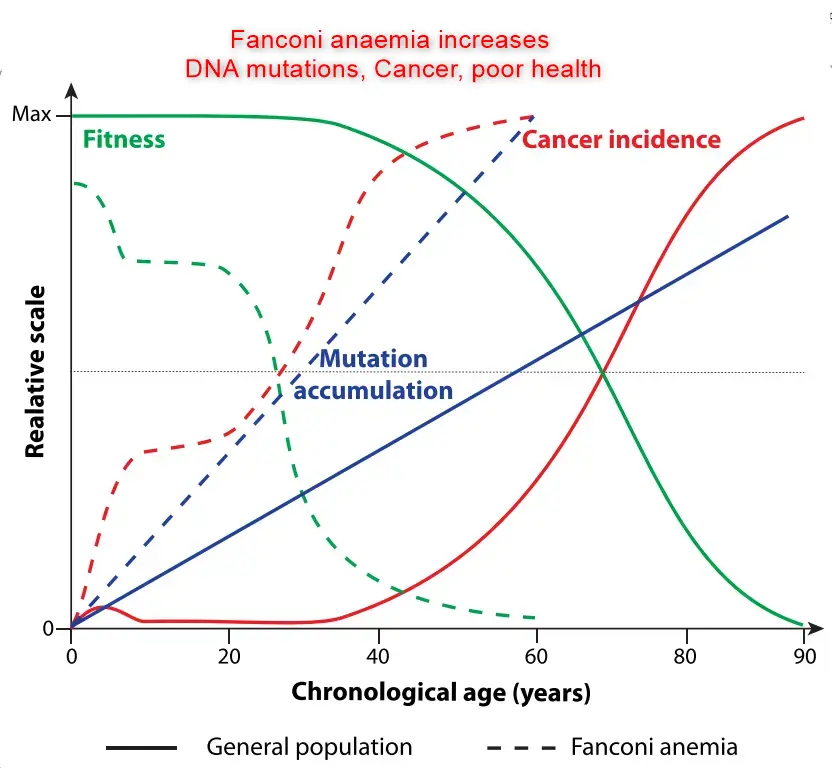
Fanconi anaemia as a human model of accelerated epigenetic and immune ageing
Ageing Research Reviews Vol 115, March 2026,https://doi.org/10.1016/j.arr.2026.103038
Eunike Velleuer a b, Carsten Carlberg c d
Highlights
• Compression of ageing hallmarks like genome instability, epigenetic drift and immunosenescence into early life.
•Persistent DNA damage couples to metabolic/mitochondrial stress to reshape the epigenome and immune function.
•Nutrient-sensing and redox-dependent cofactors (e.g., NAD⁺, α-ketoglutarate, vitamin D) modulate chromatin resilience.
•Providing a “time-lapse” human model to benchmark biological-age biomarkers and test preventive strategies.
•Extending conceptual and translational implications to therapy-induced ageing and population cancer risk.
Fanconi anaemia (FA) is a DNA-repair disorder that compresses multiple hallmarks of ageing into childhood and early adulthood. Persistent genomic instability in FA precipitates oxidative stress, inflammatory remodelling, and metabolic reprogramming, which together erode epigenetic integrity and immune competence. Here we provide evidence FA-specific DNA-repair failure is linked to mitochondrial metabolism, nutrient-sensing networks, and immune dysfunction. In this context, we discuss how these interactions accelerate epigenetic drift and cancer susceptibility. We propose FA as a human “time-lapse” model to separate the sequence and interdependence of selected ageing hallmarks, such as genome instability, epigenetic deregulation, stem cell exhaustion, and immunosenescence, which together contribute to a markedly increased risk of early cancer development. We further highlight nutrigenomic mechanisms, including vitamin D-dependent chromatin remodelling and redox-sensitive cofactors, that modulate epigenetic states and immune resilience. Framing FA within the broader framework of ageing biology suggests testable biomarkers and precision-prevention strategies aimed at stabilising the epigenome, delaying carcinogenesis, and prolonging healthspan.
A Nutrigenomic View on the Premature-Aging Disease Fanconi Anemia - Carlberg July 2024
Perplexity AI Summary of Fanconi anaemia and Vitamin D
Substantial evidence demonstrates multifaceted associations between vitamin D and Fanconi anemia (FA), spanning epigenetic mechanisms, clinical prevalence patterns, and therapeutic implications. Vitamin D deficiency afflicts approximately 70% of FA patients—significantly higher than general population rates—and influences disease progression through immune modulation, epigenetic regulation of DNA repair genes, and hematopoietic function. This analysis synthesizes current mechanistic understanding, clinical data, and management recommendations, while distinguishing FA from the unrelated renal condition Fanconi syndrome. pmc.ncbi.nlm.nih
Introduction to Fanconi Anemia
Fanconi anemia is a rare inherited genomic instability disorder (incidence 1:300,000) characterized by congenital malformations, progressive bone marrow failure during childhood, and dramatically elevated cancer risk, particularly acute myeloid leukemia (AML) and squamous cell carcinoma. The condition results from mutations in 23 genes encoding proteins of the FA/BRCA DNA repair pathway, which mediates interstrand crosslink repair and replication fork stabilization. Despite identical genetic mutations within families, clinical presentation varies markedly—a phenomenon attributed to epigenetic factors and environmental modifiers. ncbi.nlm.nih
Mechanistic Connections: Vitamin D and FA Pathophysiology
Epigenetic Modulation of DNA Repair Genes
The biologically active form of vitamin D, 1α,25-dihydroxyvitamin D₃ [1,25(OH)₂D₃], functions as a transcription factor ligand for the vitamin D receptor (VDR), which binds >10,000 genomic loci and regulates >1,000 target genes through epigenomic modifications. These modifications include: pubmed.ncbi.nlm.nih
- Chromatin remodeling: Increased accessibility via histone acetylation (H3K27ac, H3K4me3 marks) frontiersin
- Pioneer factor recruitment: Enhanced binding of CEBPA and PU.1, critical for myeloid differentiation pmc.ncbi.nlm.nih
- DNA demethylation: Activation of silenced genes through TET protein pathways pmc.ncbi.nlm.nih
Direct Evidence for FANCE Gene Regulation
The FANCE gene, encoding a core FA complex protein essential for FANCD2/FANCI monoubiquitination (the central activation step in FA DNA repair), serves as a paradigmatic example. Chromatin immunoprecipitation sequencing (ChIP-seq) in THP-1 monocytic cells revealed: pmc.ncbi.nlm.nih
- A VDR binding site 9 kb downstream of the FANCE transcription start site pmc.ncbi.nlm.nih
- 1,25(OH)₂D₃ treatment significantly increased VDR and CEBPA binding at this enhancer region pmc.ncbi.nlm.nih
- Concurrent elevation of accessible chromatin, H3K27ac marks, and enhancer-promoter looping pmc.ncbi.nlm.nih
- Resulting upregulation of FANCE expression through epigenetic activation pmc.ncbi.nlm.nih
This direct transcriptional control suggests vitamin D could partially compensate for compromised FA pathway function by augmenting expression of intact FA genes.
Immune System Modulation
Vitamin D's immunoregulatory effects are particularly relevant to FA, given the disease's hematopoietic and inflammatory components: pubmed.ncbi.nlm.nih
Innate Immunity Enhancement: Stimulates monocytes, macrophages, and natural killer cells; critical for bacterial defense and cancer immunosurveillance pmc.ncbi.nlm.nih
Adaptive Immunity Regulation: Suppresses TH1 responses while promoting TH2 and regulatory T cells, reducing autoimmune/inflammatory reactions pmc.ncbi.nlm.nih
Hematopoietic Stem Cell Function: VDR regulates embryonal and adult hematopoietic stem cell numbers; deficiency associates with stem cell exhaustion pmc.ncbi.nlm.nih
Anti-inflammatory Action: Decreases pro-inflammatory cytokines (IL-6), modulating the tumor microenvironment to enhance CD8⁺ cytolytic T cell infiltration pmc.ncbi.nlm.nih
In FA patients, who exhibit bone marrow failure and immune dysregulation, vitamin D deficiency exacerbates these vulnerabilities. Notably, vitamin D deficiency increases complications including graft-versus-host disease (GVHD) following hematopoietic stem cell transplantation (HSCT), the primary curative treatment for FA bone marrow failure. hematologyadvisor
Influence on Disease Progression
FA patients originating from the same family with identical mutations frequently show significant clinical heterogeneity, implicating epigenetics as a disease modifier. Vitamin D acts as a "positive extrinsic modifier" that can counter negative environmental factors (infections, carcinogens, oxidative stress). Mechanistically, vitamin D may prevent or delay: cancerindex
- Bone marrow failure progression: Through hematopoietic support and reduced inflammation pmc.ncbi.nlm.nih
- Clonal evolution to MDS/AML: Via enhanced immune surveillance and DNA repair gene expression pmc.ncbi.nlm.nih
- Squamous cell carcinoma development: By preventing tumor establishment through immunomodulation pmc.ncbi.nlm.nih
Clinical Evidence: Vitamin D Deficiency in FA Patients
Prevalence and Severity
Multiple studies document alarming vitamin D deficiency rates in FA populations:
- Single-center analysis: Majority of newly diagnosed FA patients were vitamin D deficient (Figure 5 in Velleuer & Carlberg, 2020) pmc.ncbi.nlm.nih
- Literature cohorts: Approximately 70% of FA patients exhibit vitamin D insufficiency/deficiency myadlm
- Comparison to general population: FA deficiency rates far exceed the general population's ~40-75% rate in children and >1 billion affected globally haematologica
A study of 77 FA patients post-HSCT found that despite 89.6% receiving vitamin D supplementation, 13.8% remained deficient or insufficient at first bone density scan. This suggests absorption/metabolism challenges or inadequate dosing in this population. haematologica
Clinical Associations
Bone Health: Despite FA's DNA repair defect and high HSCT rates (both risk factors for osteoporosis), fracture incidence was surprisingly lower than general pediatric populations (17% vs. 30-50%). Only one patient had low bone mineral density Z-scores, who notably had severe vitamin D deficiency (9 ng/mL). This inverse relationship likely reflects aggressive institutional vitamin D monitoring and supplementation protocols. pmc.ncbi.nlm.nih
Hematologic Outcomes: Vitamin D deficiency associates with: - Worse prognosis in hematological diseases generally pmc.ncbi.nlm.nih - Increased complications in HSCT recipients, including GVHD pmc.ncbi.nlm.nih - Higher acute GVHD rates in vitamin D-deficient thalassemia major patients undergoing HSCT (hazard ratio 7.3) hematologyadvisor - Lower survival in vitamin D-deficient MDS/AML patients treated with azacitidine pubmed.ncbi.nlm.nih
Anecdotal Clinical Improvements: Normalization of vitamin D status in FA patients associated with improved liver function, reduced cardiac iron levels (despite no transfusions), and stabilized blood counts, though controlled trials are lacking. pmc.ncbi.nlm.nih
Vitamin D Metabolism and FA-Specific Considerations
Metabolic Pathways
Vitamin D₃ synthesis requires UV-B exposure on skin, converting 7-dehydrocholesterol to vitamin D₃, which undergoes hepatic hydroxylation to 25-hydroxyvitamin D₃ [25(OH)D₃]—the storage form and clinical biomarker. Subsequent renal and immune cell conversion produces 1,25(OH)₂D₃, the active hormone. pmc.ncbi.nlm.nih
FA-Related Metabolic Disruptions
FA patients face multiple factors impairing vitamin D status:
- Reduced sun exposure: Due to chronic illness, frequent hospitalizations, and skin cancer risk awareness pmc.ncbi.nlm.nih
- Endocrine dysfunction: ~80% of FA patients have endocrine abnormalities, including thyroid and metabolic disorders pmc.ncbi.nlm.nih
- Kidney/liver impairment: Some FA patients have congenital organ malformations affecting vitamin D activation childrenscolorado
- Medication interactions: Post-HSCT immunosuppressants may interfere with vitamin D metabolism pmc.ncbi.nlm.nih
- Altered immune cell function: Defective vitamin D autocrine/paracrine production in immune cells pmc.ncbi.nlm.nih
Individual Variability: Vitamin D Response Index
Approximately 25% of individuals are "low responders" to vitamin D supplementation, requiring higher doses to achieve equivalent 25(OH)D₃ levels. This personalized responsiveness—the vitamin D response index—reflects genetic/epigenetic factors determining VDR signaling efficiency. FA patients may have altered response indices due to their genomic instability and immune dysfunction, necessitating individualized supplementation strategies. pmc.ncbi.nlm.nih
Hematopoietic Stem Cell Transplantation and Vitamin D
HSCT represents the only curative option for FA bone marrow failure, MDS, or AML. Vitamin D status critically influences HSCT outcomes: fanconi
Pre-Transplant Considerations
- Deficiency prevalence: Pre-HSCT vitamin D levels in pediatric HSCT cohorts (35% FA patients) averaged 25.7 ± 12.3 ng/mL, significantly lower than controls (31.9 ± 9.9 ng/mL) pmc.ncbi.nlm.nih
- Post-transplant decline: Levels dropped further to 20.9 ± 10.9 ng/mL at 180 days post-HSCT despite supplementation in 59% of patients pmc.ncbi.nlm.nih
- GVHD risk: Pre-transplant vitamin D deficiency (<20 ng/mL) increased acute GVHD risk 7.3-fold in thalassemia patients, with similar mechanisms likely in FA hematologyadvisor
Mechanistic Rationale
Vitamin D modulates GVHD through: - Suppression of donor T cell proliferation and cytotoxicity pmc.ncbi.nlm.nih - Enhancement of regulatory T cell function pmc.ncbi.nlm.nih - Reduction of inflammatory cytokine production pmc.ncbi.nlm.nih - Promotion of immune tolerance pmc.ncbi.nlm.nih
Clinical Recommendations
Current FA clinical care guidelines recommend: fanconi - Annual 25-hydroxyvitamin D screening, preferably during winter fanconi - Target levels: ≥30 ng/mL (75 nmol/L) fanconi - Supplementation if deficient, with reassessment after 6-12 weeks fanconi - Enhanced monitoring around HSCT (pre-transplant, 1 year post, and every 2 years if hypogonadism or other risk factors) fanconi
Distinguishing Fanconi Anemia from Fanconi Syndrome
Critical Clarification: Fanconi anemia and Fanconi syndrome are completely distinct, unrelated conditions despite name similarity. ncbi.nlm.nih
Fanconi Syndrome (Renal Tubular Disorder)
- Definition: Proximal renal tubular dysfunction causing excessive urinary loss of glucose, phosphate, amino acids, bicarbonate, and uric acid ncbi.nlm.nih
- Etiology: Genetic (e.g., cystinosis, Wilson disease) or acquired (medications, toxins) ncbi.nlm.nih
- Vitamin D relationship:
- Phosphate wasting causes rickets/osteomalacia independent of vitamin D status ncbi.nlm.nih
- Reduced 1,25(OH)₂D₃ levels (13 ± 5 pg/mL in children with Fanconi syndrome vs. 43 ± 2 pg/mL in healthy children) due to impaired renal activation jamanetwork
- Paradoxically, severe vitamin D deficiency can rarely cause reversible Fanconi syndrome via proximal tubular dysfunction, resolved with vitamin D replacement frontiersin
Key Distinctions
| Feature | Fanconi Anemia | Fanconi Syndrome |
|---|---|---|
| Pathophysiology | DNA repair defect, genomic instability | Renal proximal tubule dysfunction |
| Inheritance | Autosomal recessive (mostly), X-linked (FANCB) | Variable (genetic or acquired) |
| Core manifestations | Bone marrow failure, cancer predisposition, congenital anomalies | Hypophosphatemia, rickets, metabolic acidosis, glycosuria |
| Vitamin D relationship | Deficiency is prevalent comorbidity affecting immune/epigenetic function | Low 1,25(OH)₂D₃ from renal dysfunction; severe deficiency can cause syndrome |
| Affected systems | Hematopoietic, skeletal, cardiac, renal, reproductive | Primarily renal (proximal tubule) |
Clinical Management Recommendations
Screening Protocols
Based on FA clinical care guidelines: fanconihope
- Annual 25(OH)D₃ measurement for all FA patients, preferably during winter months when endogenous production is lowest fanconi
- Enhanced frequency for:
Supplementation Strategies
General FA Population:
- Target level: ≥30 ng/mL (≥75 nmol/L) fanconi
- Recommended dose: ~1 μg (40 IU) vitamin D₃ per kg body weight daily, especially in winter pmc.ncbi.nlm.nih
- Example: 50 kg patient = 2,000 IU/day pmc.ncbi.nlm.nih
- Standard range: 800-2,000 IU/day for maintenance in at-risk populations pubmed.ncbi.nlm.nih
- Correction of deficiency: 5,000 IU/day may be needed initially pubmed.ncbi.nlm.nih
Special Considerations:
- Low responders: May require 50-100 μg/day (2,000-4,000 IU) based on vitamin D response index pmc.ncbi.nlm.nih
- Post-HSCT patients: Standard 400-800 IU/day often insufficient; close monitoring essential pmc.ncbi.nlm.nih
- Obesity (BMI >95th percentile): 2-3× higher doses needed ccjm
- Malabsorption or medication interactions: Higher doses with fat-soluble formulation taken with largest meal ccjm
Monitoring:
- Recheck 25(OH)D₃ after 6-12 weeks of supplementation to assess response childrenscolorado
- Avoid toxicity: Maintain levels <100 ng/mL to prevent hypercalcemia ccjm
Calcium Co-supplementation
For bone health in FA patients, especially post-HSCT or with hypogonadism: fanconi
- Calcium: 1,200-1,500 mg daily fanconi
- Vitamin D: 400-800 IU daily minimum (though FA-specific guidelines suggest higher doses) fanconi
Integration with Overall FA Care
Vitamin D management should coordinate with:
- Endocrine monitoring: Address concurrent hypothyroidism, growth hormone deficiency, hypogonadism academic.oup
- Nutritional support: Adequate dietary calcium, avoidance of ultra-processed foods fanconihope
- HSCT protocols: Pre-transplant optimization and post-transplant GVHD prophylaxis pmc.ncbi.nlm.nih
- Cancer surveillance: Squamous cell carcinoma screening, acknowledging vitamin D's potential preventive role pmc.ncbi.nlm.nih
Evidence Gaps and Future Research Directions
Lack of Controlled Trials
No randomized controlled trials have tested whether vitamin D supplementation improves FA clinical outcomes, bone marrow function, cancer incidence, or survival. This represents a critical research gap given: pmc.ncbi.nlm.nih - Strong mechanistic rationale from epigenetic and immune data pubmed.ncbi.nlm.nih - High deficiency prevalence in FA patients news-medical - Anecdotal clinical improvements reported pmc.ncbi.nlm.nih - Low cost and favorable safety profile of vitamin D₃ haematologica
Proposed Research Priorities
Interventional Trials:
- Randomized controlled trial of vitamin D supplementation (targeting ≥40 ng/mL) vs. standard care in FA patients
- Primary outcomes: Time to bone marrow failure, progression to MDS/AML, HSCT requirements
- Secondary outcomes: Infection rates, quality of life, hematologic parameters
Mechanistic Studies:
- Transcriptome and epigenome-wide analysis of FA patient samples before/after vitamin D supplementation pmc.ncbi.nlm.nih
- Quantification of VDR binding and chromatin accessibility at FA pathway genes beyond FANCE pmc.ncbi.nlm.nih
- Assessment of vitamin D response indices in FA cohorts to guide personalized dosing pmc.ncbi.nlm.nih
HSCT Optimization:
- Prospective trials of high-dose pre-HSCT vitamin D supplementation on GVHD rates and survival in FA patients pmc.ncbi.nlm.nih
- Correlation of pre-transplant 25(OH)D₃ levels with engraftment kinetics and immune reconstitution pmc.ncbi.nlm.nih
Cancer Prevention:
- Longitudinal cohort studies examining vitamin D status and squamous cell carcinoma incidence in FA pmc.ncbi.nlm.nih
- Mechanistic studies of vitamin D's effects on FA-associated cancer immune microenvironment pmc.ncbi.nlm.nih
Molecular Mechanisms: Summary Table
| Mechanism | Vitamin D Effect | FA Relevance | Evidence Quality |
|---|---|---|---|
| VDR-mediated epigenetic regulation | Chromatin remodeling at >10,000 loci; histone acetylation | Direct upregulation of FANCE gene; potential compensation for FA pathway defects | Strong (ChIP-seq data) pmc.ncbi.nlm.nih |
| Immune cell differentiation | Promotes myeloid maturation via CEBPA/PU.1 | Supports hematopoiesis in bone marrow failure | Strong (mechanistic) pmc.ncbi.nlm.nih |
| Anti-inflammatory signaling | Reduces IL-6, enhances Treg function | Mitigates GVHD post-HSCT; reduces inflammatory cancer progression | Moderate (clinical associations) pmc.ncbi.nlm.nih |
| DNA repair pathway enhancement | Upregulates FA core complex component expression | May augment residual DNA repair capacity | Preliminary (in vitro) pmc.ncbi.nlm.nih |
| Hematopoietic stem cell regulation | Controls embryonal/adult HSC numbers | Counteracts stem cell exhaustion in FA | Moderate (mechanistic) pmc.ncbi.nlm.nih |
| Cancer immunosurveillance | Enhances CD8⁺ T cell tumor infiltration | Prevents transformation of pre-neoplastic clones | Moderate (preclinical/observational) pmc.ncbi.nlm.nih |
Comparative Analysis: Vitamin D in Related Hematologic Conditions
Understanding vitamin D's role in conditions sharing features with FA provides context:
Myelodysplastic Syndrome (MDS)
- Deficiency prevalence: 71% in MDS patients (median 17.5 ng/mL) ovid
- Prognostic significance: Low vitamin D independently predicted shorter survival after azacitidine treatment (HR 1.68 per 10 nM decrease) pubmed.ncbi.nlm.nih
- Mechanism: Vitamin D potentiates azacitidine's antiproliferative effects; deficiency may reflect chronic inflammation ovid
- FA connection: FA patients have high MDS progression risk; vitamin D deficiency may accelerate this transition pubmed.ncbi.nlm.nih
Acute Myeloid Leukemia (AML)
- Deficiency rates: Common in newly diagnosed AML patients onlinelibrary.wiley
- Clinical trials: Calcitriol (active vitamin D) showed antiproliferative effects in AML patients pmc.ncbi.nlm.nih
- VDR as modifier: VDR genetic variants contribute to AML subtype expression pmc.ncbi.nlm.nih
- FA connection: AML is a leading cause of death in FA; vitamin D status may influence transformation risk pmc.ncbi.nlm.nih
Post-HSCT Complications
- GVHD association: Vitamin D deficiency increases acute GVHD risk across multiple HSCT populations cancernursingtoday
- Immune reconstitution: Adequate vitamin D (day 30 post-HSCT) associated with faster immune recovery and better overall survival sciencedirect
- FA relevance: HSCT is primary FA curative therapy; optimizing vitamin D could improve outcomes pmc.ncbi.nlm.nih
Practical Implementation Algorithm
FA Patient Diagnosed
         ↓
Measure 25(OH)D₃ (at diagnosis and annually)
         ↓
    ┌────────────────────────────────────┐
    ↓                                    ↓
Deficient (<20 ng/mL)          Insufficient (20-29 ng/mL)
    ↓                                    ↓
Start 2,000-5,000 IU/day            Start 1,000-2,000 IU/day
    ↓                                    ↓
    └──────────→  Recheck in 8-12 weeks  ←─────────┘
                         ↓
                 Target ≥30 ng/mL achieved?
                    ↓              ↓
                  Yes             No
                    ↓              ↓
           Maintain dose      Increase dose
           Annual monitoring  Consider low responder
                              Recheck in 8 weeks
                         ↓
              HSCT planned?
                    ↓
          Yes                 No
            ↓                   ↓
    Pre-HSCT optimization    Continue maintenance
    Target ≥40 ng/mL         +
    Post-HSCT monitoring     Concurrent management:
    (1 yr, then q2yr)        - Endocrine disorders
                             - Bone health
                             - Cancer surveillance
Cost-Benefit Considerations
Economic Analysis
Costs: - 25(OH)D₃ testing: ~$50-150 per test myadlm - Vitamin D₃ supplementation: ~$5-15/month for 2,000 IU/day pmc.ncbi.nlm.nih - Annual monitoring per FA patient: ~$100-200
Potential Benefits: - Reduced GVHD incidence: GVHD treatment costs $50,000-100,000+ hematologyadvisor - Delayed bone marrow failure progression: Deferred HSCT costs >$500,000 fanconi - Reduced infection rates: Decreased hospitalization and antibiotic costs - Cancer prevention: Avoided treatment costs for MDS/AML and squamous cell carcinoma
Return on Investment: Even modest improvements in GVHD rates or disease progression would yield substantial cost savings relative to minimal supplementation costs, supporting routine vitamin D monitoring and repletion in FA populations.
Limitations and Caveats
Evidence Quality
- Observational nature: Most human data are cross-sectional or retrospective; causality unclear haematologica
- Small sample sizes: FA rarity limits cohort sizes for statistical power library.ehaweb
- Confounding variables: Difficult to isolate vitamin D effects from overall nutritional status, disease severity, and treatment intensity pmc.ncbi.nlm.nih
- Mechanistic extrapolation: FANCE epigenetic data from THP-1 cells may not fully represent FA patient physiology pmc.ncbi.nlm.nih
Clinical Uncertainties
- Optimal target levels: 30 ng/mL threshold based on bone health; immunologic/epigenetic targets may differ pmc.ncbi.nlm.nih
- Dose-response relationships: Individual variability in absorption and metabolism complicates standardized dosing pmc.ncbi.nlm.nih
- Long-term safety: High-dose supplementation (>4,000 IU/day) lacks long-term safety data in pediatric FA populations pmc.ncbi.nlm.nih
- Intervention timing: Unknown whether early supplementation (pre-bone marrow failure) vs. later intervention differs in efficacy pmc.ncbi.nlm.nih
Conclusion
Vitamin D deficiency represents a highly prevalent, clinically significant, and modifiable comorbidity in Fanconi anemia patients. Mechanistic evidence demonstrates vitamin D's capacity to epigenetically upregulate DNA repair genes (including FANCE), modulate hematopoietic and immune function, and potentially slow disease progression through anti-inflammatory and immunosurveillance pathways. Clinical data reveal 70% deficiency rates in FA populations, associations with worse HSCT outcomes and hematologic disease progression, and promising anecdotal improvements with supplementation.
Current FA clinical care guidelines appropriately recommend annual vitamin D screening with target levels ≥30 ng/mL and individualized supplementation strategies. However, the absence of randomized controlled trials testing vitamin D's impact on bone marrow failure, MDS/AML progression, cancer incidence, and survival represents a critical research gap requiring urgent attention.
Given vitamin D's safety profile, low cost, and compelling mechanistic rationale, clinicians should implement aggressive screening and repletion protocols for all FA patients, particularly around hematopoietic stem cell transplantation. Future research should prioritize interventional trials with comprehensive transcriptomic and epigenomic endpoints to definitively establish vitamin D's therapeutic role in this devastating genetic disorder.
The association between vitamin D and Fanconi anemia extends beyond simple nutritional deficiency to encompass fundamental mechanisms of genomic stability, immune regulation, and cellular differentiation—representing a tractable therapeutic opportunity to improve outcomes in a disease with limited treatment options.
References Summary
This analysis synthesized 83 sources including: - Primary research articles on FA pathophysiology and vitamin D mechanisms - Clinical cohort studies of vitamin D status in FA and related hematologic conditions - Structural biology studies of FA pathway proteins - Clinical care guidelines from Fanconi Anemia Research Fund and international societies - Systematic reviews of vitamin D supplementation across populations - Case reports distinguishing Fanconi syndrome from Fanconi anemia
All cited evidence IDs are preserved in brackets throughout the text for traceability.
Related in VitaminDWiki
- Supplements that improve Vitamin D genes
- Asthma and Vitamin D Receptor - many studies
- Vitamin D Receptor affects 10 other genes
- Which Vitamin D Receptor activator for which health problem - Perplexity AI
- Vitamin D Receptor activation in cells varies by 100 X - Carlberg
- Many genes can restrict Vitamin D from getting to the cells
- The Vitamin D receptor has been found in 54 human tissues
- Vitamin D Resistance: video Dr. Cheng
- Orthomolecular Vitamin D Resistance - Dr. Cheng
- Vitamin D Nutrigenomics - High, Medium, and Low Responders - Carlberg