Cytomegalovirus downregulates Vitamin D receptor, but tissues respond by increasing production
HUMAN CYTOMEGALOVIRUS INFECTION DOWN REGULATES VITAMIN-D RECEPTOR IN MAMMALIAN CELLS
The Journal of Steroid Biochemistry and Molecular Biology, online 9 August 2016, doi:10.1016/j.jsbmb.2016.08.002
Franz J.J. Riedera, Charlotte Gröschelb, Marie-Theres Kastnera, Karin Kosulinc, Johannes Laengled, Rene Zadnikare, Rodrig Marculescue, Martina Schneidera, Thomas Lionc, f, Michael Bergmannd, Enikö Kallayb, Christoph Steiningera, christoph.steininger@meduniwien.ac.at
Highlights
Vitamin D is essential for the human body including antimicrobial responses.
Cytomegalovirus infection downregulates VDR expression in vitro..
Expression of CYP24A1 decreases and of CYP27B1 increases in parallel.
VDR expression is not downregulated during influenza virus or adenovirus replication.
Cytomegalovirus may also influence VDR expression in vivo.
Vitamin D (VD) is essential for the human body and involved in a wide variety of critical physiological processes including bone, muscle, and cardiovascular health, as well as innate immunity and antimicrobial responses. Here, we elucidated the significance of the VD system in cytomegalovirus (CMV) infection, which is one of the most common opportunistic infections in immunocompromised or -suppressed patients.
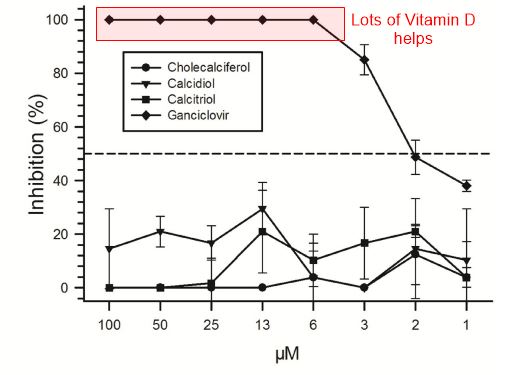
We found that expression of vitamin D receptor (VDR) was downregulated in CMV-infected cells within 12 hours [hrs] post infection [p.i.] to 12 % relative to VDR expression in mock-infected fibroblasts and did not recover during the CMV replication cycle of 96 hrs. None of the biologically active metabolites of VD, cholecalciferol, calcidiol, or calcitriol, inhibit CMV replication significantly in human fibroblasts.
In a feedback loop, expression of CYP24A1 dropped to 3 % by 12 hrs p.i. and expression of CYP27B1 increased gradually during the replication cycle of CMV to 970 % probably as a consequence of VDR inhibition. VDR expression was not downregulated during influenza virus or adenovirus replication. The potent synthetic vitamin D analog EB-1089 was not able to inhibit CMV replication or antagonize its effect on VDR expression. Only CMV replication, and none of the other viral pathogens evaluated, inhibited the vitamin D system in vitro . In view of the pleiotropism of VDR, CMV-mediated downregulation may have far-reaching virological, immunological, and clinical implications and thus warrant further evaluations in vitro and in vivo.
Publisher wants $26 for the fascinating PDF
PDF also available at [deepdyve.com]
Clipped from PDF
“Vitamin D supplementation is beneficial for patients with HIV, hepatitis C virus, Chlamydia spp. Or mycobacterial infection”
“CMV infection downregulated VDR expression and this downregulation was specific for CMV and was not observed for other, common human viruses.”
“In solid-organ and bone-marrow transplant patients, CMV is the most common opportunistic virus infection with an incidence of up to 85 % and is associated with significant morbidity and mortality”
“VDR gene expression was even upregulated continuously during influenza virus infection. “
However, Vitamin D receptor is UPREGULATED by adrenovirus

See also web
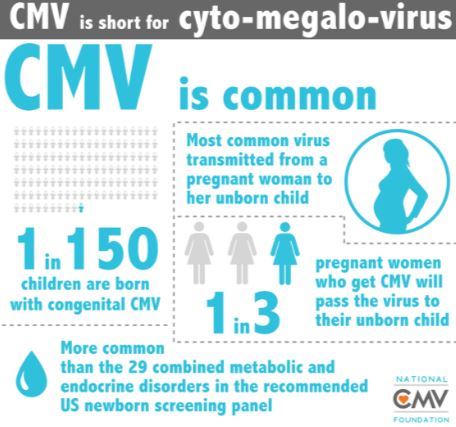
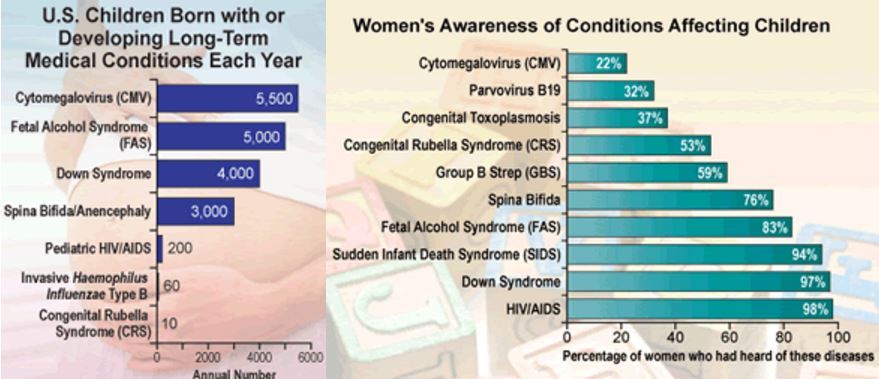
CMV is very commen, but most people are unaware of it
http://www.ccc4w.com/CytomegalovirusCMVDisease.shtml
CMV 1 in 150 people
https://www.nationalcmv.org/resources/blog/june-2016/national-cmv-awareness-month.aspx