
Coimbra Protocol and Autoimmune Disease - video and summary
The Coimbra Protocol: Breakthrough Treatment for Autoimmune Disease
Cure4Pain: summarized by Claude AI, June 2026
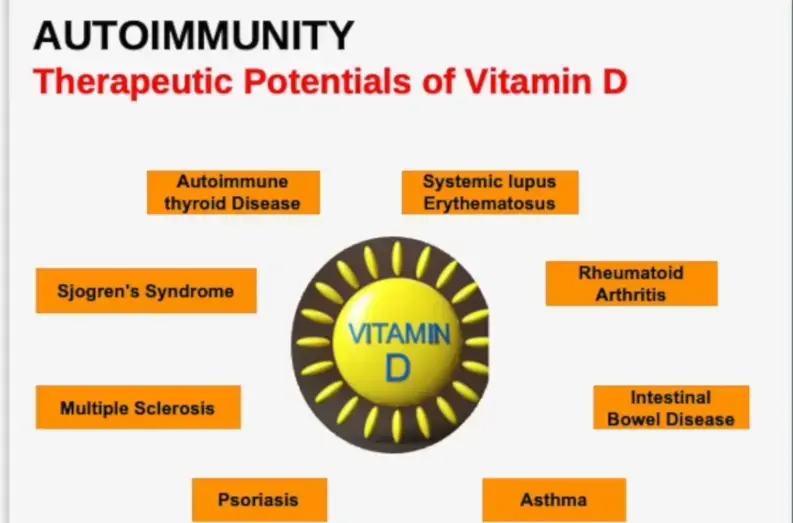
[00:25] Introduction to the Coimbra Protocol — high-dose vitamin D therapy used to manage lupus, rheumatoid arthritis, IBD, asthma, psoriasis, multiple sclerosis, Sjögren's syndrome, type 1 diabetes, and other autoimmune conditions.
[01:31–02:18] Autoimmunity defined as immune dysregulation (either immunodeficiency or hypersensitivity); encompasses 60–80 chronic inflammatory diseases driven by genetic predisposition plus environmental triggers, with ~5–8% prevalence in the US and 75% of cases occurring in women.
[09:35–10:50] Finland case study: as recommended vitamin D intake for children was cut from 4,500 IU (1964) → 2,000 IU → 1,000 IU → 400 IU (1992), type 1 diabetes incidence rose in inverse proportion, illustrating the deficiency–autoimmunity link.
[11:14–12:39] Mechanism: activated vitamin D binding to VDRs enhances T regulatory cells and beta defensins, suppresses inflammatory Th17/IL-17 signaling, and promotes the Th1→Th2 shift — published in "Vitamin D in autoimmunity: molecular mechanisms and therapeutic potential."
[13:10–15:25] Vitamin D is positioned as the root-level fix for gut health: it maintains the intestinal barrier, supports microbial homeostasis, and reduces leaky gut — deficiency drives dysbiosis, mucosal inflammation, and downstream immune dysregulation.
[16:05–17:12] Professor Cicero Coimbra developed the protocol; published research shows each doubling of serum 25(OH)D reduces MS relapse/exacerbation rate by 27%, with similar findings for psoriasis, vitiligo, RA (deficient patients had 6× odds of moderate-to-severe disability), SLE, and IBD.
[19:22–20:40] Why high doses are needed: genetic polymorphisms (VDR gene, 1-alpha-hydroxylase) cause vitamin D resistance in autoimmune patients, so therapeutic doses must far exceed standard supplementation to achieve immune-modulating effects.
[20:40–21:25] VDR polymorphisms confirmed in SLE, asthma, and autism; children with autism showed elevated IL-17A correlating with severity — consistent with vitamin D's role in suppressing IL-17.
[21:42–22:19] Before/after MRI case shown of MS lesions disappearing after high-dose vitamin D therapy; Coimbra's framing: vitamin D deficiency disables thousands of immune-cell regulatory functions.
[22:34–23:07] Closing call to action: high-dose vitamin D ("sunshine in a capsule") is presented as a natural immunotherapy, but must be clinically monitored by a trained professional given the therapeutic dose ranges involved.
Note: This presentation advocates strongly for the Coimbra Protocol but doesn't substantively address its controversies — notably the absence of large randomized controlled trials, risks of hypercalcemia/kidney damage at the doses used (often 30,000–300,000 IU/day), and the strict calcium-restricted diet and monitoring regimen the protocol actually requires. Readers evaluating this for clinical adoption should weigh those gaps alongside the mechanistic and observational evidence presented.
Related in VitaminDWiki
- Vitamin D fights Multiple Sclerosis, Autoimmune, etc. - Dr. Coimbra video and transcript
- Coimbra Protocol (using Vitamin D) is safe and effective for Multiple Sclerosis and Autoimmune diseases
- Coimbra protocol using high-dose Vitamin D is safe
- The use of high dose Vitamin D (Coimbra Protocol) for multiple sclerosis in Germany – 2019