Autism is Not a Genetic Disorder - review of 519 studies
The Neuroimmunology of Autism
Review Mol Neurobiol. 2025 Dec 20;63(1):316. doi: 10.1007/s12035-025-05589-8.
Jeet Varia 1, Martha Herbert 2 3, Brian Hooker 4
Table of contents
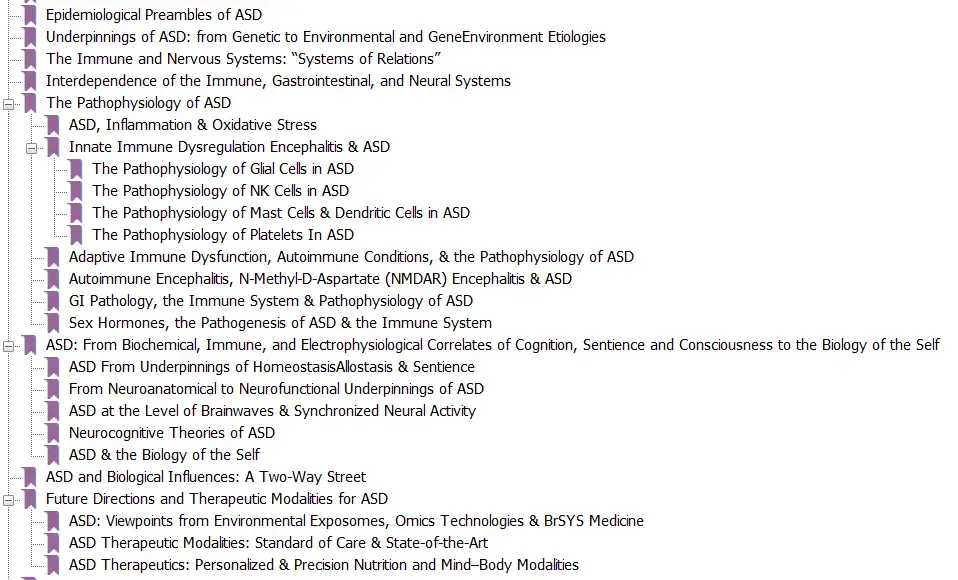
Alterations and maladaptations of the immune system remain some of the most controversial concepts in autism spectrum disorder (ASD). Nonetheless, intensifying evidence confirms that much of what ASD involves is related not to a static encephalopathy-based model of autism but rather to the consequences of environmental insult and complex and dynamic psychological and physiological processes involving the interdependence of the nervous, immune, and host microbiome. This narrative review provides a conceptual framework, focuses on clinical research, and is written for specialists and non-specialists. To provide access to multi- and interdisciplinary perspectives with wide-ranging cutting-edge implications for all people with ASD. Beginning with historical, epidemiological, and etiological underpinnings, we elaborate on a contemporary understanding of the immune system in the pathophysiology of ASD. Theoretical and scientific discourse on the relationship of the immune system with the nervous system and host microbiota in homeostasis/allostasis, neurodevelopment, and psychological and physiological health and disease is also provided. As a basis for conceptual advances detailing the interconnection, interdependence, and interference with or subjugation (as would be the case for autoinflammatory and autoimmune conditions) of the nervous system and host microbiota by the immune system, and the role of these interactions in the pathogenesis of ASD. This gives us a platform for not only examining the role of the immune system in the etiology, pathogenesis, and pathophysiology of ASD but also understanding social and higher-level processes of consciousness for individuals on the spectrum. Finally, taking a neuroimmunological perspective, we highlight the need for a multi-scale, holistic approach to understanding and developing future therapeutic modalities to address the core symptoms of ASD that go beyond the current reductionist and "magic-bullet" medical paradigm.
Note: the study fails to contain the word "VITAMIN"
Related in VitaminDWiki
- Total Load Theory (Autism,etc. book Dec 2025
- 17 Autism risk factors: low Vitamin D, virus, vaccine, mercury etc. - many studies
- Aluminum increases Autism etc., silica decreases Aluminum - Dr. Coimbra video
- Autism risk is reduced by Vitamin D – early pregnancy or chlldhood – Umbrella review
- Incidence Autism and ADHD reduced 18 percent per 10 ng of Vitamin D during pregnancy – meta-analysis
- Autism 2X to 3X more likely if poor Vitamin D Receptor
- Autistic child 2.4 X more likely if less than 10 ng of vitamin D during 2nd trimester
- Autism 4 times more likely if low vitamin D during first trimester
27 reasons why Dr. Cannell believes Autism is related to Vitamin D
Both have strong inheritance features – Vitamin D about 60%
Both have gotten substantially worse in last 30 years
Vitamin D is known to be involved in brain development
All autistic children are VitD deficient, but not all children who are deficient are autistic: genes are involved
When giving vitamin D to cure children of rickets “mental dullness” decreases as well
Children with genes which give them too much (Williams Syndrome) have to reverse of autism – too sociable
Mothers having lots of fish (and thus more vitamin D) give birth to kids with less autistic symptoms
Both associated with weak bones
Both worse around the age of weaning
Autism is more common in rich families – more likely to apply sun screen and stay indoors
Autism increases with drugs which lower levels of vitamin D
Seizures are common with Autism - Vitamin D has been shown to reduce seizures
Fewer autistic symptoms (such as sleep problems) during summer: when child gets more vitamin D from the sun
Both worse with latitude
Both vary with Ultraviolet light
Both vary with time of year (more birth of autistics in March in Northern hemisphere)
2X more urban autism – less UVB in urban environments
Both worse with pollution
Both worse with increased clouds and rain
Both worse with closely spaced pregnancies
Autistics have abnormal immune response – similar to that of vitamin D deficiency
Low levels of vitamin D in mother animals reduces brain function in offspring
Vitamin deficient rat pups have similar brain abnormalities to that of human autistic children
Autistic children get less vitamin D in their blood for the same amount of sun exposure
The 4 males/1 female ratio - Note estrogen increases vitamin D in the brain (testosterone does not)
Both worse in African Americans (A-A 2-3 increased autism rate)
Both worse in Dark-skinned immigrants in Europe